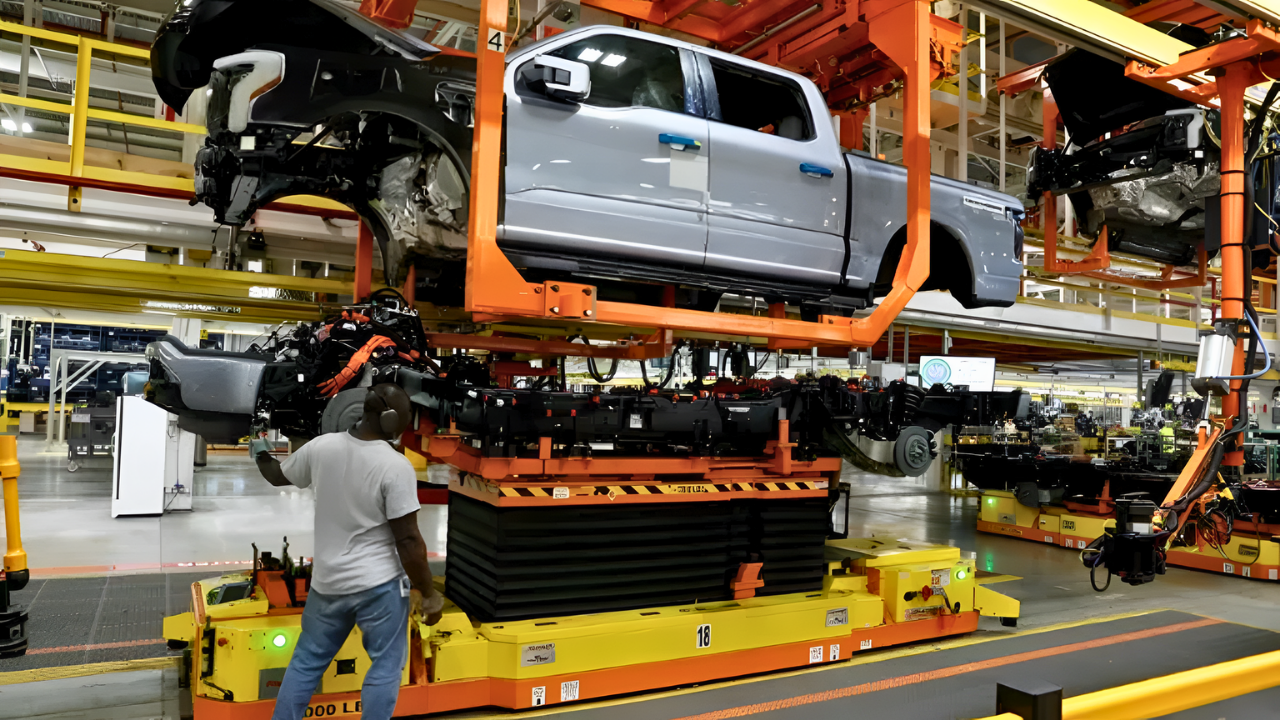
Ford spent billions making the F-150 Lightning America’s electric future. The truck launched with 200,000+ reservations and amazed dealers. By 2024, everything changed. Ford planned to build 150,000 trucks per year, but repeatedlyslashed production.
Dealership visits dried up. The flagship electric pickup became an inventory problem. Industry experts asked hard questions: Did buyers reject expensive EVs? Or did Ford simply build the wrong truck at $70,000?
The Losses Mount Faster Than Sales

Ford’s Model E electric division lost $5.1 billion in 2024 alone. By Q3 2025, three years of losses exceeded $13 billion.
In the first nine months of 2025, Model E lost $3.6 billion despite nearly doubling EV revenue.
Ford sold more vehicles, but lost money more quickly. Analysts called it unsustainable. Something had to break soon.
When Policy Met Practicality

America’s EV market rested on one foundation: federal tax credits. The $7,500 consumer credit anchored buyer interest for a ten-year period.
Biden administration emissions rules pushed EV adoption harder. January 2025 changed everything. Trump revoked the tax credit, suspended fuel-economy penalties, and relaxed emissions standards.
Regulators called it common sense. Automakers saw their entire EV business model collapse.
Demand Evaporates Overnight
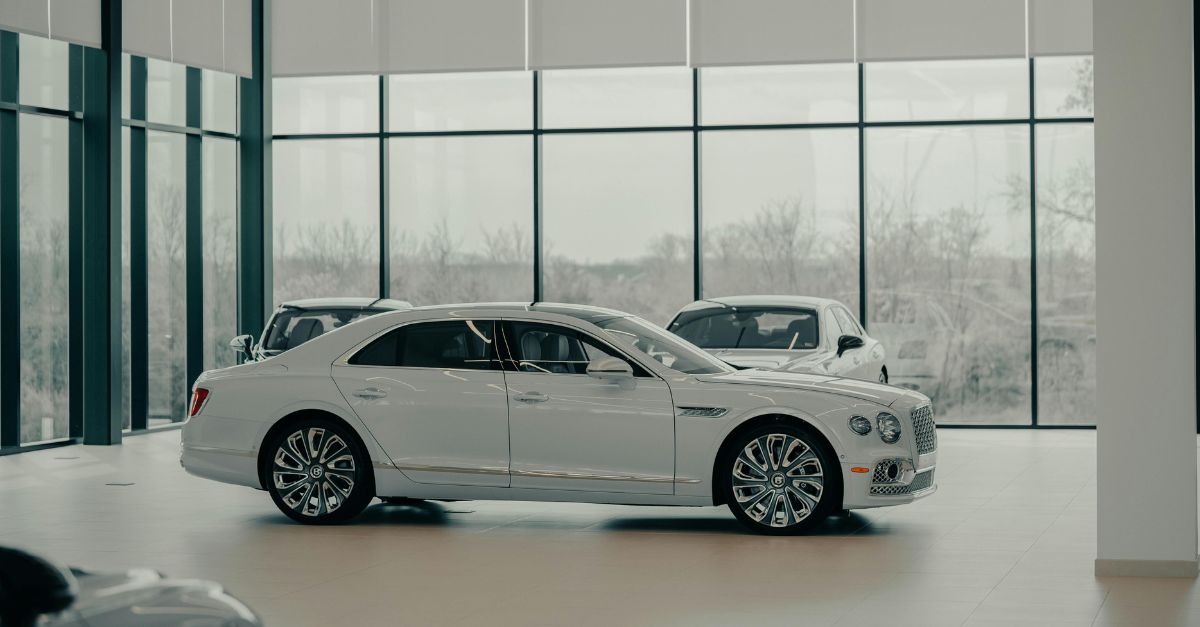
Warning signs arrived suddenly and unmistakably. U.S. EV sales dropped 40% in November 2025 compared to October. Ford’s EV sales fell 61% in one month alone.
CEO Jim Farley predicted this months earlier: ending the tax credit would cut EV market share from 10-12% down to 5%.
His forecast proved correct. High-end EVs at $50,000-$80,000 stopped moving.
The $19.5 Billion Reckoning

On December 15, 2025, Ford announced the auto industry’s largest EV writedown: $19.5 billion in special charges.
The breakdown: $8.5 billion in Model E asset impairments, $6 billion in terminated battery partnerships, and $5 billion in canceled programs.
Ford officially discontinued the all-electric F-150 Lightning. Production at Dearborn’s Rouge Electric Vehicle Center stopped immediately. Ford replaced it with a hybrid pickup.
Lightning Owners Face Uncertainty

Nearly 74,000 Lightning owners learned their vehicle would not receive a Generation 2 update. Ford offered them access to an extended-range electric vehicle (EREV), but the timelines remained undefined.
Some owners complained on online forums, questioning Ford’s commitment to EV buyers. Early adopters felt abandoned. A company that promised years of innovation suddenly walked away from them.
Farley’s Candid Confession

CEO Jim Farley spoke bluntly in television interviews after the announcement. “These really expensive $70,000 electric trucks, as much as I love the product, they didn’t make sense,” he told CNBC.
“U.S. customers wouldn’t pay for them. That was the decisive factor.”
Ford engineered a product that the market rejected. The Lightning became a cautionary tale of misreading what buyers wanted.
A Broader Industry Realignment

Ford didn’t retreat alone. General Motors quietly reduced EV production targets. Volkswagen shifted money toward hybrid powertrains. Stellantis announced a slower EV rollout. Across the industry, Trump’s policy reversal triggered massive strategy changes.
Automakers that had invested $ 100 billion or more in EV infrastructure suddenly faced zero market demand for high-end electric vehicles. Wall Street investors now penalize companies for not pivoting more quickly to hybrids.
Supply Chain Collateral Damage

Ford dissolved its battery partnership with SK On. Its planned Kentucky battery facility faced uncertain timelines. Thousands of EV production workers faced layoffs or job changes.
Ford had committed to hiring 6,200 union workers for a 2 million EV/year target by 2026—a goal now abandoned. Lightning component suppliers suddenly faced a collapse in demand.
LG Chem, Panasonic, and Chinese battery makers all cut sales forecasts.
The Paradox: Ford Raises Profit Guidance

Here’s the surprise: Ford raised its 2025 operating profit guidance to $7 billion despite the $19.5 billion charge. The company took the hit to reset its strategy aggressively.
Ford admitted: losing $3.6 billion annually on EVs destroys more value than absorbing the charge and pivoting to profitable hybrids.
Model E could reach profitability by 2029, Ford projected, but only by abandoning the large-EV game entirely.
Inside Dealer Frustration

Ford dealers received conflicting signals. Some gambled on Lightning inventory expecting tax-credit demand. Others invested in EV charging stations for customers.
The sudden announcement created chaos. Franchise owners questioned Ford’s long-term commitment to EVs. One dealer group noted that the pivot damaged their capital planning.
Trust between Ford and dealers, already strained by EV losses, deteriorated further.
Leadership’s Long Road to Acceptance

Jim Farley hadn’t always opposed large EVs. In August 2025, Ford announced a “Universal EV Platform” and promised affordable electric vehicles by 2027.
Internal data in late 2025 accelerated Ford’s reckoning. Farley said, “The past few months have clarified our direction.”
Ford’s leadership clung to EV ambitions longer than facts supported. Earlier statements about EV leadership now sounded outdated.
Hybrids: Plan B Becomes Plan A

Ford committed to doubling down on hybrids and extended-range electric vehicles (EREVs). Ford ranks third nationally in hybrid sales and dominates the truck hybrid market with an 80% market share.
Hybrid powertrains make money. Consumer demand stayed strong—hybrid sales jumped 20% in Q3 2025 as EV interest collapsed.
Ford’s $30,000 mid-size electric truck is expected to arrive in 2027. The EREV Lightning replacement delivers over 700 miles of range on a combined gas and battery system.
Skepticism Clouds the 2029 Profitability Claim

Wall Street and industry experts doubt Ford’s profitability timeline. Model E has burned over $ 13 billion since 2023, with no profit yet.
The company now claims it will reach profit by 2029—four years away—using a strategy it just reversed. One analyst said: “Ford’s credibility on EV profitability forecasts has been thoroughly damaged.”
Investor skepticism remains high about Ford’s execution ability.
The American EV Moment: Over Before It Began

Ford’s Lightning shutdown marked the symbolic end of America’s brief EV revolution. Between 2021 and 2025, the industry invested a substantial amount of capital in chasing Tesla and its Chinese competitors.
Biden’s policies seemed to lock in electrification as inevitable. Trump’s policy reversal, combined with consumer reluctance to pay $ 70,000 or more for unproven technology, exposed the fragility of that vision.
Did American consumers truly embrace EVs, or did government incentives simply create an illusion of demand?
Sources:
Reuters, Ford retreats from EVs, takes $19.5 billion charge as Trump policies take hold, December 15, 2025
Fortune, Ford writes down $19.5 billion as it pivots electric Lighting, December 15, 2025
CNBC, Ford to record $19.5 billion in special charges, pull back on electric vehicles, December 15, 2025
DW.com, Gas-loving Trump cedes electric car market to China, December 16, 2025
Electrek, Ford CEO says its $70K EV pickup wasn’t selling, but this will, December 16, 2025
Yahoo Finance, Ford’s $5 billion problem is getting worse, December 3, 2025