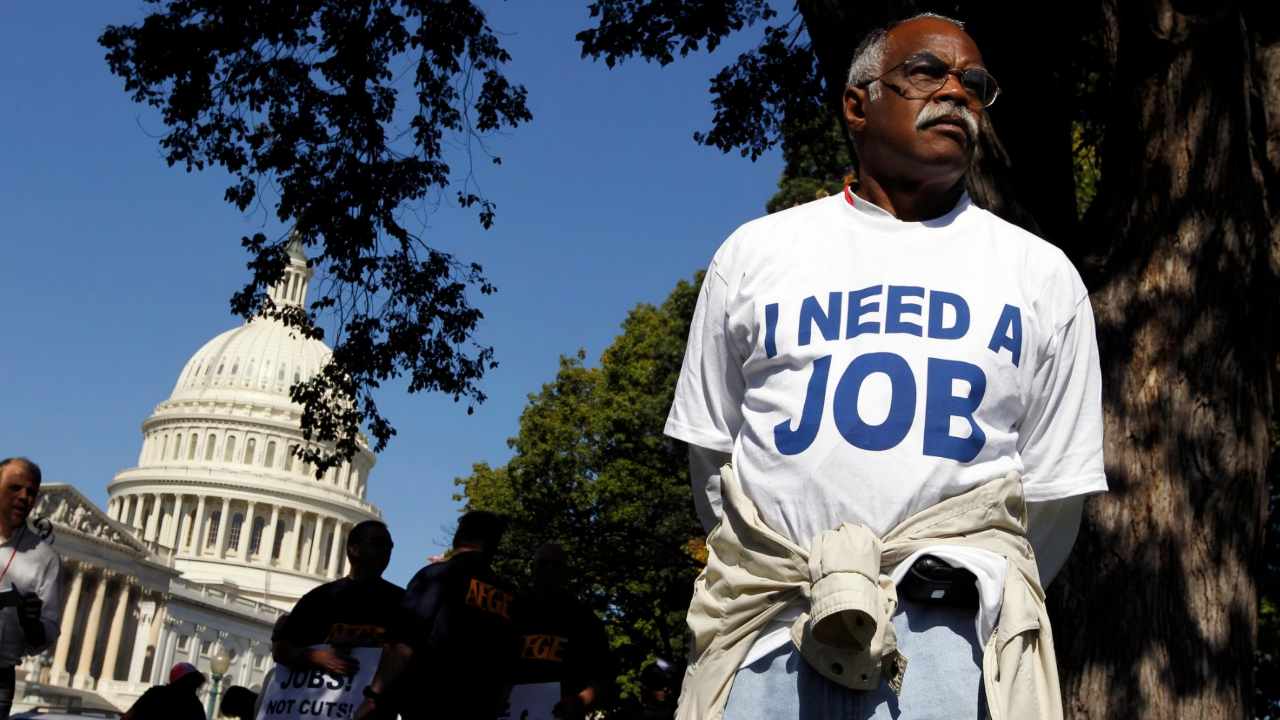
It starts without alarms or official announcements: across 2025, U.S. employers have been cutting staff at a rate not seen since the height of the pandemic. Through November, companies announced about 1.17 million job cuts, a 54% increase from the same period a year earlier. Data from outplacement firm Challenger, Gray & Christmas shows layoffs at their highest level in five years, raising questions about how secure the country’s much-touted economic strength really is.
November alone underscored the shift. Employers disclosed 71,321 planned cuts that month, up from 57,727 in November 2024. That made it the heaviest November for layoffs since 2022, when recession fears and rapid staff reductions dominated business decisions. Job cuts above 70,000 in a single month have been rare in records going back to 2008, occurring only around the early‑2000s downturn, the global financial crisis and the pandemic era. Crossing that line again in 2025 suggests the labor market is under unusual strain, not just undergoing a routine slowdown.
Layoffs at Crisis-Era Scale
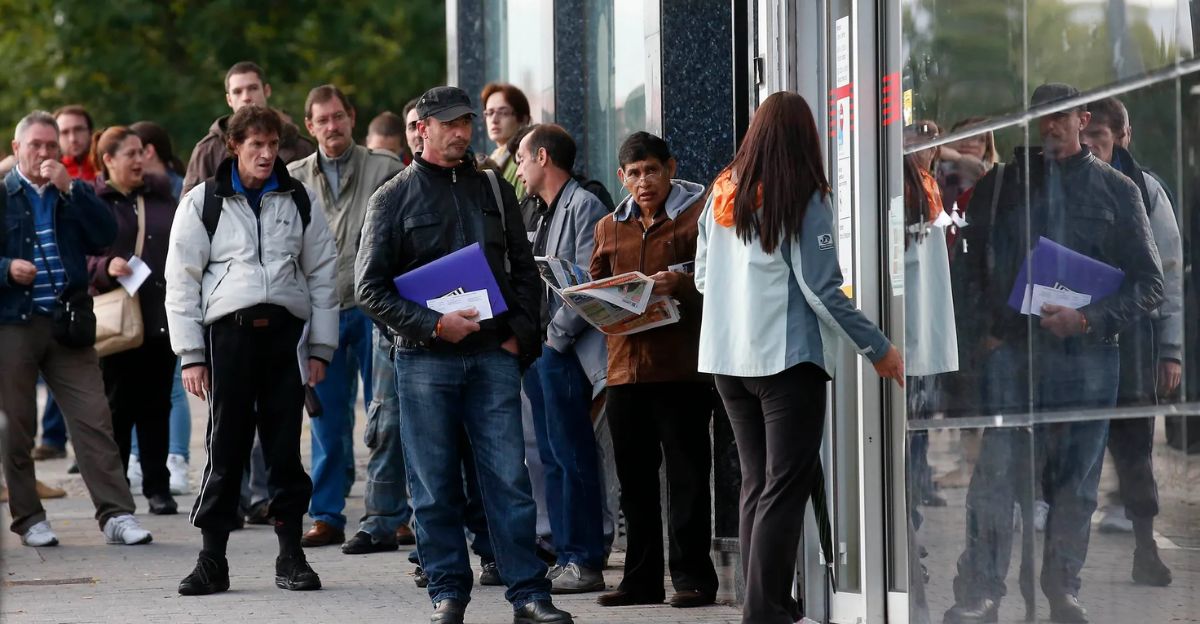
Viewed over the full year so far, the picture looks even more severe. The 1.17 million announced cuts through November are the most since 2020, when lockdowns and a public health emergency drove mass unemployment. Setting that extraordinary year aside, 2025 is on track to be the worst year for job reductions since 2009, at the bottom of the financial crisis.
Historically, crossing 1.1 million announced cuts before December has been rare. Since 1993, that threshold has been reached only six times, and typically during periods of pronounced economic stress. The inclusion of 2025 in that short list places this year alongside some of the most difficult labor periods of the past three decades.
Behind the surge is a sharp reversal from the hiring boom of 2021 and 2022, when many companies expanded aggressively, expecting consumer demand and digital activity to remain permanently elevated. Instead, as growth has cooled and borrowing costs climbed, employers have shifted abruptly from expansion to retrenchment. Finance expert Michael Ryan, founder of MichaelRyanMoney.com, notes that job security is now weaker than it has been in years, even in occupations that usually hold up well in downturns. The data suggests this is not limited to a handful of vulnerable sectors but is spread widely across the economy.
Pessimism and AI Deepen the Strain

The wave of layoffs is arriving amid a broader sense of economic unease. A survey by the Federal Reserve Bank of New York finds that 38.97% of Americans expect to be worse off financially next year, the highest share since November 2023. In practical terms, more than one in three people believe their personal finances are likely to deteriorate in the near term. That expectation is shaping behavior: households are pulling back on discretionary spending, and businesses, anticipating weaker sales, are cutting staff preemptively. The result is a feedback loop in which fear of decline helps bring about the slowdown people dread.
At the same time, automation and artificial intelligence have moved from experimental tools to active drivers of workforce reductions. Companies are adopting AI systems not only to enhance productivity but also to replace certain categories of work outright. Many of the jobs being eliminated in 2025 are tied to processes that can now be handled more cheaply by software or machines. Unlike earlier downturns, when rehiring followed recovery, some of the positions cut this year may never return in their previous form.
These losses are colliding with stubborn affordability pressures. Housing costs remain elevated, inflation has eroded purchasing power, and interest rates are still relatively high. For workers, a job loss now can quickly threaten the ability to cover rent or mortgage payments. With nearly 40% of Americans already braced for a financial setback, the combination of rising layoffs and high living costs raises the risk that more households could slip into serious hardship.
Employers Shift Into Defensive Mode
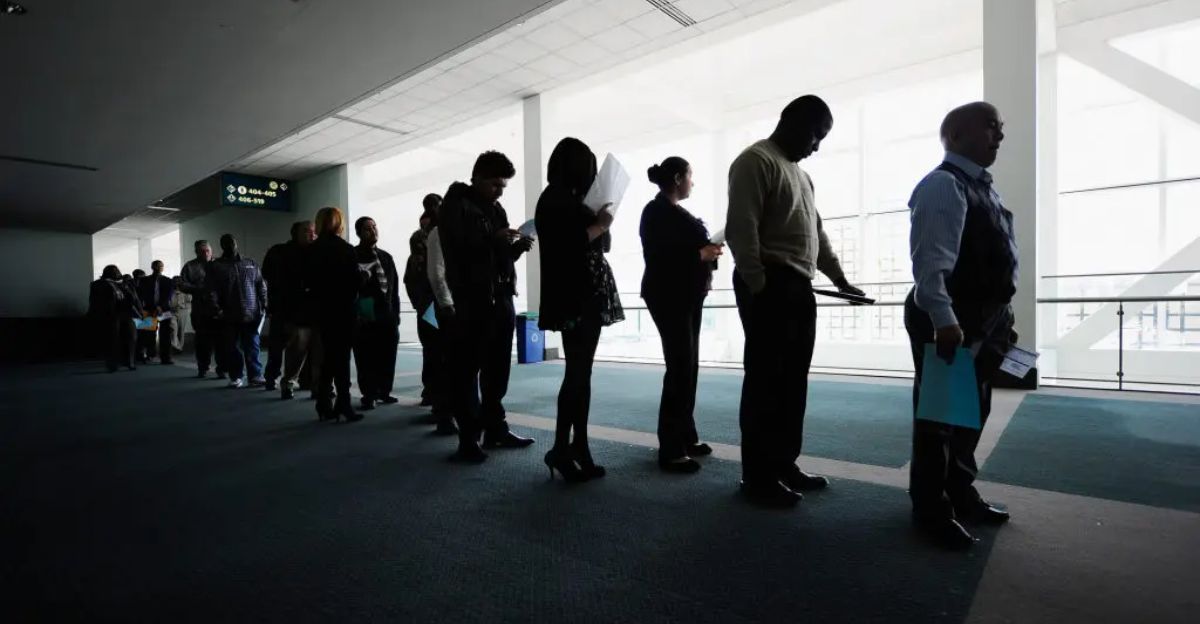
Corporate leaders are not only responding to present conditions; they are also positioning for what they fear could come next. Andy Challenger of Challenger, Gray & Christmas says employers are “bracing and reacting” to policy uncertainty and broader economic headwinds. That means some are reducing staff before demand has fully weakened, effectively treating layoffs as insurance against a more difficult 2026.
This shift shows up clearly in the year’s numbers. A 54% jump in announced cuts is not a modest adjustment; it suggests a rapid change in strategy from growth to preservation. Analysts describe a straightforward pattern: when companies stop growing, they tend to pull back, and workforce reductions follow. In many boardrooms, survival and profitability now outweigh expansion as priorities, turning staff reductions into a standard response rather than an emergency tactic.
The ripple effects of that change are widespread. Sectors once thought to be relatively insulated from downturns, including parts of healthcare, finance and technology, are also trimming head counts. Human resources specialists report that long‑standing assumptions about “safe” occupations are being revisited, and that traditional approaches to building a stable career are under pressure. In this environment, no single job title or industry offers guaranteed protection.
Navigating a Reshaped Labor Market

For individual workers, the current landscape is reshaping financial advice and planning. Instructors such as Alex Beene of the University of Tennessee at Martin argue that understanding personal finance has become a basic survival skill. The familiar guidance to build an emergency savings cushion is taking on new urgency as hundreds of thousands of people lose their jobs month after month. Broken down, the 1.17 million cuts announced over 11 months in 2025 equal roughly 106,400 jobs lost every month—an ongoing shock rather than a one‑time event.
Financial advisor Kevin Thompson, CEO of 9i Capital Group, warns that if affordability problems persist into 2026, prospects for a quick labor rebound are dim. Companies already operating in “survival mode” are likely to maintain a cautious stance, especially if higher borrowing costs, weaker consumer spending and AI‑driven efficiencies continue to pressure margins. In that setting, many employers may seek leaner staffing models even when growth resumes.
The stakes for households and the broader economy are significant. If job insecurity, high housing costs and restrained spending persist, the current pattern of steady layoffs could harden into a longer‑term restructuring of the labor market. For now, workers and businesses alike are adjusting to an environment in which adaptability, financial resilience and continuous skill development are becoming central to staying afloat in an evolving world of work.
Sources:
Challenger, Gray & Christmas. November 2025 Job Cuts Report.
Reuters. “US planned job cuts fall 53% in November, Challenger says.” December 4, 2025.
NBC News. “Layoff announcements just hit the highest level since the pandemic.” December 4, 2025.
Federal Reserve Bank of New York. Consumer Sentiment Survey. 2025.
Trading Economics. United States Challenger Job Cuts Data.