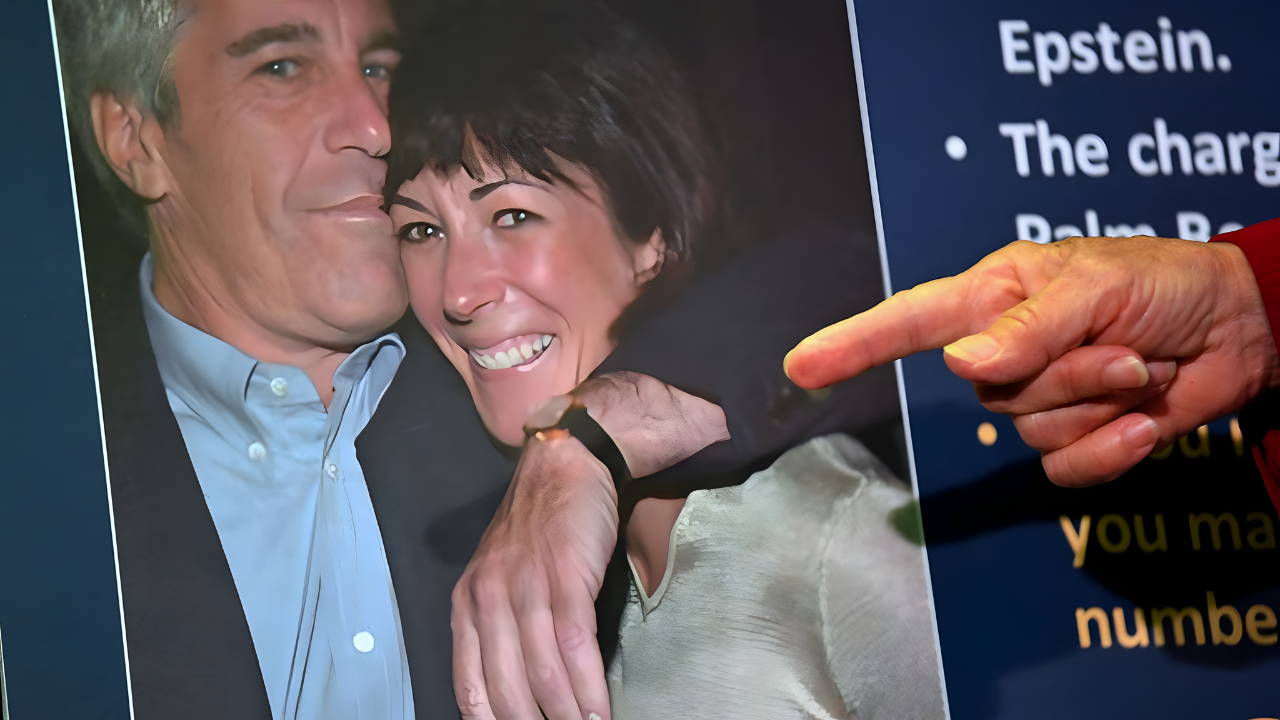
The disclosure of hundreds of emails between Goldman Sachs’ top lawyer and Jeffrey Epstein is forcing a rare public examination of where legal representation ends and complicity may begin. A newly unsealed privilege log suggests that for years, Kathryn Ruemmler, now Goldman’s Chief Legal Officer and formerly White House Counsel under Barack Obama, quietly advised the convicted sex offender on how to fend off sex trafficking lawsuits, even as her current employer and former law firm insist he was not her client.
Epstein’s Network and a Lawyer’s Role

From October 2014 to June 2019, Ruemmler exchanged roughly 277 emails with Epstein, according to a 513-page privilege log unsealed in December 2024. Those messages are designated as attorney‑client communications, even though Latham & Watkins, where Ruemmler worked at the time, previously said Epstein was not a client. In a 2023 interview with the Wall Street Journal, she stated, “I did not represent him.” The log’s volume and classification now underpin an effort by victims’ lawyers to break through attorney‑client protections and examine how Epstein coordinated his defense against sexual abuse claims.
During this period, Goldman Sachs was growing as one of the world’s largest financial institutions, employing about 46,500 people with a market capitalization around $249 billion. Ruemmler arrived at the bank in 2020, after serving as White House Counsel and later as a powerful partner and co‑chair at Latham & Watkins. The emails, kept from public view for years, indicate a sustained relationship with Epstein that went beyond occasional legal advice and coincided with a critical phase of his exposure to trafficking litigation.
Contradictions and Expanding Scrutiny

Latham & Watkins’ public assertion that Epstein “wasn’t a client” sits uneasily beside hundreds of records labeled as attorney‑client communications. For victims’ lawyers, that contradiction is central. If a court finds that Epstein was effectively receiving formal legal counsel, they may argue those emails helped him evade accountability and shield associates, raising the possibility that elite attorneys played a role in enabling a known offender.
A congressional subpoena in November 2024 released about 100 of Ruemmler’s emails with Epstein. Those messages showed a relationship that extended into personal territory: exchanges over career moves, real estate, introductions to influential contacts, and commentary on politics, including criticism of the Trump administration. Such discussions, critics say, blur the line between professional representation and a broader alliance, strengthening arguments that attorney‑client privilege should not automatically apply across the entire correspondence.
Timeline, Executors, and Ethical Tensions

Ruemmler left the White House in mid‑2014 and soon returned to Latham & Watkins. By October of that year, her email correspondence with Epstein began. In January 2019, months before his arrest, Epstein named her as a backup executor in his will. He was arrested in July 2019 on federal sex trafficking charges and died in jail in August 2019. To victims’ lawyers, that sequence underscores how trusted he considered Ruemmler at a time when his legal risks were intensifying.
Epstein had pleaded guilty in 2008 to soliciting an underage girl for prostitution and served 13 months in jail. By the time Ruemmler’s emails began, he was already a convicted sex offender facing public allegations of serial abuse. Court filings in the U.S. Virgin Islands accuse Epstein’s longtime associates and co‑executors Darren Indyke and Richard Kahn of managing more than 140 bank accounts, arranging sham marriages, and directing millions in payments to women, conduct described by the territory’s attorney general as the work of “indispensable captains” of the “Epstein Enterprise.” Their decision, as co‑executors of the estate, to assert privilege over Ruemmler’s emails is now being tested against claims that they are themselves deeply entangled in the misconduct.
Victims’ lawyers argue that any advice Ruemmler provided to respond to trafficking claims could fall under the crime‑fraud exception, a doctrine that removes attorney‑client protection when communications are used to further criminal activity. To prevail, they must show that Epstein continued to commit sex trafficking and that the legal guidance he received was aimed at shielding that activity rather than addressing past, fully concluded conduct. If a court agrees, the 277 emails could become discoverable, offering new detail on how Epstein coordinated legal strategy, what his advisers knew, and when they knew it.
Institutional Stakes and a Crime‑Fraud Test Case
The legal confrontation unfolds against a backdrop of large financial and institutional settlements. About 150 victims have received roughly $121 million from Epstein’s estate‑backed fund. JPMorgan Chase paid $290 million, Deutsche Bank $75 million, and the U.S. Virgin Islands reached a $105 million settlement plus half the proceeds from the sale of Epstein’s private island, Little St. James, bringing documented payouts to at least $666 million. Goldman Sachs, by contrast, has not been found liable and faces no known financial penalties linked to Epstein.
Yet reputational questions persist. On November 19, 2025, Goldman CEO David Solomon publicly backed Ruemmler, calling her “an excellent lawyer” whose guidance the firm relies on daily. The bank emphasizes that her involvement with Epstein predates her 2020 arrival. Nevertheless, some employees have told reporters they felt misled by how her Epstein connections were initially explained, suggesting internal unease even without a direct financial link.
For Latham & Watkins, which generated about $7 billion in revenue in 2024 and employs nearly 3,950 lawyers, the risk is professional rather than monetary. Public claims that Epstein was not a client now sit alongside a detailed privilege log indicating hundreds of attorney‑client emails. Partners whose average compensation is reported at roughly $7.1 million could face disciplinary or reputational consequences if courts conclude the firm misrepresented its relationship with him or misused privilege to block disclosure.
In December 2024, attorney Sigrid McCawley, who represents numerous Epstein victims, filed a motion in U.S. Virgin Islands court challenging what she called “overbroad privilege assertions refusing to produce critical information.” Her legal team is pressing to apply the crime‑fraud exception to Ruemmler’s emails, contending that they concern legal strategy for ongoing trafficking claims rather than only historical issues. The push has taken on additional emotional weight since the death by suicide of Virginia Giuffre, one of Epstein’s most prominent accusers, on April 25, 2025. She had spent years pressing for transparency about Epstein’s network, but the emails remained sealed during her lifetime.
The outcome of the privilege fight will resonate far beyond one estate. A ruling that exposes communications between a former White House Counsel, a global law firm, and a convicted sex offender could reset expectations about how far attorney‑client secrecy extends when alleged criminal conduct is ongoing. For victims, unsealing the emails might finally illuminate the architecture of Epstein’s operation and the role played by trusted advisers. For the legal profession, the case poses a direct challenge to long‑standing practices around sensitive clients, forcing a reassessment of how ethical duties intersect with powerful figures facing grave accusations.
Sources
“Epstein Estate Says Emails With Top Goldman Lawyer Should Be Protected,” Business Insider, December 3, 2025.
“A Look at How Kathy Ruemmler Advised Jeffrey Epstein’s Legal Defense,” CNN, December 11, 2025.
“Understanding the Crime-Fraud Exception to the Attorney-Client Privilege,” South Carolina Law Review, October 22, 2023.
“Two of Epstein’s Closest Advisers Are Sued by His Victims,” New York Times, February 16, 2024.
“Jeffrey Epstein Accuser Virginia Giuffre Dies by Suicide,” BBC News, April 25, 2025.
“U.S. Virgin Islands Attorney General Settles Sex Trafficking Case,” U.S. Virgin Islands Department of Justice, November 30, 2022.