
The world’s oceans entered uncharted territory in 2024, with heat levels rising so sharply that long-standing expectations about gradual warming no longer fully apply. Data compiled by the World Meteorological Organization (WMO) and partner institutions show that both surface waters and the upper layers of the sea absorbed record amounts of energy, even as a small pocket of the deep Atlantic bucked the trend by cooling over several decades. Together, these findings highlight how rapidly the climate is changing, and how unevenly those changes can unfold below the surface.
Ocean Heat Surges to Record Levels

From 2023 to 2024, the heat stored in the upper global ocean jumped by 16 zettajoules, according to analyses led by the Institute of Atmospheric Physics and summarized by the WMO. That increase alone is estimated to be around 140 times larger than the world’s annual electricity production, underscoring the scale of energy the oceans are now taking up. Rather than a gentle step in a familiar upward march, monitoring networks registered this as a sharp escalation.
The oceans act as the planet’s main heat reservoir, absorbing an estimated 91 percent of the excess energy trapped by greenhouse gases. Since 2016, global ocean heat content has set a new high every year, with no recent sign of the occasional plateaus or brief dips seen in earlier decades. Researchers warn that as the oceans continue to store more heat, the consequences will ripple outward through marine ecosystems, weather patterns, and ice sheets, with many of the impacts unfolding over decades or centuries.
Surface Temperatures and a Warming Atlantic
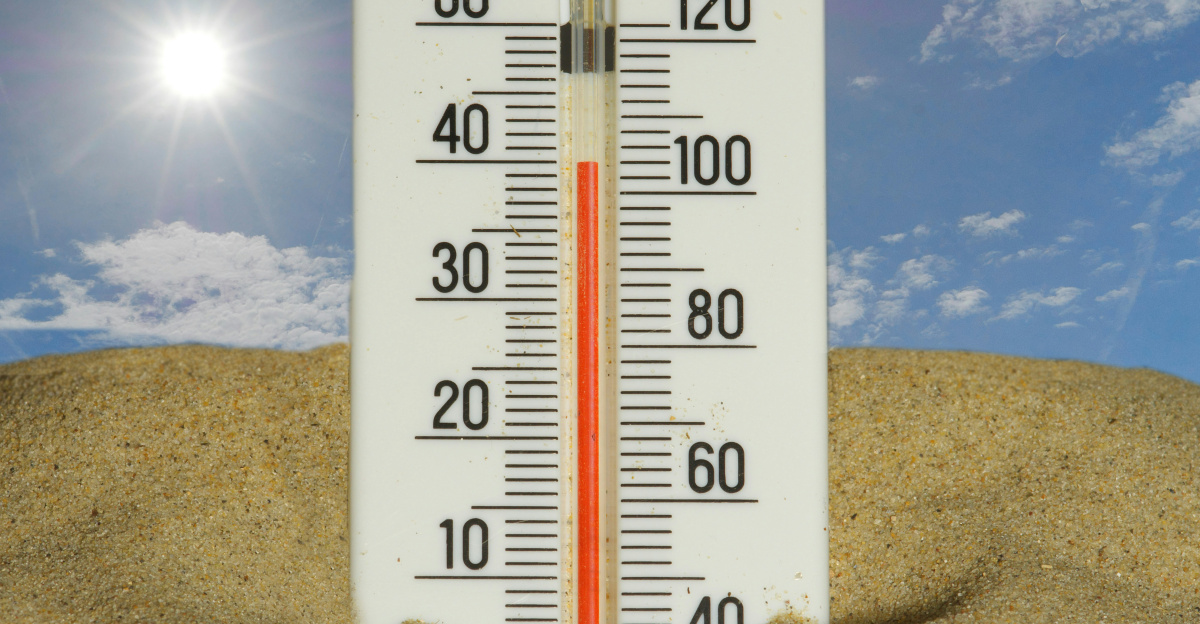
The year’s most striking snapshot came in December 2024, which ranked as the second-warmest December globally since satellite records began in 1991, according to the Ocean Temperature Bulletin. Average sea surface temperature across the globe reached 20.67 degrees Celsius that month. In some regions the numbers were even higher: parts of the North Atlantic recorded about 22.11 degrees Celsius, reinforcing concerns about persistent marine heat anomalies in that basin.
These unusually warm surface conditions raise questions about how heat is moving through the water column and interacting with the atmosphere. Scientists are examining whether the recent surface spikes are tied to changes in large-scale circulation, shifts in wind patterns, or other mechanisms that could amplify or dampen future warming. At the same time, the data feed into seasonal and longer-term forecasts, since warmer seas can influence storm formation, rainfall patterns, and the likelihood of extreme events.
A Cooling Signal in the Deep Atlantic

Against this backdrop of record surface and upper-ocean warmth, a smaller but significant signal has emerged in the deep subtropical North Atlantic. At a monitoring latitude of 26.5 degrees north, temperatures at depths greater than 2,000 meters have been cooling at a rate of about 0.2523 degrees Celsius per 40 years, based on four decades of hydrographic measurements reported in Nature Climate Communications. This pattern stands in contrast to the global average, where deep waters are generally warming.
The cooling is not a recent surprise but the delayed imprint of changes that began farther north in the subpolar Atlantic between the 1970s and 2000s. During that period, increased influxes of fresh meltwater and shifts in precipitation altered the density structure of surface waters, creating a cold, fresh anomaly. As these lighter waters participated in deep-water formation processes, the anomaly was carried into the ocean’s interior and gradually advected southward. It took roughly a decade to reach the 26.5-degree north section, where it now appears as a localized cooling signal in a broader warming ocean.
This phenomenon affects less than a tenth of one percent of the global ocean volume, but it demonstrates how regional processes can leave long-lasting fingerprints at depth. It also illustrates why long-term, repeated measurements are necessary to distinguish short-term variability from enduring trends.
Monitoring Efforts and Scientific Coordination

Capturing these complex changes relies on a combination of satellite observations, drifting buoys, autonomous profilers, and ship-based surveys. One key effort is the Abaco 26.5-degree north hydrographic line, maintained by NOAA’s Atlantic Oceanographic and Meteorological Laboratory. For about 40 years, teams have conducted quarterly cruises along this transect, deploying conductivity–temperature–depth instruments to map the structure of the water column from the surface to the deep ocean.
These on-the-water measurements complement autonomous and space-based systems by providing high-accuracy profiles that can be repeated over long periods. They have been central to documenting the deep Atlantic cooling signal and validating broader assessments of ocean heat content.
At a global scale, agencies including the WMO, NOAA, NASA’s Goddard Institute for Space Studies, and the UK Met Office have pooled independent datasets to cross-check 2024 records. Despite using different instruments and analysis methods, their results converge on the same conclusion: ocean heat content and sea surface temperatures reached or approached record highs, reinforcing confidence that the observed changes reflect real physical shifts rather than measurement errors.
Ecosystems, People, and the Path Ahead
Rising ocean temperatures influence marine life from microscopic plankton to large fish and marine mammals. Warmer conditions can drive coral bleaching, shift species ranges, and disrupt food webs that support fisheries and coastal economies. At the same time, warmer seas contribute to sea-level rise through thermal expansion and can fuel more intense storms, compounding risks for low-lying communities.
The localized cooling in the deep Atlantic does not offset these global trends but adds nuance to them, showing how historical freshwater inputs and circulation patterns can shape conditions thousands of meters below the surface decades later. Understanding how such regional anomalies interact with the general warming of the oceans is now a priority for researchers seeking to refine climate models and improve projections.
As monitoring networks expand and multi-decade records grow, scientists expect to gain a clearer picture of how heat is redistributed within the ocean and how that, in turn, affects the atmosphere and ice sheets. These insights are likely to inform future climate policy, coastal planning, and marine management. The stakes extend from the stability of weather and climate systems to the resilience of ecosystems and communities that depend on a predictable ocean. While the latest findings underscore the urgency of limiting further warming, they also demonstrate the value of sustained observation and coordinated research in navigating an era of rapid environmental change.
Sources:
World Meteorological Organization – “WMO confirms 2024 as warmest year on record at about 1.55°C above pre-industrial level” – wmo.int
Institute of Atmospheric Physics, Chinese Academy of Sciences – “Ocean heat content study by 54 scientists from 7 countries” – Advances in Atmospheric Sciences
NOAA National Centers for Environmental Information – “Assessing the Global Climate in 2024” – ncei.noaa.gov
Mercator Ocean International – “Ocean Temperature Bulletin – December 2024” – mercator-ocean.eu
Nature Climate Communications – “Deep ocean cooling and freshening from Subpolar North Atlantic climatic signals imprint deep subtropical waters” by Chomiak et al. – nature.com
NOAA Atlantic Oceanographic & Meteorological Laboratory – “New Insights into Deep Ocean Cooling in the Atlantic” – aoml.noaa.gov