
It starts quietly. No news alerts. No government warnings. But throughout 2025, American employers have been systematically cutting jobs at a pace not seen since the pandemic. The number is staggering: 1.17 million job cuts announced through November, a 54% surge from last year.
According to Challenger, Gray & Christmas, this is the highest layoff level in five years—a historic threshold that signals a fundamental shift has occurred in the American labor market. What happened to the “strong economy” we keep hearing about?
November’s 71,321 Cuts: When One Month Tells the Whole Story
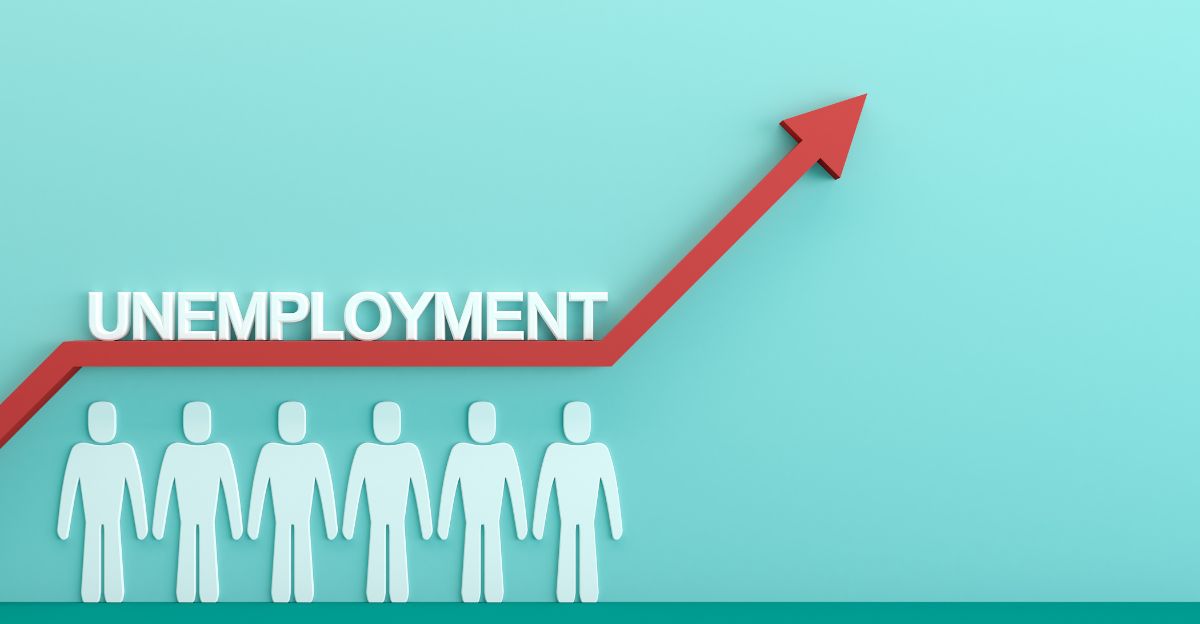
A single month tells the tale. In November 2025, U.S. employers announced 71,321 job cuts—a 24% jump from November 2024’s 57,727. This is the highest November figure since 2022, a year defined by recession fears and rapid layoffs. What makes this number truly alarming is its rarity: job cuts exceeding 70,000 in a single month have occurred only three times since 2008—in 2002, in 2008, during the financial crisis, and now.
When a metric only spikes in crisis years, the message is unmistakable: we are living through a labor market crisis masquerading as normal economic adjustment.
Layoffs Return to Pandemic-Era Levels

The cumulative picture is even more dire. Through November 2025, the 1.17 million job cuts announced mark the highest total since 2020, when the global pandemic triggered mass unemployment and economic shutdown. Excluding that anomaly, 2025 is witnessing the most severe job shedding since 2009, the depths of the financial crisis.
For workers, this comparison carries enormous weight: the jobs they held were supposed to be safe in a “recovering” economy, yet the numbers suggest we are witnessing something closer to a structural collapse than a temporary correction.
A Rare and Ominous Threshold

Since 1993, job cuts through November have surged past the 1.1 million mark only six times. Think about that. Over the past three decades, this threshold has been breached only during the most severe economic periods. 2025 is now one of those rare, dark years.
The data is a blunt admission: the American labor market is no longer in a gradual slowdown, but in a freefall that can only be triggered by extreme economic stress.
The Post-Pandemic Hiring Binge

What led to this crisis? The answer lies in corporate overcorrection. In 2021 and 2022, companies aggressively hired, convinced that demand would remain permanently elevated. They were wrong. Now, facing slower consumer spending and uncertain futures, they are cutting with equal aggression.
Michael Ryan, finance expert and founder of MichaelRyanMoney.com, captures the severity: “If you work, job security is shakier than it’s been in years, even in fields that have historically weathered downturns.” This admission reveals that the pain is not isolated to vulnerable sectors but has spread across the entire economy.
Consumer Pessimism Hits a Two-Year High

The job cuts are not happening in a vacuum. They are happening because Americans are terrified. A Federal Reserve Bank of New York poll shows that 38.97% of Americans expect to be worse off financially next year—the highest level of pessimism since November 2023. That means more than one in three Americans feels their financial life is about to deteriorate.
This is not abstract economic theory; it is the lived reality of millions bracing for impact. Families are tightening their spending, and businesses sense the pullback; they respond by cutting more jobs. The cycle accelerates.
AI Is Here

The rise of artificial intelligence has moved from a future threat to a present reality, driving immediate layoffs. Companies are deploying automation and AI tools not as pilots but as replacements. This is not speculation; it is baked into the 1.17 million cuts already announced.
The structural implication is sobering: many of these jobs will not return. Unlike previous downturns, where rehiring eventually came, the AI-enabled cuts may represent permanent workforce reductions.
When Both Your Paycheck and Your House Feel Unstable

For American families, the timing could not be worse. The 1.17 million job cuts are occurring amid stubbornly high housing costs, persistent inflation, and interest rates that remain elevated. A worker who loses their job does not just lose their salary; they risk their ability to pay their mortgage or rent.
With nearly 40% of Americans already pessimistic about their finances, the addition of actual job loss could tip millions into crisis. The squeeze between job insecurity and housing unaffordability is tightening, and households caught in the middle have nowhere to turn.
Employers Are Bracing
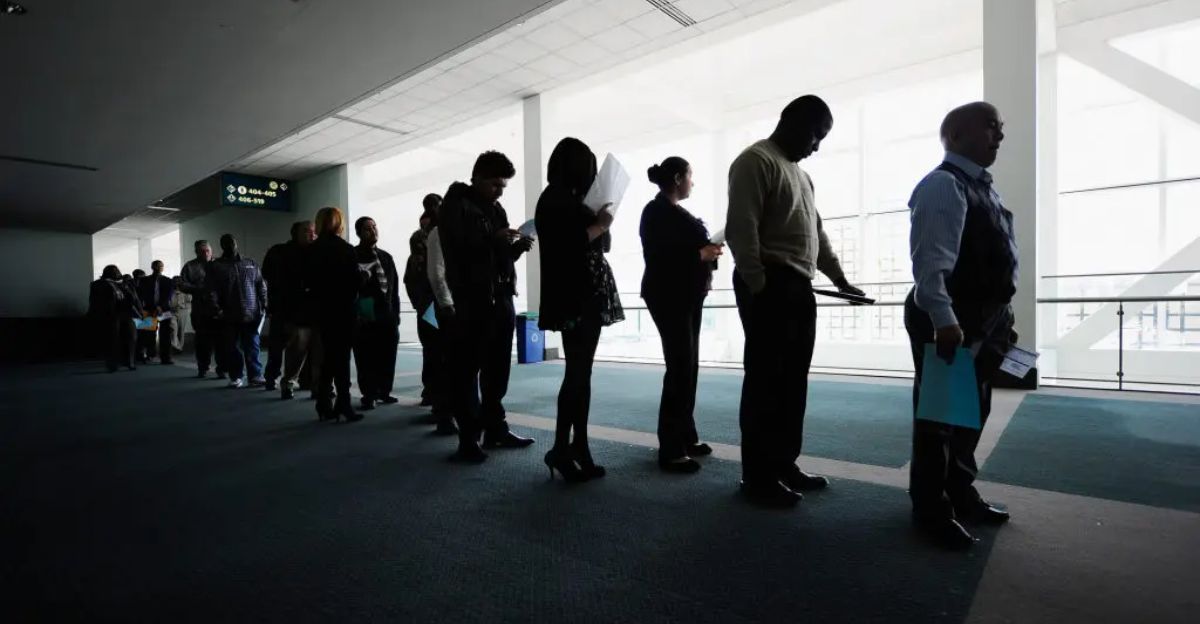
Here is what separates 2025 from a normal slowdown: companies are cutting jobs before demand fully collapses. According to Andy Challenger, workplace expert and chief revenue officer for Challenger, Gray & Christmas, employers are “bracing and reacting” to policy uncertainty and economic headwinds.
They are not laying off workers because they have to; they are laying them off because they fear what comes next. This preemptive retreat suggests corporate leadership has already given up on a strong 2026, building in cuts to prepare for further deterioration.
When Growth Stops, Cutting Begins
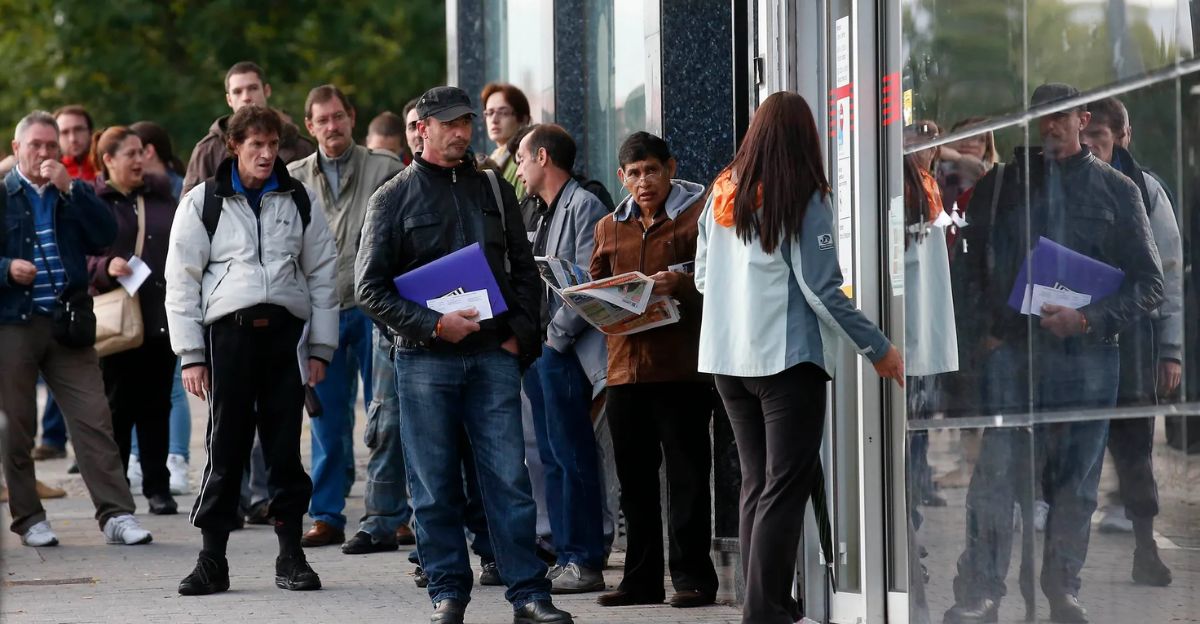
Corporate strategy has flipped from expansion to survival. Analysts note a simple equation: when companies are not growing, they are retreating, and when they retreat, they cut staff. The 54% year-over-year increase in job cuts reflects this shift in mindset.
Growth is no longer the goal; survival is. This defensive posture pervades boardrooms across America, turning layoffs from an emergency measure into standard operating procedure.
The Strong Labor Market
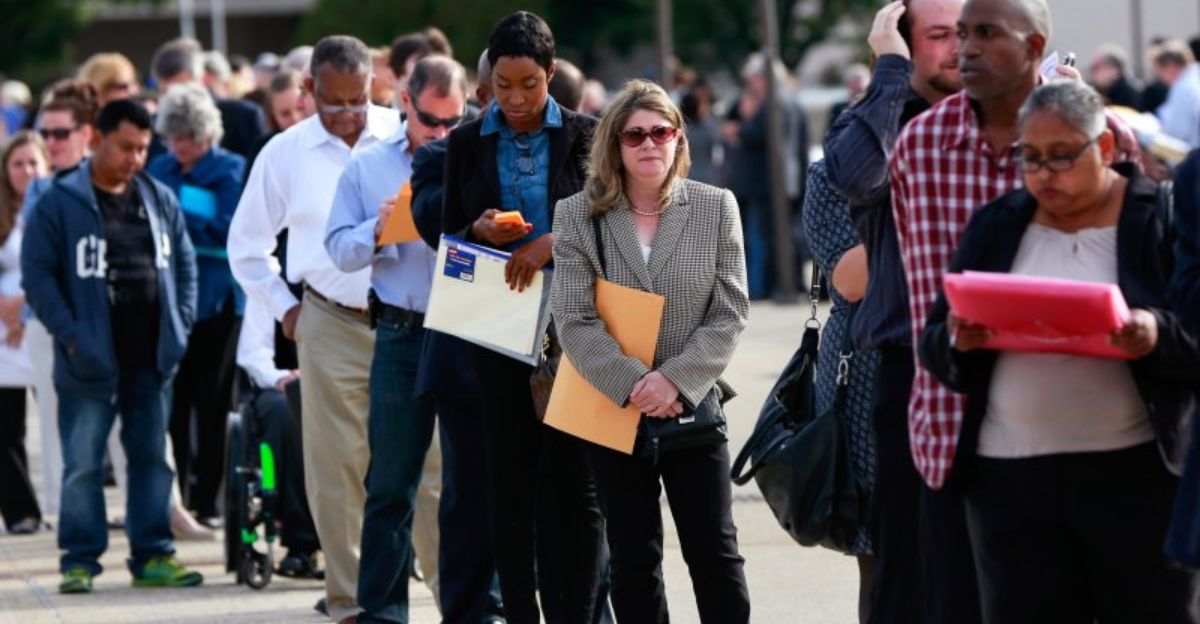
For months, headlines proclaimed a “strong labor market,” but the 1.17 million cuts expose this narrative as wishful thinking. The resilience that officials touted masked profound weakness underneath. Now that the mask has slipped, the contrast is jarring.
Workers who believed they were safe, who negotiated raises and changed jobs confidently, are now facing sudden terminations. The betrayal of that broken promise compounds the shock.
Job Security Just Got Worse

The scale of the shift is what catches people off guard. A 54% increase is not a gradual deterioration; it is a sudden rupture. Families that felt reasonably secure six months ago are now facing termination notices. The speed of the change—from “good job market” to “massive layoff wave”—leaves people scrambling.
Financial advisor Kevin Thompson, CEO of 9i Capital Group, emphasizes the urgency: “If those same consumers continue to struggle with affordability in 2026, there is not much optimism for a reversal.”
Even the “Recession-Proof” Jobs Are Disappearing

Sectors once considered immune to downturns—such as healthcare, finance, and even some tech roles—are shedding workers at alarming rates. The universality of the cuts suggests that this is not a sector-specific problem, but a wholesale economic contraction.
Bryan Driscoll, an HR consultant, observes that no job title guarantees security anymore. The old career playbook—find a stable field, stay for decades, retire with a pension—is obsolete.
The Emergency Fund Is Not Optional Anymore

Financial literacy experts are changing their tone from cautionary to critical. Alex Beene, a financial literacy instructor at the University of Tennessee at Martin, emphasizes that in today’s economy, understanding money is a vital survival skill, not a luxury.
The advice to build emergency savings is no longer a suggestion for “someday”; it is a mandate for now. Workers must act immediately to shore up their finances before a layoff hits them.
Roughly 106,400 Jobs Lost Every Single Month
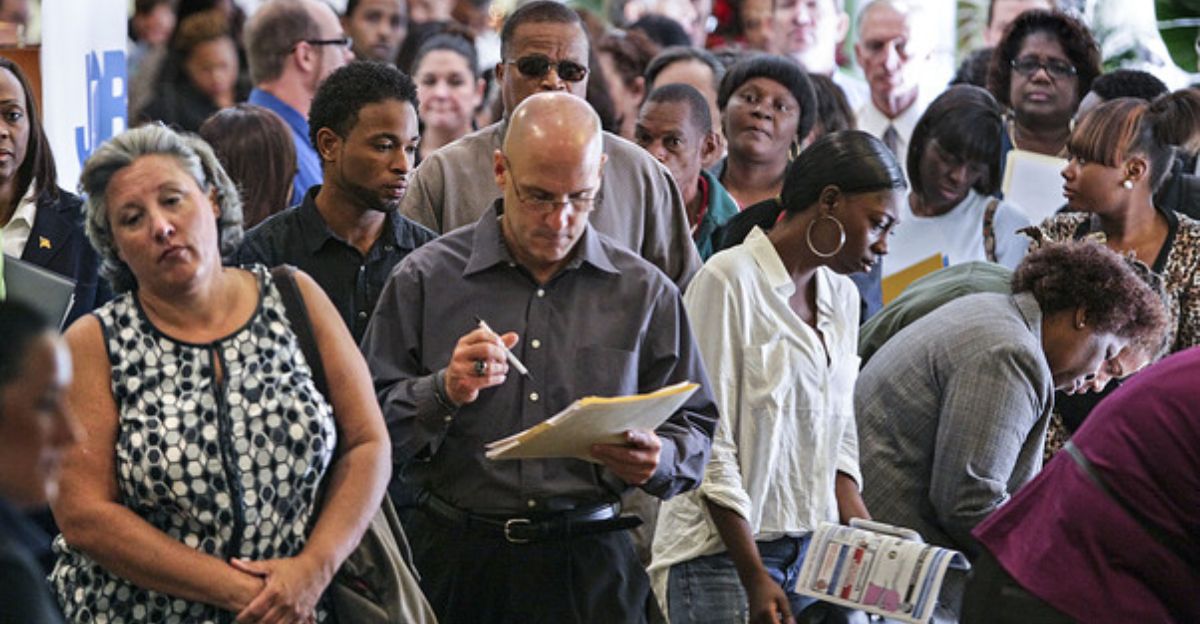
When you break down the 1.17 million cuts across eleven months of 2025, the reality becomes even more visceral: approximately 106,400 Americans are losing their jobs every month, month after month. That is not a one-time shock; it is a relentless wave.
Unlike a sudden, massive layoff that shocks the system and forces adaptation, this grinding, persistent loss erodes confidence and depletes savings across the entire workforce.
Companies Are in Survival Mode

The aggressive nature of these cuts signals that U.S. companies view their situation as existential, not cyclical. They are not trimming; they are gutting. Facing stubborn interest rates, cooling consumer demand, and the impact of AI-enabled efficiencies, businesses have adopted a survival mindset.
Shareholders demand profitability over growth. Executives prioritize quarterly earnings over workforce stability. In survival mode, employees are viewed as costs to be minimized, not assets to be invested in.
If Affordability Doesn’t Improve

The outlook for next year hinges on a single factor: can consumers maintain their spending while facing job insecurity and housing costs? The answer is almost certainly no. As the 1.17 million job cuts deplete savings and reduce paychecks, consumer spending is expected to contract further.
Businesses will respond with more cuts. The cycle becomes self-reinforcing. Kevin Thompson warns that if affordability pressures persist into 2026, “there is not much optimism for a reversal.”
Not Just a Cyclical Dip
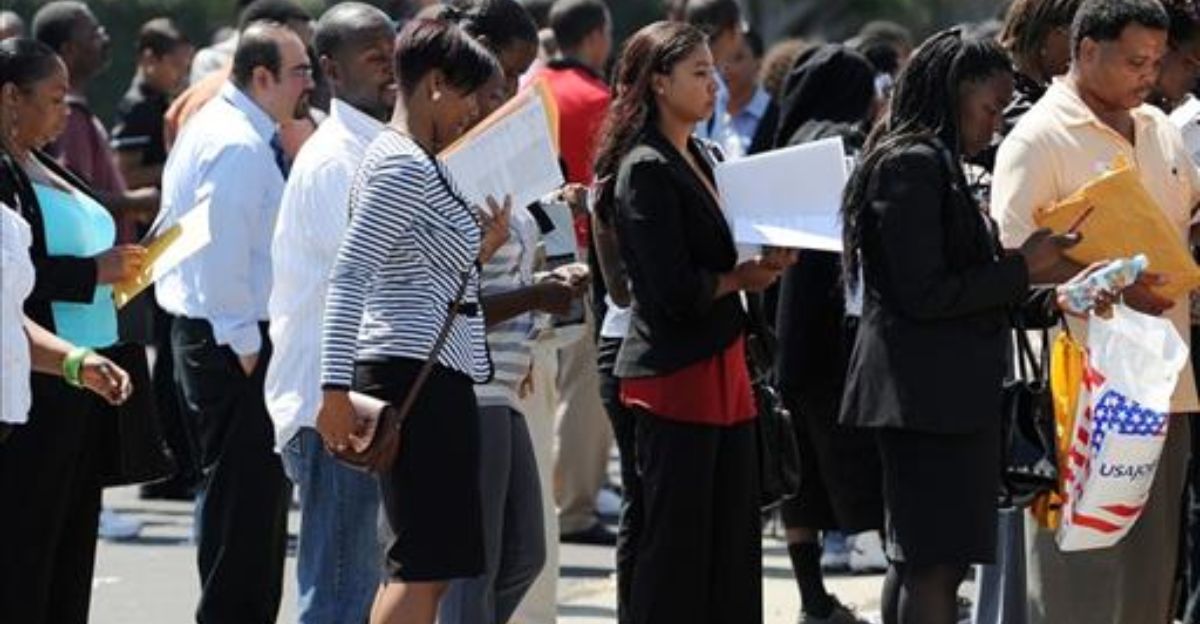
This is the critical insight: 2025’s layoffs likely represent a structural realignment of the American labor market, not a temporary downturn. The involvement of AI, the span across sectors, the preemptive nature of cuts—all suggest that companies are fundamentally rethinking their workforce needs.
Many of the 1.17 million jobs eliminated this year are unlikely to return when the economy resumes growth. Instead, fewer workers will handle more work, supported by technology.
The New Reality

In the aftermath of 1.17 million cuts and widespread financial pessimism, a new truth has crystallized for American workers: there is no such thing as permanent job security. Tenure, loyalty, and hard work no longer guarantee stability.
Instead, workers must cultivate agility—the ability to learn new skills, pivot to new roles, and adapt faster than the market shifts. Resilience—the ability to weather setbacks, maintain savings, and avoid panic—is now a core survival skill.
The Clock Is Ticking

As 2025 closes with 1.17 million jobs lost and 38.97% of Americans expecting financial decline, the message is unmistakable: do not wait for the crisis to hit your household. Build your emergency fund now. Diversify your income if possible. Upskill aggressively. Pay down debt. Network constantly.
The job security your parents’ generation took for granted is gone, replaced by an economy that demands constant vigilance and preparation. The workers who act now will be far better positioned than those who wait until the layoff notice arrives. The question is not whether your job is at risk—it is whether you will be ready when it is.
Sources:
Challenger, Gray & Christmas. November 2025 Job Cuts Report.
Reuters. “US planned job cuts fall 53% in November, Challenger says.” December 4, 2025.
NBC News. “Layoff announcements just hit the highest level since the pandemic.” December 4, 2025.
Federal Reserve Bank of New York. Consumer Sentiment Survey. 2025.
Trading Economics. United States Challenger Job Cuts Data.