
Long-held beliefs about the abilities and social complexity of prehistoric humans are called into question by the discovery of the Blinkerwall, the oldest submerged stone wall in the world, in the Baltic Sea. This massive structure, which is nearly a kilometer long and buried about 21 meters below the surface off the Bay of Mecklenburg in Germany, is over 10,000 years old and dates back to the Stone Age.
It contradicts the widely held belief that intricate, large-scale construction only appeared after the introduction of settled agriculture. It is made up of about 1,700 stones, including 300 massive boulders that can weigh up to 142 tons. The wall most likely functioned as an advanced hunting device that guided reindeer to a designated killing area.
Historical Background and Findings

Students and researchers from the Leibniz Institute for Baltic Sea Research in Germany made the unintentional discovery of the Blinkerwall in 2021 while conducting a geophysical survey. They discovered a near-linear stone formation on the seafloor that was first believed to be natural using multibeam sonar technology.
The artificial origin of the structure was confirmed by subsequent dives and sediment analysis. According to the geological context, the site was constructed on dry land, but it is now underwater because of the rise of the Holocene sea level that followed the last Ice Age. By providing evidence of monumental construction nearly twice as old, the discovery upends the conventional chronology of megalithic architecture, which was previously focused on Neolithic Europe around 6,000 years ago.
Composition and Structure
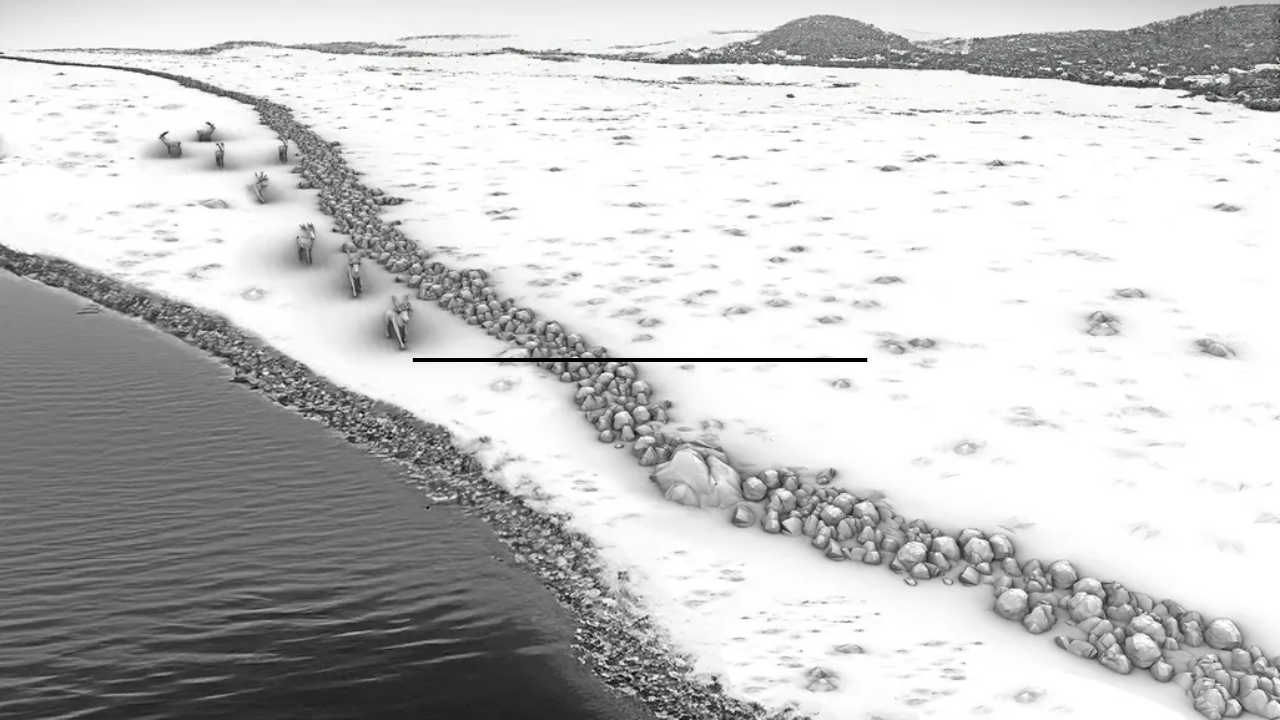
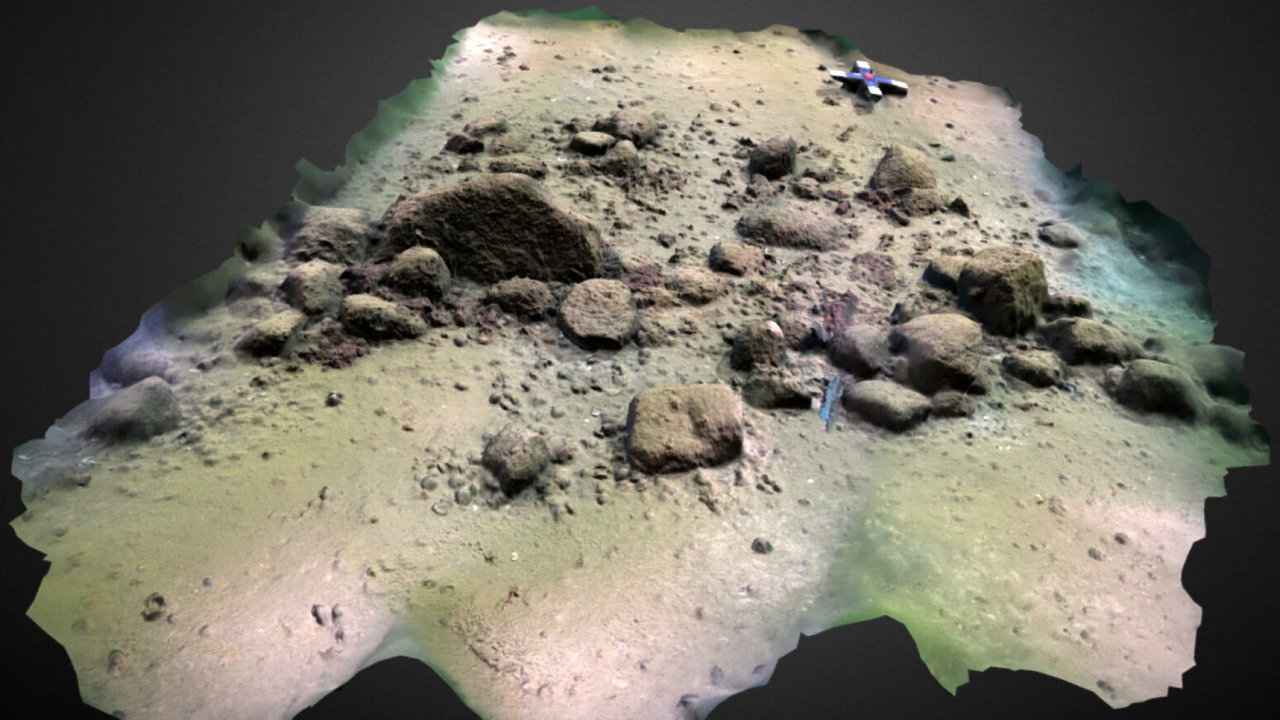
About 1,700 stones make up the Blinkerwall, with about 1,400 smaller stones, most of which are less than one meter tall, connecting about 300 enormous boulders, some of which weigh more than 140 tons. Surprisingly, the stones are arranged side by side instead of stacked, forming a continuous, curved barrier that is typically 0.5 meters high.
Because they are found at bends and curves, the large boulders probably provide structural stability. For a society that has historically been regarded as technologically limited, this deliberate placement demonstrates advanced knowledge of construction and landscape engineering. The wall’s nearly one-kilometer length is unheard of for hunter-gatherer communities during that time period.
Function and Goals
According to research conducted by geophysicist Jacob Geersen, the Blinkerwall was a large-scale hunting tool that forced herds of Eurasian reindeer into small areas so that early humans could capture them. It’s possible that the wall served as a “driving lane,” guiding animals toward bogs or lakes where hunters could more effectively kill them with bows and spears.
Ethnographic evidence on hunter-gatherer hunting tactics utilizing physical barriers is consistent with this functional interpretation. Larger, more stable human populations could have been supported by such infrastructure, which would have greatly increased the efficiency of food acquisition. This points to a deliberate use of landscape modification for resource management as well as survival, which reflects an early method of territorial control and knowledge transfer in these communities.
Challenges in Technology and Logistics
The fact that a nearly kilometer-long stone wall was built using enormous stones, some weighing 142 tons, without the use of metal tools or a wheel, begs serious questions regarding the technological and logistical prowess of these prehistoric peoples. Finding, transporting, and assembling such materials requires coordination, which suggests sophisticated planning that may involve leadership hierarchies or collective labor.
According to theories, hunter-gatherers may have used teamwork similar to later monumental constructions or taken advantage of the natural environment, moving stones with sleds, rollers, or watercraft. The size and accuracy call into question the idea that large-scale engineering is exclusive to settled agrarian societies, and they encourage a reexamination of the social complexity and inventiveness of prehistoric humans.
Archaeological and Preservation Techniques

The Blinkerwall has been fortunately preserved by the Baltic Sea’s submerged environment, which has prevented erosion and human interference that are common at terrestrial sites. Researchers can use a multidisciplinary approach that combines archaeology, marine geoscience, and geophysical surveying because of this exceptional preservation.
The wall and the paleo-landscape it was constructed on, which sediment dating estimates to be more than 10,000 years old, have been reconstructed with the aid of hydroacoustic imaging, sediment sampling, and diving expeditions. Although difficult, underwater archaeology is becoming more and more important in locating ancient sites that have been lost to sea level rise since the last glacial period.
Relevance to Prehistory

Early human societal models must be drastically revised in light of the Blinkerwall discovery, especially in light of hunter-gatherer cultures’ capacities. It proves that monumental constructions existed in some form among nomadic populations tens of thousands of years ago and did not wait for the advent of agriculture or sedentism. This changes our understanding of social complexity by showing how important territoriality, teamwork, and manipulating the landscape were to prehistoric life.
The discovery highlights the cognitive and cultural sophistication of early humans, bridging the gaps between evolutionary biology, anthropology, and archaeology. It might show how social hierarchies, technological advancement, and ecological adaptation have evolved over thousands of years, indicating that these characteristics predate traditional timelines.
Contrarian Views and Discussions
Despite the strong evidence supporting the Blinkerwall’s human origin, some skeptics advise caution and offer substitute natural formation theories, such as glacial deposits or geological processes. Numerous studies, however, have disproved these, emphasizing how the structure’s deliberate layout and placement defy natural phenomena. The wall’s exact purpose and dating are also up for debate; some argue that it serves purposes other than hunting.
The dispute reflects broader scholarly disagreements regarding the interpretation of scant prehistoric data, which are frequently skewed by conventional models that give preference to agrarian societies. In rewriting prehistory, these discussions highlight the value of interdisciplinary research, open-mindedness, and methodological rigor. As a result, the Blinkerwall serves as a focal point for developing archaeological theory and revising standards for determining the presence of prehistoric humans.
More General Archaeological Patterns
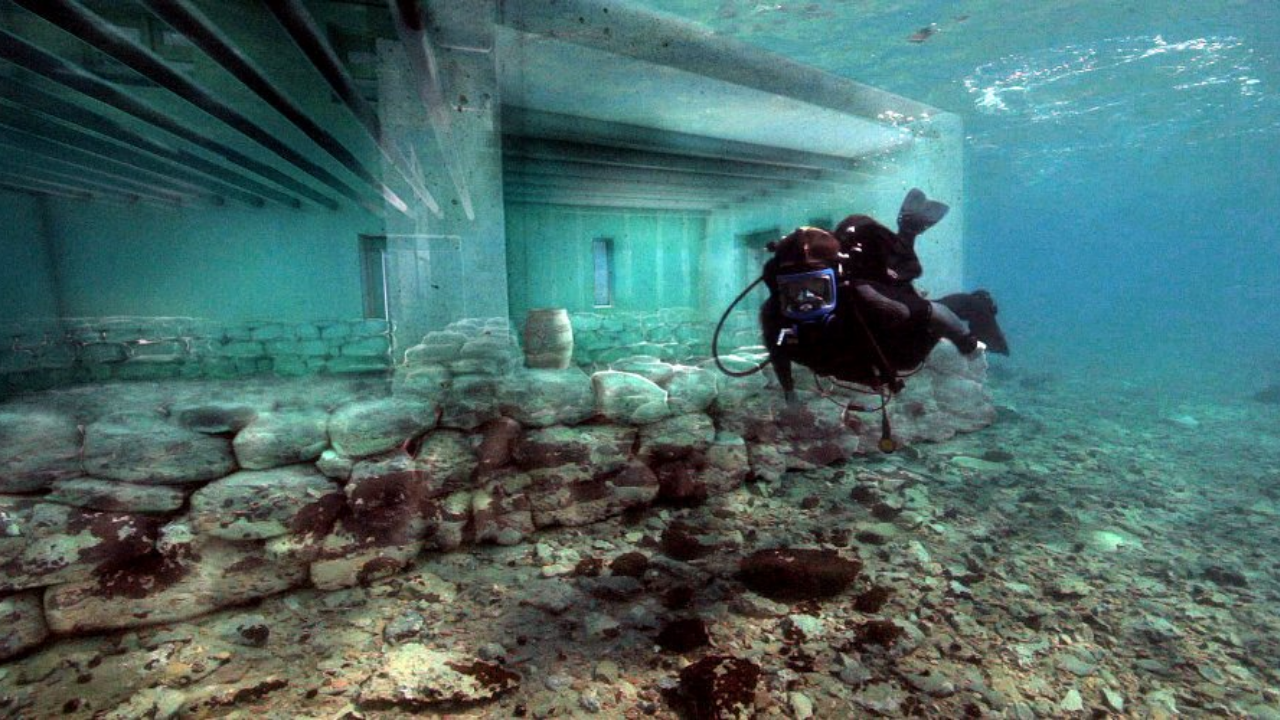
Submerged prehistoric sites have gained more recognition in recent years as important repositories of human history that were lost to post-Ice Age sea level rise. This is in line with a global trend toward marine archaeology and sophisticated remote sensing technologies that are revealing massive Stone Age structures like fish traps, ritual sites, and large enclosures. These findings are enhanced by the Blinkerwall, which shows how prehistoric people exploited waterways and coastlines.
It challenges Eurocentric Neolithic narratives by integrating with growing evidence of sophisticated hunter-gatherer societies in places like Scandinavia and North America. The increasing scientific agreement that pre-agricultural societies were capable of substantial social organization and landscape engineering is reflected in this pattern.
Sociocultural and Psychological Perspectives

The Blinkerwall’s construction suggests that Stone Age hunter-gatherers possessed ingrained psychological traits such as cooperation, planning, and environmental mastery. Communication, common objectives, and perhaps emergent leadership or ritual authority are necessary for such enormous endeavors in order to organize and maintain sizable crowds. This suggests more complex social networks with cultural traditions and knowledge transfer, challenging the idea that prehistoric people lived in isolated bands.
In addition to serving functional purposes, the wall may also display territorial or symbolic markers that convey group identity. By examining its sociocultural aspects, psychological theories regarding the genesis of social complexity and collective behavior in human history can be informed by insights into early human cognition, social bonding, and cultural evolution.
Opportunities for Multidisciplinary Research

The Blinkerwall site is a prime example of the need for interdisciplinary cooperation between geology, paleoecology, marine science, experimental archaeology, and archaeology. Unprecedented access to submerged sites is made possible by technologies like underwater robotics, sediment core analysis, and 3D imaging. Reconstructing historical human-environment interactions is made possible by combining these with ecological modeling and ethnographic analogies.
The discovery encourages communication between engineering and human sciences fields that study traditional building methods in resource-constrained environments. Innovative frameworks that explain the adoption of technology and social organization in prehistoric times are made possible by these synergies.
Undiscovered Aspects and Theories

The finding raises a number of intriguing but speculative theories, such as the potential existence of a second submerged wall beneath the sediment, which would indicate larger hunting or territorial structures. Beyond its practical use, it is also possible to investigate whether the Blinkerwall had any ritualistic or symbolic meaning. Could these structures have served as social rituals for early humans related to seasonal cycles or hunting success?
Another theory relates to coordinated ecological management, in which the wall exhibited early conservationist behavior by regulating not only the movement of prey but also the preservation of habitats. These concepts push the limits of archaeological interpretation and raise fresh queries regarding how prehistoric survival, culture, and environmental stewardship interacted.
“Model of Prehistoric Megastructures”
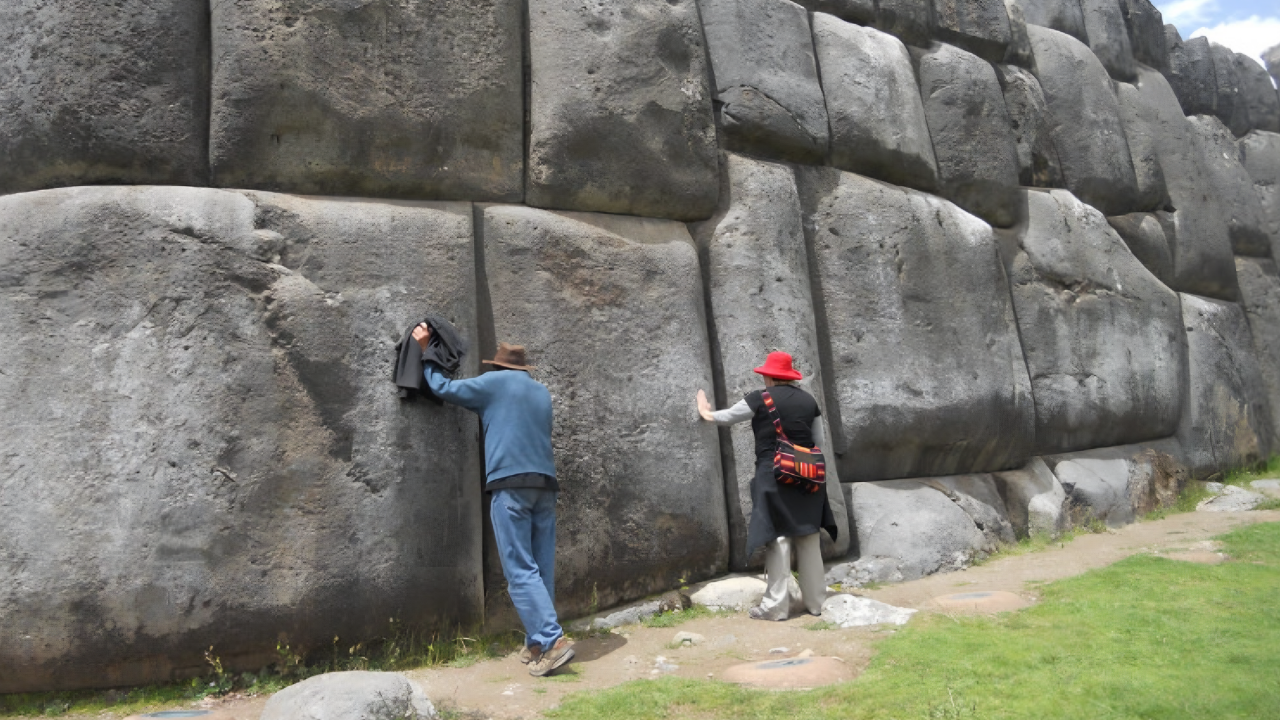
Provide a “Prehistoric Megastructure Model” that frames early monumental construction as a sign of social complexity and environmental adaptation in nomadic societies in order to contextualize the significance of the Blinkerwall. This method places more emphasis on transient but extensive infrastructure supporting ecological roles like hunting or territorial control than typical sedentary megalithic models.
The model incorporates theories of labor organization, social psychology, and ecological dynamics with data from archaeology. It reinterprets “megastructure” to include strategic, utilitarian landscape alteration by hunter-gatherers, going beyond permanence or ritual. This framework offers a lens through which to locate and interpret similar sites around the world, helping to explain why such constructions may appear abruptly in some contexts and vanish with environmental changes.
Possible Effects on Associated Industries and Fields

Numerous disciplines, including anthropology, climate science, heritage management, and even tourism, may be impacted by the discovery of Blinkerwall. It contributes to models of human resilience and adaptability pertinent to current climate challenges by exposing early sophisticated landscape use. Submerged sites may be given priority by archaeological heritage sectors, which could drive advancements in virtual reality reconstruction and underwater preservation.
The discovery might stimulate public curiosity about deep prehistory, which could have an impact on media storytelling, education, and museum curation, all of which could promote cultural tourism in the Baltic region. Furthermore, biomimetic design and sustainable architecture, which prioritize the use of low-impact materials and natural environments, can benefit from knowledge of ancient building methods.
Conclusion
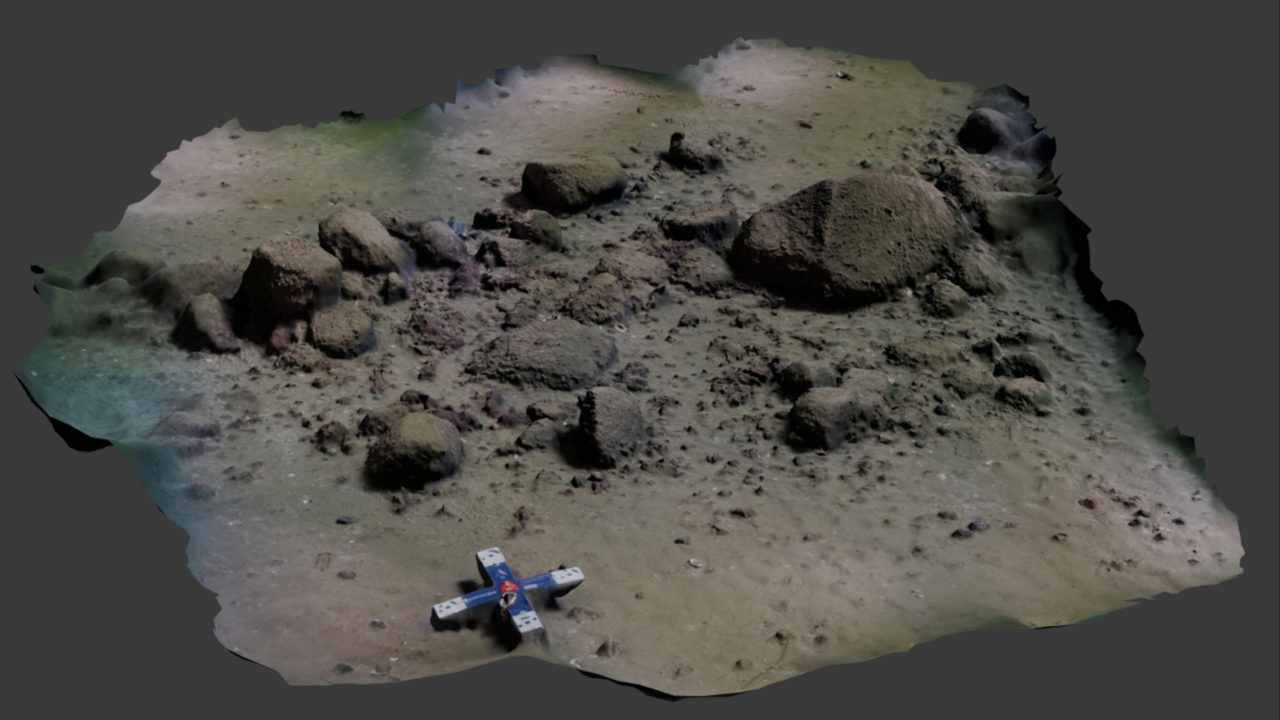
An important turning point in our knowledge of human prehistory has been reached with the discovery of the Blinkerwall, the oldest submerged stone wall in the world. It forces a reexamination of the technological capabilities, social structure, and interaction with their surroundings of prehistoric hunter-gatherers. More than just a massive hunting implement, it represents early humans’ cultural and cognitive abilities to plan for long-term survival, collaborate on large-scale projects, and adjust to changing environmental conditions.
This megastructure challenges long-held beliefs about the beginnings of civilization and emphasizes how much more can be found beneath our oceans as the scientific community continues to investigate and contextualize it. Finally, the Blinkerwall inspires future interdisciplinary and creative approaches to archaeology and heritage conservation while enhancing the collective narrative of humanity’s ancient past.