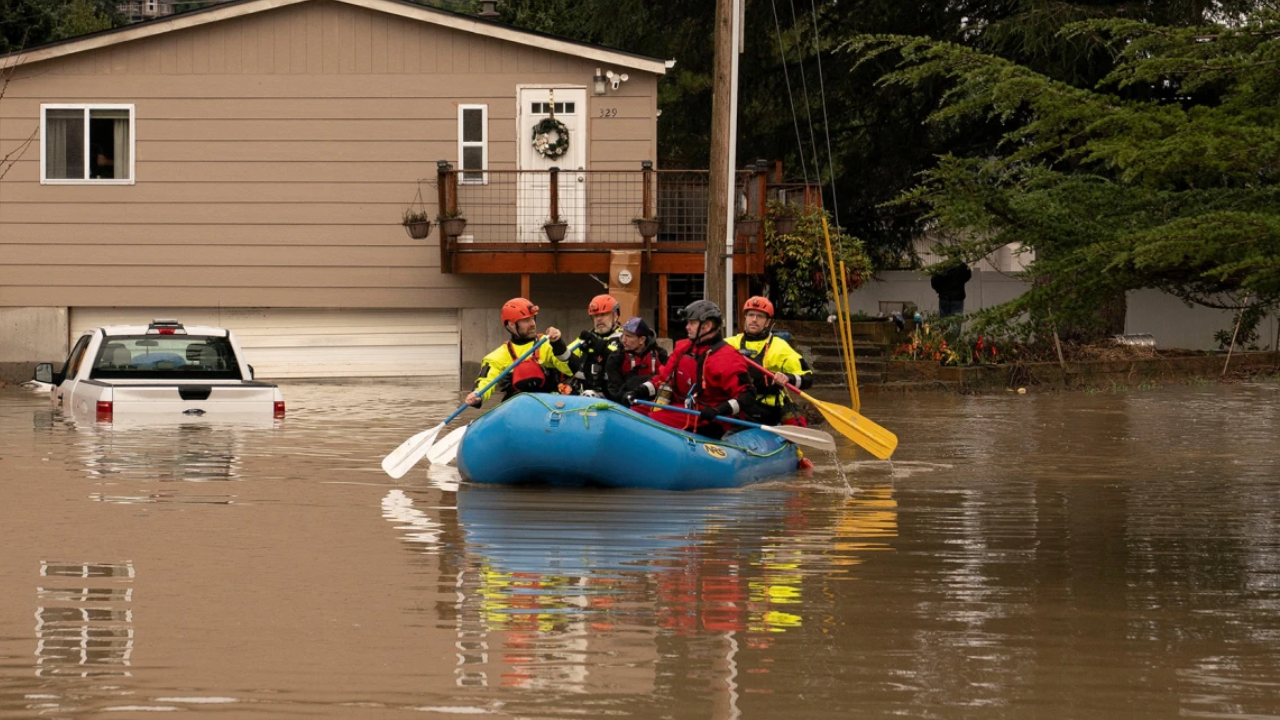
An intense atmospheric river has unleashed what officials describe as western Washington’s most severe flooding in nearly 40 years, inundating communities from coastal towns to mountain valleys. Over just 72 hours, 10 to 17 inches of rain fell across the region, pushing rivers to heights not seen since 1990 and prompting Governor Bob Ferguson to activate emergency powers typically reserved for once-in-a-century events. With a second powerful storm forecast within days, authorities are racing to protect millions of residents and critical infrastructure already under strain.
Widespread Flooding and Mass Evacuations
Weather authorities estimate that about 5.8 million people in western Washington and northern Oregon are within areas at risk of flooding. Flood watches and warnings cover multiple counties and river systems as state and federal agencies coordinate a broad response spanning coastal zones, lowland river basins, and mountain corridors.
At least 10 rivers in western Washington have reached major flood stage. The Skagit River near Mount Vernon rose to 37.73 feet on Friday morning, December 12, surpassing its 1990 record of 37.4 feet, and forecasters say it could climb to around 42 feet. The Snohomish River also exceeded its 1990 benchmark of 33.5 feet. Officials warn that in some communities, water levels could reach rooftops if levees fail.
Roughly 100,000 people across at least six counties have received Level 3 “GO NOW” evacuation orders. Skagit County alone expects about 75,000 residents to leave their homes. National Guard troops and local law enforcement are moving door-to-door, in some cases using inflatable rafts, to ensure those in low-lying and high-risk neighborhoods evacuate quickly.
Emergency Measures and Rescue Operations
Governor Ferguson signed a statewide emergency declaration on December 10, 2025, citing “extreme rainfall causing major coastal, river, and local flooding.” The proclamation allows state agencies to bypass certain regulations and speed the delivery of personnel, equipment, and funding. On December 12, President Donald Trump approved a federal emergency declaration, unlocking additional national support and disaster resources.
Rescue operations have intensified as waters rise. Between Wednesday and Friday in Snohomish County alone, fire crews pulled 60 to 70 people from flooded homes and vehicles, often using inflatable kayaks to reach stranded families and their pets. A sheriff’s helicopter hoisted five people and two dogs to safety from the town of Sultan on Wednesday afternoon. Fire departments from around Washington have sent teams to assist with flood response, and as of Friday morning, officials reported no confirmed fatalities.
One of the most dramatic responses is underway in Burlington, a Skagit County city of about 9,200 residents, which ordered a full evacuation as the Skagit River approached record levels. National Guard troops and sheriff’s deputies have been going house to house, using boats to move people through deepening water. Authorities warn that levee breaches in this area could send water high enough to submerge single-story homes, even as nearby Mount Vernon’s levee system has so far held under extreme pressure.
Infrastructure Closures and Cross-Border Impacts
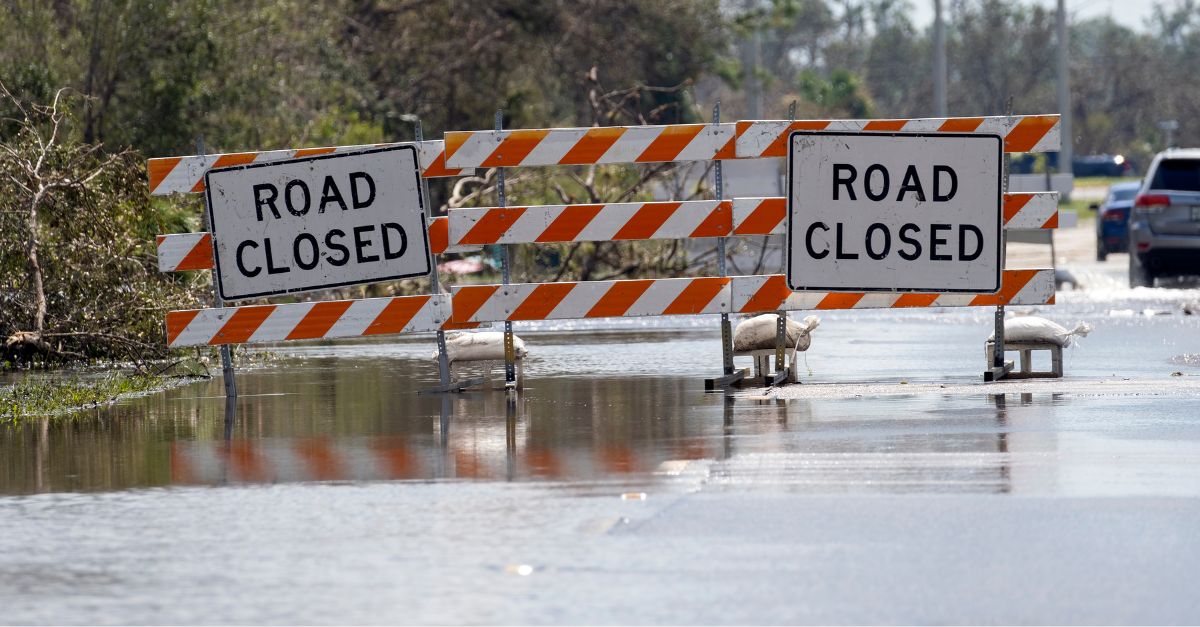
The flooding and landslides have severed key transportation links. More than 30 highways in western Washington are closed, including major east–west routes. A mudslide blocked all eastbound lanes of Interstate 90 near North Bend for about five miles. Highway 2 over Stevens Pass is shut down for roughly 28 miles between Index and Coles Corner. Portions of State Routes 203 and 410, along with numerous secondary roads in at least five counties, are also impassable.
Rail lines have been hit hard. Sections of BNSF Railway track are under water or damaged, with some bridges and approaches washed out. Passenger service has also been disrupted, with Amtrak canceling trains between Seattle and Vancouver on Thursday and Friday.
The crisis crosses the Canadian border, where British Columbia officials report similar disruptions. Five of the six main highway routes into Vancouver are closed because of flooding, landslides, and avalanche hazards. Highways 1, 3, and 99 have all been shut, cutting off or severely limiting overland access to the region.
Levee Weakness, Economic Risks, and Past Parallels
The surge has exposed lingering weaknesses in flood defenses rebuilt after the destructive 2021 atmospheric river. State engineers and local emergency managers have identified vulnerable sections of levees and dikes where repairs were made in recent years. The National Weather Service has cautioned that structural failures could send record volumes of water into “streets, homes, and farmland.” Skagit County Emergency Director Julie de Losada said that “vulnerabilities exist where repairs were made since 2021,” raising concern that the county’s entire 100-year floodplain could be inundated if protective systems fail.
Officials are drawing uneasy comparisons to the November 2021 storm that devastated parts of British Columbia, dropping roughly a month’s worth of rain in two days, killing four people, severing rail connections to Vancouver, and causing insured losses exceeding $500 million. Total losses from that event, including uninsured damage, were estimated at $7.5 billion. Current projections suggest the financial toll from the present flooding in Washington and cross-border trade corridors could rival or surpass that disaster.
Economic concerns are mounting as key routes and trade links close. The Sumas border crossing, an important commercial gateway between Washington and British Columbia, is shut. U.S. Senator Maria Cantwell has noted that major highway closures in the region typically cost between $7 million and $10 million per year, and prolonged shutdowns could drive that figure higher. Agricultural impacts may be severe but are not yet fully measured; Skagit County’s fertile floodplain supplies food across the broader Pacific Northwest, and extended inundation could wipe out crops and damage farm infrastructure.
Outlook: Second Storm and Long-Term Questions

The immediate emergency may only be the first phase of a longer ordeal. The National Weather Service is tracking another strong atmospheric river expected to arrive Sunday evening. Rated as a Level 4 event, the system is forecast to drop an additional 1 to 3 inches of rain on already saturated ground. With soils unable to absorb more water, the risk of renewed flash flooding, landslides, and rapid river rises early next week is high. Rivers that had begun to recede could return to dangerous levels by Tuesday and Wednesday.
These challenges are unfolding during the holiday season, complicating shelter arrangements, recovery logistics, and family travel. Authorities estimate that at least 75,000 displaced residents in Skagit County alone will need temporary housing. Governor Ferguson has warned that “this is a prolonged situation,” and local officials caution that drainage and repair efforts may stretch into late December, especially if additional storms arrive.
Scientists project that atmospheric river events in the Pacific Northwest are likely to become more frequent and intense in coming decades. The back-to-back experiences of 2021 and 2025, separated by just four years yet both described in terms once reserved for “100-year” floods, are prompting renewed debate over how to reinforce levees, redesign transportation corridors, and protect communities in expanding floodplains. As waters slowly recede and assessments begin, policymakers and residents alike face a central question: how to adapt a growing region and its infrastructure to a future in which extreme flooding may no longer be rare.
Sources
Reuters, Torrential rains unleash widespread flooding, evacuations, December 11, 2025
KUOW, Live updates: Rivers have crested, but Western Washington flood threat continues to loom, December 11, 2025
Fox 13 Seattle, WA rivers hit record levels, highest in 10 years, December 9, 2025
CNN, Washington flooding: More atmospheric rivers coming for flooded Washington and the West Coast, December 12, 2025
Insurance Journal, Washington Faces Historic Floods That Have Washed, December 11, 2025
Washington Governor’s Office, Governor Ferguson declares statewide emergency responding to major flooding, December 9, 2025