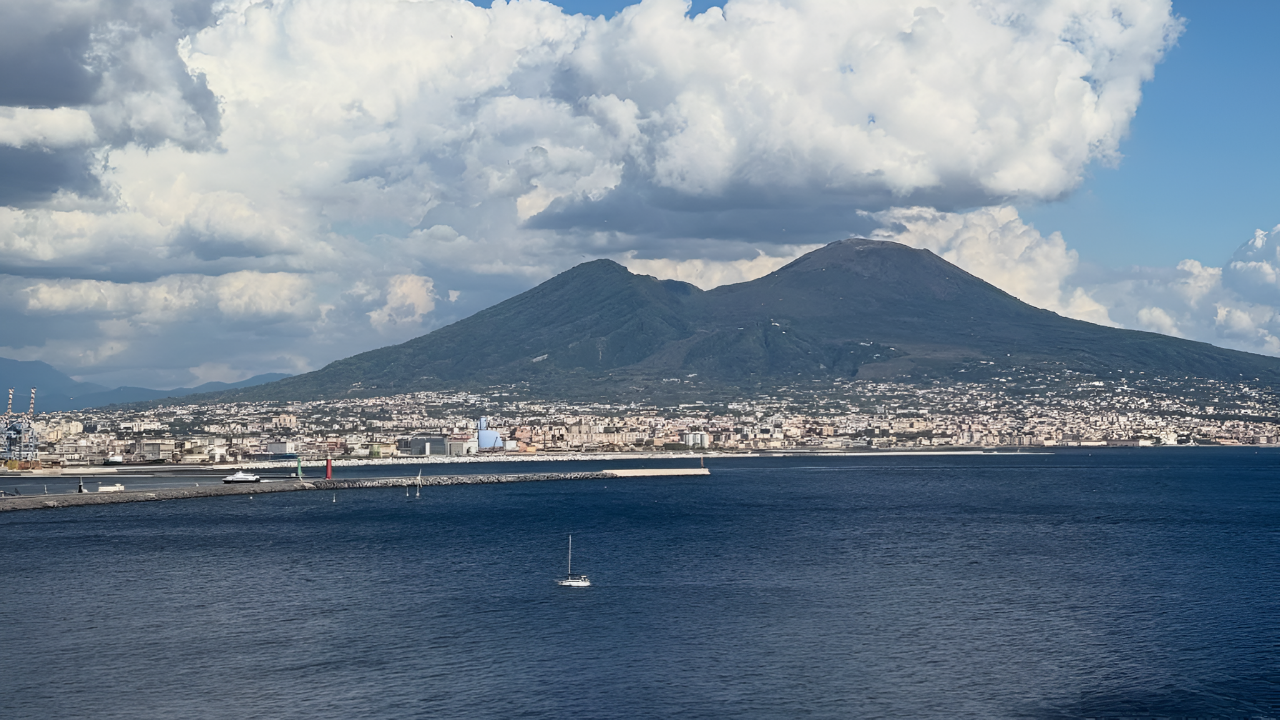
Beneath the Bay of Naples, the ground has been slowly but relentlessly lifting for two decades, rising more than 1.4 meters (4.6 feet) since 2005. At the center of this movement lies Campi Flegrei, an eight-mile-wide volcanic depression that overlaps densely populated suburbs of Naples and is home to over half a million people. Long recognized as one of the world’s most dangerous volcanoes, it has produced two of Europe’s most powerful eruptions in the past 40,000 years and has been under “yellow alert” status since 2012, with evacuation plans kept on standby.
Record Quakes and a Moving Landscape
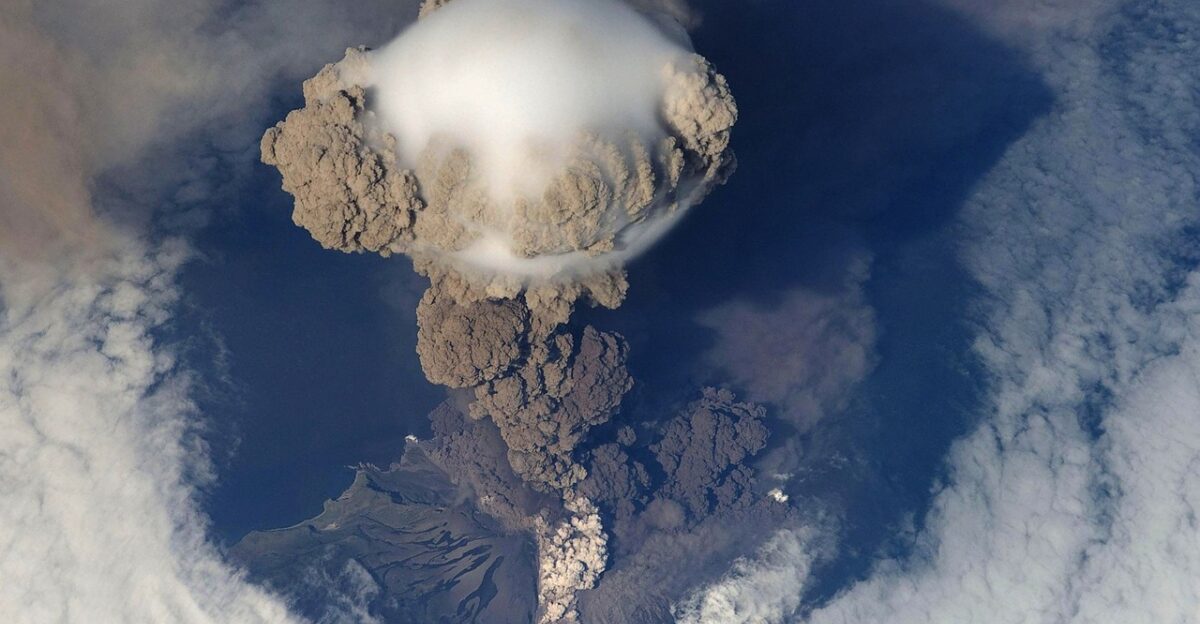
On June 30, 2025, Campi Flegrei experienced its strongest earthquake in four decades: a magnitude 4.6 event from shallow depth that shook western Naples and nearby towns. Residents rushed into the streets, schools were evacuated, and already fragile buildings suffered fresh damage. The episode capped a series of stronger tremors: in 2025 alone, five earthquakes above magnitude 4.0 struck the area, signaling a clear intensification of unrest compared with previous years.
The region has faced similar crises before. During the 1983–1984 emergency, earthquakes reached magnitude 4.0, ground uplift accelerated, and some 40,000 people were evacuated from the coastal town of Pozzuoli, many of whom never returned. Today the ground is again rising—a phenomenon known as bradyseism, driven by changes in pressure within the volcanic system. The cumulative uplift since 2005 has reshaped parts of the coastline, exposing previously buried sections of Roman columns and leaving boats resting on now-raised seafloor. Before a major caldera-forming eruption about 15,000 years ago, geological records show uplift of around 26 meters (85 feet), underscoring why scientists closely track the current acceleration.
Ancient Gateway, Modern Megarisk
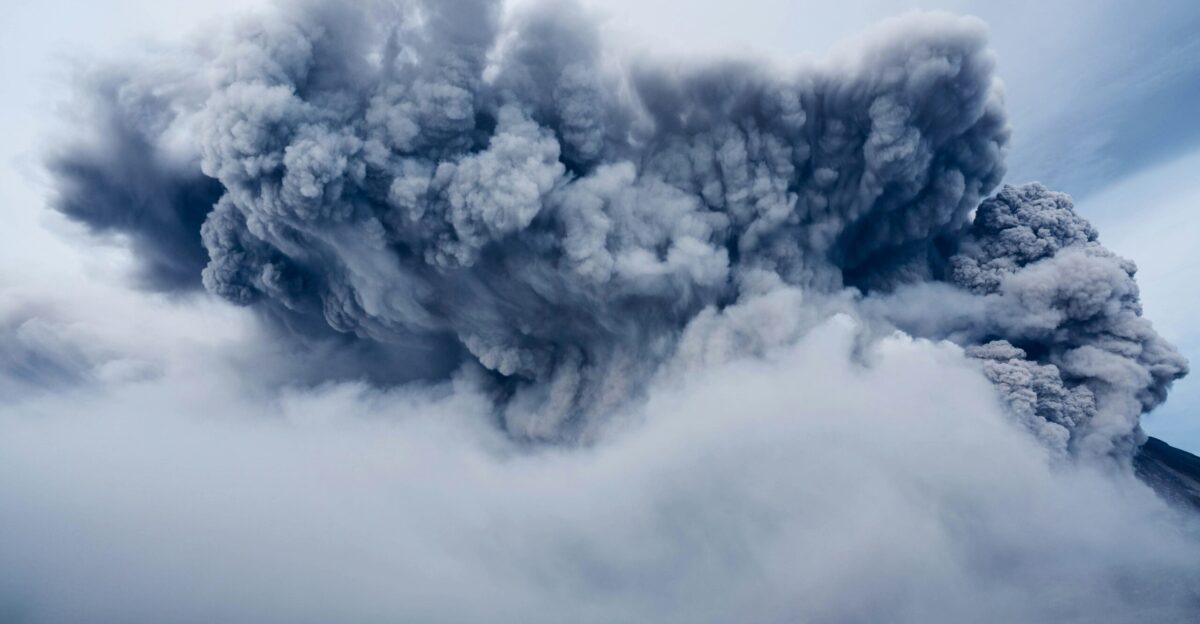
Campi Flegrei’s danger has long been entwined with its mythology. Within the caldera lies Lake Avernus, which Roman writers portrayed as an entrance to the underworld. In Virgil’s Aeneid, the hero Aeneas is described descending there to meet his father’s spirit, and ancient observers believed volcanic gases were so toxic that they killed birds flying overhead. The nickname “Gateway to the Underworld” persists today in popular coverage, a reminder that the area’s reputation for hidden menace spans millennia.
In reality, the volcano’s history is more dramatic than legend. The last eruption occurred in 1538, when Monte Nuovo (“New Mountain”) rose from the sea over the course of a week, an event detailed by contemporary witnesses. The caldera’s previous major episode, the Neapolitan Yellow Tuff eruption around 15,000 years ago, expelled about 72 cubic miles of material, reshaping the region. An even larger event—the Campanian Ignimbrite eruption roughly 39,000 years ago—blanketed much of Europe and western Russia in ash, cooled the climate, and has been proposed as a contributing factor in Neanderthal extinction, although that link remains debated. These past eruptions show the volcano’s capacity for continent-scale impact if activity were to escalate today.
Hidden Quakes and New Technology
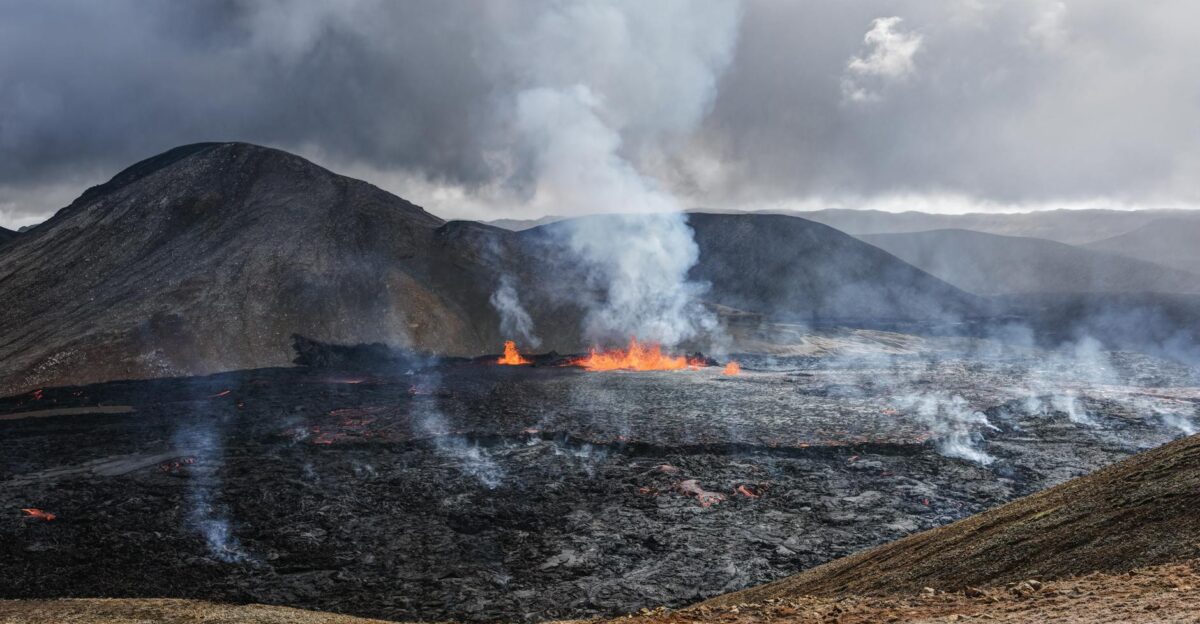
Monitoring by Italy’s National Institute of Geophysics and Volcanology (INGV) has revealed a steady rise in seismic activity in recent years. Between 2022 and 2025, INGV’s traditional seismic network manually catalogued 12,083 earthquakes at Campi Flegrei. A Stanford University team then applied a machine-learning model trained on the same data and identified 54,319 events for the same period—around 350 percent more than the manual catalogue.
According to that analysis, about 78 percent of earthquakes had gone undetected by conventional methods, especially small and closely spaced events. The artificial intelligence approach, designed to recognize subtle patterns in seismic waveforms, revealed a far more active and evolving system than previously recognized. This denser picture of shaking has sharpened scientific understanding of how stress and fluids move beneath the caldera and has become an important input in updated hazard assessments.
Uncertain Threat, Massive Exposure
Despite the growing unrest, scientists emphasize that the current activity does not necessarily signal an imminent eruption. INGV’s interpretation is that most recent earthquakes and ground uplift are likely driven by superheated water and gases circulating in the shallow crust, rather than a clear, sustained ascent of magma. Even so, experts caution that magma involvement cannot be excluded and that the chance of an eruption is “not zero.” As University of Naples volcanologist Warner Marzocchi put it in September 2025, “Nature has the control. We do not have control.” Researchers acknowledge large uncertainties: the system could continue in a restless state for decades without a major eruption, or shift more rapidly toward one.
Meanwhile, around 500,000 people live within the official “red zone,” designated as the highest-risk area for evacuation. Many buildings have suffered cumulative damage from years of shaking, and some schools have been temporarily closed after stronger quakes. Residents describe persistent anxiety over whether to stay or leave, weighing employment, family ties, and housing availability against an ever-present hazard. Memories of the 1983–1984 evacuations, when tens of thousands were relocated and some were barred from returning, add to local mistrust and uncertainty.
Authorities Confront Evacuation Dilemmas
Italian authorities have responded with a combination of long-term planning and emergency measures. In May 2025, the national government declared a state of emergency for Campi Flegrei and allocated €500 million for strengthening buildings and improving evacuation infrastructure. The European Investment Bank later approved another €1.4 billion for reconstruction and safety projects in the area. Civil Protection officials maintain a dedicated “red phone” link with INGV’s monitoring center, allowing for twice-daily briefings and rapid coordination if conditions deteriorate.
Yet the logistical challenge remains daunting. Current plans envision relocating around 500,000 people from the caldera within a few days if a high-risk scenario is declared. Potential host regions across Italy have been identified, but authorities acknowledge that a full-scale evacuation has never been tested in practice. A nationwide civil protection exercise held in October 2025 highlighted gaps in coordination and resource deployment, prompting further revisions to emergency procedures.
Beyond the local zone, an explosive eruption with a tall ash column—potentially reaching about 30 kilometers (18 miles) into the atmosphere—could disrupt life across Europe. Historical eruptions from Campi Flegrei have sent ash as far as central Europe and Russia. In a modern context, a similar event could severely affect aviation and agriculture; the 2010 eruption of Iceland’s Eyjafjallajökull, a much smaller volcano, temporarily halted European air travel and caused an estimated €1.7 billion in airline losses. Campi Flegrei’s scale and proximity to major population centers raise the stakes considerably.
For now, scientists continue to refine monitoring networks, deploy advanced analysis like machine learning, and drill to better understand conditions beneath the surface. Officials update emergency protocols, and residents adapt to drills, reinforced structures, and daily tremors. The central question—whether the current unrest marks a prelude to a new eruptive phase or a prolonged episode of non-eruptive agitation—remains unresolved. In a region where myth once explained the dangers below, the future of Campi Flegrei still ultimately depends on processes far beyond human control.
Sources
Stanford University, Sep 2025, AI study
Italian Civil Protection 2016 Emergency Plan Update
INGV 2025 seismic data and reports
Nature Communications Dec 2024 study
Wanted in Rome archives 2025
Watchers.news archives Jun 2025