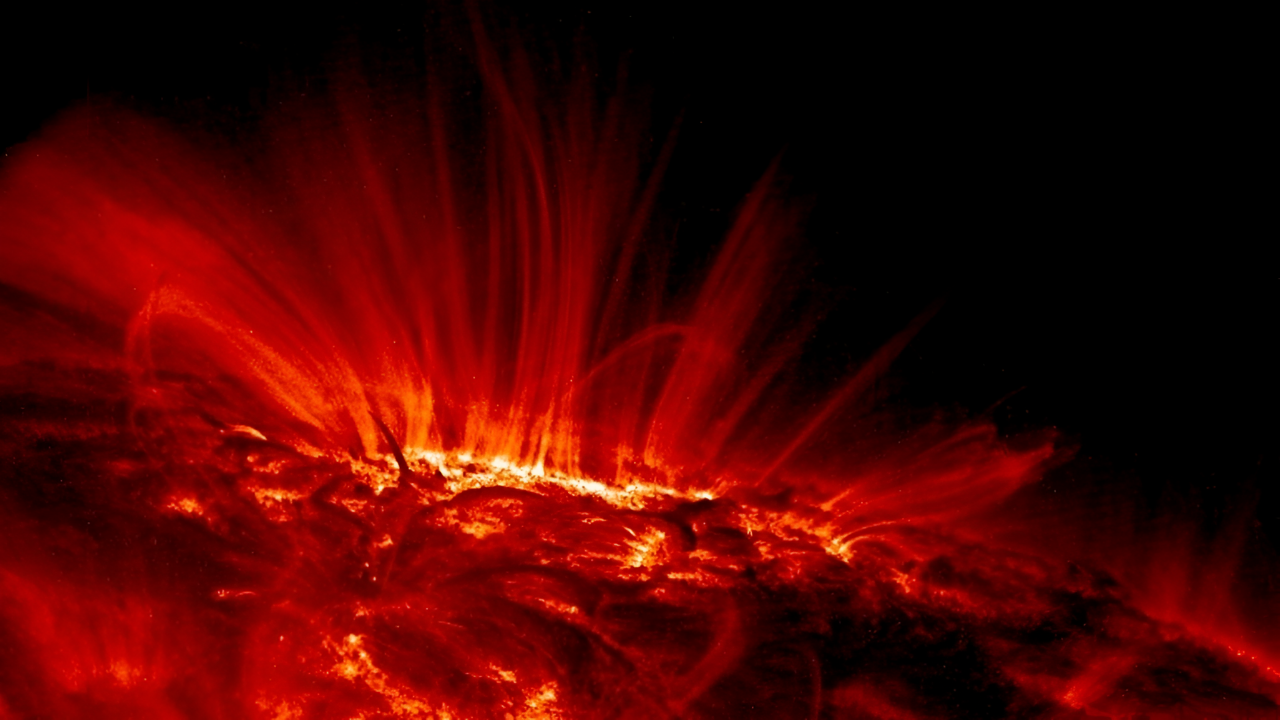
On December 8, 2025, at 5:01 a.m. UTC, a sunspot called Active Region 4298 fired off a super-strong X1.1 solar flare. This is the top level of sun explosions, blasting radiation straight at Earth. It caused an instant R3 radio blackout, the third-worst on NOAA’s scale, knocking out high-frequency signals over the huge Indian Ocean.
Planes and ships in this busy area lost contact, affecting thousands of flights and ships that use radio for safety. The radiation raced here at light speed, no warning. It’s a wake-up call on how the sun can mess with our world in seconds.
One Sunspot’s Flare Explosion, 20 in a Day!
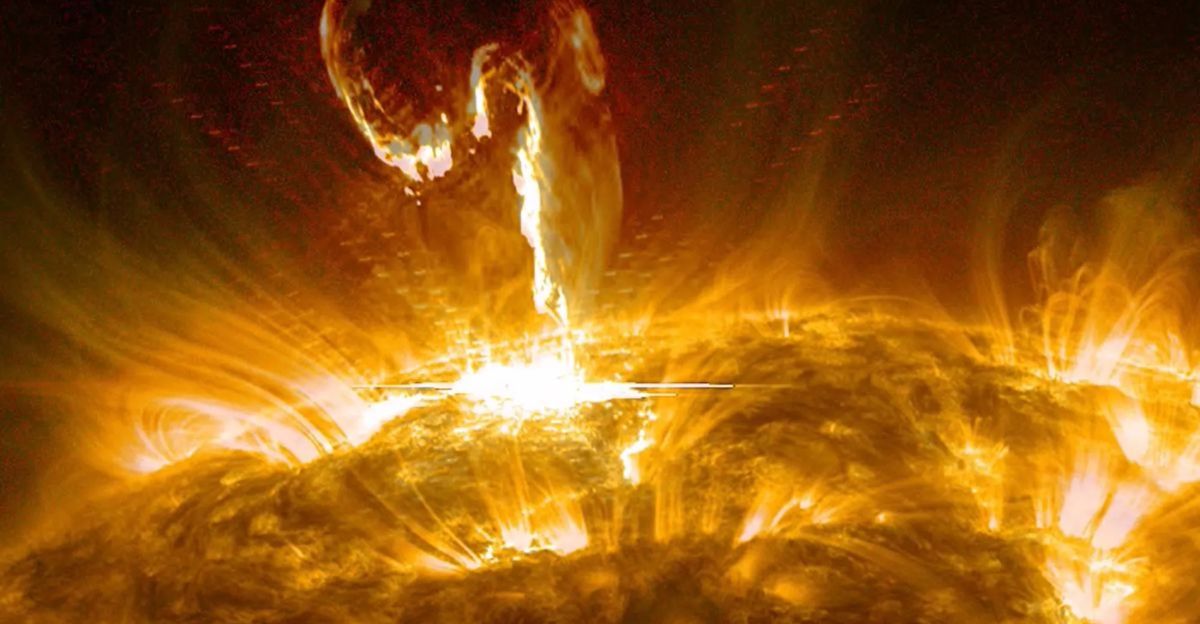
Active Region 4294, the biggest and wildest sunspot group, went crazy on December 7-8, spitting out 20 flares in just 24 hours. It has a beta-gamma-delta setup, the most twisted magnetic fields, like a ticking bomb. This frenzy included the X1.1 giant and three M-class flares, totaling 24 flares from that spot.
Even in the sun’s peak busy time, this is rare. Now seven sunspot groups are turning toward Earth, with AR4294 leading the pack. NOAA says it’s the 20th X-class flare this solar cycle, proving we’re in the sun’s 11-year rage peak.
NOAA’s Big Warning, Get Ready!
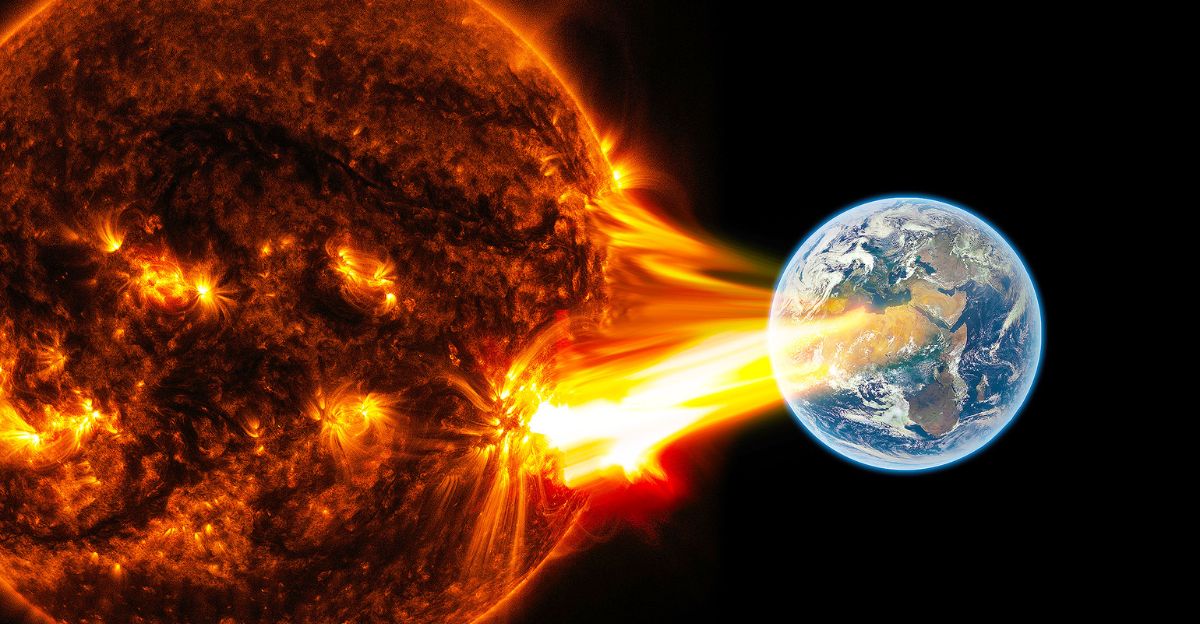
NOAA’s experts hit the alarm button with clear alerts. Multiple solar blasts called coronal mass ejections (CMEs) are speeding toward Earth, teaming up with more flares to shake things up. There’s a 65% chance of more M-class flares and 15% for another X-class.
Power companies, satellite bosses, and pilots must prep now. This isn’t scaremongering, it’s real data from the top space weather watchers. The sun’s on a hot streak, beating even their boldest guesses. Imagine your phone or lights flickering because of sun tantrums.
Cannibal CMEs, Solar Eaters on the Loose
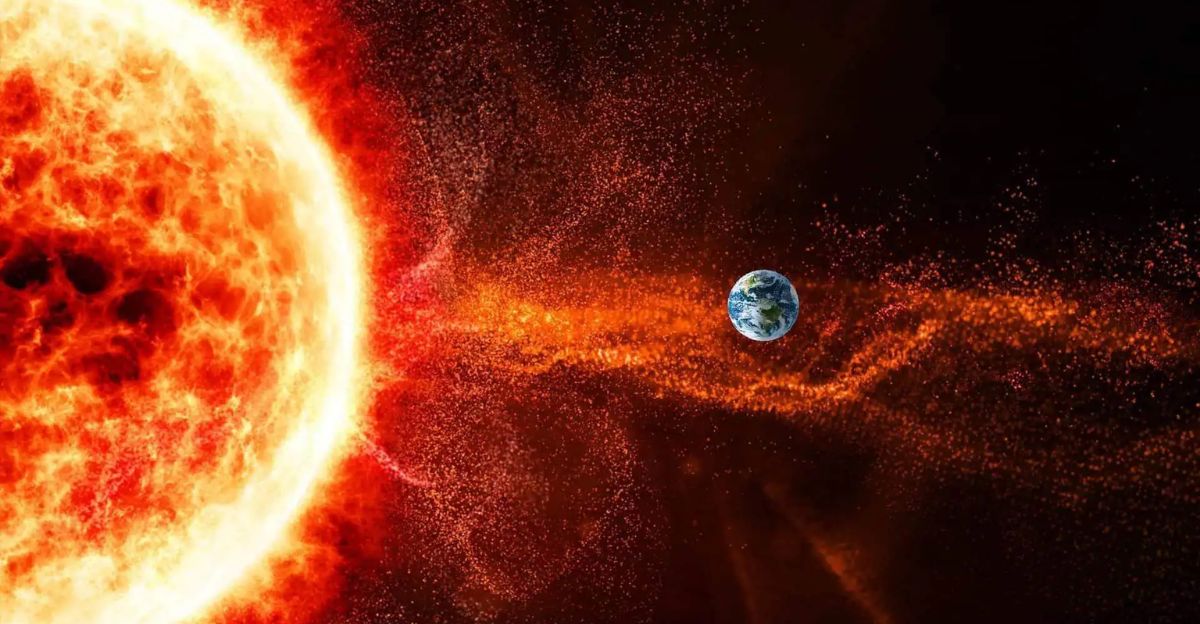
Ever heard of a cannibal CME It’s when a fast solar blast catches a slower one ahead, swallowing it like a monster in space. Their super-hot gas clouds smash together into one mega-blob. Here, a full-halo CME from December 6’s M8.1 flare, aimed right at Earth, is getting chased by faster ones.
This crash could crank magnetic strength to 10 nT and wind speeds to 350-550 km/s, making a thicker, meaner storm. NOAA models can’t pinpoint the exact smash time, but it might act like one huge blast.
Four Solar Blasts Racing to Hit Us
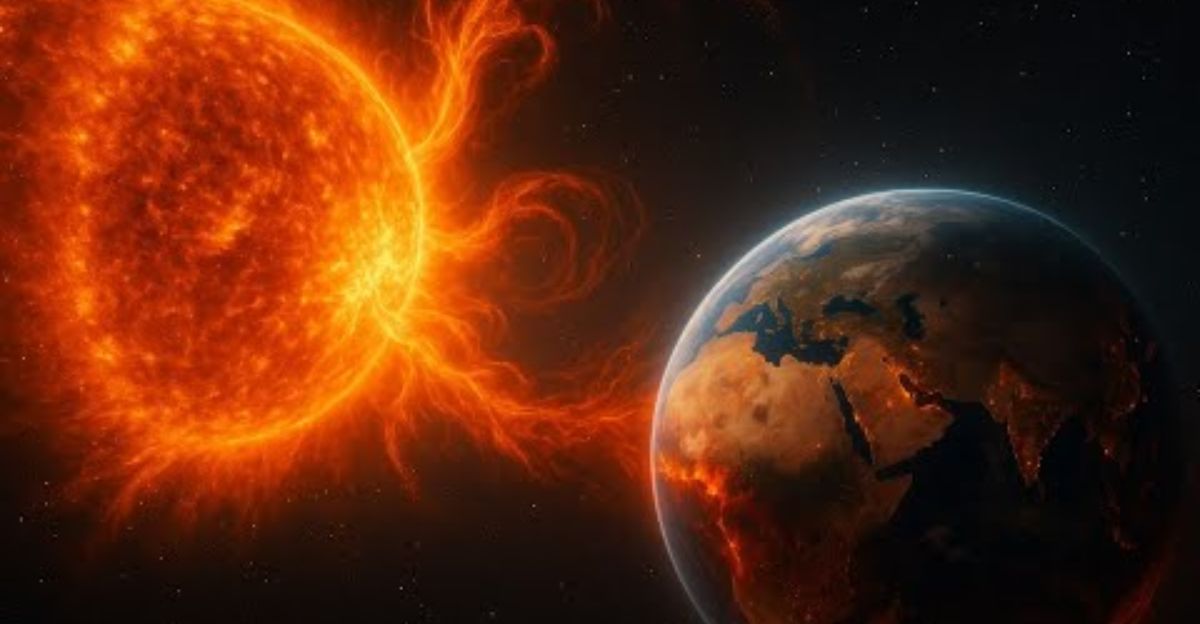
Picture four giant clouds of sun gas, billions of tons each, rushing through space straight for Earth. The front-runner is the full-halo CME from the M8.1 flare. Trailing are blasts from recent X and M flares, including that cannibal combo. They’re due to slam in around 4-8 a.m. UTC on December 9 (late night Monday into Tuesday for North America).
That’s super short notice! When they pile up, the magnetic mayhem could stretch for days, pushing Earth’s shield to the limit. Unlike one hit, this barrage overloads everything.
Storm Alert, From Moderate to Severe
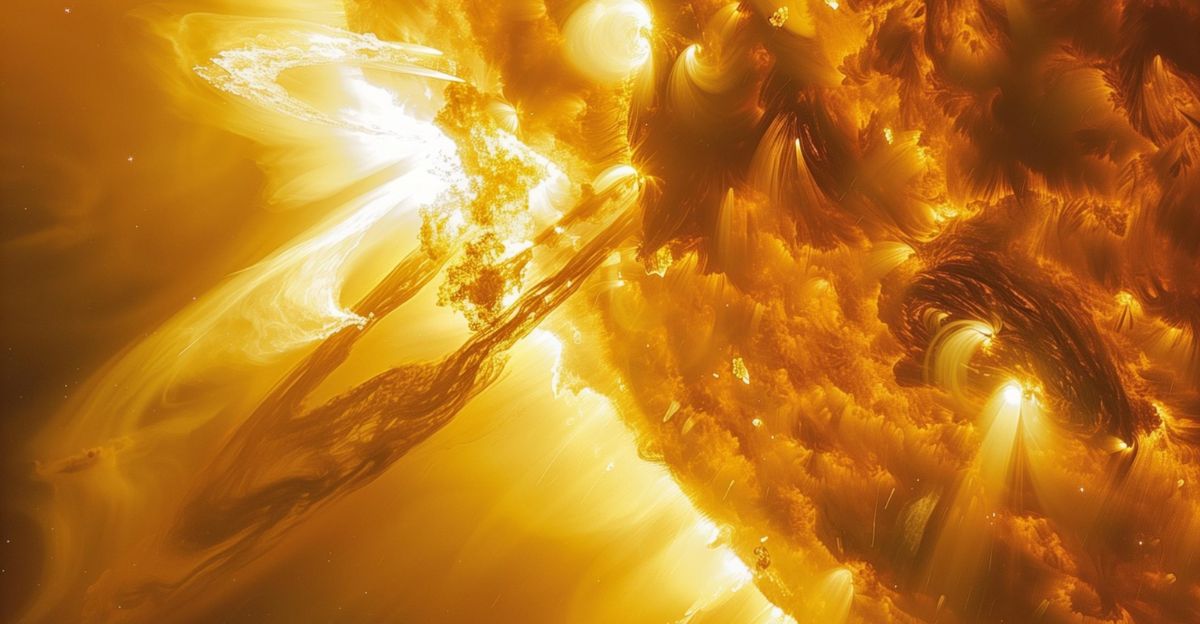
NOAA forecasts G2-G3 geomagnetic storms (moderate to strong), with a shot at G4 (severe). That’s Kp levels 6-8 on the 0-9 scale for magnetic shakes. These could spark currents in power lines, drag satellites off course, and black out radios worldwide.
Solar winds at 350-550 km/s and thick gas will pound our magnetic bubble for hours or days. Past G3 storms fried transformers; G4 could black out cities like Quebec in 1989.
Radio Silence Over Indian Ocean
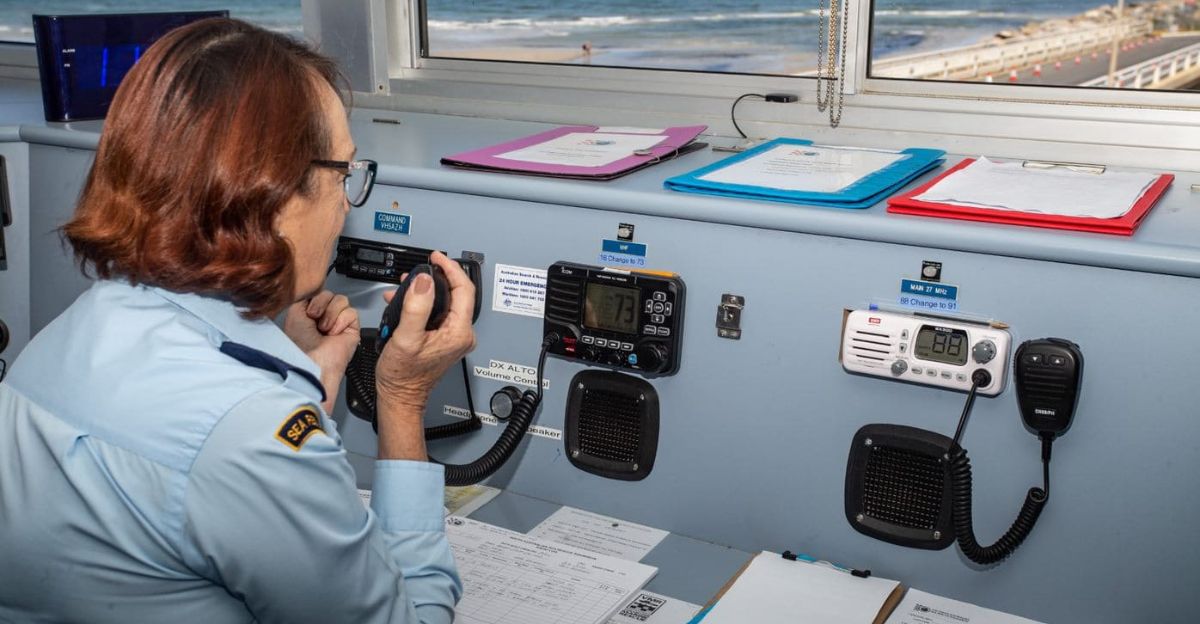
The X1.1 flare caused an R3 blackout, wiping HF radio over the Indian Ocean, a key path for global travel. Thousands of planes and tens of thousands of ships lost navigation and SOS signals. They switched to backups fast.
On NOAA’s 1-5 scale, R3 means big disruptions for minutes to hours as X-rays zap the air, blocking waves. Flares hit in 18 minutes at light speed, no heads-up. Slower CMEs follow later, but this shows flares’ sneaky speed.
Epic Auroras for 100 Million Viewers

G2-G3 storms could spark northern lights visible to 100 million people! From Seattle and Minneapolis down to Chicago, Boston, Toronto, London, Paris, and northern Germany.
These rare mid-latitude shows need clear December 9 skies and Kp 6+. Sun particles slam the sky, creating glowing curtains.
Your Maps Go Haywire

During peak storms, GPS signals scramble for millions. Magnetic chaos scatters air electrons, delaying signals by meters or kilometers. Phones, cars, drones, and farm tech suffer, think traffic jams or crop fails.
NOAA predicts drops at Kp 6-8; no fast fix, just wait it out. It’s proof the cosmos touches daily life.
Power Grids Brace for Surge Attacks
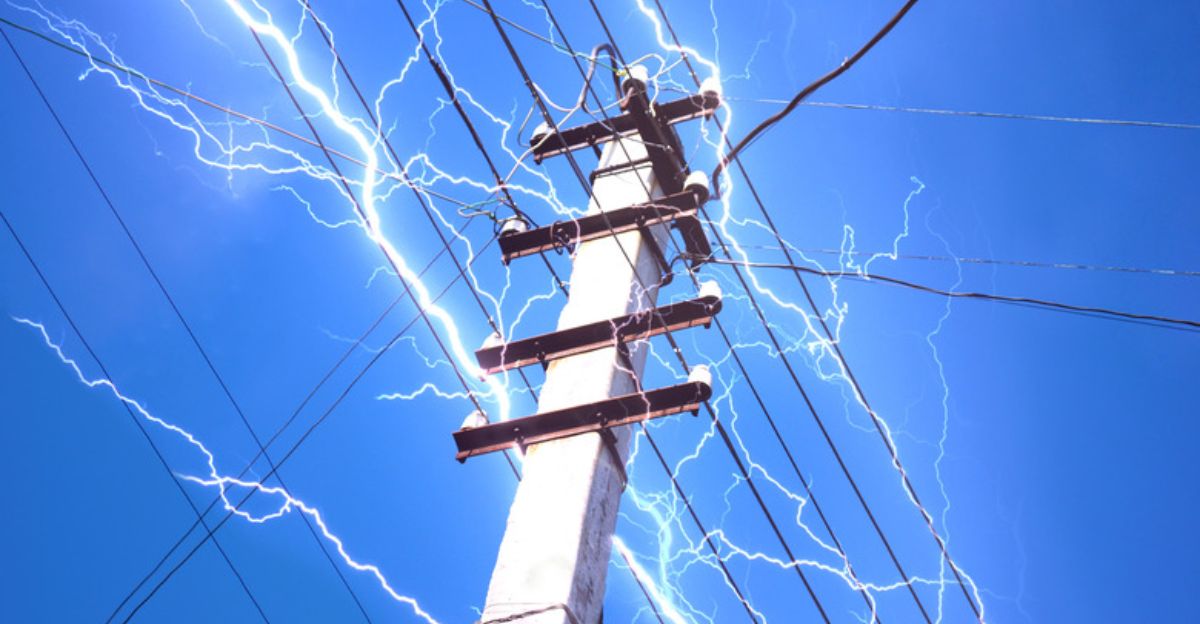
CMEs trigger wild currents in long power lines, overloading transformers and risking blackouts for millions. At Kp 8, northern U.S. grids from Seattle to Boston could spike like lightning.
Engineers have under 48 hours to watch closely. Past G4 storms cost billions in damage. This solar max ramps up risks, shields must hold against the sun’s fury.
Satellites Dodging Solar Bullets
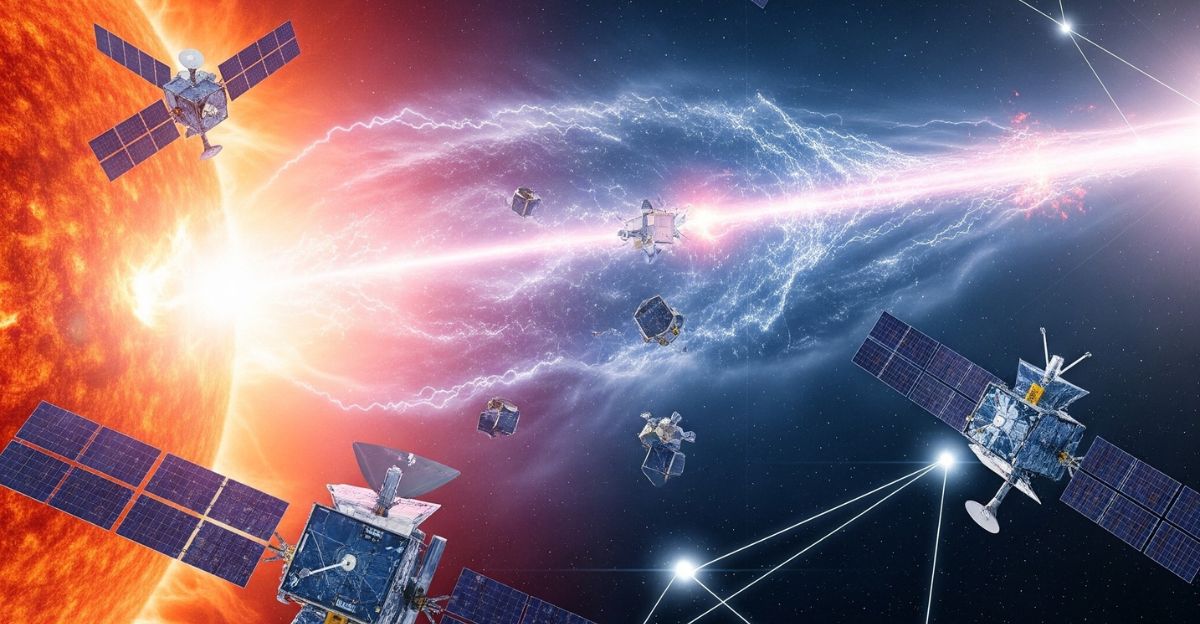
Space gear faces drag from puffed-up air, radiation zaps, and magnetic spins. Hundreds of satellites, like Starlink and weather ones, might tumble or go silent in G3+ storms. The cannibal CME’s thick gas worsens it, cutting missions short.
The flare’s high-energy particles hit first at near-light speed, frying unshielded electronics or causing temporary blackouts in star trackers and solar panels, while the CME’s plasma cloud—potentially supercharged by the cannibal merger—expands Earth’s upper atmosphere by up to 400%, dramatically increasing orbital drag.
Why the Sun’s Throwing a Tantrum
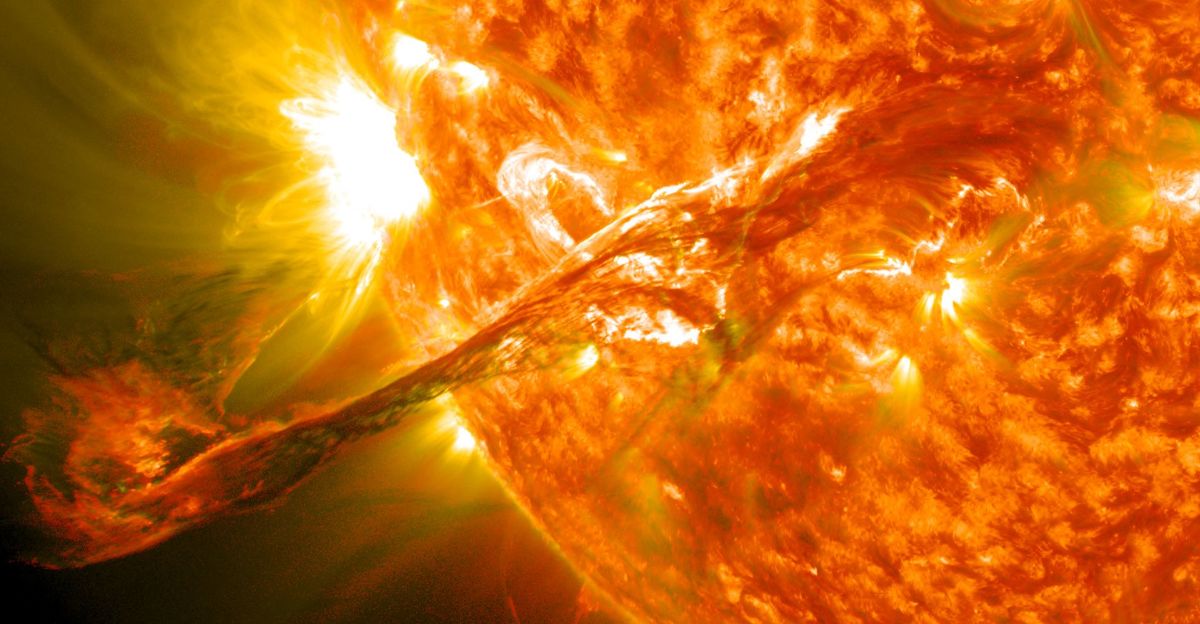
The sun’s current outburst stems from its position deep in Solar Cycle 25’s maximum phase, where the 11-year solar dynamo ramps up magnetic field twisting, creating twisted loops that snap explosively in regions like AR4294 and AR4298. These beta-gamma-delta sunspots, classified as the most complex due to sheared, opposite-polarity fields, store immense energy from convection zone motions, releasing it as 20 flares in 24 hours when reconnection events trigger plasma heating to millions of degrees.
NOAA data shows seven active regions clustered on the Earth-facing disk, an unusual pileup amplifying activity as the sun rotates every 27 days, swinging fresh hotspots into view.
The Deadliest Sunspots
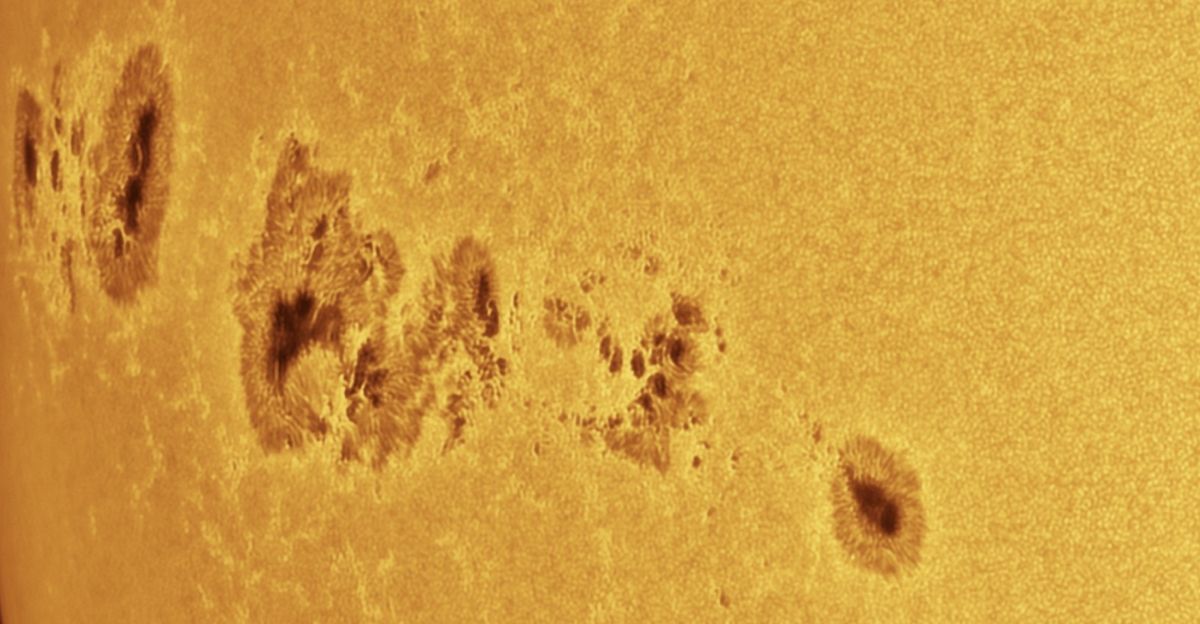
Beta-gamma-delta (BGD) sunspots like AR4294 represent the most dangerous configuration on the sun, featuring intertwined magnetic fields of opposite polarity that build catastrophic energy for explosive releases.
AR4294’s BGD complexity, spanning regions with sheared umbrae and penumbrae, produced 20 flares in 24 hours, including multiple M-class and contributing to the cycle’s 20th X-class event, due to frequent reconnection in its delta spots.
Solar Storms From History’s Playbook
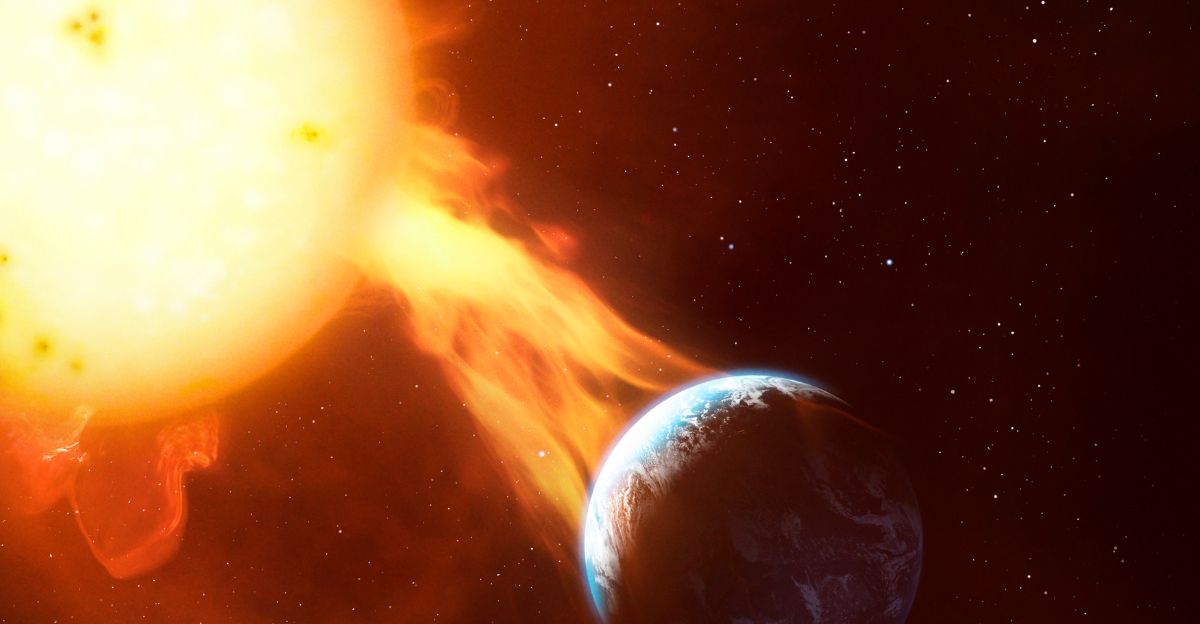
The Carrington Event of 1859 stands as the benchmark for solar devastation, when a massive CME from solar cycle 10 slammed Earth in 17.6 hours, sparking telegraph lines into flames and igniting auroras visible in Hawaii and Chile.
Richard Carrington sketched the precursor flare, but the geomagnetic storm induced currents that shocked operators and fried equipment across North America and Europe, a G5-level nightmare without modern grids to amplify the chaos. Today’s satellites and power networks would face trillions in damage from similar voltage surges, dwarfing the December 2025 G3 forecast.
How to Survive the Solar Storm
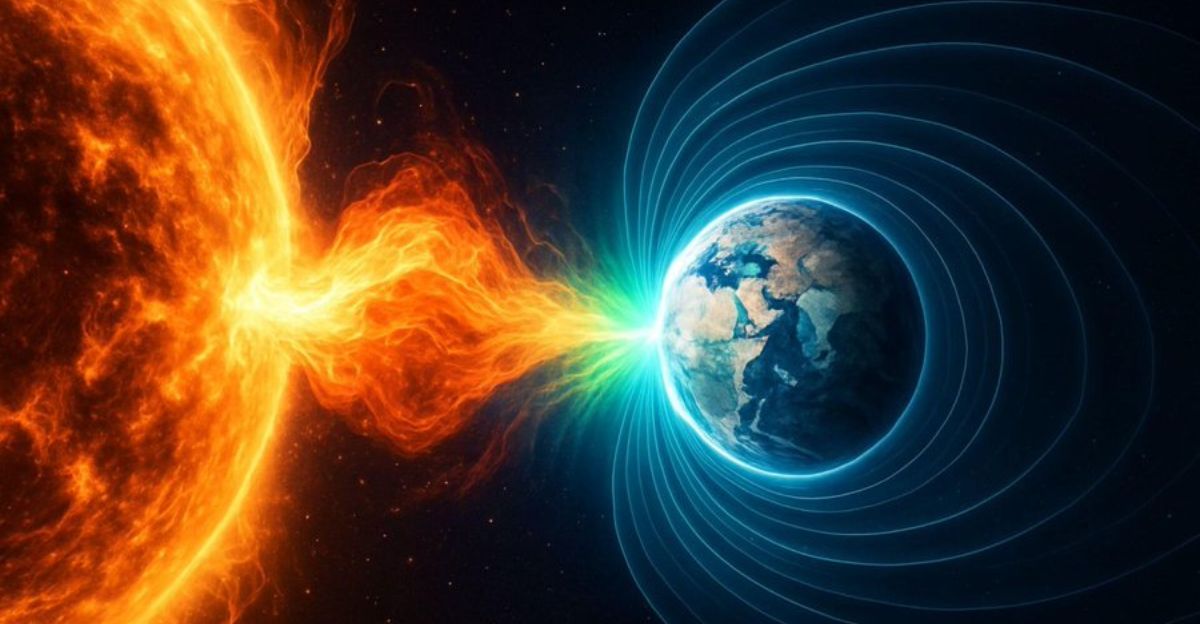
G2-G3 geomagnetic storms from the December 2025 cannibal CME demand proactive steps, starting with monitoring NOAA’s spaceweather.gov for real-time Kp indices and aurora forecasts to time your preparations before the 04:00-08:00 UTC December 9 impact window.
Unplug electronics and appliances to shield against surges, as GICs fried Quebec’s grid in 1989. Charge all devices fully beforehand, download offline maps, and keep a full gas tank for evacuation if grids fail; avoid polar flights or travel, as airlines reroute amid R3 blackouts like the Indian Ocean event.
Sources:
- NASA – “Strong Flare Erupts from Sun”
- Space – Coverage of the Dec. 8, 2025 X1.1 flare and radio blackouts
- SpaceWeatherLive – Solar flares archive for Dec. 8, 2025