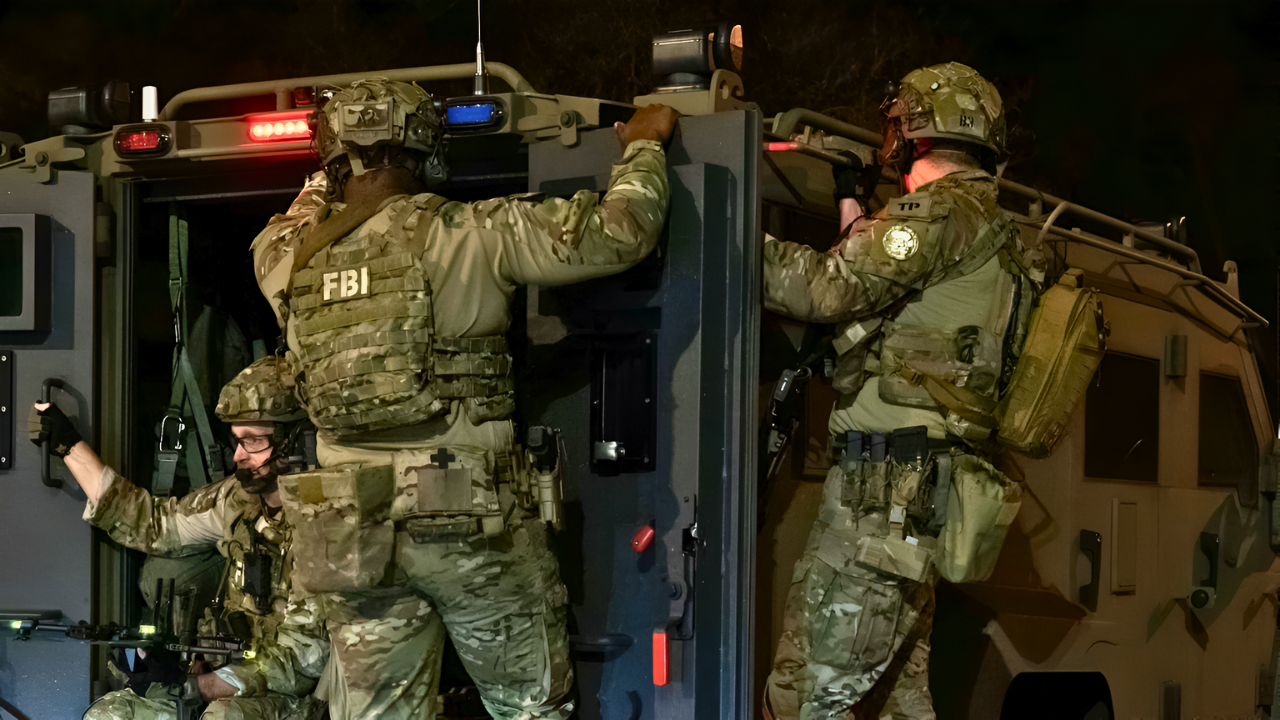
Federal agents in Georgia intercepted more than three-quarters of a ton of methamphetamine hidden in blackberry shipments, exposing how Mexican cartels are increasingly exploiting the refrigerated produce trade to move narcotics across the United States.
Escalating Smuggling Through Produce
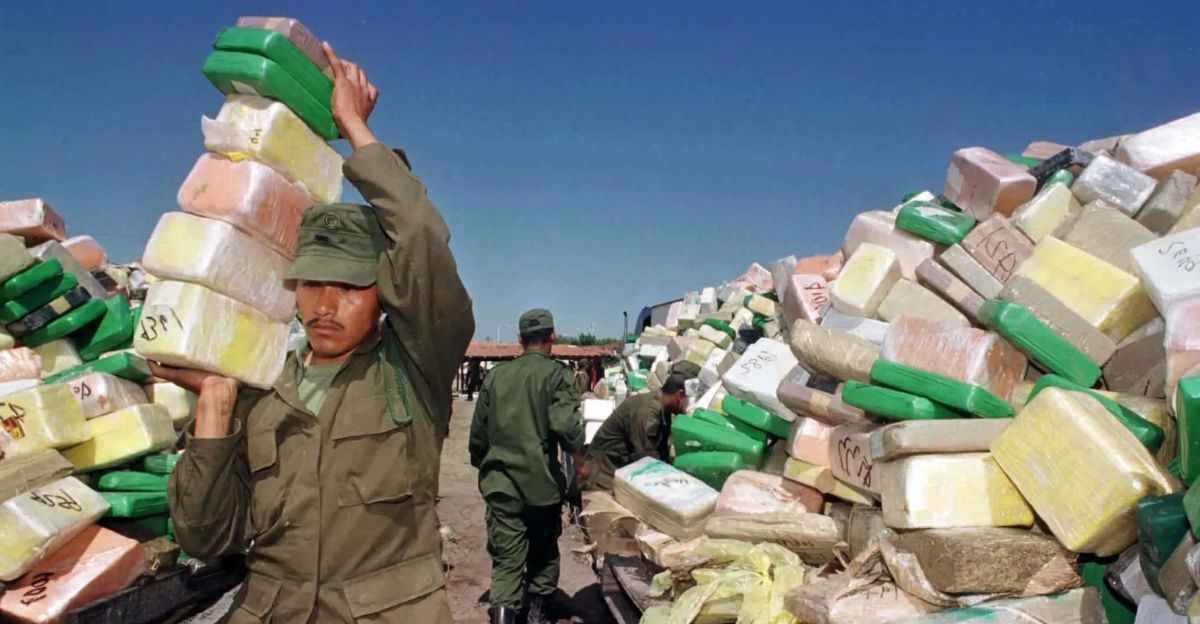
Investigators say cartels are leaning on legitimate fresh produce shipments to disguise drug loads, taking advantage of fast-moving cold-chain logistics and limited inspection windows. Blackberries, cucumbers, jalapeño peppers, and celery are among the items now used as cover for concealed narcotics. This shift reflects a move toward routes perceived as lower risk as traditional border crossings come under tighter scrutiny. Analysts warn the tactic both endangers communities and adds pressure on federal, state, and local agencies already contending with complex trafficking patterns.
History and Scale of Produce-Based Trafficking
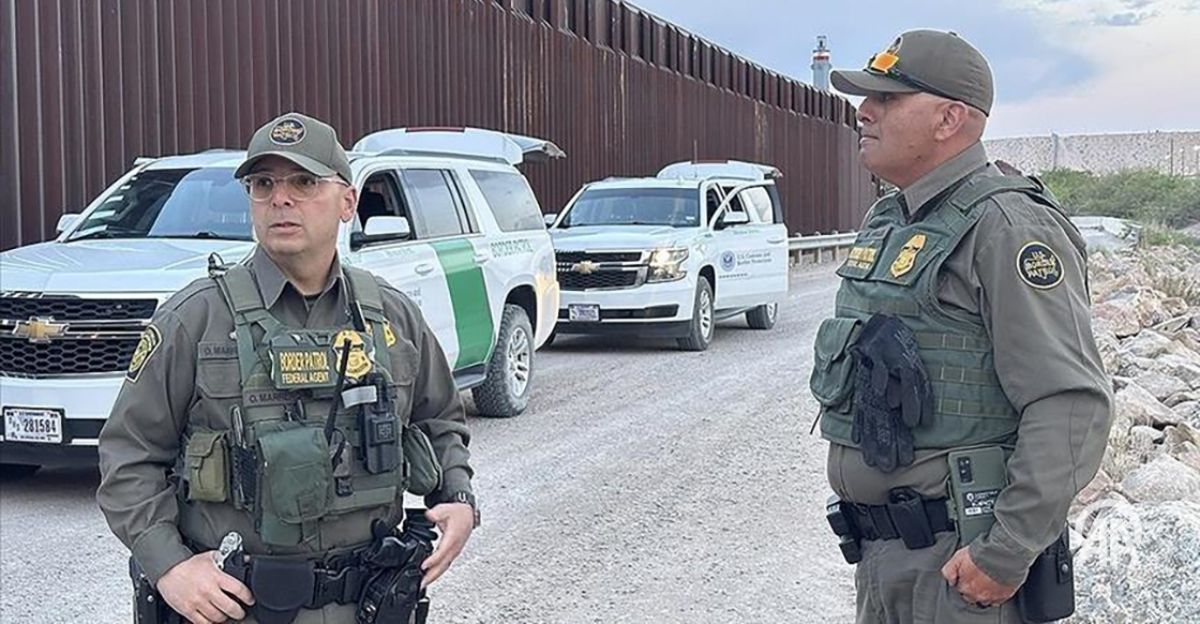
Hiding drugs in agricultural loads is a long-standing method, but authorities describe the current scale as unprecedented. Over time, cartels have refined the approach, embedding illegal shipments inside legitimate business operations and supply chains. Federal prosecutors identify cold storage warehouses in Fulton County, Georgia, as key waypoints in these schemes, serving as distribution hubs for narcotics destined for markets nationwide. As traffickers build operations around apparently lawful commerce, investigators must sort legal trade from contraband, complicating efforts to disrupt networks without disrupting the broader food supply.
Details of the Georgia Record Seizure

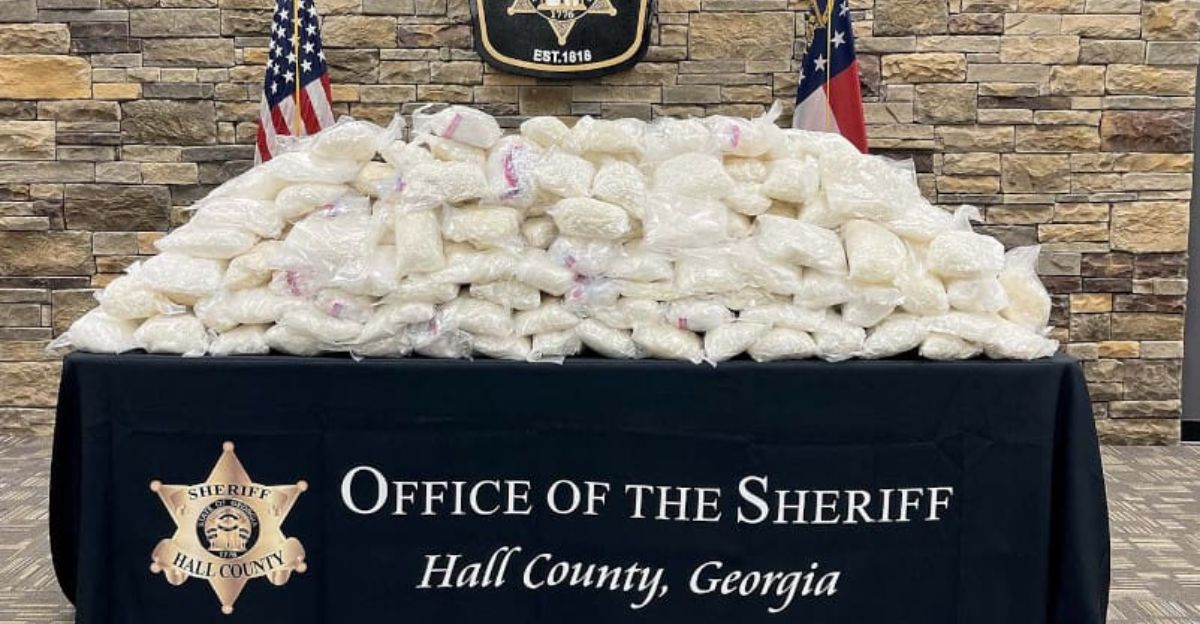
The latest operation unfolded on November 20, 2025, when federal agents targeted refrigerated trucks operating around Atlanta and Gainesville, Georgia. Working off intelligence that pointed to a Fulton County cold storage facility, agents uncovered 1,585 pounds of methamphetamine concealed among blackberries. Authorities say the load is tied primarily to Mexican cartels and carries an estimated street value of about $22.5 million.
Two men were arrested in connection with the seizure. Gerardo Solorio-Alvarado, 44, and Nelson Enrique Sorto, 36, now face federal drug trafficking charges. The Hall County Sheriff’s Office described the haul as the largest in its 39-year history, with 661 pounds seized from one truck and 924 pounds from another. Officials say the quantity of meth, if successfully distributed, could have had a severe impact on communities across the southeastern United States.
Profiles of the Accused and Consequences
Court and criminal history records cited by officials paint a stark picture of the suspects’ pasts. Solorio-Alvarado, described as an illegal immigrant, previously served 17 years in federal prison on drug trafficking and firearms charges before unlawfully reentering the country. Sorto was on probation for a felony methamphetamine conviction at the time of his arrest. Both men face lengthy mandatory minimum sentences if convicted: at least 15 years for Solorio-Alvarado and 10 years for Sorto, with the possibility of life imprisonment without parole. Authorities argue that such penalties highlight the gravity of high-volume trafficking and its effects on public safety.
National Context and Evolving Response
Officials say the Georgia seizure is part of a broader pattern of large methamphetamine interceptions in 2025, including approximately 1,115 pounds seized in Colorado in November and about 960 pounds in Minnesota in July. Investigators believe cartels view produce shipments as a high-profit, lower-risk alternative as enforcement tightens along more conventional corridors. U.S. funding increases for border control and Drug Enforcement Administration task forces have constrained some established routes, prompting traffickers to adapt.
The Georgia operation was carried out under the Homeland Security Task Force created in January 2025, which coordinates federal and local efforts against cartel activity. Agencies involved included the FBI’s Atlanta Division, the DEA, the Georgia Bureau of Investigation, and regional law enforcement partners. Officials say the success of the November seizure underscores the value of joint operations, shared intelligence, and specialized focus on supply-chain vulnerabilities. At the same time, they acknowledge that traffickers continue probing for weaknesses in inspection regimes and transportation networks.
Authorities, public health experts, and industry representatives all point to broader implications of the case. Methamphetamine availability is closely linked to addiction, overdose risk, and strain on health systems. The use of agricultural logistics threatens to erode consumer confidence and harm legitimate growers and distributors. In response, officials are examining ways to tighten inspection protocols without crippling commerce, expand intelligence-sharing among agencies, and strengthen community education and treatment initiatives. As cartels experiment with new concealment strategies and synthetic drugs, law enforcement and public health leaders say they expect trafficking methods to keep evolving, making sustained vigilance, technological innovation, and community engagement central to limiting the damage.