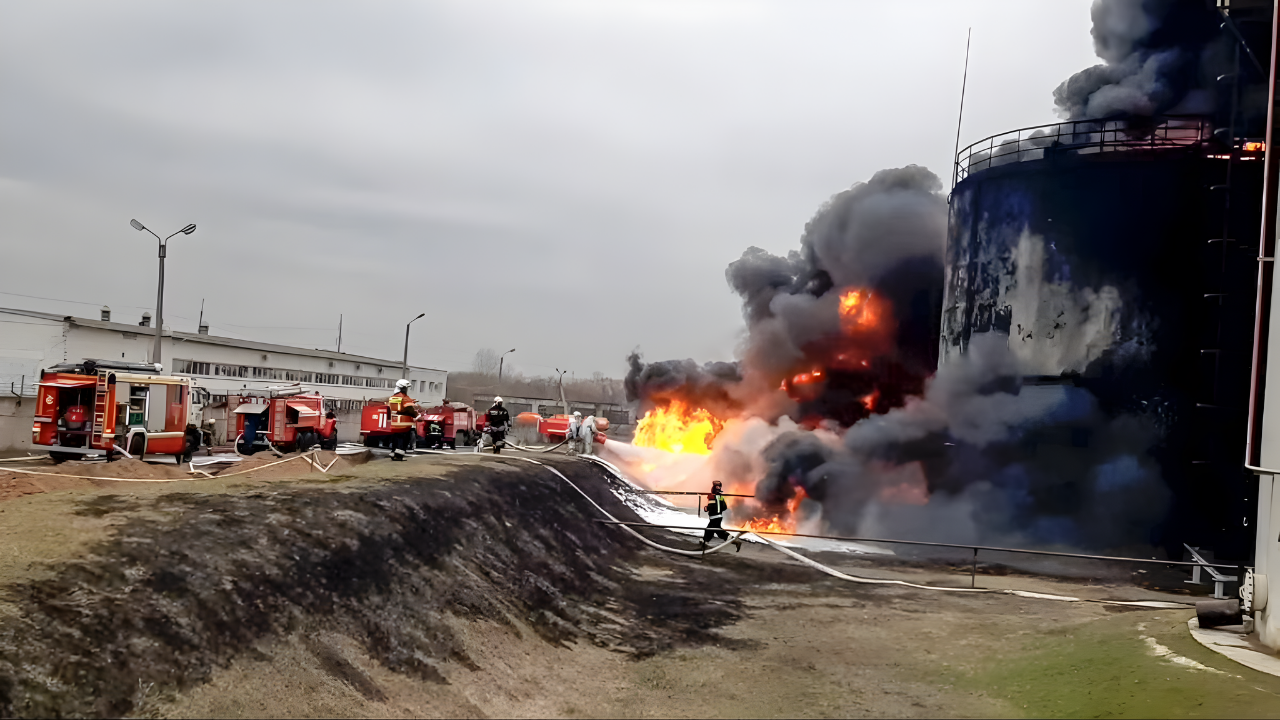
Ukraine’s long-range drones struck the Nikiforovskaya oil depot in Dmitrievka, Tambov Oblast, overnight into December 3, igniting multiple fuel tanks and sending flames high above the surrounding countryside. Russian regional officials acknowledged that debris from intercepted drones triggered the fire but reported no casualties. The facility sits hundreds of kilometers from the front line, making it one of the deepest confirmed Ukrainian attacks on Russian energy infrastructure since the start of the full-scale invasion. The strike forms part of a widening effort by Kyiv to disrupt the fuel supply underpinning Russia’s war effort.
Targeting the Fuel Behind Russia’s War
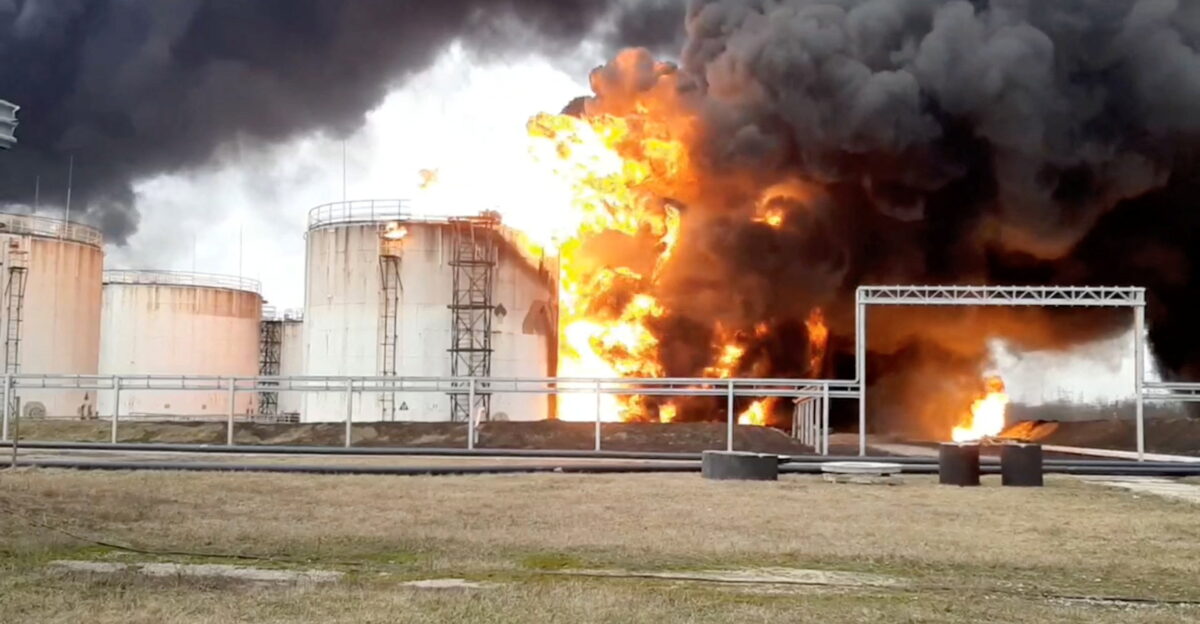
Ukrainian officials increasingly present oil depots and refineries as legitimate military objectives because they keep Russian forces supplied with diesel, aviation fuel, and lubricants needed for tanks, artillery, trucks, aircraft, and drones. By hitting fuel hubs well behind the front, Ukraine aims to force Russia to move supplies over longer distances, complicate logistics planning, and limit the speed and scale of future offensives.
The Tambov attack follows a pattern of long-range operations against mid- and large-scale fuel facilities across central and southern Russia. These rear-area strikes are designed not to collapse the entire Russian fuel system at once, but to gradually erode its efficiency, increase costs, and undermine the reliability of supply to units deployed in Ukraine.
Inside the Nikiforovskaya Depot
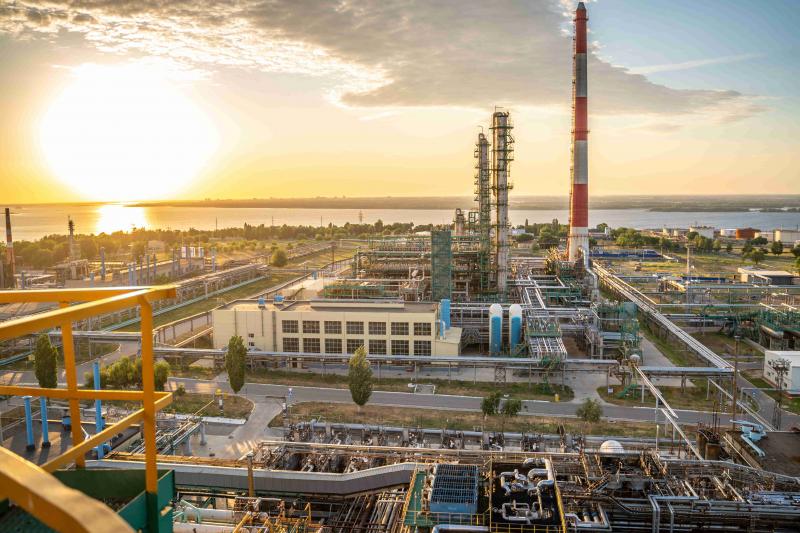
Monitoring data indicate that the Nikiforovskaya depot consists of 14 storage tanks with a combined capacity of about 10,440 cubic meters of diesel. Facilities of this size normally serve a mix of civilian and industrial customers, from motorists and farmers to regional freight operators.
Ukrainian officials say the depot also plays a role in supplying Russian military logistics, bringing it squarely into the scope of Kyiv’s broader campaign against rear-area infrastructure. Any damage to storage tanks, pumping systems, or pipelines will require detailed technical inspections and repairs at a time when Russian energy sites face mounting security threats.
The depot is owned by Tambovnefteprodukt, which at the end of November was merged into a Rosneft subsidiary in Voronezh. For Rosneft, Russia’s largest state oil company, repeated strikes on inland depots mean higher spending on physical protection, surveillance, and contingency planning. Regional distributors must also adapt to new risks, adding to operational and financial pressures even when fires are quickly contained.
Local Risks, Emergency Response, and Civilian Impact
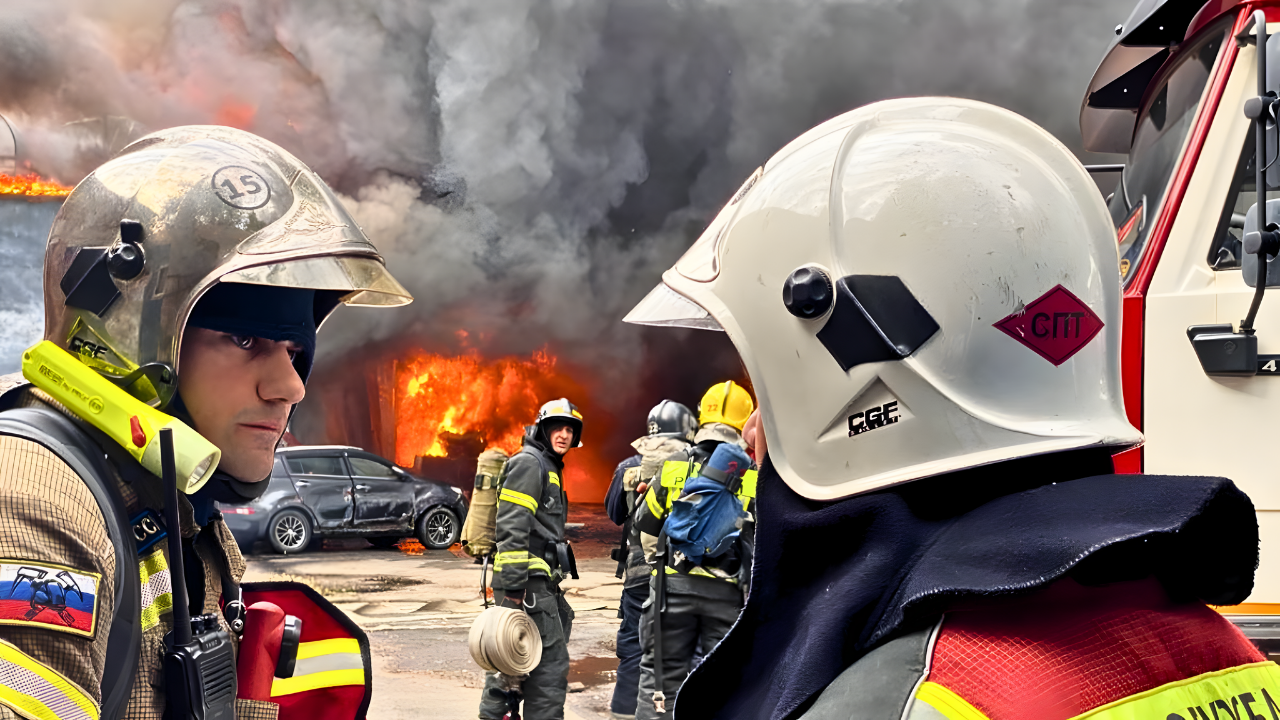
Tambov Oblast authorities said the blaze started when wreckage from downed drones fell onto the depot. Firefighters, emergency services, and law enforcement units were deployed through the night to bring the fire under control. Residents in nearby neighborhoods filmed the blaze and secondary explosions, underscoring how industrial sites once viewed as benign economic assets have become potential targets in a long-range drone war.
No injuries were officially reported, but the incident highlights the hazards for emergency crews working close to fuel tanks under bombardment, as well as for civilians living near strategic energy infrastructure. Even when authorities stress that emergencies are localized and handled swiftly, people in the region now contend with air-raid alerts, temporary road closures, and security cordons that were previously associated mainly with frontline cities.
Disruption at a regional depot does not necessarily cause immediate fuel shortages, but it can force deliveries to be rerouted from other oblasts. That in turn may lengthen delivery times, increase transport costs, and contribute to localized price volatility. Trucking companies, farms, and industrial plants that depend on stable diesel supplies are particularly exposed to even short interruptions.
A Broader Campaign: Oryol, Saratov, Crimea, and the Black Sea

The Tambov strike came shortly after Ukraine reported another successful attack on the Livny oil depot in Oryol Oblast overnight into December 2, where two RV-5000 fuel tanks reportedly caught fire. As with Nikiforovskaya, Livny is a mid-scale regional hub that channels fuel to both civilian sectors and military-linked consumers across western and central Russia.
On November 28, Ukraine said it had hit the Saratov oil refinery, extending its focus from storage to refining capacity itself. Ukrainian forces also targeted offshore infrastructure in the Black Sea, including the MSP-4 stationary platform and surveillance equipment on the Sivash rig, signaling that energy production and monitoring assets at sea are part of the same strategic picture.
In the air domain, Ukraine’s General Staff reported on November 27 that three Russian Orion reconnaissance-strike drones were destroyed at Saky airfield in occupied Crimea. Orion drones are used for surveillance and precision attacks, and Ukrainian officials estimate each unit at around 5 million dollars in value. Their loss narrows Russia’s intelligence and strike options over southern Ukraine and the Black Sea.
These attacks, taken together, point to a coordinated campaign that links fuel depots, refineries, airfields, and offshore platforms as interconnected targets. Ukrainian planners appear to be seeking cumulative pressure on multiple elements of Russia’s war-supporting infrastructure rather than relying on any single decisive blow.
Changing Life and Defenses in Russia’s Interior
Tambov and Oryol Oblasts lie far from active front lines, but now find themselves increasingly drawn into the conflict. Communities near fuel depots and energy nodes face recurring alerts, heavier security, and the psychological strain of living close to facilities that both sides treat as militarily significant. Workers at these sites deal with new access rules and safety protocols, while residents adjust to the risk of fires, explosions, and possible environmental damage from burning hydrocarbons.
Blazes at oil storage facilities release dense smoke and other combustion products that can contaminate air and soil. Russian officials emphasize rapid response, but repeated incidents across multiple regions raise longer-term concerns about pollution affecting farmland and local water resources.
For Moscow, defending far-flung depots and refineries requires diverting air-defense systems, radar coverage, and trained personnel into the interior. Each successful Ukrainian strike adds to the pressure on Russia’s stock of interceptors and its ability to protect both front-line units and critical infrastructure at home.
Kyiv, for its part, frames attacks such as the Tambov strike as part of a methodical effort to weaken the logistics chain that sustains Russia’s operations in Ukraine. As both sides adapt, the conflict is likely to place even greater emphasis on the energy and transport systems that enable modern mechanized warfare, with communities near these facilities living on the front line of an increasingly deep and complex campaign.
Sources:
3 diesel tanks burned down as a result of attack on oil depot of JSC Tambovnefteprodukt, Astra, 3 Dec 2025
Ukraine struck a second Rosneft oil depot in two days, The Odessa Journal, 3 Dec 2025
Russia reports attack by over 100 drones, fuel depots hit in Tambov, Voronezh regions, Ukrinform, 3 Dec 2025
Ukraine’s General Staff confirms strike on oil depot in Russia’s Tambov Oblast (and related coverage of Livny, Saratov refinery, Saky airfield, MSP-4 platform), MSN aggregation of Ukrainian General Staff and regional reporting, late Nov–3 Dec 2025