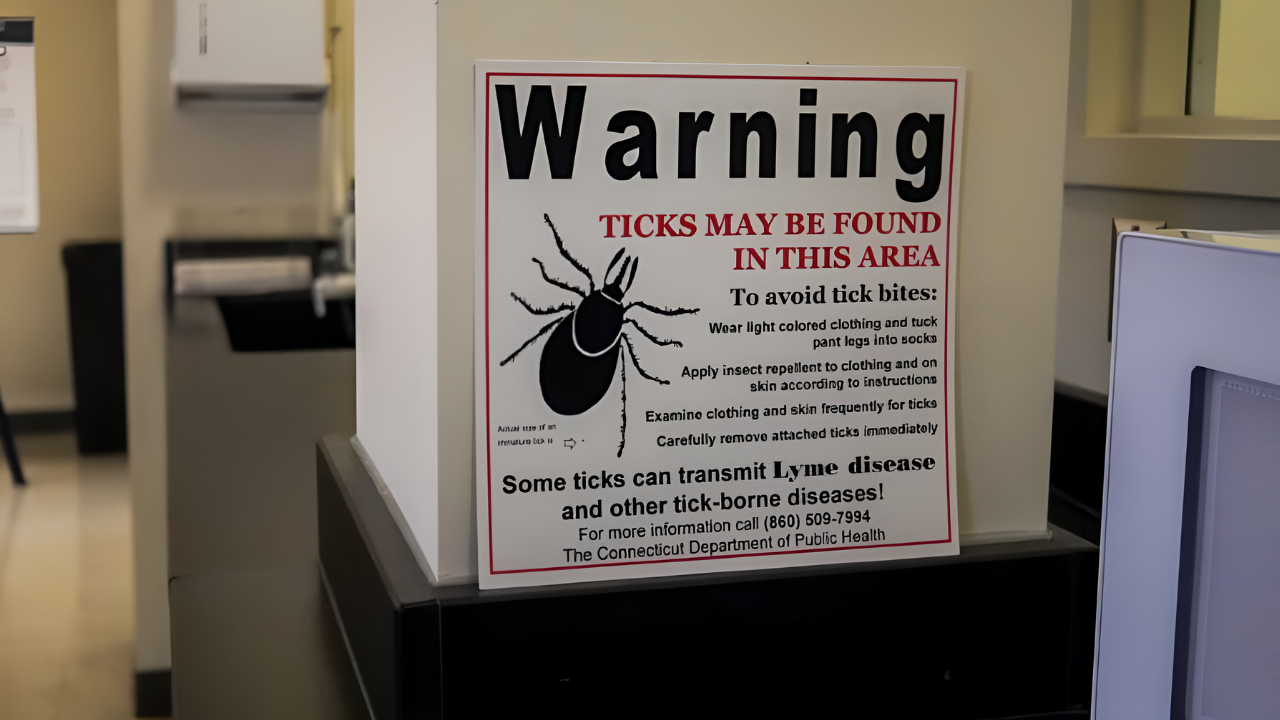
Every year, Lyme disease infects an estimated 476,000 Americans—more than West Nile virus and dengue combined. Yet this silent epidemic is rarely discussed outside its hotspots. It begins not with a dramatic outbreak, but with a slow, steady spread.
The disease, transmitted by blacklegged ticks, is quietly reshaping America’s public health priorities. How did a disease once confined to the Northeast expand so rapidly? The answer lies in a complex mix of ecological and societal changes.
The Numbers Explode

In 2022, 62,551 confirmed cases of Lyme disease were reported in the U.S., marking a 68.5% increase from the 2017–2019 average of 37,118 cases. But what’s driving this surge? The CDC points to a revised case definition from January 2022, which allows labs in high-incidence states to report cases without clinical documentation.
While this method has revealed hidden cases, it also raises the question: how much of the disease went undetected before the revision?
The Origins of Lyme Disease

Lyme disease first emerged in the 1970s in Lyme, Connecticut, where clusters of arthritis were linked to tick habitats. Researchers identified Borrelia burgdorferi, the bacterium that causes Lyme, and the Ixodes blacklegged tick as the culprit. The disease was initially confined to the Northeast.
But now, it is spreading westward and northward, following deer populations and warmer climates into regions previously unprepared for tick-borne illnesses.
A Perfect Storm

The rise of Lyme disease can be traced to several factors: climate change extends tick seasons, while suburban sprawl brings more humans into deer habitats. At the same time, tick predators are dwindling, and diagnostic tools have improved, catching more cases.
Yet, public awareness remains low in many emerging areas, transforming Lyme from a regional concern into a national health crisis, with 15 states now classified as high-incidence by the CDC.
The Epicenter

Ten states account for over 80% of all reported Lyme disease cases in the U.S., with the Northeast forming the epicenter. These states are experiencing endemic transmission, meaning Lyme disease is perpetually present in their tick populations. In 2022, Rhode Island reported the highest incidence rate, with 212 cases per 100,000 residents—far exceeding the national average of 20 per 100,000.
The geographic clustering of these cases has prompted heightened public health efforts and growing concern about the disease’s continued spread.
Rhode Island: The Hardest Hit

Rhode Island carries the heaviest Lyme disease burden in the nation, with 212 cases per 100,000 residents in 2022. Approximately 1 in 500 residents contracted Lyme that year. The state grapples with rising tick populations, abundant deer, and mild winters—ideal conditions for blacklegged ticks.
Hospitals are overwhelmed during tick season. This critical situation has spurred demand for expanded treatment capacity and comprehensive public awareness programs to reduce transmission risk.
Vermont: America’s Second-Highest Burden

Vermont ranks second nationally for Lyme disease incidence, with 202.8 cases per 100,000 residents and 1,312 confirmed cases in recent years. The state has expanded resources for patients with persistent Lyme disease symptoms and intensified prevention efforts. School districts and healthcare providers routinely implement tick-awareness guidelines.
Vermont’s epidemic reflects decades of northward disease expansion as climate and habitat changes favor tick survival and reproduction in previously unaffected regions.
Maine: Record Surge and Psychological Toll

Maine experienced an unprecedented surge in Lyme cases, reaching a record 3,035 in 2024, nearly double the number from five years earlier. With 192.6 cases per 100,000 residents, Maine ranks third nationally. The explosion of cases has fundamentally changed residents’ behavior. Children and adults routinely check for ticks after outdoor activities.
Local schools issue tick-awareness guidelines, and pediatricians regularly screen for infection. The psychological toll is significant, with many reconsidering outdoor recreation.
West Virginia: Surprising High-Incidence Hot Spot

West Virginia has emerged as an unexpected Lyme disease hot spot, ranking fourth nationally with 138.3 cases per 100,000 residents and 2,470 confirmed cases. This Appalachian state’s abundance of forests, wildlife, and outdoor recreation contributes to high tick exposure. Climate change has expanded tick seasons and geographic range into West Virginia.
The state’s growing Lyme burden reflects how the disease is penetrating beyond traditional Northeast strongholds into regions with less clinical awareness and diagnostic capacity.
Wisconsin: Upper Midwest’s Lyme Crisis

Wisconsin ranks fifth nationally for Lyme disease incidence, with 88.6 cases per 100,000 residents and 5,208 confirmed cases. The state conducts tick surveillance through coordinated monitoring programs at sentinel sites to track disease trends. Wisconsin has become a crucial geographic bridge, demonstrating how Lyme disease is expanding beyond the Northeast into Upper Midwest states.
The state’s tick populations now carry Lyme bacteria in significant percentages, transforming the region’s tick-borne disease landscape.
New York: The Case Count Leader

New York leads the nation in absolute numbers of Lyme disease cases, with 16,798 confirmed cases and an incidence rate of 84.6 per 100,000 residents in 2022. From New York City’s outer boroughs to the Adirondacks, Lyme disease transmission occurs statewide. The state has approved advanced Lyme testing methods and supported financial assistance programs for treatment.
New York’s experience demonstrates how disease burdens can vary dramatically within a single state based on geography and human-tick contact patterns.
Pennsylvania: Geographic Pivot Point

Pennsylvania reported 8,413 cases in 2022, the second-highest count in the country. More concerning, ticks infected with Lyme-causing bacteria have been found in all 67 counties. The disease’s spread follows deer migration patterns and transportation routes, making Pennsylvania a regional epicenter.
The state has accounted for a significant portion of U.S. Lyme cases since 2016, signaling its pivotal role in the disease’s geography and its function as a transmission corridor.
Massachusetts and New Hampshire: Northern New England’s Surge

Massachusetts ranks eighth nationally with 72.3 cases per 100,000 residents and 5,052 confirmed cases, while New Hampshire ranks seventh with 78.2 per 100,000 and 1,085 confirmed cases. Both states exemplify the northward expansion of Lyme disease into previously lower-incidence regions. New Hampshire experienced particularly steep increases over the past two decades.
Together, these states represent the expanding geographic frontier where Lyme disease is becoming endemic in populations historically unaccustomed to tick-borne disease risk.
New Jersey: Mid-Atlantic Contributor

New Jersey rounds out the top ten states, with 63.6 cases per 100,000 residents and 5,897 confirmed cases. The state accounts for approximately 12% of all U.S. Lyme disease cases from 2016–2019. Three northern counties—Hunterdon, Warren, and Sussex—report the highest disease incidence.
New Jersey’s role as a major transmission hub reflects both high tick populations and significant human exposure through outdoor recreation, demonstrating how mid-Atlantic states have become co-epicenters of America’s Lyme disease crisis.
The Path Forward: National Response and Prevention

As Lyme disease spreads across America’s ten highest-burden states and beyond, state health departments face a critical decision: invest now in prevention or bear the costs of treatment and chronic illness later. Some legislators are calling for a dedicated Lyme disease research initiative, similar to the cancer moonshot program.
The question is not whether cases will rise in these ten states and others, but whether America’s health system can adapt fast enough to prevent the epidemic from worsening.
Sources:
“Surveillance for Lyme Disease After Implementation of a Revised Case Definition — United States, 2022” (CDC/MMWR, February 2024)
“History of Lyme Disease” (Bay Area Lyme Foundation, 2022)
“Climate Change Indicators: Lyme Disease” (U.S. EPA, December 2024)
“Documented US Lyme disease infections soared in 2022 after updated case definition” (CIDRAP, University of Minnesota, February 2024)
Maine CDC Lyme Disease Report and Press Release (Maine Department of Health and Human Services, 2024)