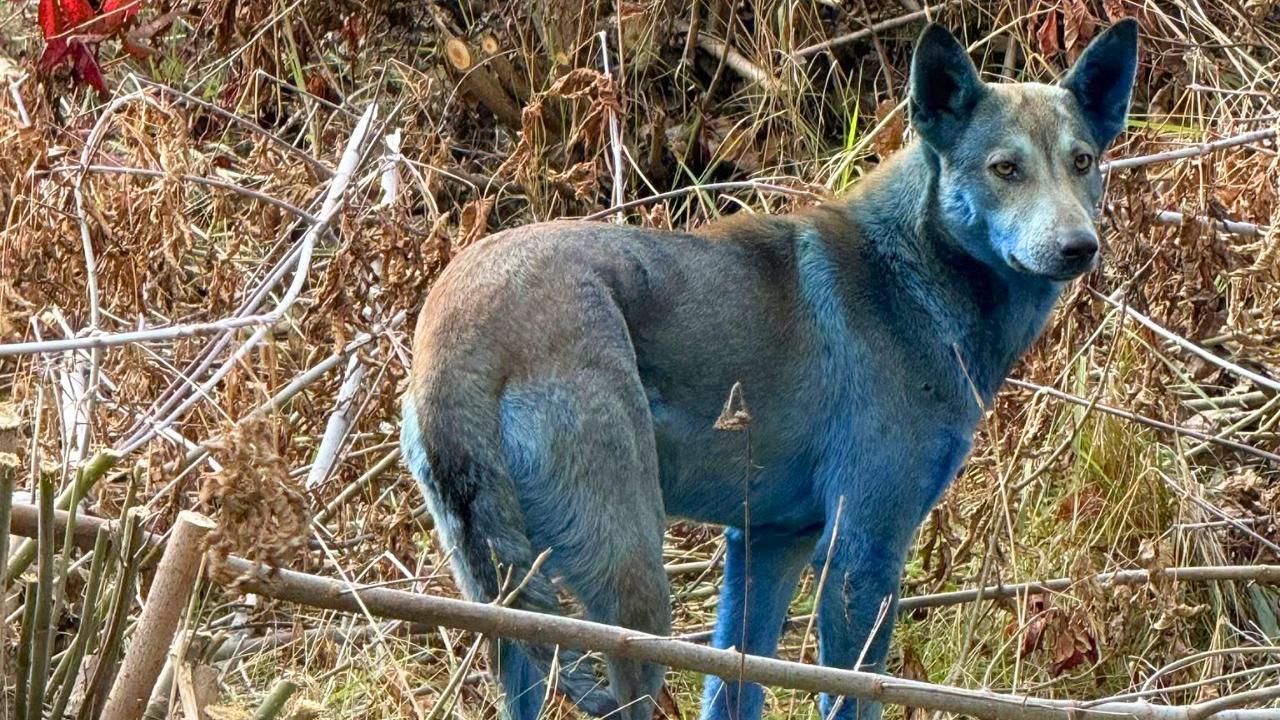
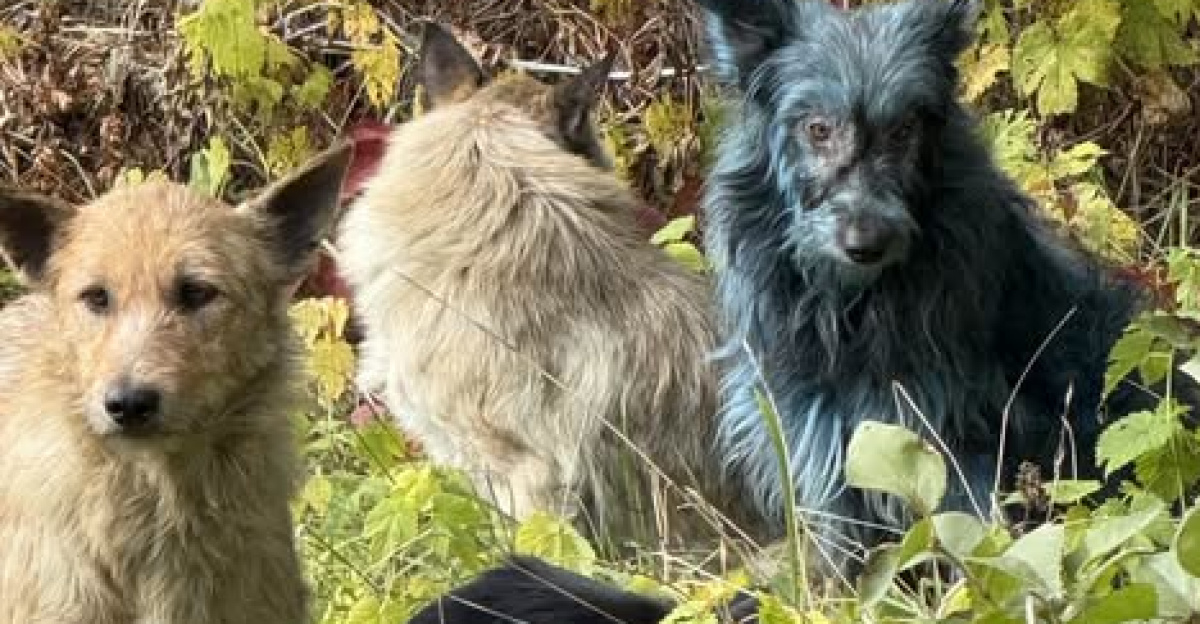
In October 2024, workers and volunteers encountered three stray dogs with striking bright blue fur near Ukraine’s Chernobyl Exclusion Zone. The contaminated area surrounding the 1986 nuclear disaster remains heavily radioactive and closed to public access.
Photos of the periwinkle canines spread rapidly across social media, captivating global audiences instantly. Within hours, online speculation ignited about what caused such unusual coloring.
The vivid, mysterious images demanded a scientific explanation. People worldwide debated the origins of those blue coats.
Speculation Explodes

As images circulated on TikTok and Facebook, users generated wild theories about the blue dogs. Some claimed the blue dye proved radiation-induced mutations—a visible marker of genetic adaptation to extreme exposure.
Others proposed evolutionary changes, making the dogs uniquely suited to contamination. Some commenters dismissed the images as AI-generated fakes, claiming the bright blue seemed surreal against the desolate landscape.
Scientists initially offered no explanation, which fueled further speculation. The public constructed conclusions from limited information. Each reshare deepened the mystery exponentially.
The Evacuation Legacy
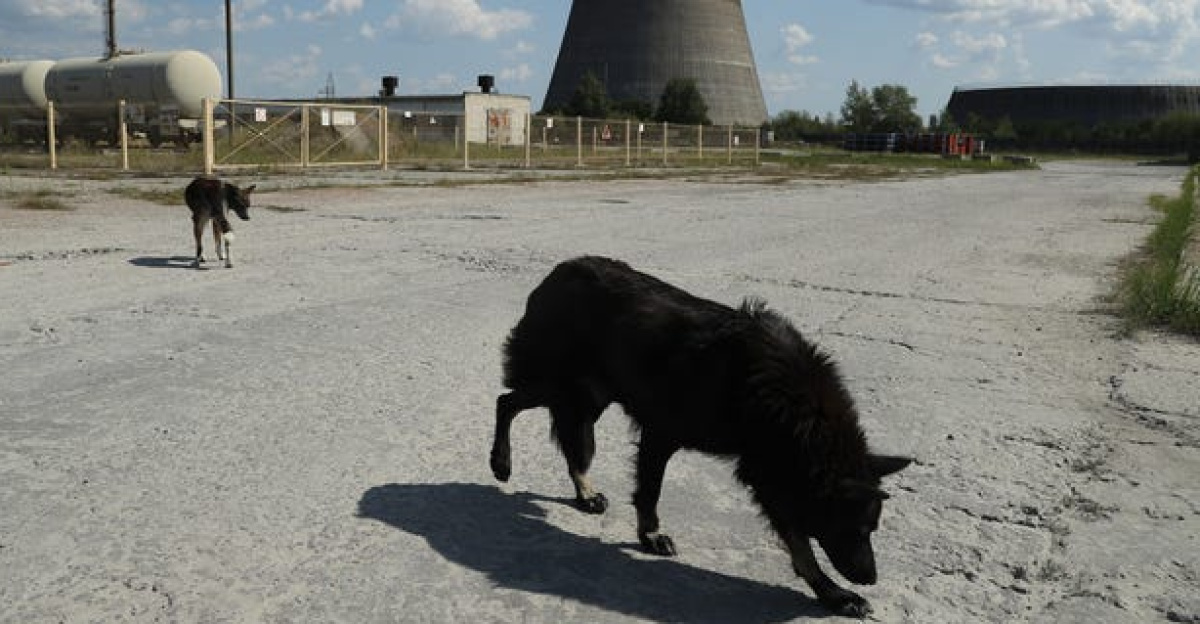
To understand why Chernobyl housed these dogs, we must return to April 26, 1986, when Reactor No. 4 exploded. The Soviet Union quickly established an 18.6-mile exclusion zone and evacuated over 120,000 people from 189 cities and communities within days.
Officials forced evacuees to leave temporarily, promising a return within three days. They prohibited residents from bringing pets. Families abandoned dogs, cats, and livestock, expecting a reunion soon. That reunion never occurred.
Over three decades later, descendants of those abandoned pets still roam the contaminated zone today.
Survival Against Odds

After the 1986 evacuation, Soviet Army soldiers attempted to cull abandoned animals to prevent contamination spread. However, many animals hid throughout the vast exclusion zone, making systematic extermination impossible across the 1,004-square-mile area.
Surviving animals bred feral across generations in one of Earth’s most hostile environments. By 2024, approximately 700 stray dogs inhabited the Chernobyl Exclusion Zone, concentrated around the power plant and nearby Chernobyl City.
Dogs faced extreme hardship: malnourishment, rabies exposure, wolf predation, radiation contamination, wildfires, and dramatically shortened lifespans averaging just five years. Yet they persisted remarkably.
The October Encounter
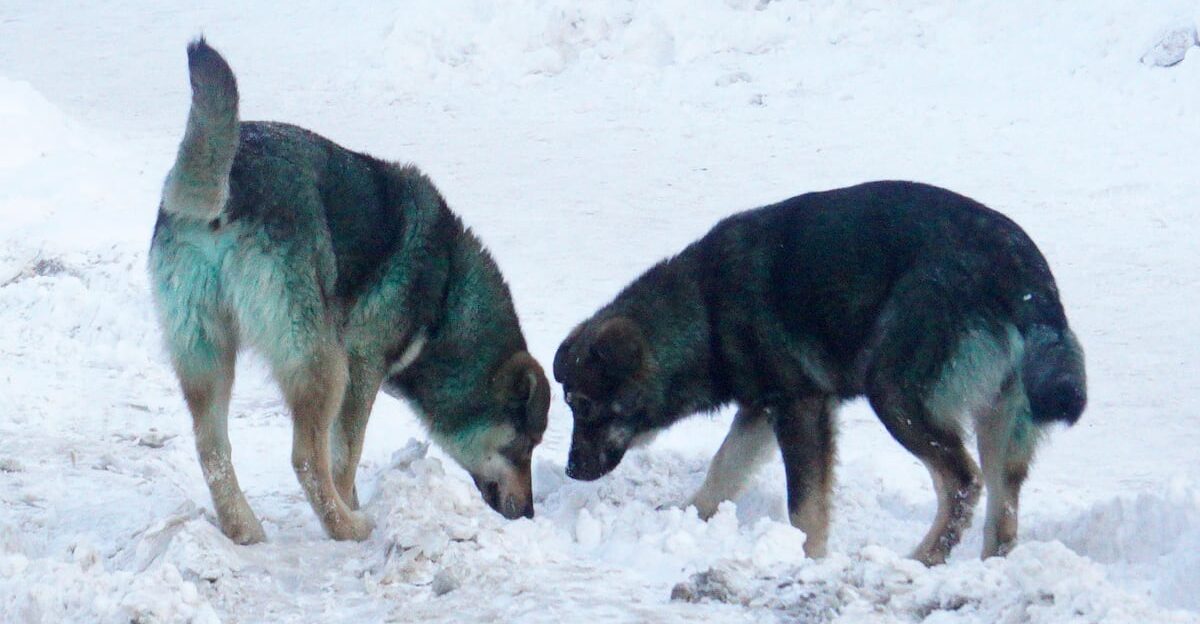
In early October 2024, the Dogs of Chernobyl team conducted its annual mission. They aimed to capture, sterilize, vaccinate, and release dogs to control the population and reduce suffering.
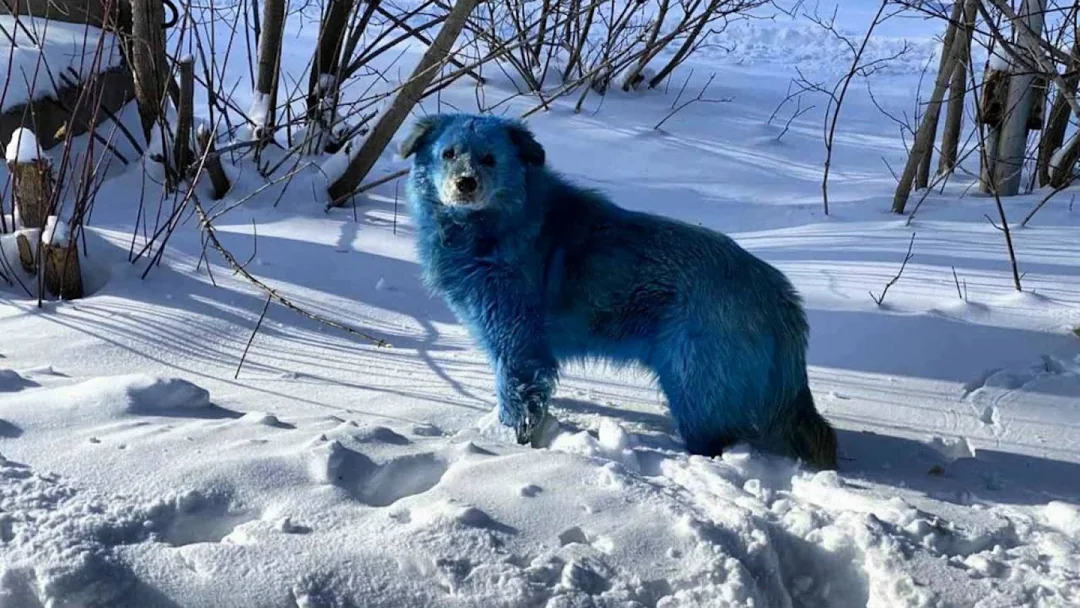
From October 5 to 13, team members discovered something unprecedented: three dogs completely coated in bright blue substance. The coloration appeared uniform, vivid, and unmistakable. Dr. Jennifer Betz, the Veterinary Medical Director, documented the sighting.
Multiple capture attempts failed—the three blue-furred dogs remained too skittish to be sedated and transported. The team photographed them and shared images on social media, acknowledging their uncertainty about the origin.
The Program Behind the Dogs
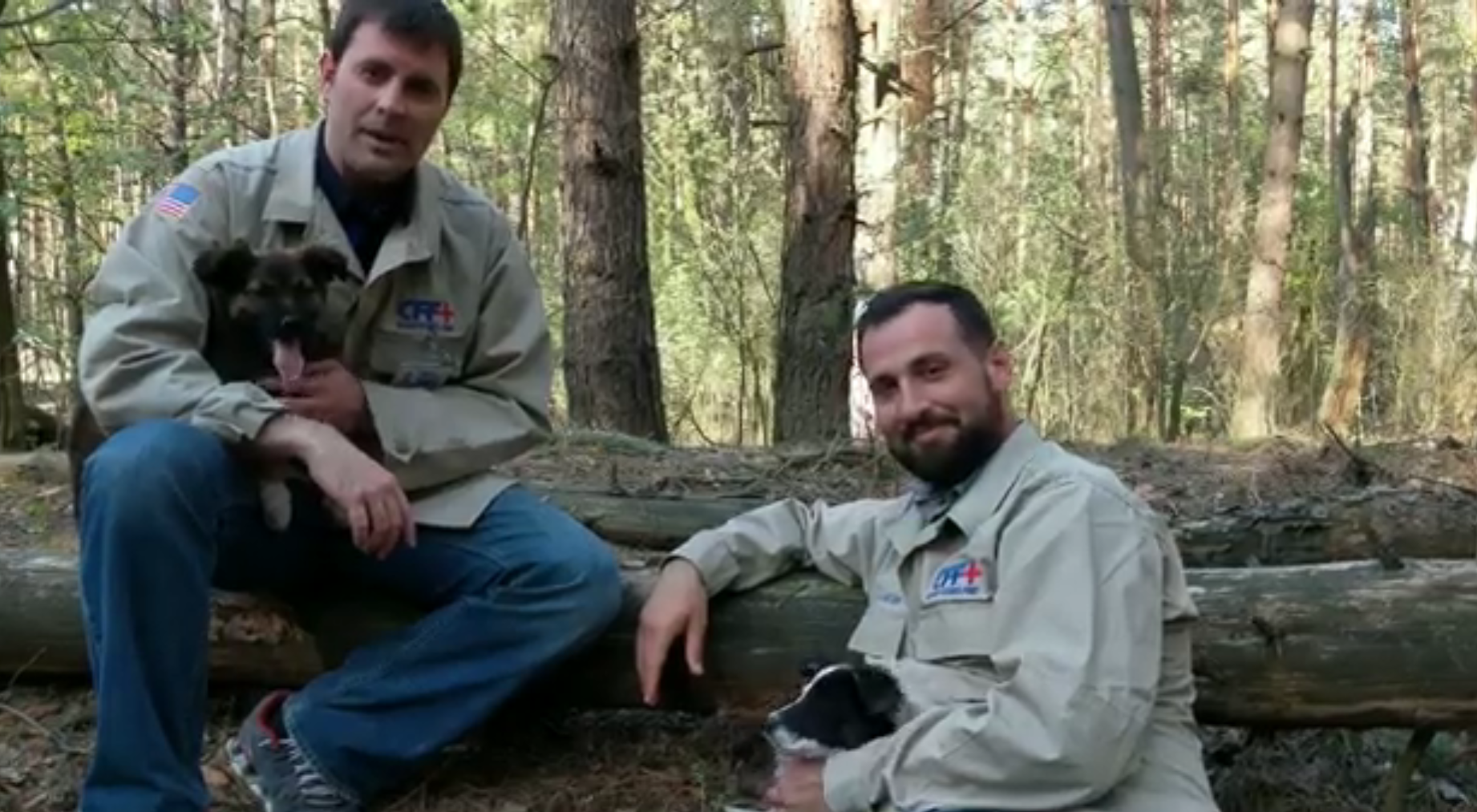
Erik Kambarian and Lucas Hixson founded Clean Futures Fund in 2016 as a humanitarian organization addressing communities affected by industrial disasters. In 2017, they launched the Dogs of Chernobyl program specifically to help the feral population at the nuclear site.
The organization transitioned from a theoretical concern to direct action, recruiting veterinarians, veterinary technicians, scientists, and volunteers worldwide to provide medical care. Teams established annual clinics at three strategic locations within the exclusion zone.
Every year, they vaccinate, spay, and neuter hundreds of dogs. After 2019, they added food and water stations when most workers departed.
Conditions Inside the Zone
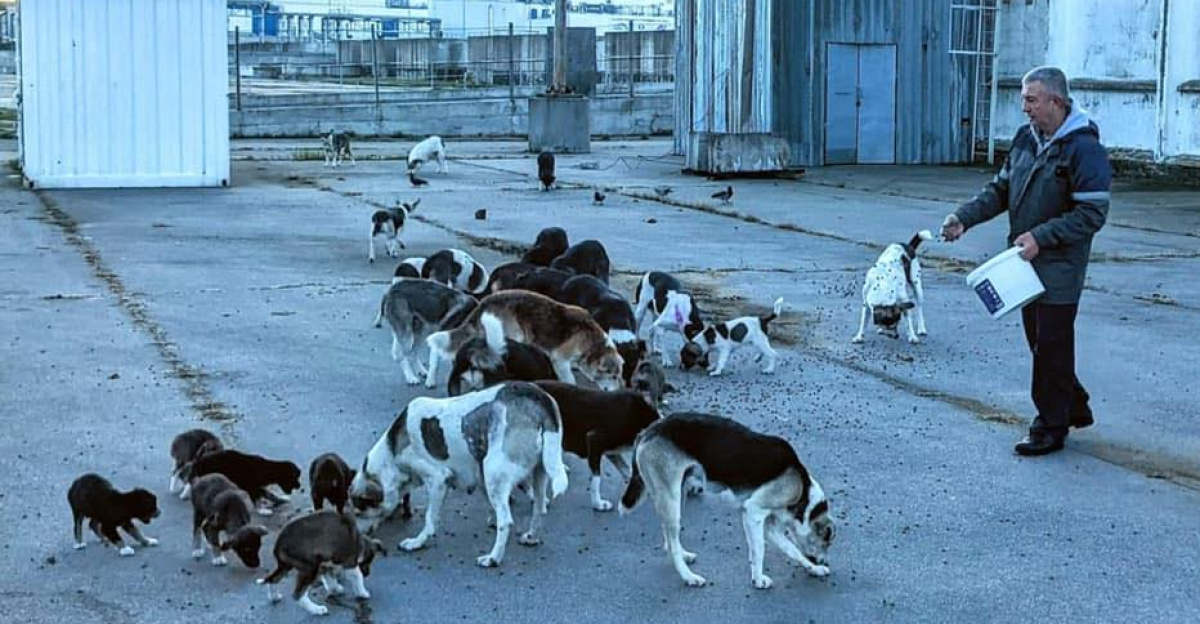
Seven hundred dogs living in the Chernobyl Exclusion Zone face conditions unlike any other stray population on Earth. The zone contains 11.28 millirem of radiation—approximately six times the maximum permissible exposure level for human workers.
Dogs receive veterinary care only during annual Clean Futures Fund visits. They lack reliable food supplies without human intervention and face predation by aggressive wolf packs. Water sources may contain contamination. Shelter remains minimal.
Rabies circulates among the population, transmitted by wild animals. Workers at the power plant—approximately 3,500 people daily—sometimes feed dogs scraps, creating a tenuous symbiosis in this abandoned landscape.
Scientific Interest Grows

Before the blue dogs appeared, Chernobyl’s canine population attracted significant scientific attention. In 2017, researchers from the University of South Carolina and the National Human Genome Research Institute launched the Chernobyl Dog Research Initiative.
Between 2017 and 2019, teams collected genetic samples from 302 dogs across three distinct populations: those near the power plant (with the highest radiation exposure), those in Chernobyl City (with lower exposure, approximately 10 miles away), and comparison populations outside the exclusion zone.
Researchers examined the dogs’ genomes for mutations, genetic diversity patterns, and signatures of adaptation. Scientists positioned Chernobyl dogs as a unique living laboratory for understanding how large mammals respond to chronic radiation exposure.
Contradictory Findings Emerge
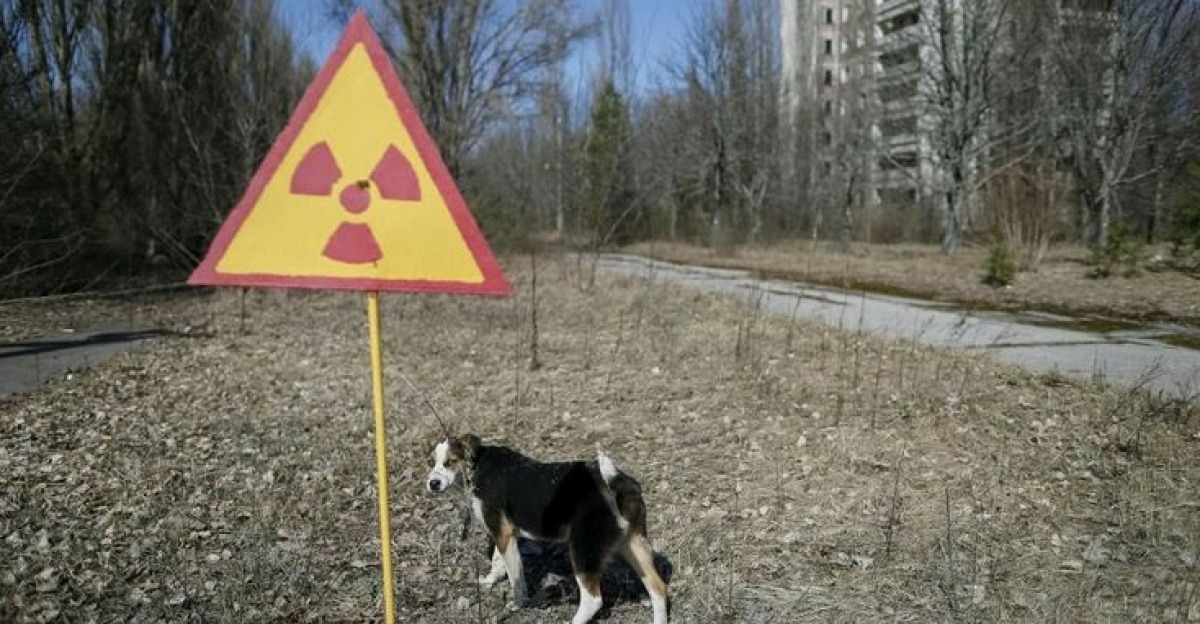
Initial 2023 research found genetic differentiation between dogs at the power plant and those in Chernobyl City, suggesting potential radiation-driven adaptation. However, subsequent studies published in 2024 directly contradicted this interpretation.
A comprehensive PLOS ONE analysis in December 2024 examined short tandem repeat diversity and recently derived alleles—genetic markers indicating elevated mutation rates. Researchers found no evidence that radiation-induced mutations caused the genetic differences observed in Chernobyl dogs.
Instead, population isolation, inbreeding, and founder effects created genetic differentiation rather than radiation exposure. The scientific consensus shifted dramatically: while dogs showed genetic distinction, radiation played no role whatsoever. The blue dogs arrived amid this uncertain scientific landscape.
The Porta-Potty Revelation

In late October and early November 2024, Dr. Jennifer Betz shared the team’s hypothesis with organization partners and media contacts. The Dogs of Chernobyl suspected the blue coloration came from a tipped-over portable toilet near where the dogs lived.
Standard porta-potty disinfectants contain bright blue dyes designed to break down waste and mask odors. If a porta-potty tipped over, dogs would roll through the mixture of feces and dye, attracted to such substances.
Such behavior matches typical canine scavenging patterns, like dogs rolling in cat litter boxes. Dr. Betz emphasized that if correct, coloration posed minimal health risk if dogs consumed minimal dried chemicals.
Expert Debunking Begins

Timothy Mousseau, a biology professor at the University of South Carolina and scientific advisor to Dogs of Chernobyl, directly addressed spreading theories. In December 2024, Mousseau posted to the Dogs of Chernobyl Facebook page: “The blue dye likely came from a tipped-over porta-potty where the dogs rolled around in poop, as dogs do.”
He emphasized the ordinariness of this behavior, comparing it to how some dogs love cat litter boxes. Mousseau’s direct, slightly exasperated tone reflected the distance between scientific reality and public speculation.
His intervention proved necessary because organizational silence allowed theories to flourish unchecked. An authoritative voice now provided a clear counter-narrative based on canine behavior.
Debunking Mutation Claims

Mousseau vigorously rejected theories of mutation and evolutionary adaptation. He stated, “The blue coloration simply showed the dog’s unsanitary behavior! As any dog owner knows, most dogs eat just about anything, including feces.”
This blunt formulation intentionally stripped away any glamour or scientific mystique clinging to the mutation narrative. Mousseau then addressed broader claims circulating online alongside the blue fur story. He dismissed viral assertions that “Chernobyl dogs have higher or lower cancer rates” and rejected claims about “wolves near the Belarus border developing anti-cancer immune systems.”
He explained that Chernobyl dogs rarely lived long enough for cancer to develop, and verifying such claims would require analyzing tens of thousands to millions of cases.
Social Media Amplification

The initial Dogs of Chernobyl posts reached millions on TikTok and Facebook before the expert explanation arrived. The organization’s uncertainty (“We are not sure exactly what is going on”) invited speculation rather than limiting it.
Videos of the blue dogs have spread, accompanied by commentary ranging from excited scientific speculation to conspiratorial theories. Some TikTok users created elaborate threads connecting the dogs to radiation mutation, genetic engineering, or climate change experiments. Others questioned the photograph’s authenticity, proposing that it was generated by AI.
The two-month gap between the October discovery and December expert explanation allowed misinformation to take root in public consciousness. By the time Mousseau explained the truth, he faced the cognitive barrier of previously formed beliefs and viral content that had already been shared hundreds of thousands of times.
The Misinformation Problem
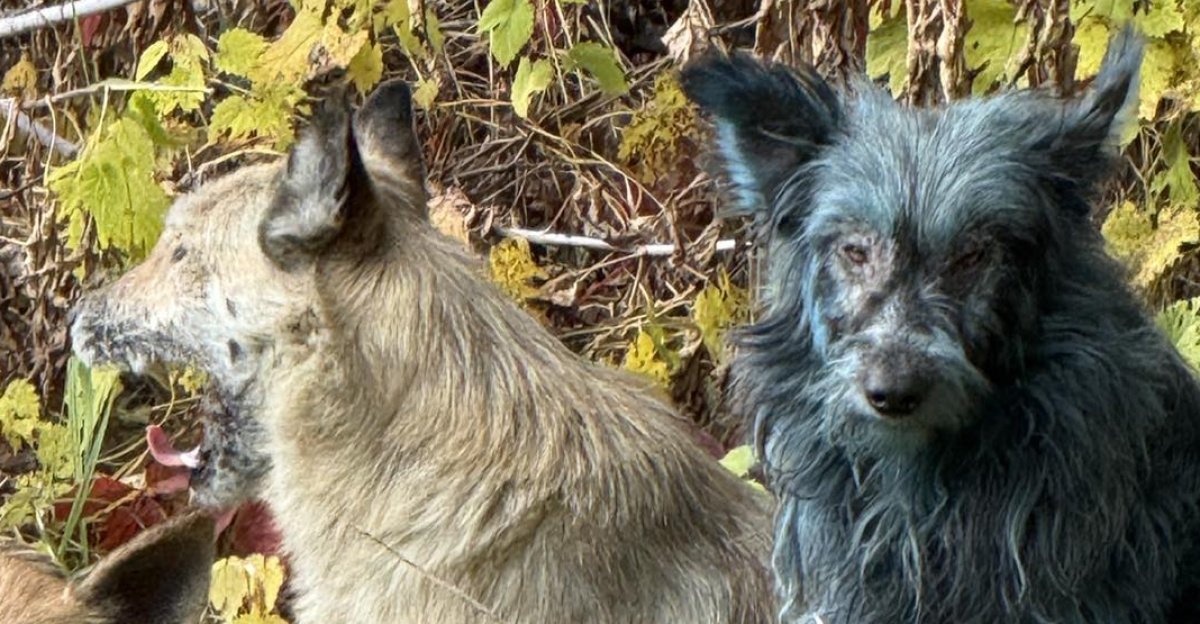
The blue dogs case illustrated a persistent modern challenge: images travel faster than expert explanations. One widespread claim suggested Chernobyl dogs developed “genetic superpowers” including radiation immunity, heavy metal immunity, and pollution immunity.
This narrative cherry-picks findings from the 2023 genetic differentiation study, while ignoring the 2024 research that contradicted it, showing no evidence of mutation. Network for Animals, a UK-based organization, published an article headlined “Dogs living near Chernobyl nuclear disaster have mutated to develop a new superpower,” citing a study that didn’t support such dramatic conclusions.
This article then spread as validation of mutation theories, creating a feedback loop where scientific misinterpretation reinforced public misconceptions. The blue dogs became symbols of radiation’s power rather than evidence of porta-potty exposure.
Implications for Future Disasters
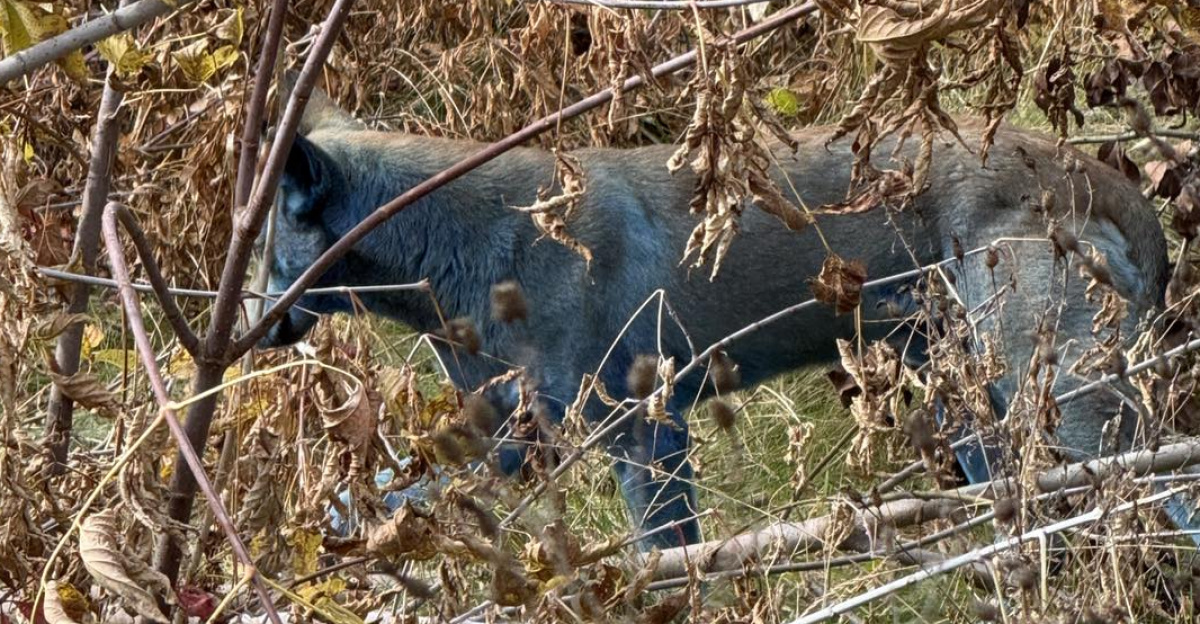
The blue dogs mystery offers insights applicable to future nuclear incidents, environmental contaminations, or industrial disasters. When organizations initially disclose unexpected phenomena, explicit acknowledgment of uncertainty can either invite speculation or frame boundaries for appropriate inquiry.
The Dogs of Chernobyl’s honest statement that they “did not know” the reason reflected appropriate scientific humility but created an explanatory vacuum. Forward-looking crisis communication recommendations suggest pairing uncertainty acknowledgment with preliminary expert analysis and clear statements about implausible hypotheses.
Had Mousseau’s porta-potty explanation accompanied the October photos, the narrative arc would have differed entirely. The lesson extends beyond Chernobyl: in an age of viral imagery, the speed of expert explanations matters as much as their accuracy itself.
Ongoing Genetic Research
Despite the blue dogs’ mundane cause, the larger scientific mission continues. Researchers with the National Human Genome Research Institute and the University of South Carolina have not had access to dog samples since 2020 due to the ongoing Russo-Ukrainian War.
The conflict disrupted annual clinic operations, preventing the collection of new genetic samples and complicating long-term comparative studies. However, the research foundation laid through 2019 remains robust. Scientists have determined that the genetic differentiation observed in Chernobyl dogs results from population isolation and inbreeding, rather than radiation-driven mutation.
Future research priorities include determining whether genetic differences affect survival, reproduction, or physical expression—questions requiring access to living populations and longitudinal data collection. War has frozen Chernobyl dog research in time, creating significant understanding gaps.
Adoption and Relocation Programs
The Clean Futures Fund previously facilitated the international adoptions of Chernobyl dogs, relocating animals to North America and Europe. In 2018, approximately 200 dogs qualified for adoption in the United States, with the first group of 12 departing for new homes in June.
Dogs underwent 45-day quarantine in Slavutych (the resettlement city for power plant workers) and veterinary screening for radiation contamination before boarding aircraft. However, the adoption program paused due to scientific and regulatory concerns about relocating animals with potential radiation exposure.
No clear international protocols have determined safe radiation thresholds for relocated animals. Pandemic concerns and Ukraine’s war further halted these efforts completely. Current policy maintains adoptions in indefinite suspension, keeping the zone’s dogs concentrated at the site.
Viral Theories and Platform Spread

An analysis of the Blue Dogs’ social media journey reveals how rapidly misinformation spreads on visual platforms. TikTok, where video content dominates, proved particularly effective at spreading mutation theories without expert context.
The hashtag #ChernobylBlueDogs accumulated millions of views by November 2024. Facebook groups dedicated to science and wildlife amplified the story, often with sensationalized commentary (“Dogs have mutated with superpowers”). YouTube channels posted speculative videos alongside excerpts from genetic studies, creating a false sense of authority through selective citation.
Reddit threads generated extensive discussion featuring competing theories, with upvoted comments favoring the mutation narrative because it seemed more dramatic. Platform algorithms rewarded engagement, meaning sensational posts outpaced factual corrections in visibility. Many users encountered authoritative debunking only through active searching.
Pripyat’s Long Shadow

The blue dogs’ story echoes an earlier tragedy: the hasty evacuation of Pripyat in 1986. As evacuees boarded buses, soldiers pushed away dogs attempting to follow. An oral history in “Chernobyl Prayer” documents the scene: “Dogs howling, trying to get on the buses. Mongrels, alsatians.
The soldiers pushed them out again, kicking them. They ran after the buses for ages.” Desperate families pinned notes to doors: “Don’t kill our Zhulka. She’s a good dog.” Soviet Army extermination teams shot systematically through Pripyat, though many animals escaped into surrounding villages and forests.
The surviving dogs’ descendants became the feral population that researchers studied decades later. The blue dogs represent the ongoing legacy of sudden human abandonment. These animals adapted to human habitation but now survive independently.
The Mundane Explanation

The Chernobyl blue dogs mystery teaches a straightforward lesson: the most sensational explanation rarely proves correct. A tipped-over porta-potty containing blue disinfectant dye produced the vivid coloration when dogs rolled through feces and chemicals.
The explanation was pedestrian, even unglamorous—precisely what makes it believable. Yet this ordinariness contradicted public expectations that Chernobyl, synonymous with catastrophe and hidden dangers, should produce equally dramatic phenomena.
The viral speculation reflected a preference for narratives that aligned with the site’s symbolic meaning: a place where nature itself had been transformed by radiation. Scientific reality proved less compelling: population isolation, rather than mutation, likely caused genetic differentiation in Chernobyl dogs, and dogs survived through typical canine adaptability.
The blue dogs remain endangered and suffering, deserving protection because they are abandoned animals needing human compassion. That truth, stripped of spectacle, represents genuine significance.
Sources:
- Independent, 8 Dec 2025
- Fox News, 7 Dec 2025
- Popular Mechanics, 3 Dec 2025
- PLOS ONE, 26 Dec 2024
- Bellona, 23 May 2018
- BBC Future, 31 Mar 2022