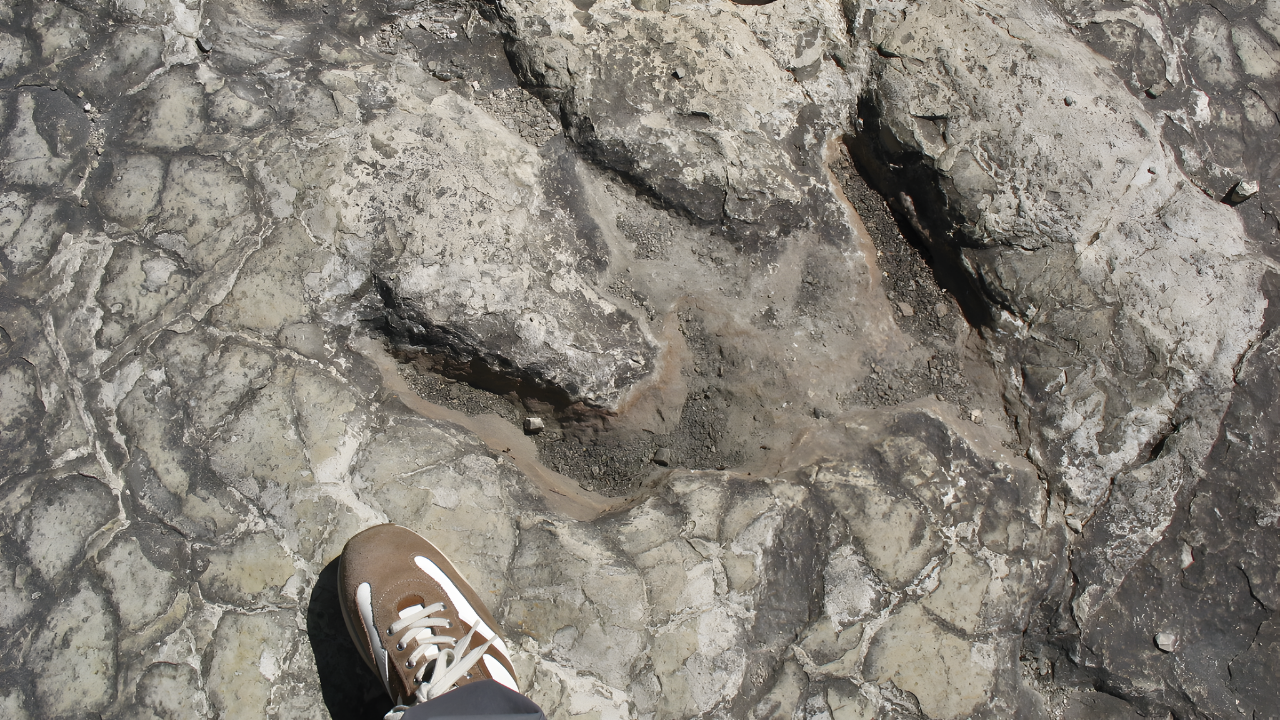
Deep within Bolivia’s Andes Mountains lies an extraordinary geological canvas: a 1.85-acre expanse of limestone bearing approximately 18,000 dinosaur footprints preserved for 66 million years. The Carreras Pampa site in Torotoro National Park has fundamentally transformed our understanding of Late Cretaceous ecosystems, surpassing the previous world record by 50 percent and revealing unprecedented evidence of theropod behavior, migration patterns, and aquatic locomotion that skeletal remains alone cannot provide.
Systematic Documentation Unlocks Hidden Complexity
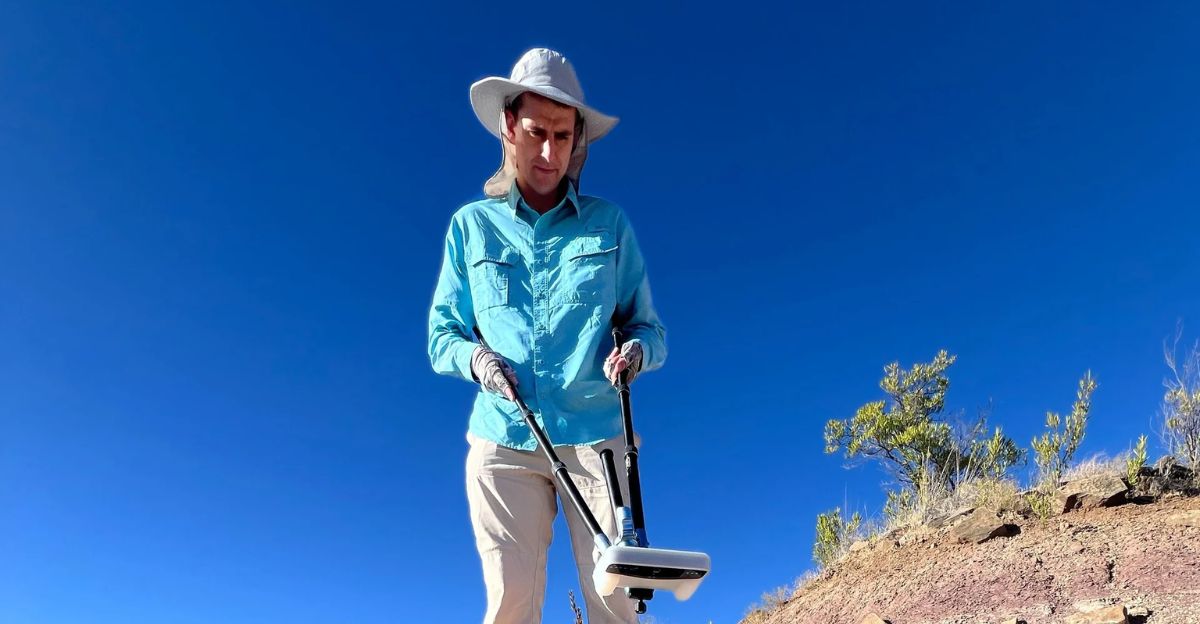
When paleontologist Jeremy McLarty and his international research team arrived at Carreras Pampa in 2021, the site had long been recognized as geologically significant but remained largely unstudied. Using modern documentation techniques—high-resolution photography, three-dimensional digital scanning, precise measurements, and hand-drawn tracings—the team methodically cleared accumulated debris and mapped the carbonate surface with centimeter-level accuracy. This rigorous approach revealed layers of complexity that casual observation could never capture, transforming a geological curiosity into a comprehensive behavioral archive.
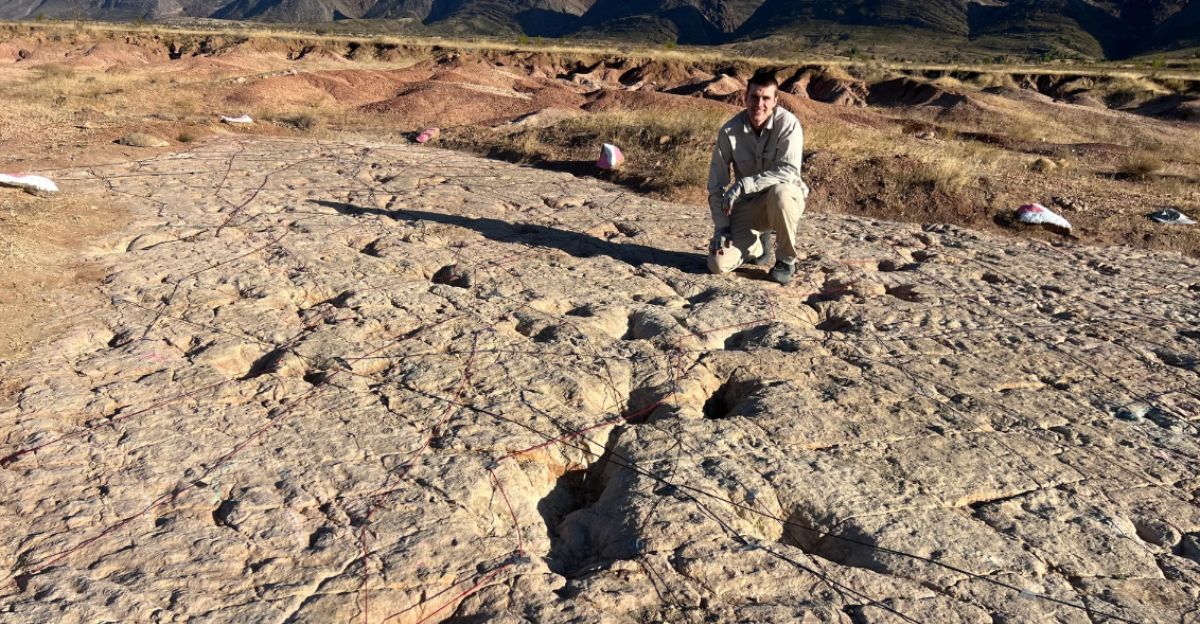
The December 2025 publication in PLOS One documented 16,600 theropod footprints and 1,378 swim tracks across nine distinct study zones concentrated on a single tracking surface. This concentration suggests the site functioned as a high-traffic corridor during a geologically brief interval—possibly days, weeks, or a few years—when dinosaurs repeatedly returned to this ancient shoreline.
Bolivia’s Paleontological Dominance
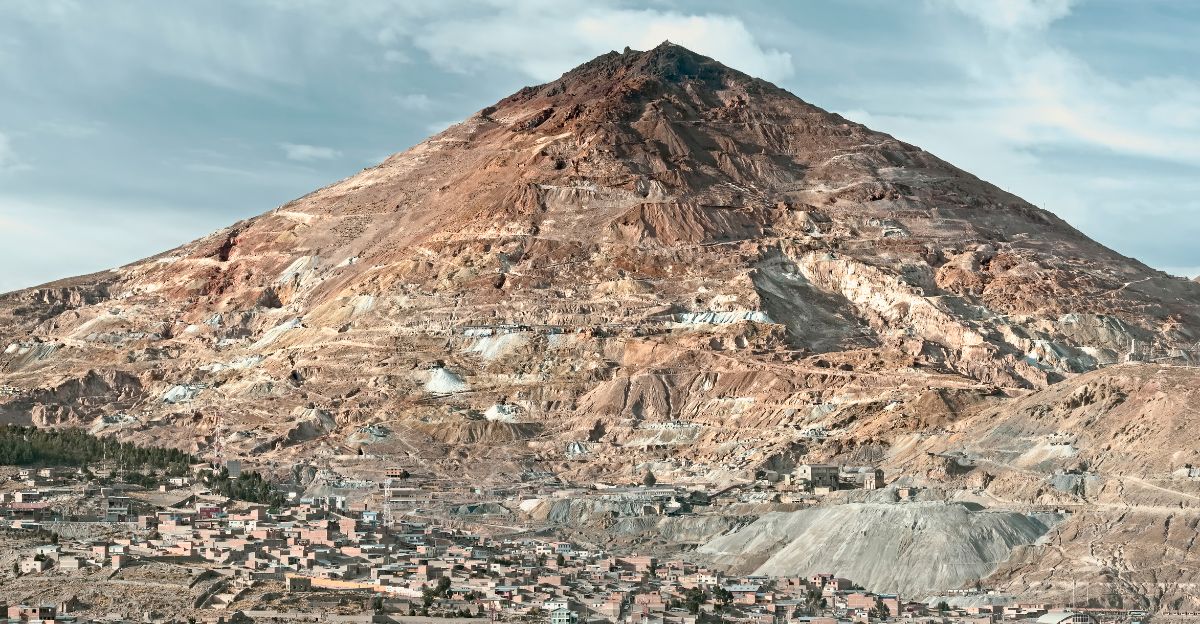
Bolivia ranks as a major paleontological hotspot, containing dinosaur tracksites spanning the Triassic, Jurassic, and Cretaceous periods. The El Molino Formation, which contains Carreras Pampa, represents the final chapter of the Cretaceous period, when the region transitioned from shallow seas to coastal environments. Before Carreras Pampa’s discovery, Cal Orck’o near Sucre held the world record with 12,092 individual tracks documented between 1998 and 2015. Carreras Pampa’s 18,000 impressions shattered this benchmark, definitively repositioning Bolivia as the epicenter of trackway science.
Ecosystem Diversity Revealed Through Track Morphology
Footprint sizes and shapes reveal a thriving ecosystem dominated by multiple theropod species. Impressions range from tiny marks under four inches long—possibly from juvenile dinosaurs or small species—to large prints exceeding twelve inches, suggesting mid-sized predators. The absence of giant T. rex-sized prints indicates that smaller and medium-sized predators dominated this ancient shoreline, revealing a complex food web fundamentally different from popular imagination.
Trackway patterns demonstrate walking, running, sudden turns, tail-dragging, and swimming—behaviors that skeletal remains alone cannot reveal. Most footprints follow consistent northwest-southeast orientations, suggesting dinosaurs traveled together along established pathways. Some tracks display sprint acceleration patterns; others show leisurely strides, indicating dinosaurs used the site under varying conditions and for different purposes.
Swimming Evidence Transforms Understanding of Theropod Behavior
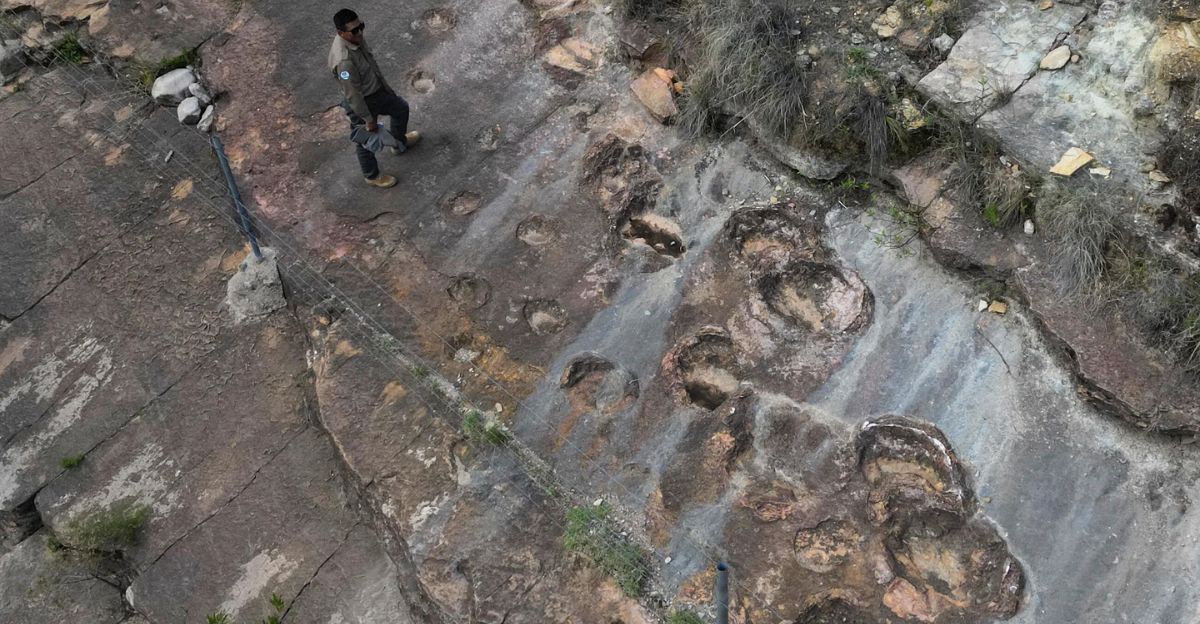
The 1,378 swim tracks represent perhaps Carreras Pampa’s most groundbreaking discovery—the highest number of swimming impressions ever documented at one site. These tracks appear as straight or comma-shaped grooves in alternating left-right patterns, created when theropods used their middle toes to scratch shallow water sediment. This evidence proves that theropods were confident swimmers capable of sustained aquatic locomotion, fundamentally challenging previous assumptions about theropod ecology and habitat use.
Moments Before Extinction
All Carreras Pampa tracks date to the very end of the Cretaceous period, with geological evidence suggesting final deposits formed just before the K-Pg extinction event 66 million years ago. These dinosaurs walked this shoreline moments before an asteroid impact near Mexico’s Yucatán Peninsula triggered a global catastrophe. The 180-kilometer Chicxulub crater unleashed an impact winter that darkened skies, halted photosynthesis, and eliminated roughly 75 percent of species within approximately 32,000 years.
Carreras Pampa crystallizes a profound scientific truth: sometimes the most powerful window into the deep past comes not from skeletal remains, but from the paths dinosaurs literally walked. The 18,000 tracks spanning nine sites reveal communities, populations, and behavioral patterns frozen in stone, offering direct evidence of how dinosaurs moved, behaved, and lived in their ecosystems during Earth’s final moments of the Mesozoic Era.
Sources
PLOS One, December 3, 2025
Jeremy McLarty, SWAU
CNN, December 4, 2025
Britannica, K-T Extinction
Wikipedia, Cal Orck’o
BBC Newsround, December 5, 2025