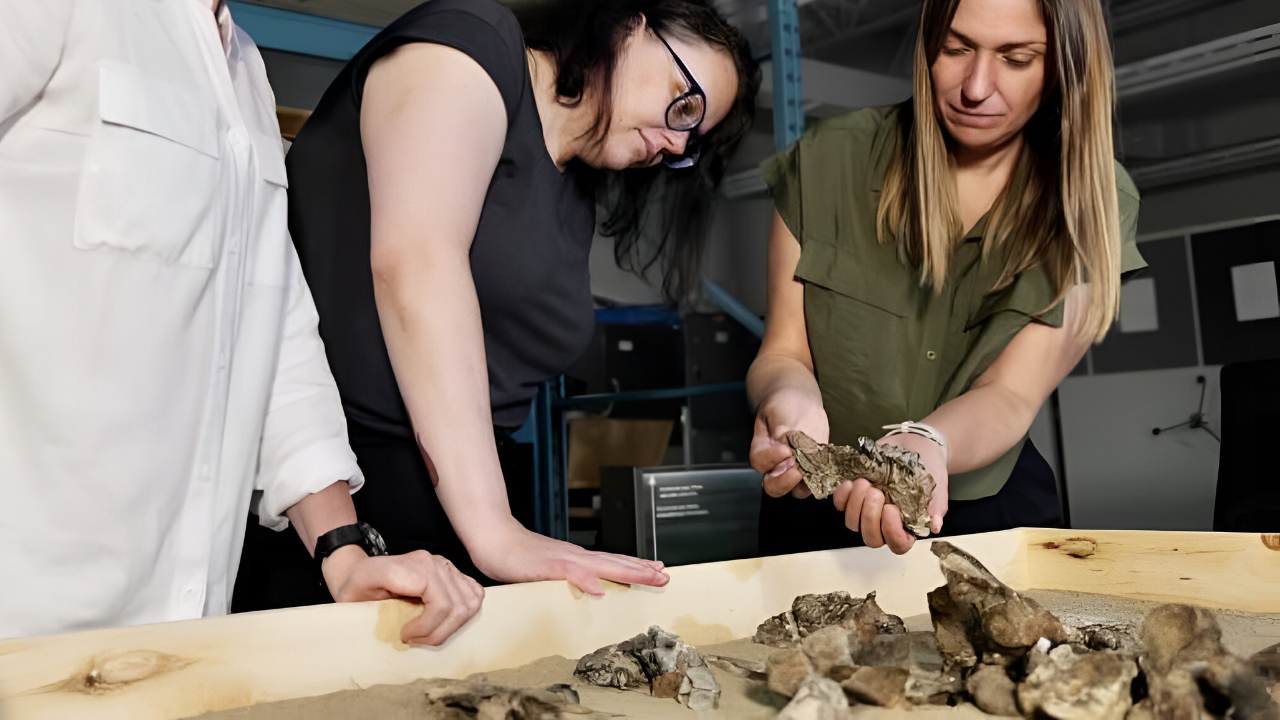
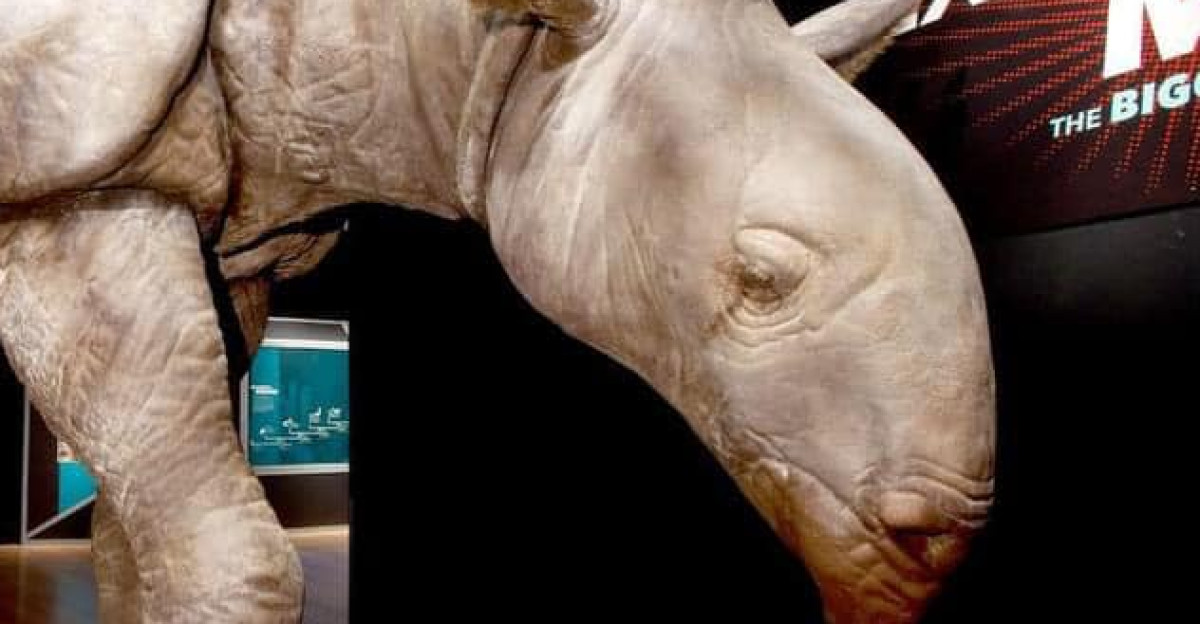
In October 2025, paleontologists announced the discovery of a new rhinoceros species in Canada’s High Arctic. Named Epiatheracerium itjilik the fossil came from Haughton Crater on Devon Island, Nunavut.
It’s the northernmost rhino ever discovered. The 75%-complete skeleton is exceptionally rare. Researchers used it to study rhino evolution globally.
This discovery shifted scientific thinking: the North Atlantic Land Bridge stayed passable for mammals far longer than anyone believed. Scientists must rethink 40 years of assumptions about when animals crossed between Europe and North America.
The Old Timeline
For 50 years, scientists believed the North Atlantic Land Bridge closed around 56 million years ago during the early Eocene epoch. Geological evidence showed the bridge “became disrupted after the Early Eocene” as the Atlantic Ocean widened.
Scientists believed that large mammals like rhinos could no longer cross during the Oligocene and Miocene epochs. No fossil proof existed of recent crossing.
Textbooks taught that North American and European mammals evolved separately for tens of millions of years after the bridge closed.
Meet Epiatheracerium itjilik
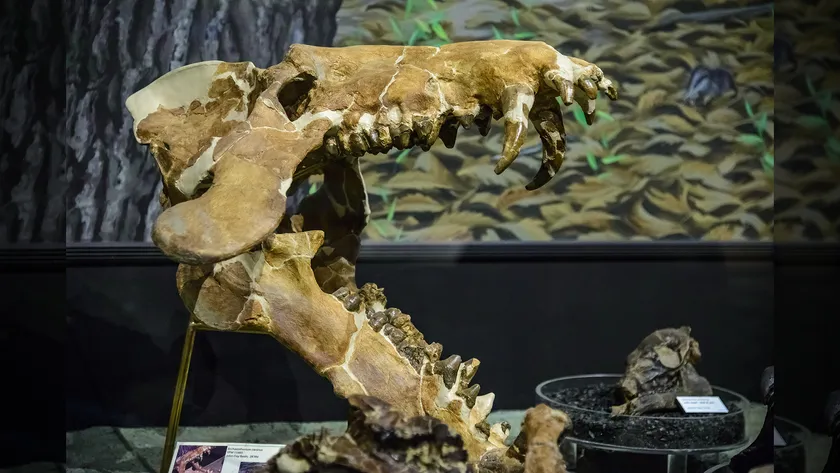
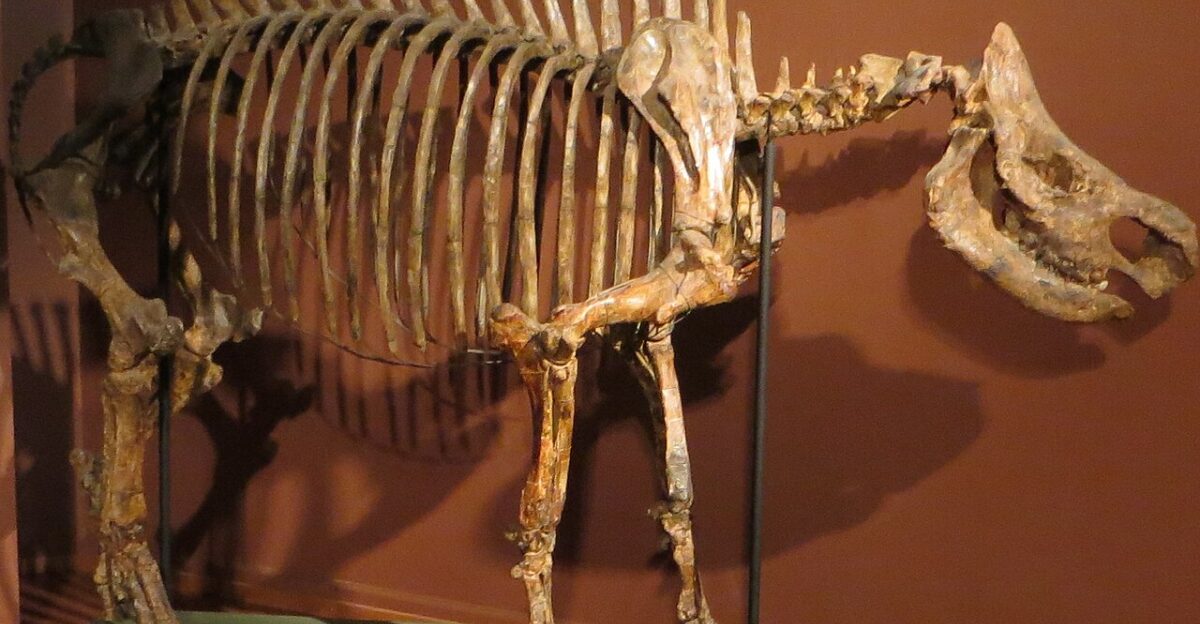
Epiatherium itjilik was a hornless rhino that lived 23 million years ago during the Early Miocene epoch. It stood roughly 5.6 feet tall and lived in temperate forests, not frozen tundra.
Initial fossils were discovered in 1986 by paleontologist Mary Dawson of the Carnegie Museum of Natural History. Later expeditions found more bones.
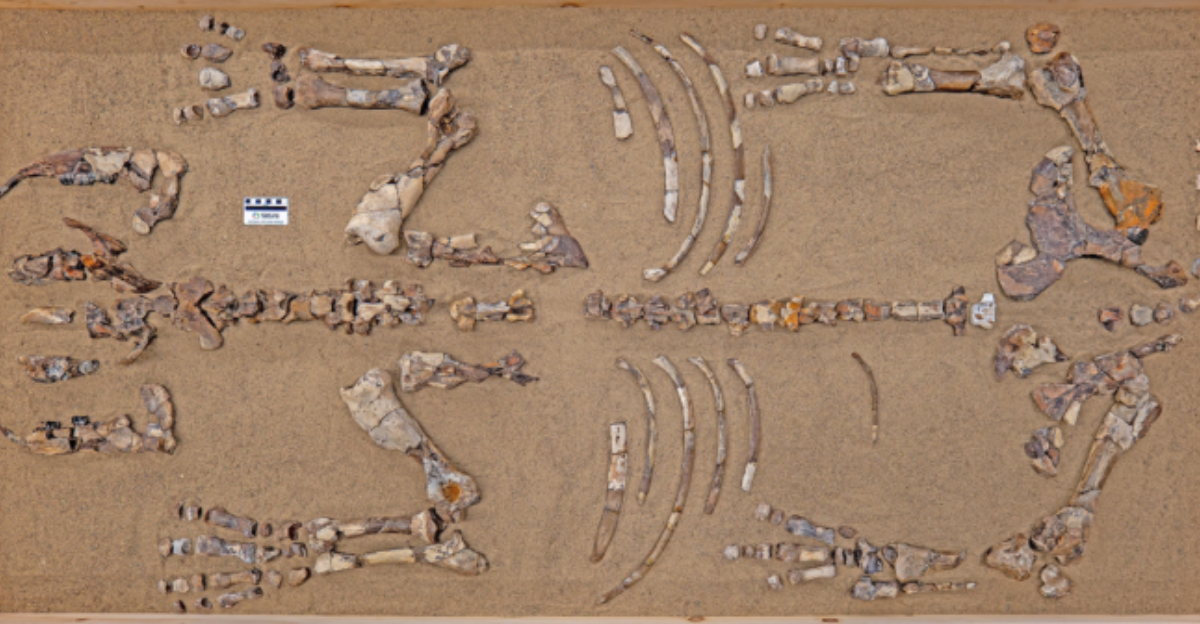
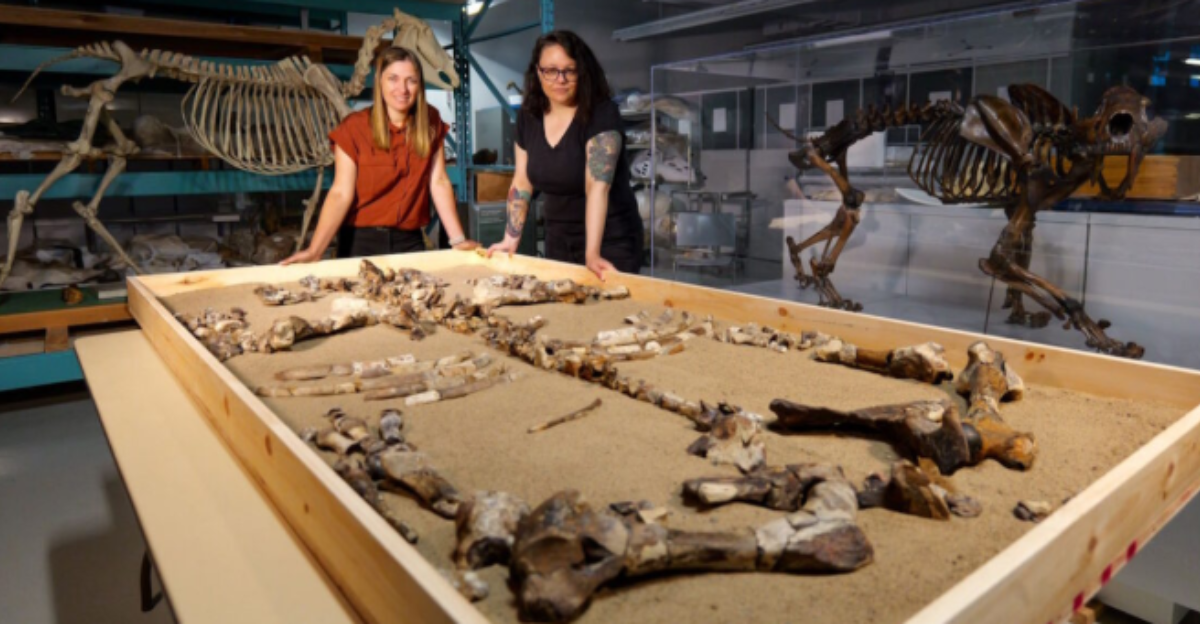
Scientists assembled a 75% complete skeleton—extraordinary, since most ancient rhino fossils are fragmented. This completeness lets researchers place the species precisely in the rhino family tree.
The Preservation Puzzle
The 75%-complete skeleton is a paleontological jackpot. Most ancient rhino fossils contain only scattered teeth, jaw pieces, or a few bones—typically less than 10% complete.
E. itjilik‘s bones are three-dimensional and in “excellent condition” with minimal mineralization, suggesting rapid burial and protection from scavengers. The Haughton Crater’s unique geology likely created ideal preservation conditions—a sealed environment protecting bones for 23 million years undisturbed.
This completeness was crucial, as it allowed researchers to identify unique features that distinguish the species and reveal its relationships to rhinos worldwide.
The 33-Million-Year Shift
Dr. Danielle Fraser’s team conducted a revolutionary biogeographic phylogenetic analysis examining 57 rhino species across the fossil record. They reconstructed dispersal patterns and migration timelines using computational modeling.
Their analysis revealed that E. itjilik descended from European ancestry and crossed the North Atlantic Land Bridge as recently as 23 million years ago. This contradicts the established 56-million-year closure date, extending the bridge’s usability by 33 million years.
The research, published in Nature Ecology & Evolution, demonstrates that mammals utilized the intercontinental corridor much longer than geological models had suggested.
What This Means for Evolution
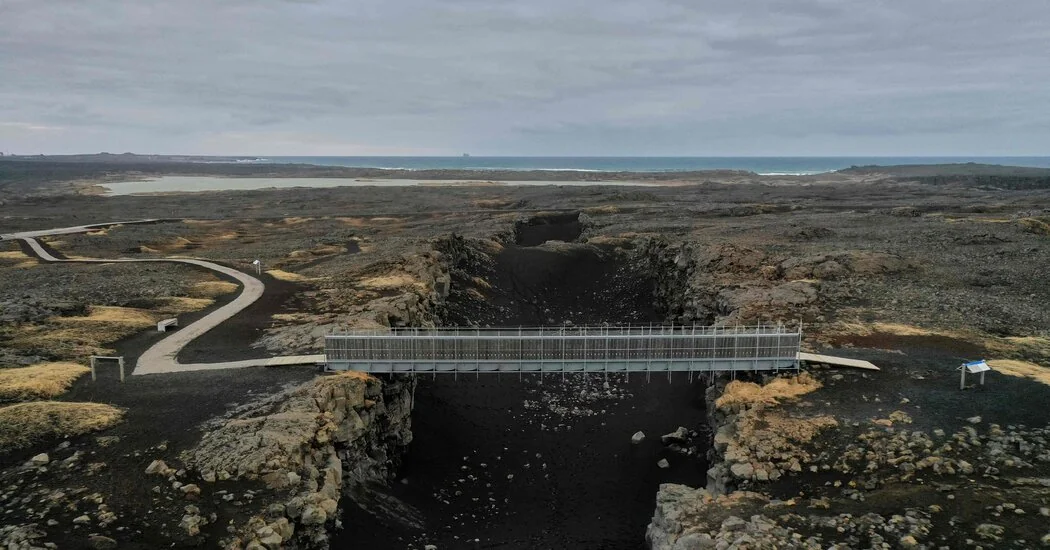
The extended North Atlantic Land Bridge timeline reshapes understanding of mammalian biogeography during Earth’s critical Miocene epoch (23 to 5 million years ago).
This period witnessed dramatic climate shifts, grassland expansion, and major changes in mammal body size and behavior. If rhinos crossed continents, then it solves fossil puzzles: scientists found similar species on opposite Atlantic shores with no known migration route.
The discovery forces paleontologists to reconsider which Miocene mammals were continent-specific versus recent arrivals via NALB. It changes the understanding of predator-prey relationships and ecosystem development.
The Research Team
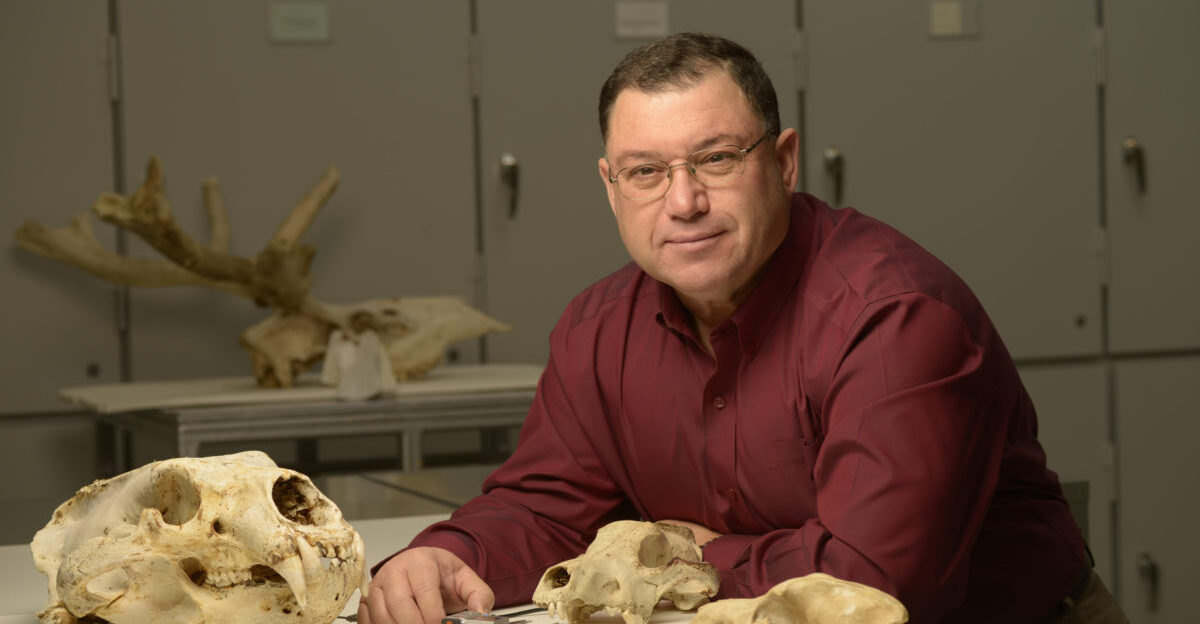
Dr. Danielle Fraser, Research Scientist and Head of Palaeobiology at the Canadian Museum of Nature, led the study. She specializes in mammal ecology and evolutionary biology using phylogenetic methods.
Her team included Dr. Natalia Rybczynski, a paleontologist at the Canadian Museum of Nature specializing in high-latitude ancient environments, and Marisa Gilbert, a palaeobiologist at the Carnegie Museum of Natural History.
This collaboration shows how modern paleontology integrates expertise across institutions and regions. Fraser’s previous groundbreaking work on Arctic mammal evolution positioned the team uniquely to interpret the significance of E. itjilik.
Phylogenetic Methodology
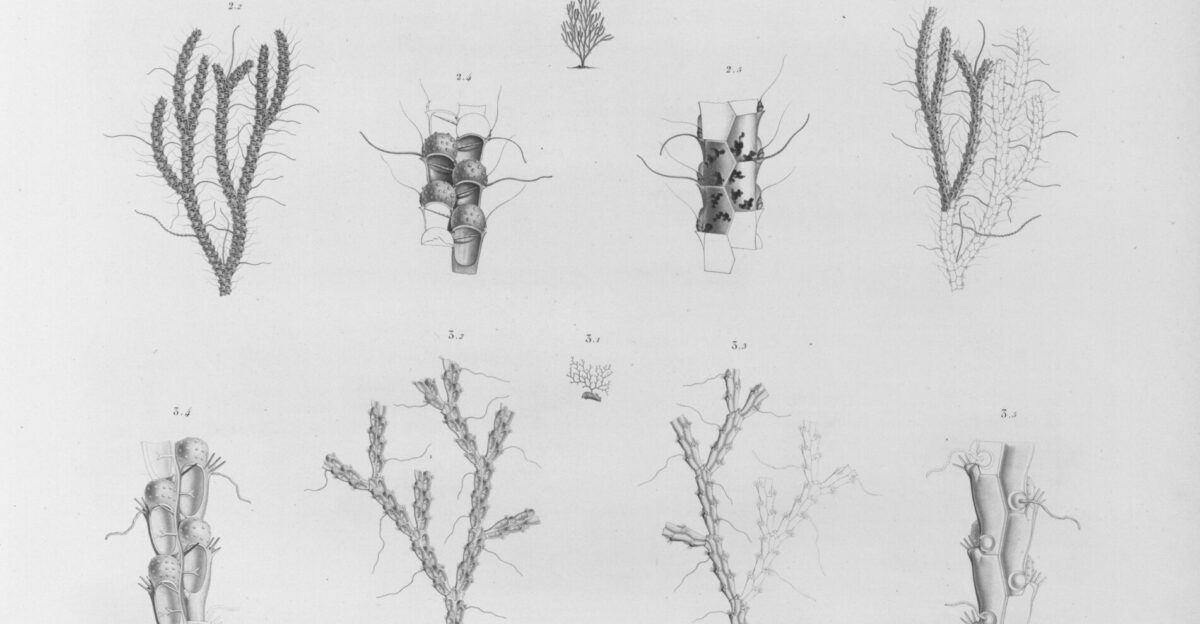
Fraser’s team employed a sophisticated method called fossilized birth-death phylogenetic modeling, analyzing 57 rhino species—both extinct and living—to reconstruct evolutionary relationships and biogeographic histories.
They used the BioGeoBears R package, specialized software modeling geographic spread, extinction, and lineage splitting across continents. By reconstructing ancestral conditions at each point in the family tree, researchers determined when and where lineages originated, migrated, and split.
The model combined fossil age data, anatomical features, and geographic location data. This approach enables Fraser to trace E. itjilik‘s European origins and calculate the NALB crossing probability during the Miocene.
Climate Context: A Temperate Arctic
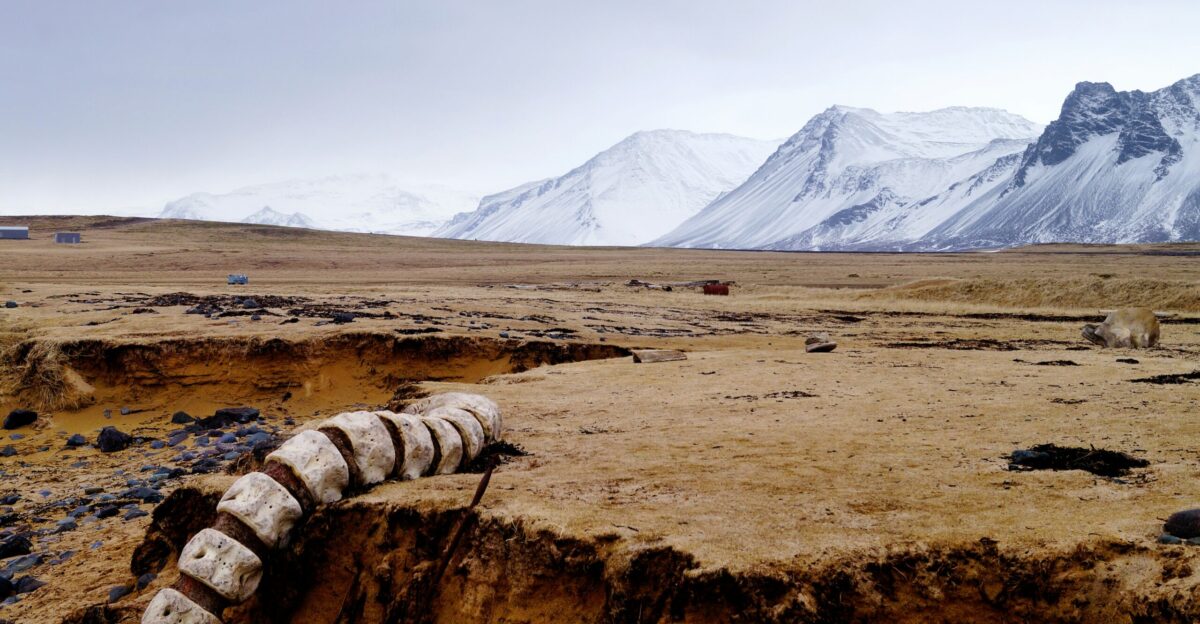
A remarkable aspect of E. itjilik‘s discovery is the environment: paleobotanical and climate evidence shows the Canadian High Arctic was a temperate, mixed forest 23 million years ago—not today’s ice wasteland.
Fossil pollen and plant remains indicate that the region had mild winters and warm summers, supporting the growth of dense coniferous and deciduous forests. The temperate Arctic supported a diverse array of mammals, including primates, odd-toed ungulates, and carnivores, which thrived in lush riparian corridors.
The Arctic became progressively colder during later epochs, driven by the expansion of the Antarctic ice sheet and shifts in ocean circulation. This context reshapes the understanding of climate-driven mammal range changes.
The Extinction Context
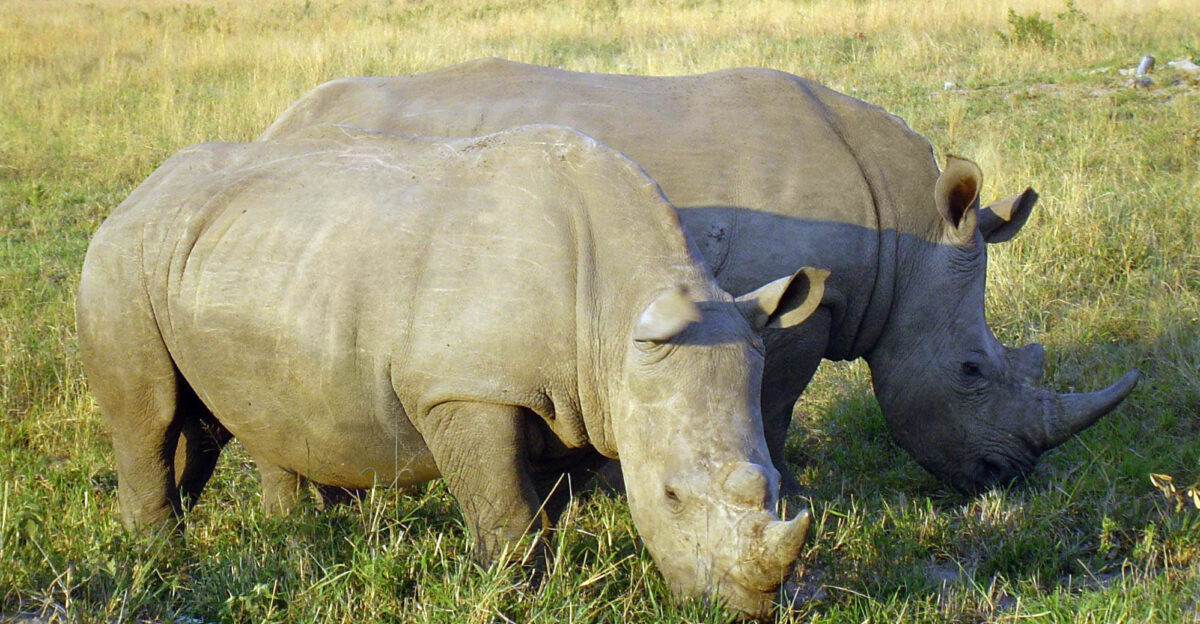
Today, only five rhino species survive globally: two in Africa (Ceratotherium simum, Diceros bicornis) and three in Asia (Rhinoceros unicornis, Dicerorhinus sumatrensis, Rhinoceros sondaicus—the latter is critically endangered with fewer than 75 individuals remaining).
Paleontological evidence reveals at least 50 extinct rhino species in the fossil record, indicating a 90% extinction rate across the group’s history. E. itjilik represents one data point in a pattern: Miocene rhino diversity followed by progressive extinction during the Pliocene and Pleistocene epochs.
Arctic rhino loss coincided with global cooling, habitat fragmentation, and the rise of predators.
Taxonomic Naming & Indigenous Recognition

The species name Epiatheracerium itjilik combines classical scientific nomenclature with Inuit language, honoring the region’s Indigenous peoples and modern paleontological ethics.
The genus Epiatheracerium places the species within the extinct subfamily of hornless rhinos, Aceratheriinae. The species name itjilik means “frosty” or “frost” in Inuktitut, the language of Canadian Arctic Inuit peoples. This dual naming approach reflects the growing recognition that non-Western knowledge and perspectives should be at the center of scientific practice.
The naming also highlights that the Canadian High Arctic, although frozen today, holds profound historical and cultural significance for Indigenous communities.
Broader Implications for Biogeography
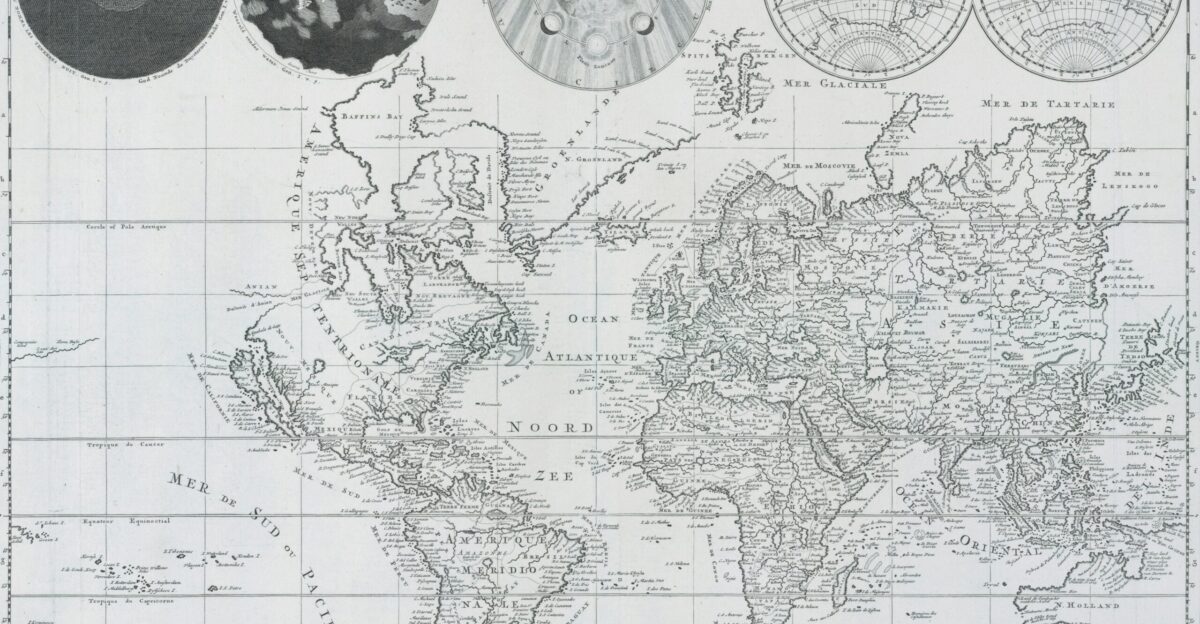
The E. itjilik discovery prompts paleontologists to reconsider other Miocene mammals found on opposite Atlantic sides with seemingly no crossing mechanism. Deer, horses, and carnivores may have crossed the North Atlantic Land Bridge more recently than previously thought.
The extended corridor explains why Miocene fauna in North America and Europe resemble each other more than the Eocene-Oligocene boundary would predict if 56-million-year isolation occurred. Future phylogenetic analyses using the revised NALB timeline may reinterpret the origins of numerous Miocene lineages.
Additionally, the discovery suggests geological models of Atlantic spreading and bridge formation need refinement—perhaps the bridge remained intermittently passable longer than traditional reconstructions indicate.
Future Research Directions
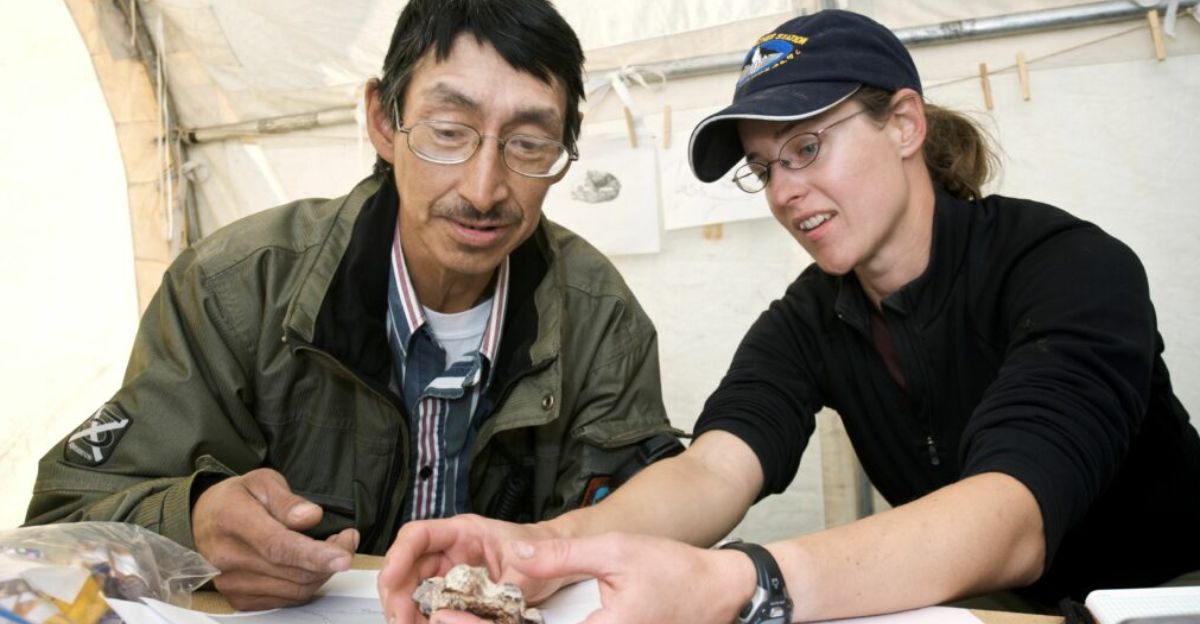
The E. itjilik discovery opens multiple future investigation avenues. Paleontologists plan advanced bone isotope analysis to reconstruct diet, migration patterns, and paleoclimate signatures.
Ancient DNA extraction attempts may yield protein sequences that reveal genetic relationships to modern Asian and African rhinos, thereby testing phylogenetic predictions. Continued excavation in the Haughton Crater region may unearth additional specimens, revealing population structure, sexual differences, or developmental variation.
Geological surveys may identify additional NALB crossing sites or refine tectonic models explaining prolonged land connections. Paleoclimate modeling can simulate Arctic climates 23 million years ago, allowing for the determination of whether terrestrial migration was year-round or seasonal.
Why the Timeline Matters Now

Understanding ancient mammal range shifts and climate adaptation carries urgent relevance amid current climate change. As Arctic temperatures rise and ice retreats faster than any previous period in human history, ancient Arctic habitat records help predict how modern animals may respond to rapid environmental change.
The discovery that diverse mammals thrived in a warm Arctic 23 million years ago shows the region’s capacity for rich ecosystems under warmer climates. The disappearance of Arctic rhinos as climates cooled offers cautionary lessons about extinction vulnerability during transition periods.
Modern rhino conservation benefits from evolutionary knowledge revealing how climate and habitat shape survival.
The Bottom Line
Epiatheracerium itjilik‘s discovery and implications for the North Atlantic Land Bridge mark a landmark paleontological moment, revising a 50-year-old consensus timeline and demonstrating how single, well-preserved specimens reshape our understanding of Earth’s evolutionary history.
The 33-million-year NALB dispersal window extension illustrates how fossil evidence combined with computational phylogenetic methods solves longstanding biogeographic puzzles.
Dr. Fraser’s research demonstrates that paleontology remains a discovery science capable of producing revolutionary Arctic excavation findings in the 21st century. The study reminds us that Earth’s climate and geography underwent dramatic transformations over deep time, enriching our capacity to navigate current environmental challenges.
Sources:
Nature Ecology & Evolution, October 27, 2025
CBC News, October 28, 2025
Discover Magazine, October 27, 2025
NPR, December 4, 2025
Arctic Today, October 30, 2025
IFLScience, November 15, 2025