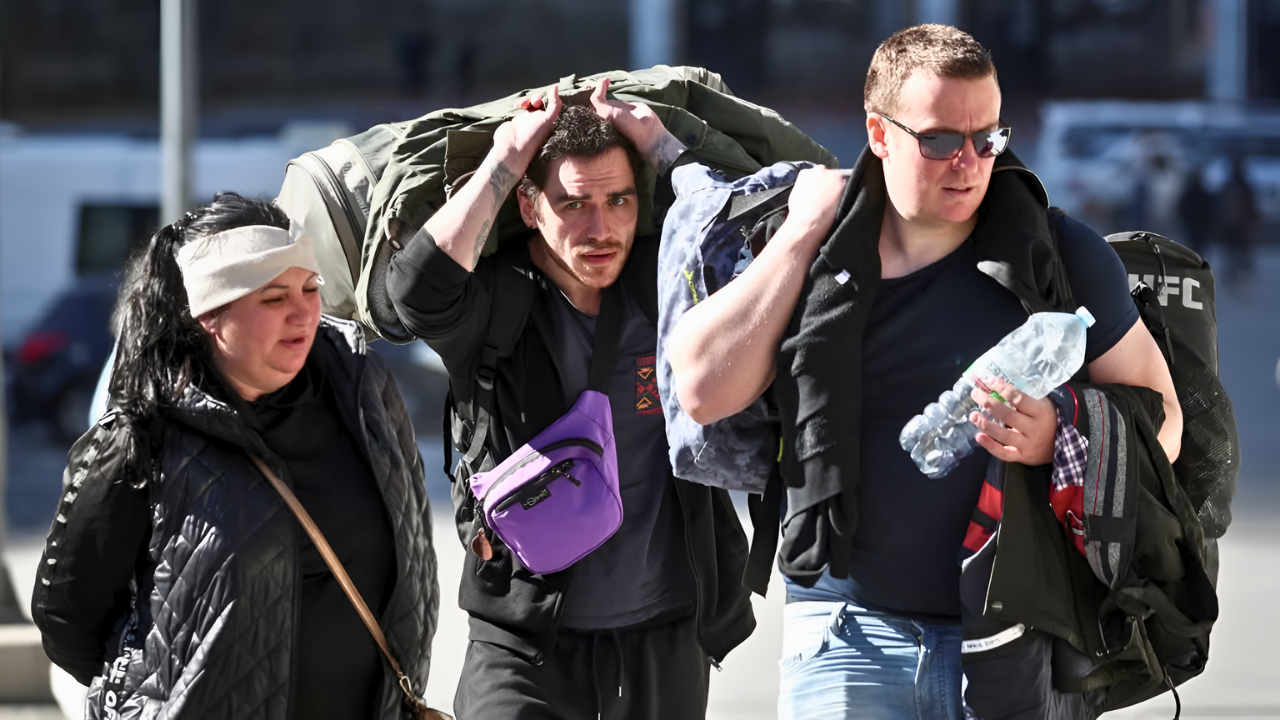
Russian citizens returning home now face a stark choice: risk conscription or stay away. Since late November 2025, military officers have been stationed at twelve major Russian airports, intercepting arriving passengers and handing out draft summonses on the spot. For many, landing in Russia is no longer a homecoming—it is the start of a forced mobilization process.
How the Airport Dragnet Works
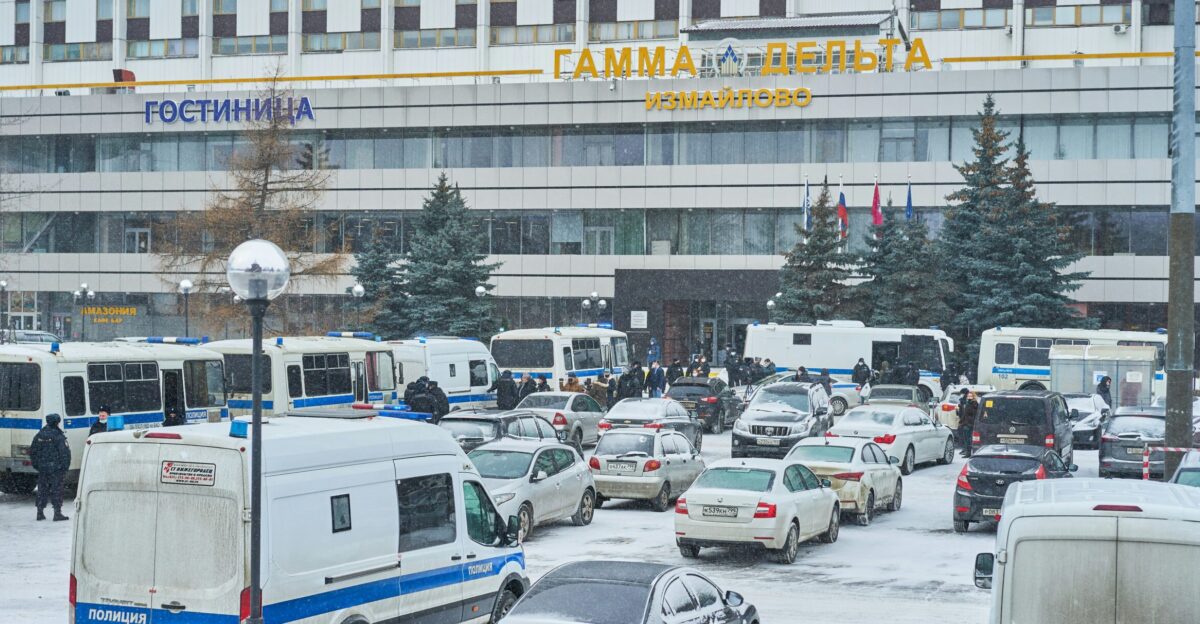
At airports including Moscow’s Sheremetyevo, Vnukovo, and Domodedovo, Saint Petersburg’s Pulkovo, Yekaterinburg’s Koltsovo, Sochi, Kazan, and Novosibirsk, arriving passengers are being stopped and checked for draft eligibility. Those flagged are given summonses and instructed to register with military offices immediately. Refusal can result in a fine of 30,000 rubles, approximately $330, a tenfold increase from the earlier maximum penalties under legislation signed by President Vladimir Putin in August 2023.
The twelve airports involved handled more than 150 million passengers in 2024, covering roughly 70–80% of Russia’s international passenger traffic. Most returning citizens now have little chance of avoiding these checkpoints. State television footage from Vesti Ural on November 20, 2025, showed Russian men detained at Koltsovo Airport and handed draft notices, with reporters noting that even those with return tickets could not simply fly back out.
Digital Enforcement and Travel Restrictions
Russia’s electronic draft system, fully operational by 2025, delivers summonses through the Gosuslugi government portal. Once a notice appears there, it is considered legally delivered, regardless of whether the person has read it. Names are then entered into centralized databases, which can trigger travel bans, block property transactions, deny loans, and prevent business registration. The FSB Border Service has real-time access to these systems, making it nearly impossible to evade the reach of military authorities.
This digital infrastructure is layered with physical surveillance. Moscow’s metro system has been using facial recognition technology since October 2025 to identify draft-age men who have challenged conscription orders in court. Human rights monitors report that some are taken to conscription centers without access to lawyers. Airport checkpoints appear to be the next stage in this expanding enforcement network.
Targeting Naturalized Citizens and Non-Slavic Men

Military law expert Timofey Vaskin has described how authorities, facing staffing shortages, focus on men “of non-Slavic appearance.” This selective enforcement, he notes, is not an accident but a function of limited resources and institutional bias. Men from Central Asia, the Caucasus, and occupied Ukrainian territories are disproportionately affected.
Naturalized citizens face particularly severe risks. While many ethnic Russians can ignore draft notices with limited consequences, those who obtained citizenship more recently risk having their passports revoked, their legal status challenged, and even deportation. For some, accepting Russian citizenship has effectively meant signing a military contract they did not fully understand.
Expansion Beyond Airports
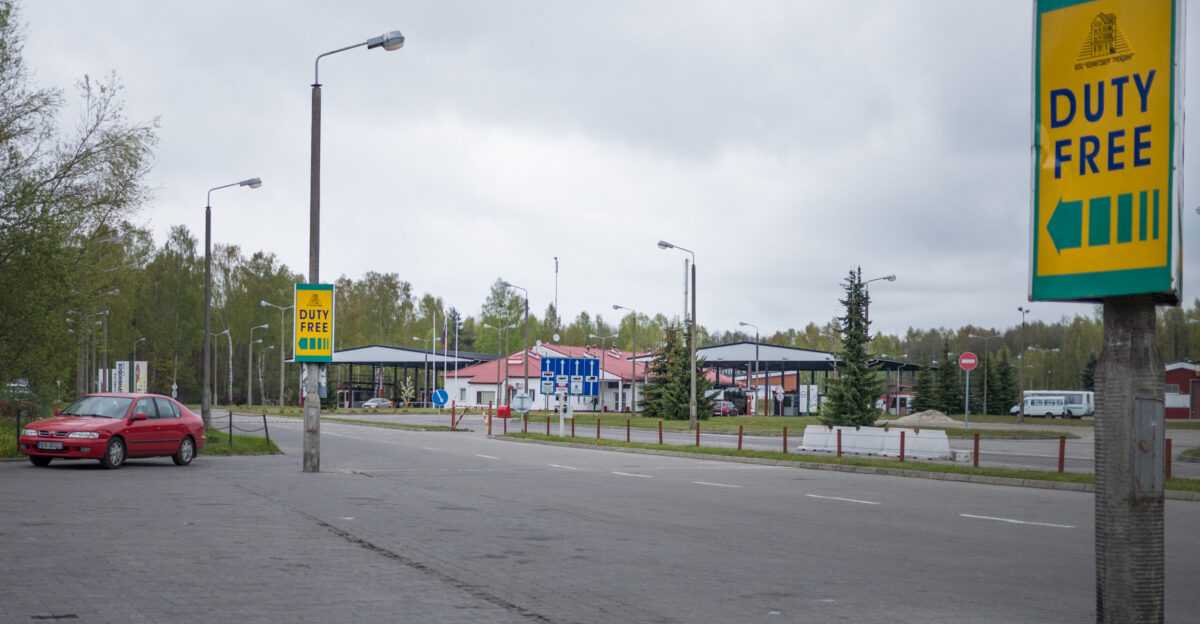
The airport program is only the first phase of the project. By late November 2025, the Interior Ministry confirmed plans to extend the dragnet to railway stations and other border crossings. Combined with facial recognition, digital notice systems, and ethnic profiling, this creates a multi-layered apparatus for tracking and conscripting citizens.
Human rights groups have documented intensified targeting of Central Asian and Caucasian migrants, especially after the March 2024 Crocus City Hall attack, which triggered a wave of xenophobic crackdowns. In the first half of 2024, Russia deported 85,800 migrants, nearly double the number from the same period the previous year. Many of those detained faced pressure to sign military contracts before being deported.
The Human and Strategic Cost
Estimates suggest that at least 650,000 Russians who left after the 2022 invasion of Ukraine remain abroad. Russia has also issued 3.5 million passports to residents of occupied Ukrainian territories since 2022, many under coercive conditions. Hundreds of thousands of Central Asian migrants have obtained citizenship, often under pressure from local authorities. Each of these individuals now faces the risk of conscription when returning for family visits, inheritance matters, or property transactions.
In September 2023, hundreds of Central Asian migrant workers were reportedly rounded up and pressured into signing military contracts, sometimes without fully understanding the documents. In May 2025, Alexander Bastrykin, head of the Investigative Committee, stated that 30,000 naturalized citizens who had refused registration had been tracked down, with 10,000 already deployed to Ukraine. The full human cost of this system remains obscured in official figures.
For millions of Russians abroad, every potential return trip is now a high-stakes gamble. The state’s ability to control movement and enforce conscription through airports, railways, and digital systems represents a significant expansion of its coercive reach, with long-term implications for mobility, citizenship, and personal freedom.
Sources
United24 Media. “Russia Starts Issuing Draft Notices at Airports to New Citizens and Returning Expats,” November 30, 2025.
Dagens. “Draft summonses handed out at Russian airports,” December 1, 2025.
The Moscow Times. “Russia Pressures Migrant Workers with Raids, Military Summons,” September 7, 2023.
Global Detention Project. “Russia: Weaponising Immigration Policies,” April 27, 2025.
Newsmax. “Russia Issuing Citizens Draft Notices Upon Airport Arrival,” December 3, 2025.
BBC World. “Russia conscription laws change,” August 3, 2023.
Newsweek. “Putin Tightens Mobilization Noose,” August 1, 2023.