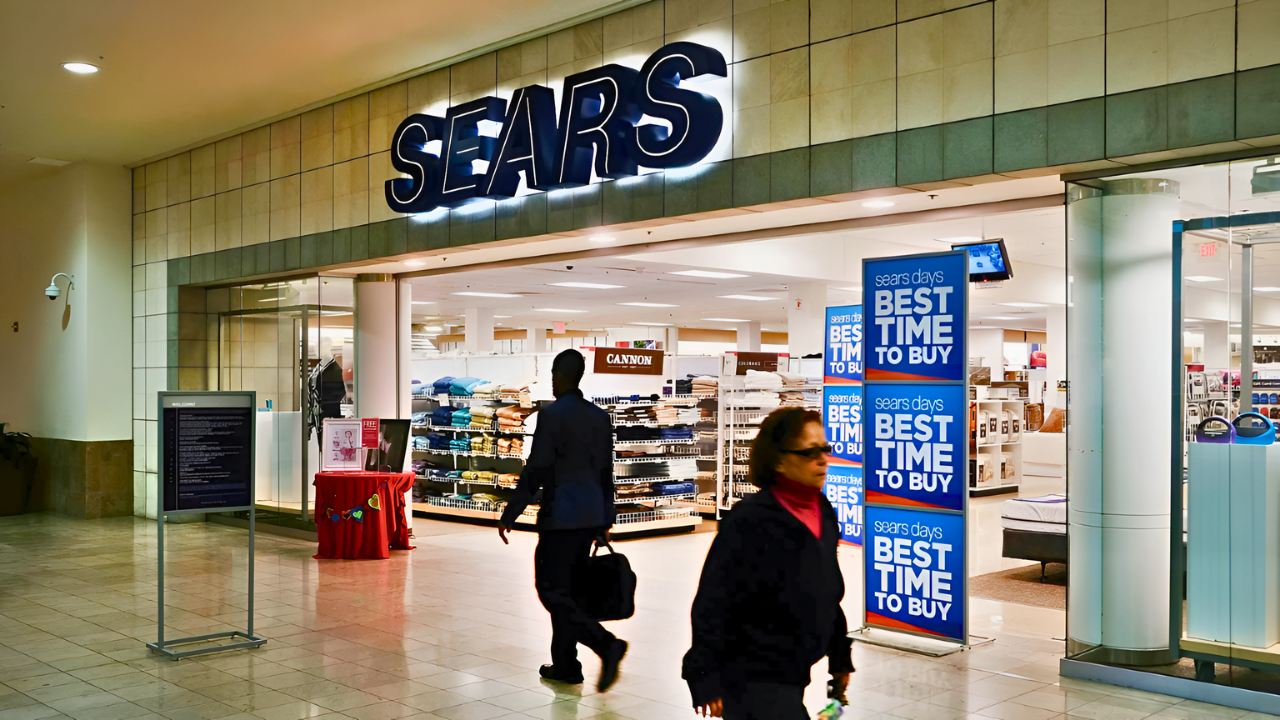
A sales associate turning a “Closed” sign at the last operating Sears in Coral Gables, Florida, captures the final chapter of a 133-year-old retailer that once defined American shopping. From a peak of roughly 3,500 stores and $43 billion in annual revenue, Sears has withered to just five minimally staffed locations that analysts describe as “phantom stores.” The collapse is the culmination of two decades of shrinking sales, aggressive financial maneuvers, and a failure to adapt to a rapidly changing retail landscape.
Falling Behind in a Changing Retail Era
For much of the 20th century, Sears was a dominant force, first through its mail-order catalogs and later as an anchor of suburban shopping centers. It pioneered the model of a one-stop department store, built landmark properties such as the Sears Tower in Chicago, and employed about 350,000 people across the country.
But as Walmart perfected low-cost, high-efficiency retailing and Amazon reshaped how consumers shop online, Sears struggled to modernize. Its website lagged competitors, its mobile experience remained clumsy, and its supply chain integration fell behind industry standards. The company that once invented mail-order shopping failed to translate that heritage into a competitive digital strategy. Rather than investing heavily in technology and store upgrades, Sears increasingly turned to financial engineering and asset sales to generate cash.
The Lampert Era: Merger, Asset Sales, and Bankruptcy

The turning point came in the mid-2000s, when hedge fund manager Eddie Lampert combined Kmart and Sears in an $11 billion deal completed in 2005. Lampert had earlier taken Kmart out of bankruptcy with an $800 million investment and then used Kmart’s surging stock as currency to acquire the larger but already weakening Sears. At the time of the merger, the new Sears Holdings controlled about 3,500 locations and employed roughly 350,000 workers.
Between 2005 and 2008, the company spent about $5 billion buying back its own shares while allocating less than half that amount to capital expenditures. During the same period, Amazon was rapidly scaling its e-commerce operations and Walmart was refining its logistics and technology. Sears, by contrast, began selling off its once-valuable in-house brands: Lands’ End was spun off in 2014 in a deal valued at $2.4 billion, and the Craftsman tool line was sold to Stanley Black & Decker for $500 million in 2017. These moves generated short-term cash but eroded the differentiated brands that had long drawn customers to Sears.
One of the most controversial transactions was the 2015 sale of 235 Sears properties to Seritage Growth Properties for $2.7 billion, followed by leasebacks so Sears could continue operating in the same spaces. Seritage was free to sublease portions of these sites to other tenants at significantly higher rents. A shareholder lawsuit later claimed Sears had undervalued the real estate by $649 million, and critics argued Lampert benefited from his dual roles at Sears and Seritage. He settled the suit for $40 million without admitting wrongdoing, but the deal became a symbol of how the retailer’s physical footprint was being monetized rather than modernized.
By the time Sears Holdings filed for Chapter 11 protection on October 15, 2018, the company listed $11.3 billion in liabilities against $6.9 billion in assets and had shrunk to about 700 stores and 68,000 employees. The filing underscored the human cost: tens of thousands of job losses, pressure on retiree pensions, and significant unpaid bills for suppliers.
From Rescue Bid to “Phantom” Stores
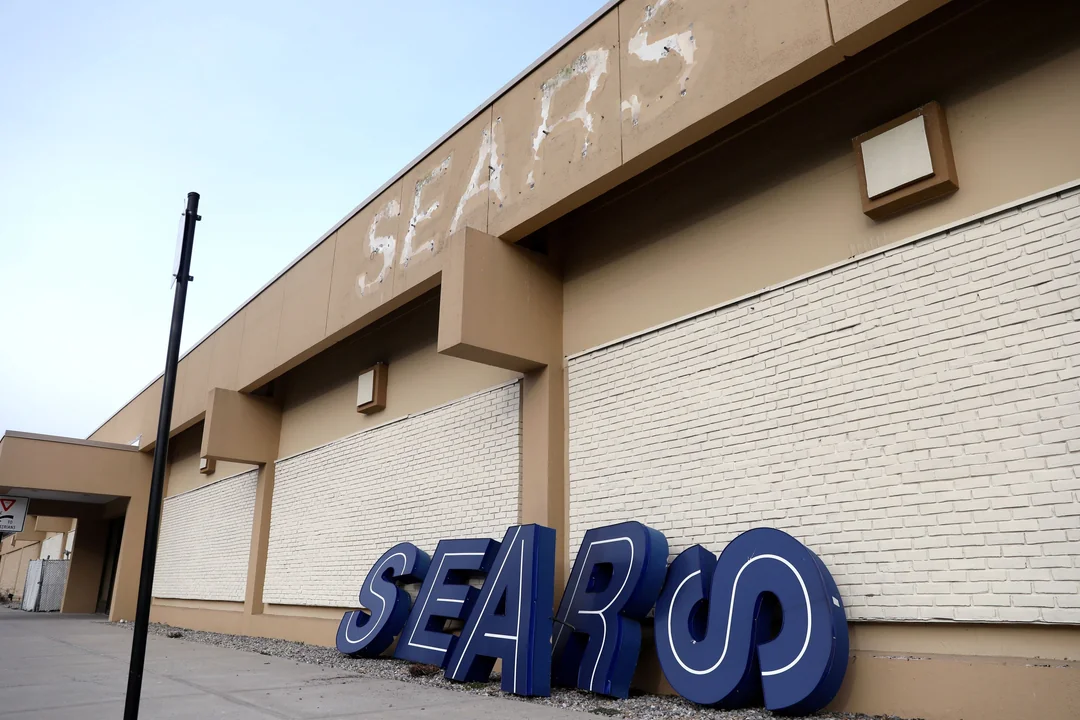
In February 2019, Lampert’s ESL Investments acquired about 425 Sears and Kmart stores out of bankruptcy for $5.2 billion, folding them into a new entity called Transformco. The purchase was presented as a chance to preserve around 45,000 jobs and chart a turnaround under the same leadership. Instead, closures continued at a steady pace.
Sears had about 2,705 stores in 2011; that figure had dropped to around 700 at bankruptcy, about 425 after the ESL acquisition, and fewer than 50 by 2024. By November 2025, only five locations remained: Braintree, Massachusetts; Concord, California; El Paso, Texas; Orlando, Florida; and Coral Gables, Florida. Four operate inside malls owned by Simon Property Group, while Coral Gables stands on a site targeted for redevelopment. All are reported to have sparse inventory and skeletal staffing.
Retail academics and industry analysts say these stores no longer function as meaningful commercial operations. Mark Cohen, a former Sears Canada executive now at Columbia University, described them as “phantoms in the night,” open in name only and with “nothing to sell.” Neil Saunders of GlobalData noted that Sears struggled to earn profits when it had hundreds of outlets, calling the idea that five remaining stores could be viable financially “for the birds.” Analysts broadly agree that these locations are unlikely to generate sustainable earnings.
Why the Last Five Stores Still Exist
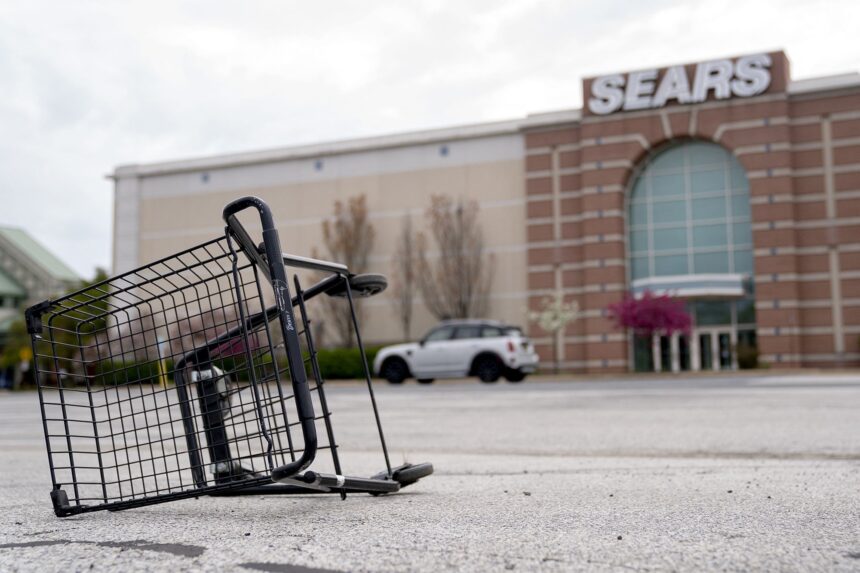
Observers have advanced several explanations for why these unprofitable locations remain open. One theory is that they may help generate accounting losses that offset other income for tax purposes, making them useful on paper even if they lose money day to day. Another possibility is that long-term leases, particularly in properties owned by Simon, could make immediate closure expensive, leading the owner to keep stores running at minimal levels until agreements expire or can be renegotiated.
A third factor may be real estate strategy. In Coral Gables, for example, the former Sears parcel is part of a planned mixed-use redevelopment approved in 2025, including more than 1,000 residential units plus retail and commercial space on land assessed at $31.75 million. Yet the Sears lease reportedly runs through 2030, complicating redevelopment. Similar dynamics may exist at other sites, where a continued, though diminished, store presence buys time for longer-term property decisions.
A Broader Reckoning for Malls, Jobs, and Traditional Retail
Sears’ downfall has rippled across the wider retail and real estate landscape. As a longtime anchor in many suburban malls, its exit left large vacancies that accelerated the decline of already struggling shopping centers. Other department store chains, including Macy’s and Bon-Ton, faced increased pressure as co-tenancy agreements were disrupted and foot traffic fell. Landlords and investors absorbed substantial losses as many mall properties became increasingly obsolete in their original form.
The employment impact has been similarly far-reaching. From a workforce of about 350,000 at its height, Sears had cut to 68,000 employees by the 2018 bankruptcy. More than 10,000 jobs disappeared in 2018 alone due to closures, and additional layoffs followed as Transformco shuttered more locations. Cumulatively, the company’s decline and related supply-chain upheaval displaced an estimated 300,000 workers, including indirect roles tied to Sears’ stores and distribution network.
Analysts point to multiple failures behind this collapse: an overreliance on financial transactions, chronic underinvestment in stores and technology, the sale of core brands that once set Sears apart, and an inability to match the low prices and efficiency of Walmart, the convenience and scale of Amazon, or the focused positioning of rivals like Target. The result, they argue, is a company that tried to be everything to everyone and ended up with no clear identity.
As the final stores move toward likely closure and long-term leases unwind, Sears is increasingly seen as a warning for other established retailers confronting digital transformation. Its trajectory suggests that history, size, and valuable real estate cannot substitute for ongoing investment in technology, customer experience, and distinctive products. The mixed-use projects now planned for former Sears sites, such as the Coral Gables redevelopment, also hint at how large retail footprints may evolve—away from traditional department stores and toward more diversified urban-style complexes—long after the Sears name disappears from the American shopping landscape.
Sources
MSN Money – Sears company closure announcement and final store count verification
CNN Business – Expert analysis featuring Mark Cohen, retail industry commentary
Yahoo Finance – Current operating store locations and corporate status updates
Federal Bankruptcy Court Records – October 15, 2018 Chapter 11 filing documentation
Transformco/ESL Investments – Company statements regarding February 2019 acquisition
SEC Filings and Financial Disclosures – Revenue figures, employment data, asset valuations
Challenger, Gray & Christmas – 2018 employment layoff statistics and store closure impact data