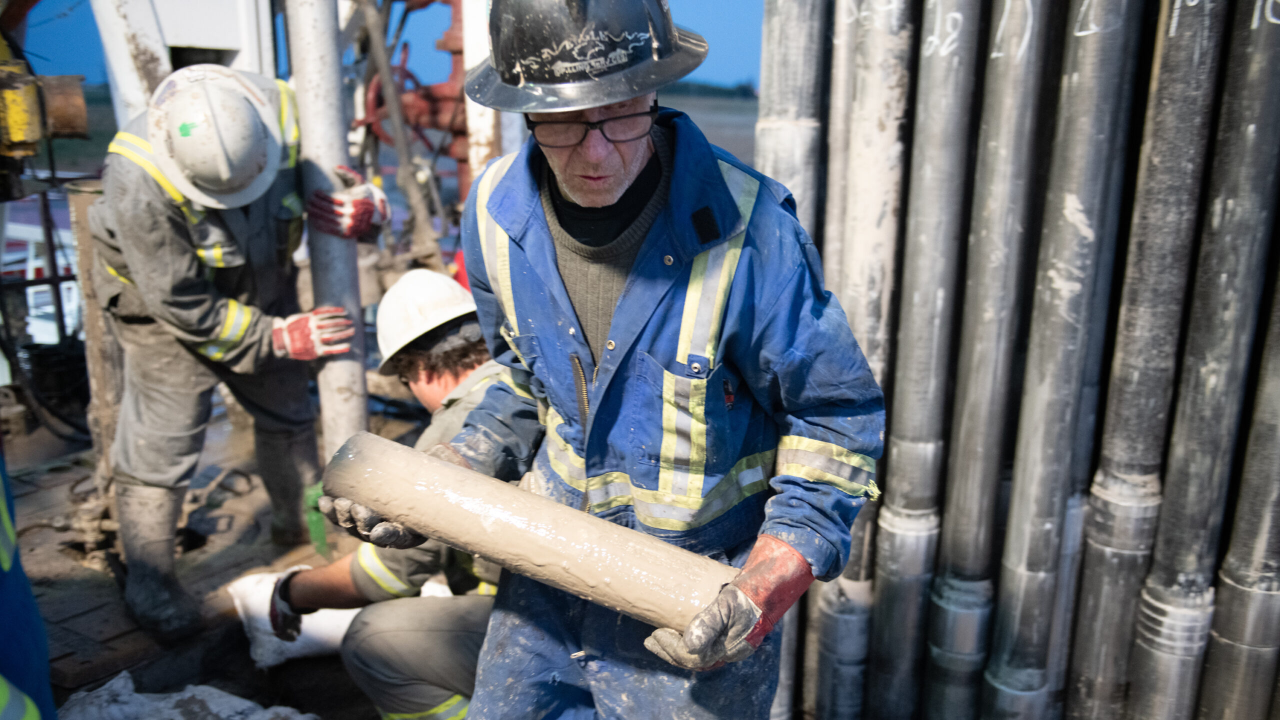
Steel skeletons now rise from the Nevada desert at Thacker Pass, where hundreds of workers are building what could become one of the world’s most consequential sources of battery metal. Beneath this 18,000-acre site in the McDermitt Caldera lies an estimated 20–40 million metric tons of lithium, a geological windfall that could reshape global supply chains, U.S. energy security, and the pace of the electric-vehicle transition.
Geology of a hidden giant
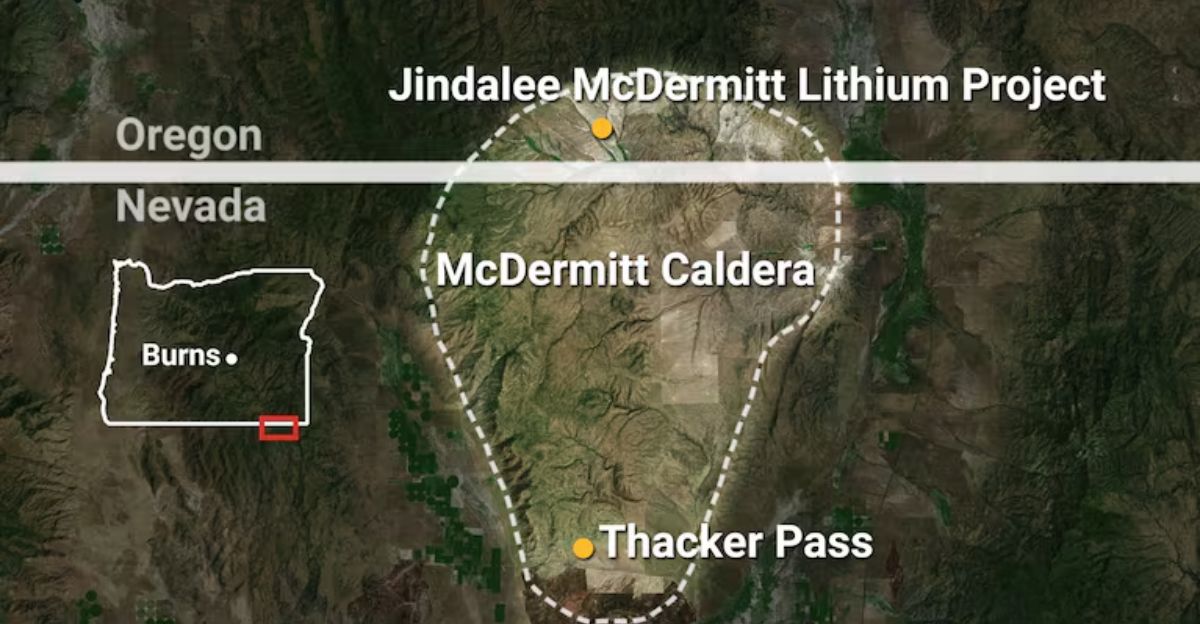
The McDermitt Caldera straddling Nevada and Oregon was created about 16 million years ago by a massive volcanic eruption that expelled roughly 1,000 cubic kilometers of ash and lava rich in lithium-bearing minerals. Over millions of years, a long-lived lake filled the collapsed crater, accumulating volcanic sediments that altered into clay.
A later pulse of magma reheated the system, driving hydrothermal fluids hotter than 300°C through the sedimentary layers. Those fluids transformed existing clays into illite, a mineral that can trap much higher concentrations of lithium. Studies indicate the process roughly doubled or tripled lithium levels compared with typical clay deposits, creating one of the most lithium-rich clay systems yet identified.
Analysts convert the metal estimates into “lithium carbonate equivalent” to gauge potential market value. Using average 2024 contract prices of around $14,000 per metric ton, the McDermitt resource is often described as holding between $1.5 trillion and $3 trillion worth of lithium on paper. In practice, only part of that will be technically and economically recoverable.
Building Thacker Pass and challenging China’s lead
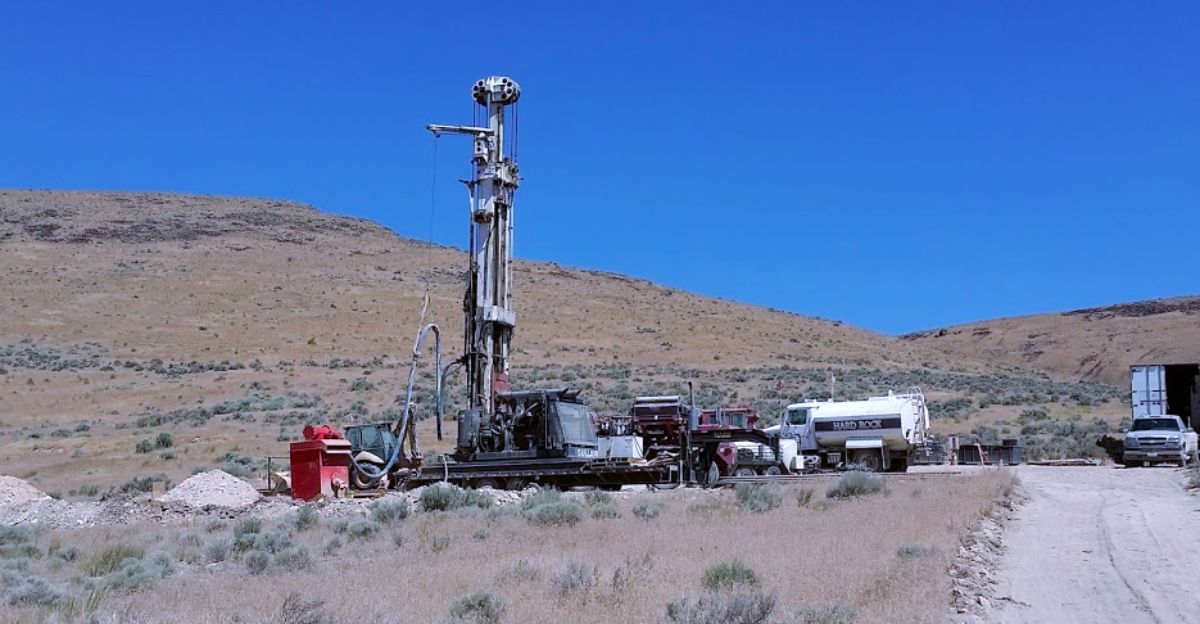
Lithium Americas is developing Thacker Pass at the caldera’s southern edge as North America’s largest lithium mine. Phase 1 is designed to produce about 40,000 metric tons of battery-grade lithium carbonate per year, enough for roughly 800,000 to 1 million electric vehicles annually, depending on battery size and chemistry.
The capital budget of roughly $3 billion is now fully financed. The U.S. Department of Energy has approved a $2.26 billion loan and taken a 5 percent equity stake, while General Motors has committed $625 million in exchange for a 38 percent ownership interest and long-term offtake rights. Construction began in March 2023, and by late 2025 the company reported engineering work about 80 percent complete and more than 700 workers on site. Commercial production from Phase 1 is targeted for early 2028, following mechanical completion in late 2027.
Behind those figures lies a sharp shift in industrial strategy. The United States currently imports about 95 percent of its refined lithium, while China controls roughly 80 percent of global processing capacity. That dominance has allowed Beijing to influence prices, impose tariffs, and use export controls as a policy tool. Washington’s multibillion-dollar bet on Thacker Pass reflects an effort to unwind that dependency and secure feedstock for domestic battery plants.
Market swings, new rivals, and soaring demand
The McDermitt discovery arrives amid a period of exceptional volatility. Spot lithium prices plunged from peaks near $71,000 per ton in 2022 to around $610 in mid-2025, a drop of about 90 percent as new supply entered the market and speculative froth evaporated. Even so, investment banks such as Goldman Sachs project a recovery to roughly $11,000–$13,250 per ton by 2026 and potentially up to $17,000 by 2028, levels that would support Thacker Pass economics if achieved.
On the supply side, the caldera is part of a broader reordering of the global lithium map. For years, South America’s “lithium triangle” and Australian hard-rock mines supplied most of the world’s output. Bolivia’s Salar de Uyuni alone holds about 23 million tons of lithium, yet contributes less than 0.1 percent of production because of technical and infrastructure hurdles. In the United States, new assessments of McDermitt and Arkansas’s brine-rich Smackover Formation—estimated at 5–19 million tons—prompted the U.S. Geological Survey to revise national lithium resources from 750,000 tons to about 14 million tons. That jump places the United States third globally, after Bolivia and Argentina.
Demand projections are equally striking. Global lithium consumption was about 720,000 metric tons in 2022 and is forecast to grow roughly 400 percent by 2030. Goldman Sachs estimates total demand at about 3.1 million metric tons that year, with electric vehicles absorbing around 80 percent of battery-grade supply. Additional pull will come from grid-scale energy storage and backup systems for power-hungry data centers supporting artificial intelligence, adding pressure just as Thacker Pass is scheduled to ramp up.
Environmental conflicts, Indigenous rights, and human costs
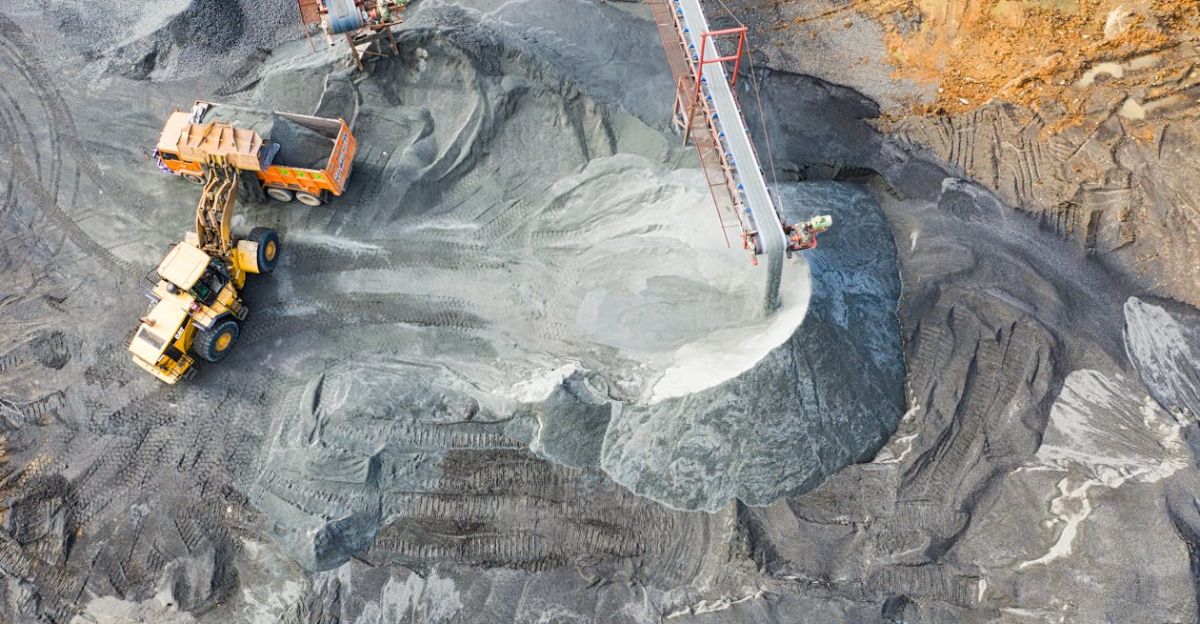
The scale of McDermitt’s resource is matched by the intensity of local opposition. Thacker Pass is projected to use between 2,850 and 5,200 acre-feet of water each year in an already arid basin. Conservation groups warn that heavy withdrawals could deplete aquifers and degrade streams that support threatened species such as the Lahontan cutthroat trout and the Greater Sage-Grouse.
The mine site—known in the Northern Paiute language as Peehee Mu’huh—also carries deep historical trauma. Tribal leaders describe the area as the site of an 1865 massacre in which U.S. cavalry killed dozens of Indigenous people. For them, open-pit mining and industrial facilities atop this landscape represent a continuation rather than a break from past dispossession.
In February 2025, the American Civil Liberties Union and Human Rights Watch released a 133-page report alleging violations of international human rights standards in the project’s approval process. The report argues that the Bureau of Land Management authorized the mine without guaranteeing affected tribes the ability to withhold consent or negotiate on equal footing. Federal judges acknowledged some procedural shortcomings but allowed construction to proceed, citing the strategic importance of domestic lithium extraction. That legal outcome has become a flash point in broader debates over how to balance climate goals with environmental justice and Indigenous sovereignty.
Technical hurdles and long-term stakes
Thacker Pass also poses complex engineering challenges. Unlike the brine fields of Chile or Australia’s spodumene deposits, McDermitt’s lithium is bound in illite clays. Producing battery-grade lithium carbonate at scale will require roasting ore, acid leaching, selective precipitation, and multiple refining steps. Pilot tests suggest recovery rates of 70–92 percent are possible, but no clay operation of this size yet exists. Lithium Americas has hired engineering firm Bechtel to design and build the processing plant, while investors closely watch for cost overruns, quality issues, and throughput bottlenecks as the facility scales.
Company plans envision a phased expansion from 40,000 metric tons per year in Phase 1 to 160,000 metric tons annually across five phases, potentially supplying material for several million electric vehicles a year. At realistic recovery rates and assuming roughly 8 kilograms of lithium per vehicle battery, the caldera’s resource could theoretically support between 1.75 billion and 4 billion EVs over time—far beyond any single national fleet. Yet the same lithium will also be in demand for stationary storage, electronics, and aerospace, meaning the deposit represents an important but finite share of future needs.
For investors and policymakers, the coming decade at Thacker Pass is a test of whether the United States can convert geological abundance into an integrated battery ecosystem while responding to community concerns. If construction stays on schedule and prices recover as forecast, the first shipments of lithium carbonate from McDermitt in 2028 could mark a turning point in reducing reliance on Chinese processors. If technical setbacks, legal challenges, or prolonged low prices derail the project, they will underscore how fragile plans for energy independence remain in a rapidly shifting global minerals landscape.
Sources:
Science Advances Journal: “Hydrothermal enrichment of lithium in intracaldera illite, McDermitt Caldera, Nevada-Oregon” (2023)
U.S. Geological Survey: Mineral Commodity Summaries 2025 — Lithium Report
Department of Energy: Thacker Pass Loan Guarantee Announcement and Project Overview (2024)
Lithium Americas Corporation: Thacker Pass Phase 1 Construction Updates and Project Specifications (2025)
Goldman Sachs Equity Research: Global Lithium Supply-Demand Forecasts and Price Projections (2025)
American Civil Liberties Union & Human Rights Watch: “The Land of Our People, Forever” — Indigenous Rights Impact Report on Thacker Pass (February 2025)
U.S. Geological Survey: National Mineral Resource Assessment — U.S. Lithium Reserves Revision (2024)