A front-line Russian Su-30SM fighter jet, valued at about $50 million, was destroyed in a fire at an airfield in Rostov-on-Don, in what Ukraine says was a deep-cover sabotage operation inside Russian territory. Ukraine’s Main Directorate of Intelligence (HUR) confirmed the loss on April 24, 2025, describing the operation as successfully targeting a Russian aviation asset, as Kyiv highlighted the strike as part of its campaign to erode Russia’s air power and expose vulnerabilities far from the front.
The attack, carried out in late April 2025, targeted a base that supports Russian air operations across southern Ukraine. It comes amid a broader pattern of long-range strikes, drone attacks, and covert missions that Ukrainian officials say are designed to weaken Moscow’s military capabilities and strain its defense industry.
A Covert Operation Claimed by Ukrainian Intelligence
Ukraine’s Main Directorate of Intelligence (HUR) said it planned and executed the sabotage at Rostov-on-Don, a city that hosts the headquarters of Russia’s southern military district. The agency announced responsibility on April 24, 2025, but withheld details on personnel, routes of infiltration, or specific methods, citing operational security and ongoing missions.
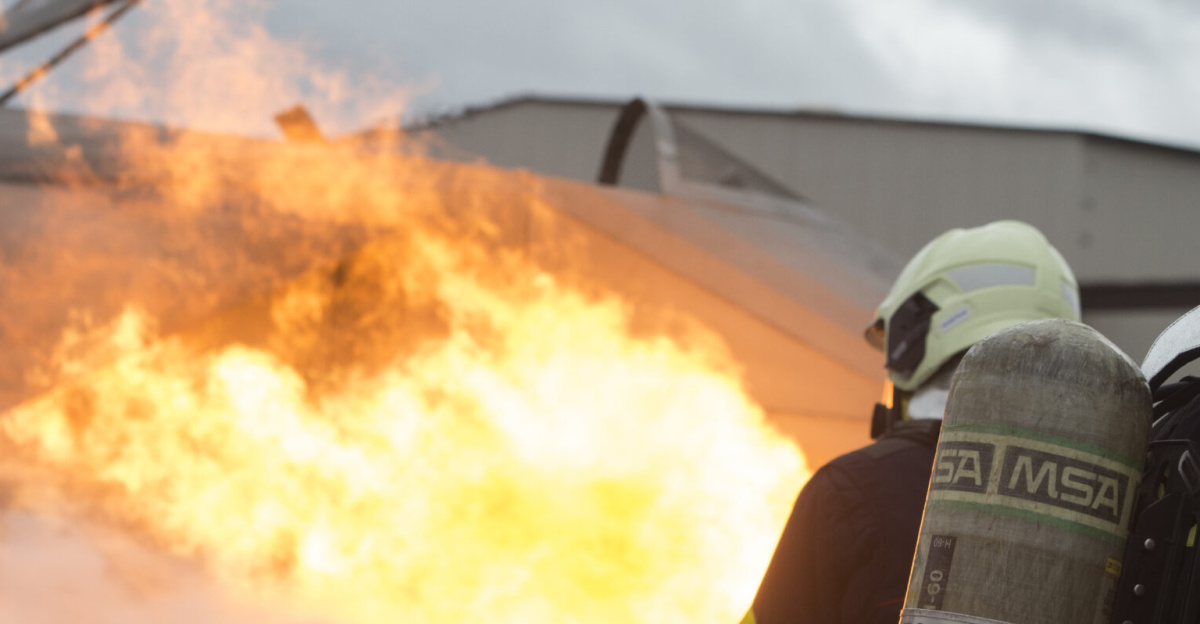
According to HUR, Ukrainian operatives managed to breach the airfield’s defenses and ignite the parked aircraft. Video released by the agency showed the Su-30SM fully engulfed in flames, with no visible signs of missile impact or explosive blast patterns, suggesting the destruction was caused by arson rather than an external strike.
Ukraine’s security service, the SBU, later referenced the Rostov incident while discussing broader sabotage operations in June 2025. SBU Chief Vasyl Malyuk oversaw Operation Spiderweb, a coordinated drone attack on June 1, 2025 that reportedly damaged or destroyed dozens of Russian aircraft across multiple airbases. Malyuk emphasized that Ukraine would continue similar operations against Russian military targets.
The Jet That Burned: Capabilities and Battlefield Role
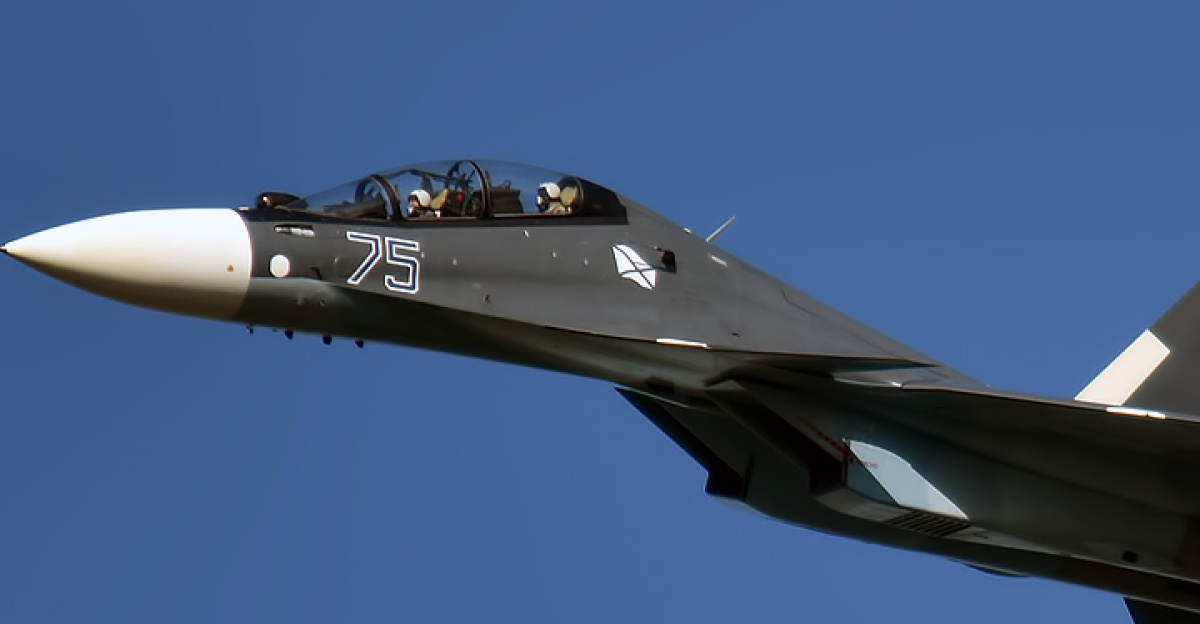
The destroyed aircraft was identified as a Sukhoi Su-30SM, tail number 35, a twin-engine, two-seat multirole fighter used for both air-to-air combat and precision strikes against ground targets. The jet can reach speeds of up to Mach 2, carry roughly eight tons of weapons, and fly around 3,000 kilometers without refueling. Ukrainian intelligence and independent defense analysts put its unit cost at approximately $50 million.
This particular Su-30SM had reportedly been involved in air-to-ground missions against Ukrainian targets. Its loss further reduces Russia’s pool of modern combat aircraft available for operations over southern Ukraine, forcing Russian commanders to compensate by redeploying planes from other regions and relying more on older platforms with fewer capabilities.
Rostov-on-Don as a Strategic Pressure Point

Rostov-on-Don sits less than 100 kilometers from contested areas near the Ukrainian border and functions as a key logistics and command hub for Russian forces in the Kherson, Zaporizhzhia, and Donetsk sectors. The southern military district headquarters in the city is responsible for directing large parts of Moscow’s campaign in Ukraine.
Striking an airfield there, Ukrainian analysts argue, carries symbolic and operational weight. It shows that Ukrainian operatives can reach facilities deep inside Russian territory that are assumed to be secure, including bases tied to high-level command and control. The operation also continues a pattern of long-range actions: on April 23, Ukrainian forces targeted a drone factory more than 1,000 kilometers inside Russia.
According to the Wikipedia article tracking attacks in Russia during the war, there have been numerous sabotage incidents in Russia since the full-scale invasion began in February 2022, with Ukrainian-linked actors assessed to be behind a significant portion. Operation Spiderweb in June 2025, which Ukraine says damaged or destroyed aircraft across four different bases and caused an estimated $7 billion in losses, is presented in Kyiv as a major escalation of this campaign.
Military, Industrial, and Civilian Repercussions
The destruction of a Su-30SM adds to cumulative losses that Western and Ukrainian assessments put at around 250 Russian aircraft since 2022. Each loss reduces sortie rates, intensifies the workload on remaining pilots and maintenance crews, and magnifies the strain on an already pressured aviation industry.
Irkut Corporation, the producer of the Su-30SM, has been grappling with component shortages, rising costs, and labor gaps as skilled workers are drafted. Over the past two years, production expenses for some models have risen by 45 to 80 percent, while delayed payments and sanctions have disrupted supply chains. Substitutes sourced from partners such as China, Iran, and North Korea are reported to fall short of original specifications, complicating repairs and upgrades.
The consequences extend beyond Russia’s borders. Countries that operate Russian-made fighters, including Algeria, Egypt, Vietnam, India, and Indonesia, face longer waits for spare parts and overhauls. As Russian capacity falters, Chinese aerospace firms and Western manufacturers are moving to capture market share, and several regional powers are accelerating their own development programs.
On the battlefield, Ukrainian officials link attrition of Russian strike aircraft to reduced intensity of aerial attacks on Ukrainian cities. Kyiv argues that each destroyed fighter marginally lowers Russia’s ability to conduct such operations and boosts Ukrainian morale by showing that high-value targets are not out of reach.
Narratives, Denials, and the Road Ahead

Politically, HUR presented the Rostov sabotage as a blow against what it called the “criminal Putin regime,” portraying the operation as evidence of growing internal resistance in Russia. Ukrainian commentators have argued that acts of sabotage in regions far from the front, including in the Russian “heartland,” suggest that critical infrastructure can no longer be fully secured.
Moscow’s official response has been muted. The Russian Ministry of Defense has neither confirmed nor denied the loss of the Su-30SM. Some pro-Russian sources, such as the outlet Avia.pro, have claimed that an older Su-27, rather than a more advanced Su-30SM, was damaged. Independent analysts and Ukrainian intelligence reject this version and maintain that the destroyed aircraft was indeed a Su-30SM.
The Rostov strike fits into a wider sequence of Ukrainian deep-strike operations. In August 2024, a Su-34 and a depot were destroyed; in April 2024, multiple aircraft were hit at Morozovsk air base; and in June 2025, Operation Spiderweb expanded the theater of sabotage to multiple Russian installations. Together, these actions signal a long-term strategy aimed at degrading Russian air superiority, exposing weaknesses in the country’s industrial base, and challenging the Kremlin’s narrative of control.
As both sides adapt, the destruction of one fighter jet in Rostov-on-Don is unlikely to be decisive on its own. But it illustrates the direction of Ukraine’s campaign: using a mix of drones, missiles, and covert teams to push the war ever deeper into Russian territory, complicate Moscow’s planning, and shape the balance of power in the air and on the ground in the months ahead.
Sources:
Ukrainian Main Directorate of Intelligence (HUR) – April 24, 2025 Statement and Video Evidence
Kyrylo Budanov, HUR Chief – Official Statements, April 2025
Ukrainian Security Service (SBU) – June 1, 2025 Operation Spiderweb Report
Ukrinform – April 23–24, 2025 Reporting
Kyiv Independent – June 1–8, 2025 Reporting
Armed Conflict Location & Event Data Project (ACLED) – May 2025 Sabotage Analysis Report
Russian Aerospace Industry Reports – November 2025
Institute for the Study of War (ISW) – August 2025 Updates
Defense Express – January 2025 Fleet Analysis
United Nations Human Rights Monitoring Mission – September 2025