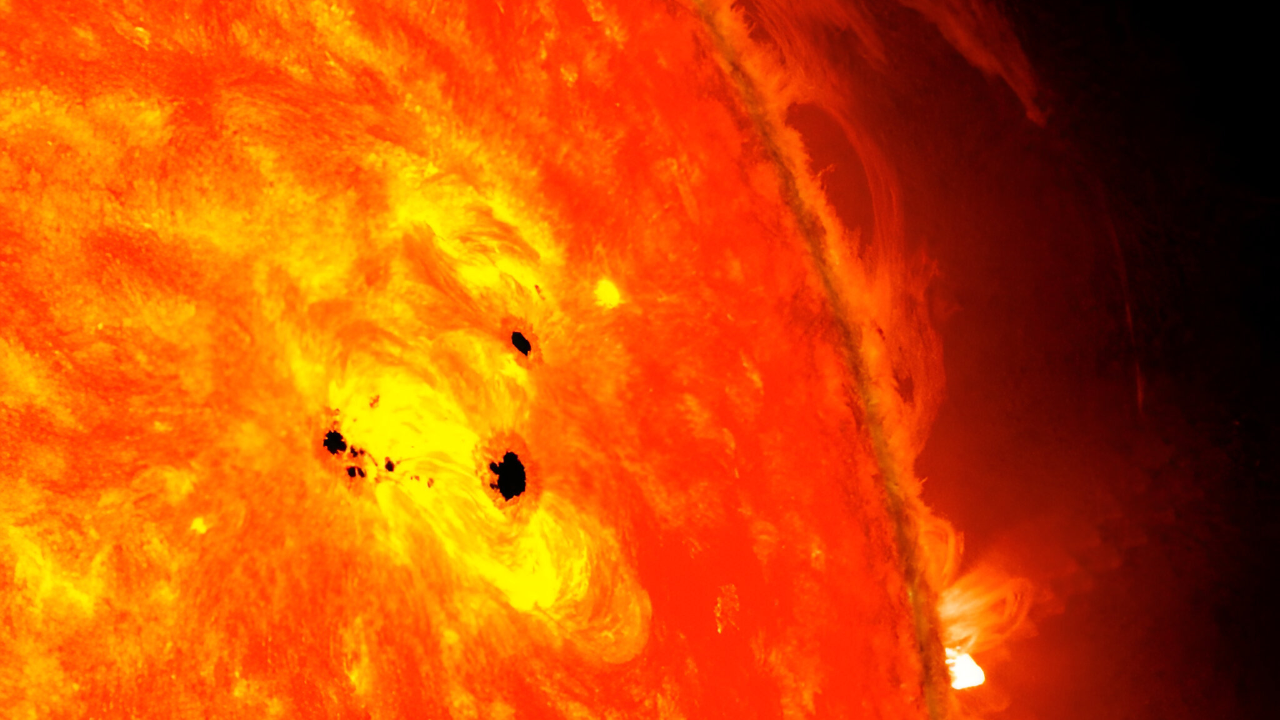
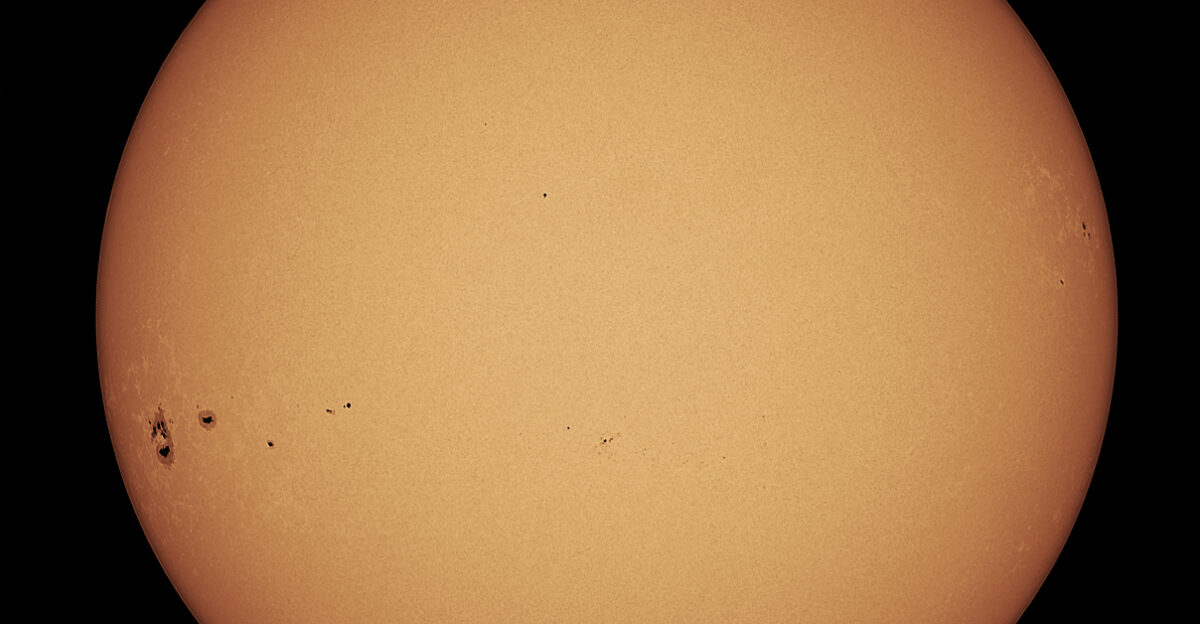
There is something unsettling brewing on the surface of our star. NASA’s Solar Dynamics Observatory has flagged a massive sunspot complex—a sprawling region of magnetic instability that has turned to face Earth. It’s not just a blemish; experts at the NOAA Space Weather Prediction Center describe it as a churning region of energy that demands attention.
For the first time in a decade, we are staring down a solar feature of this magnitude, and it’s a stark reminder that we live in the atmosphere of a volatile star.
A Void That Could Swallow Worlds
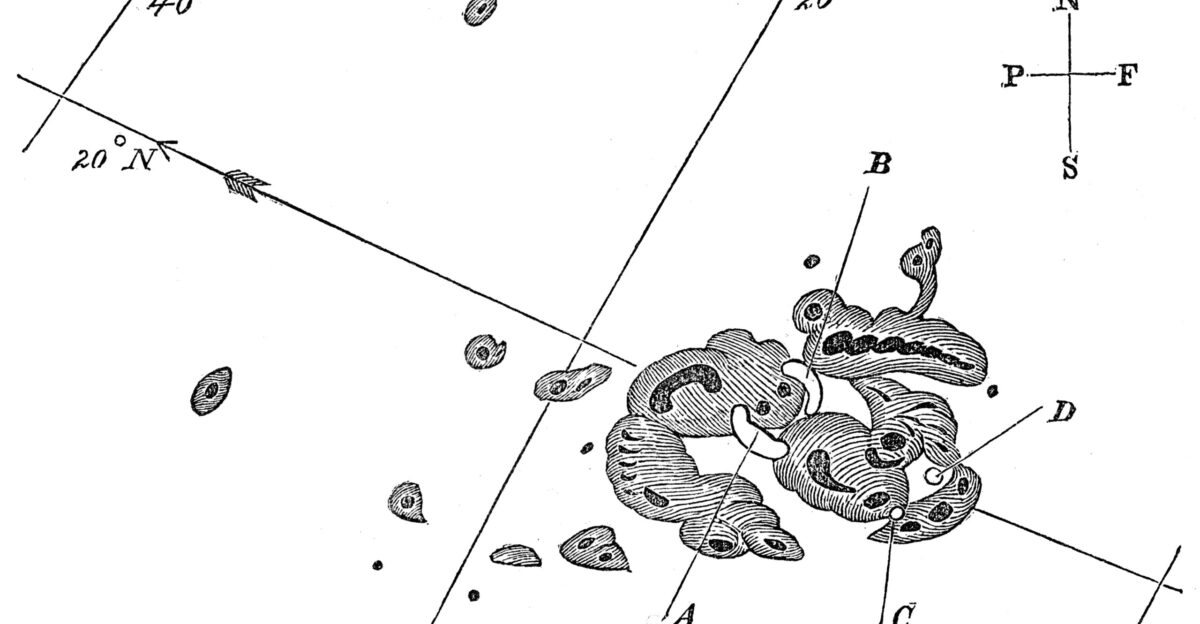
To truly grasp the scale of this phenomenon, you have to leave terrestrial measurements behind. This isn’t a crater; it’s a magnetic storm roughly 180,000 kilometers across—wider than our entire planet. In fact, you could fit several Earths inside the dark cores of this cluster.
According to LiveScience, the formation is roughly 90 percent the size of the legendary sunspot that triggered the 1859 Carrington Event.
The Zombie Sunspot Returns
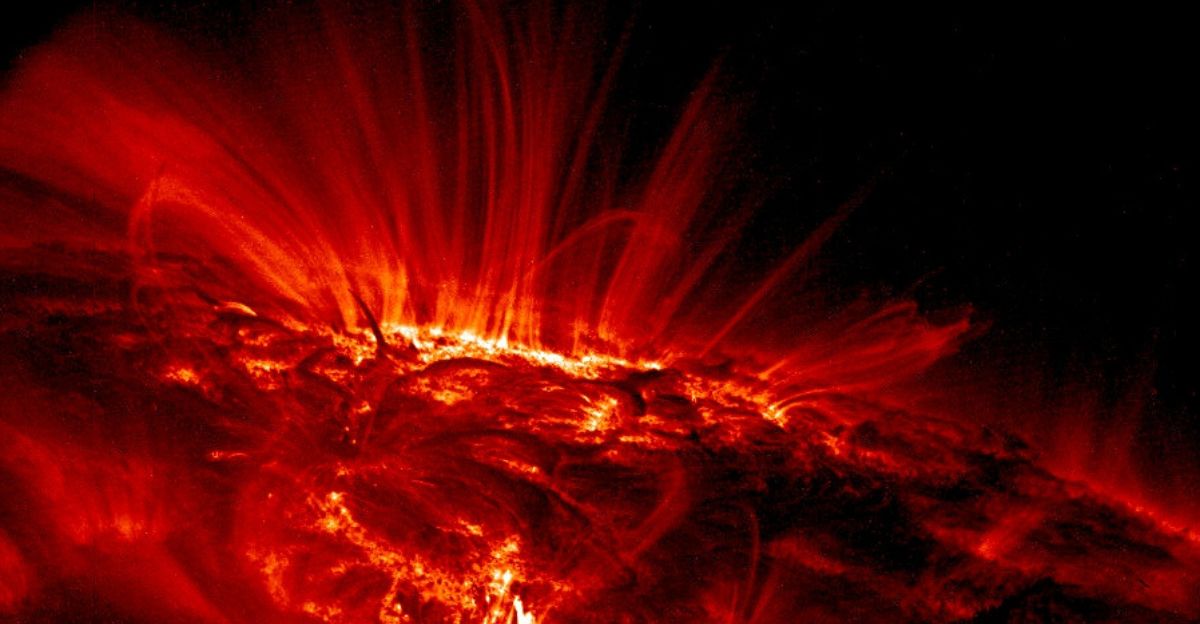
Space weather forecasters love a good mystery, and this sunspot has provided one. It isn’t new; we met it weeks ago as AR 4274, when it triggered dazzling auroras before rotating away to the sun’s far side. Usually, the sun’s turmoil tears these spots apart over time. But this one refused to die.
It survived the trek around the back of the sun and re-emerged as AR 4299—larger, darker, and significantly more complex than it had been when it left. It came back bigger, and it came back hungry.
In the Line of Fire
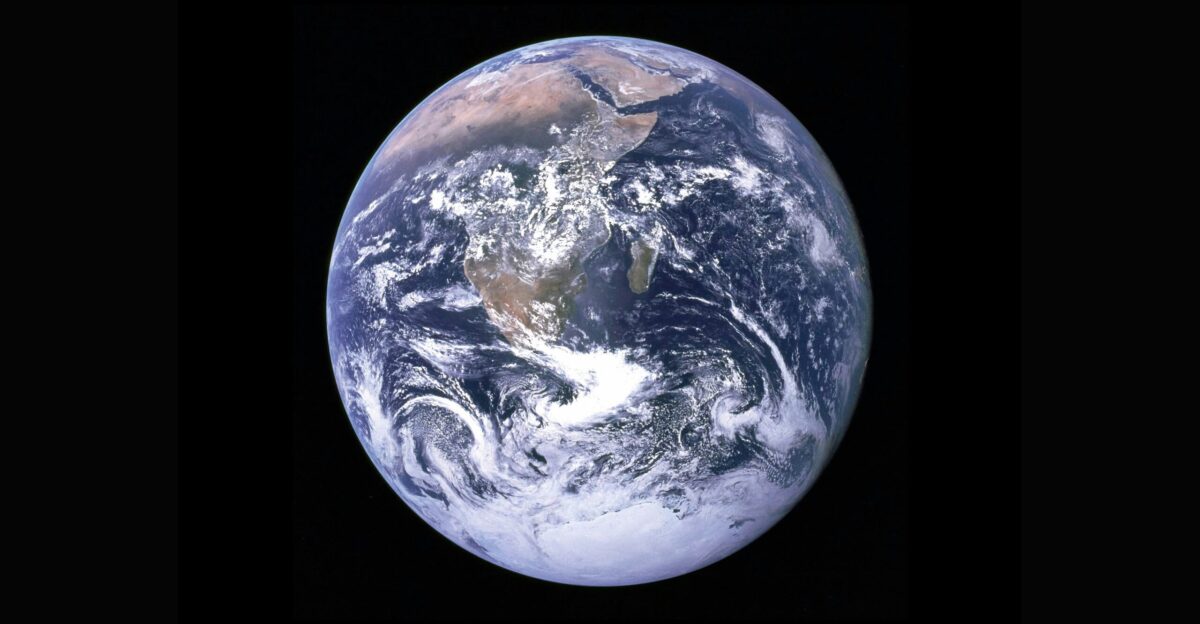
A sunspot on the far side is a curiosity; a sunspot on the western limb facing Earth is a threat. Right now, the barrel is pointing our way. While NOAA reports that no Coronal Mass Ejections—massive clouds of solar plasma—have hit us yet from this specific complex, the geometry is precarious.
Over the next week, the sun’s rotation will drag this volatile region into a prime position to launch storms directly at our planet.
Ghosts of the Carrington Event
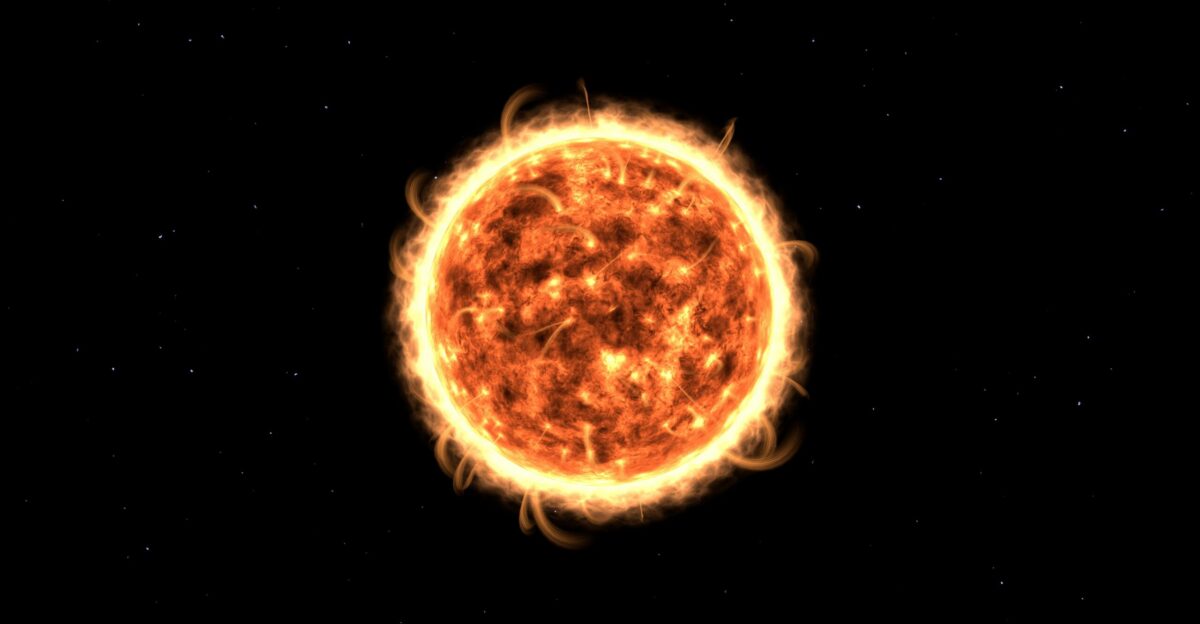
Why the panic over a dark spot? It comes down to history. Scientists use the 1859 Carrington Event as the benchmark for a “worst-case scenario.” During that storm, the night sky turned to day, and the primitive technology of the time—telegraphs—failed globally.
With this new complex measuring roughly 90 percent the size of that 1859 monster, researchers are asking a chilling question: if a storm that size hit us back when we barely used electricity, what would it do to a world that runs on it?
Glass Houses and Solar Stones
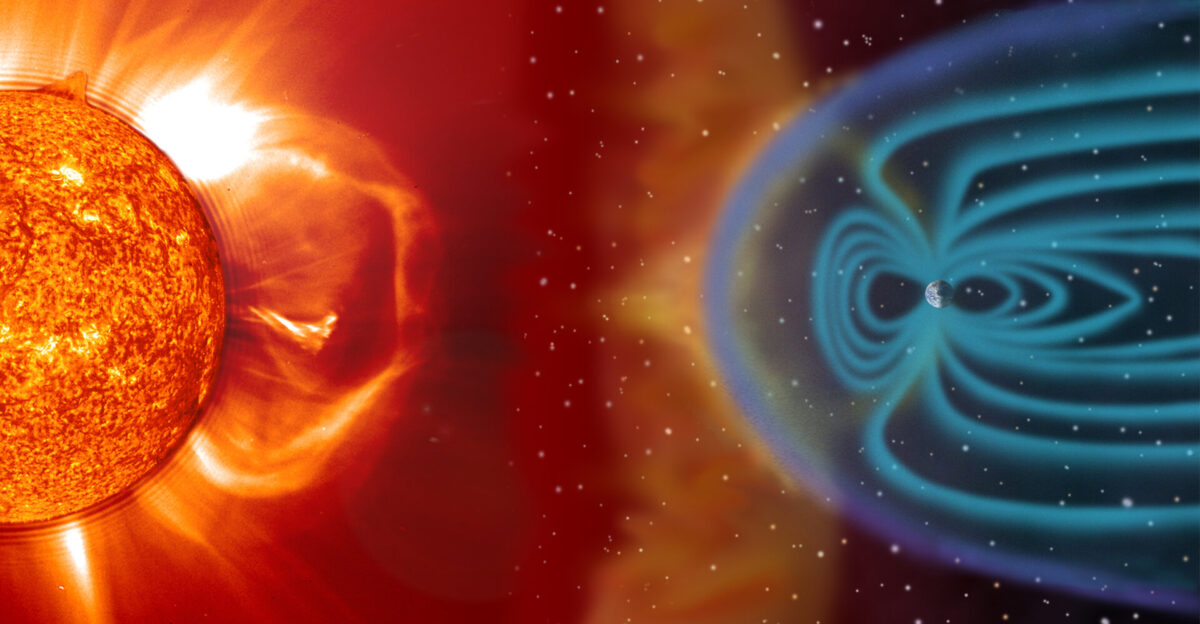
We are far more fragile today than the Victorians were. In 1859, a solar storm meant you couldn’t send a telegram for a few hours. Today, it means the potential collapse of the systems that sustain us. Our civilization is built on a delicate, invisible web of signals and power lines.
As experts point out, the very technology that makes modern life possible—GPS, the internet, the power grid—is also our Achilles’ heel when the sun decides to unleash its fury.
The First Casualties: Satellites
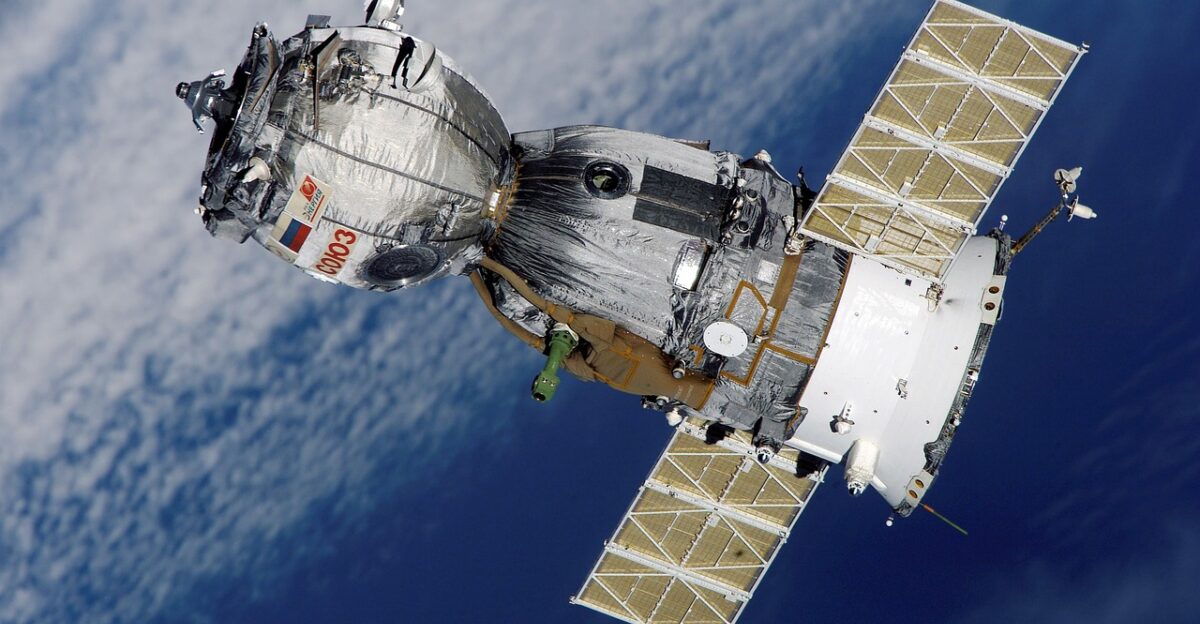
If this giant erupts, the first signs of trouble won’t be on the ground—they’ll be in orbit. We have roughly 11,700 to 15,000 satellites orbiting above us, including the Starlink constellation that beams internet to the world.
A major solar storm causes the atmosphere to swell, dragging these satellites down and scrambling their electronics.
When the Map Goes Dark

Imagine driving down a highway and watching your GPS screen freeze. Now multiply that by millions. It’s not just about missed exits; it’s about commercial airliners, cargo ships, and emergency responders who rely on satellite timing to navigate.
If this sunspot unleashes a powerful flare, it could scramble the signals that guide global transportation.
The Internet’s Underwater Weakness
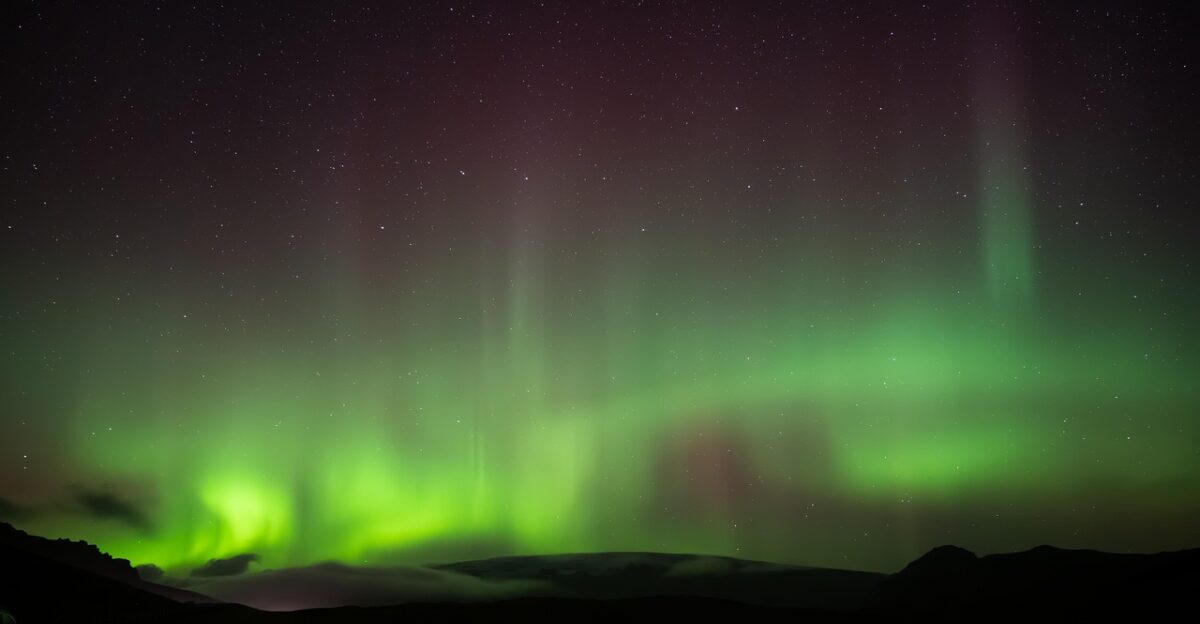
Research by Sangeetha Abdu Jyothi has highlighted the vulnerability of submarine cable systems to severe geomagnetic storms, showing that the internet infrastructure concentrated in regions above 40 degrees latitude faces particular risk during extreme space weather events.
In a worst-case scenario, experts estimate that significant portions of global internet traffic could be disrupted, resulting in a digital blackout that isolates nations.
The Nightmare Scenario: Grid Failure
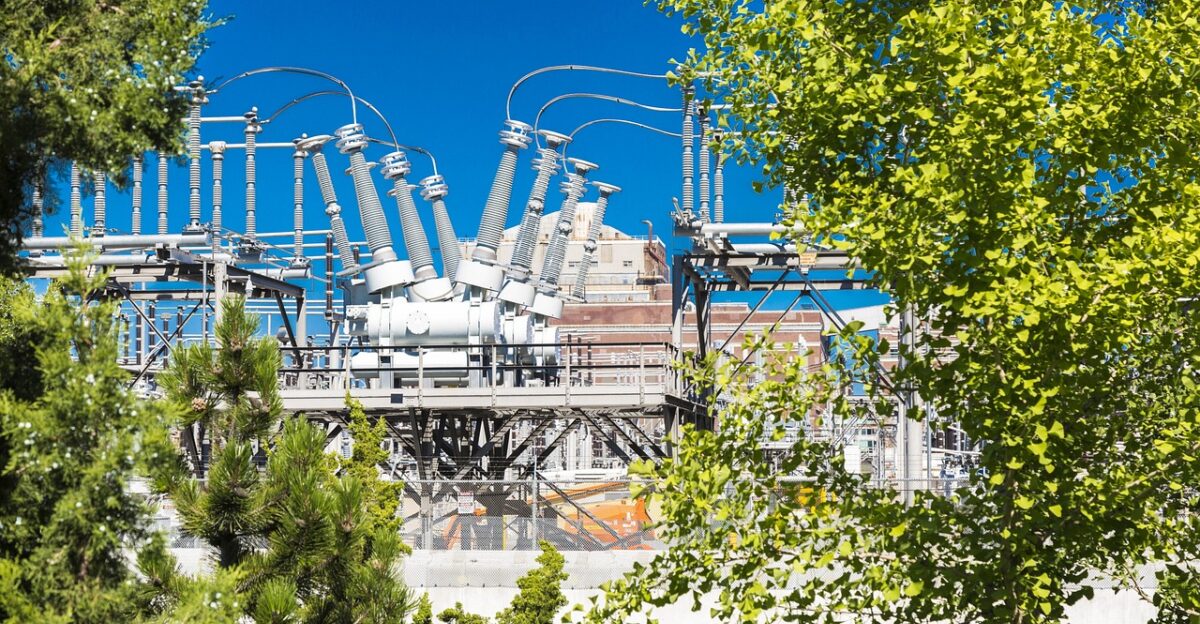
The ultimate fear isn’t lost emails; it’s lost power. A massive geomagnetic storm sends electrical currents surging through the ground and into our power lines. These surges can melt the copper hearts of the giant transformers that serve as the backbone of the grid.
Replacing them isn’t like changing a fuse; these are custom-built behemoths that take months to manufacture and assemble.
Counting the Cost in Trillions
When risk assessors run the numbers on a modern-day Carrington Event, the calculator runs out of zeros. Estimates for the economic fallout range from $600 billion to a staggering $2.6 trillion. It’s not just the repair bill; it’s the frozen supply chains, the halted banking transactions, and the spoiled food.
With the massive sunspot complex looming large, these aren’t just abstract figures anymore—they are the potential price tag of a single bad day on the sun.
See It With Your Own Eyes
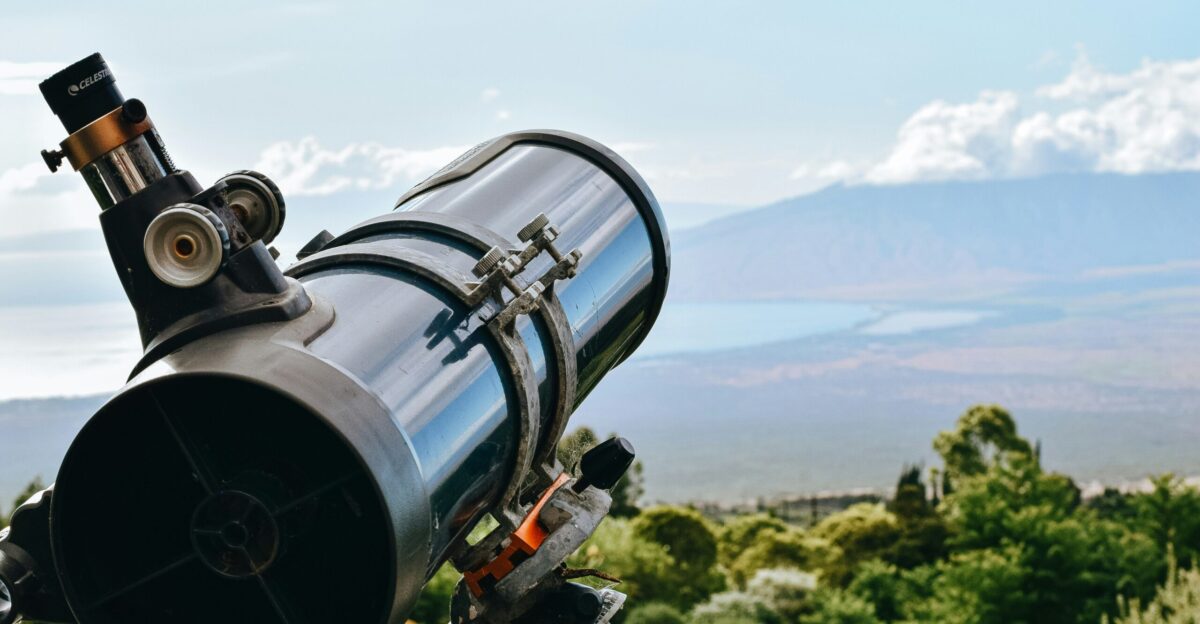
You don’t need a PhD to appreciate the scale of this formation. The sunspot complex is so vast that it is easily visible through properly filtered telescopes, even for amateur observers.
There is something visceral about seeing it yourself: a distinct, ink-black region on the face of the sun.
The Anatomy of a Solar Storm
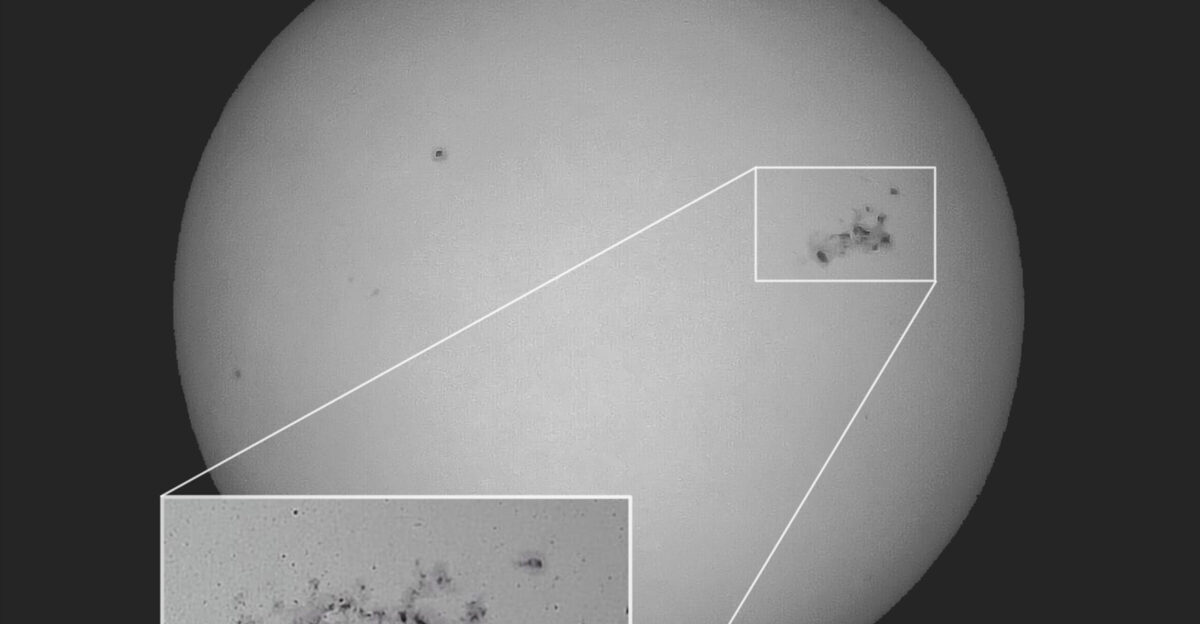
What exactly are we looking at? A sunspot isn’t a physical hole; it’s a magnetic knot. Think of it as a tangle of rubber bands wound so tight they snap. When the magnetic fields in this complex get too twisted, they undergo “magnetic reconnection,” blasting radiation and plasma outward.
It is this invisible tension that SWPC forecasters are analyzing right now, trying to predict when and if those magnetic rubber bands will break in our direction.
The Waiting Game
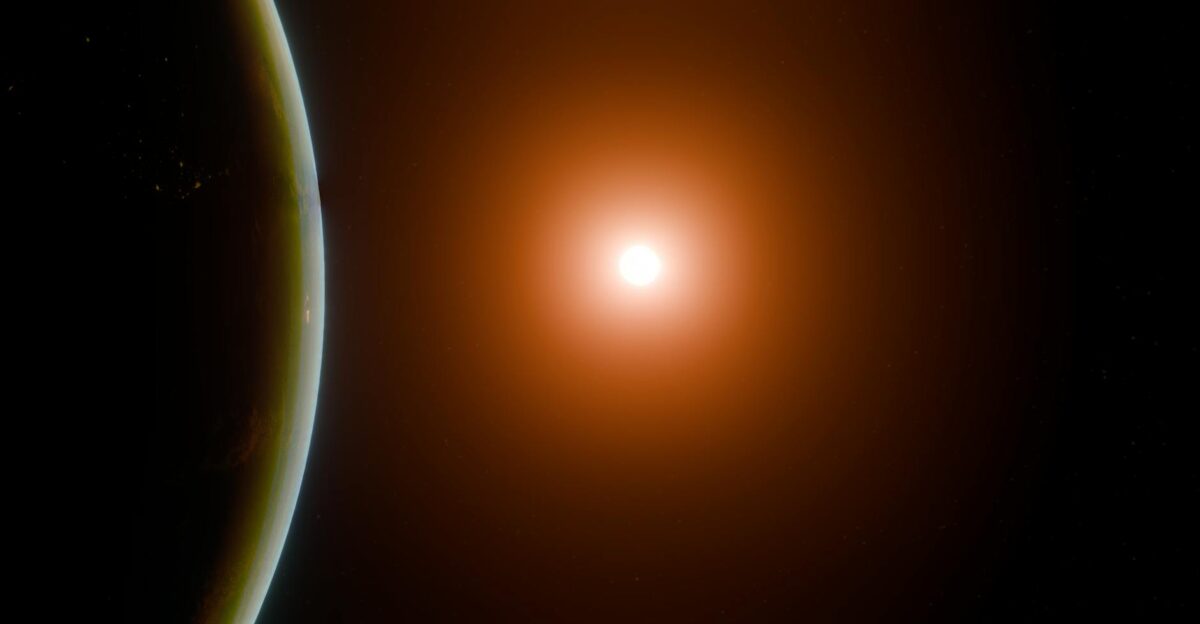
Currently, we are in a cosmic standoff. The sun rotates slowly, and every day changes the angle of the threat. Over the next week, the complex could turn into a “favorable” position for an Earth-directed eruption, or it could fizzle out entirely.
That’s the frustration of space weather: we can see the cannon loaded and pointed at us, but we have no way of knowing if the trigger will be pulled.
The Sentinels on Watch
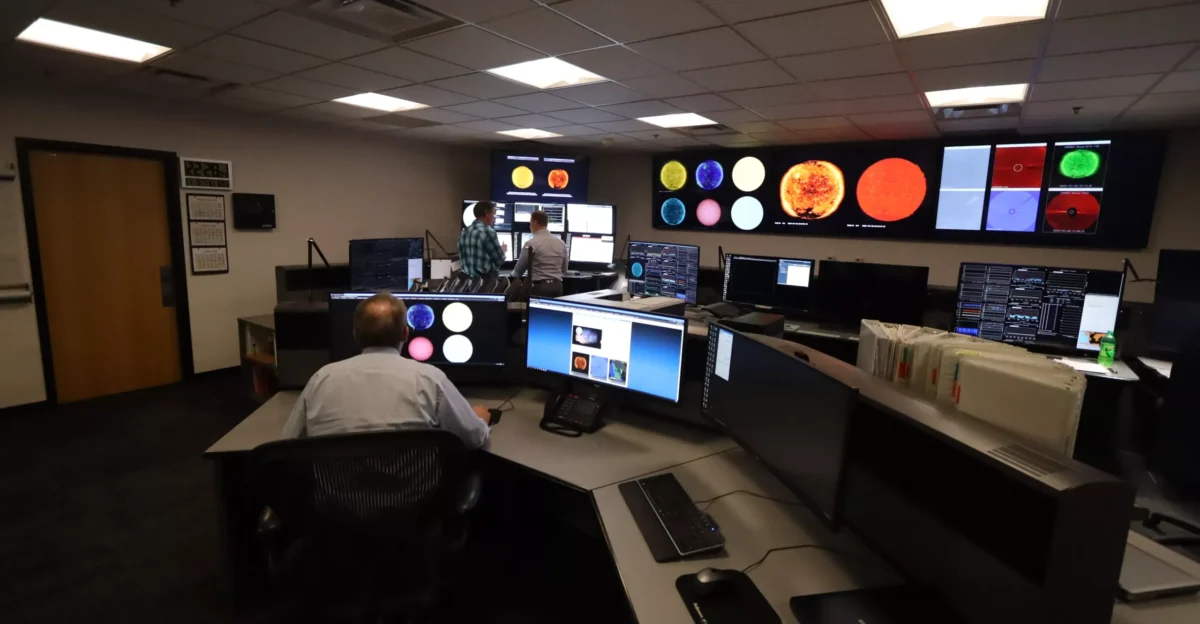
Fortunately, we aren’t sitting ducks. The NOAA Space Weather Prediction Center and NASA operate 24/7, monitoring the sun like a patient in critical care. They track every flicker and flare.
As space weather experts note, these agencies closely monitor sunspot activity so that they can react on time.
Fifteen Hours to Brace for Impact
If the worst happens, we won’t be totally surprised. We would likely have a warning window—anywhere from 15 to 72 hours—before the plasma cloud hits Earth. It sounds brief, but it’s enough time to act.
Grid operators can offload power to save transformers, and satellite teams can put spacecraft into hibernation.
A National Vulnerability
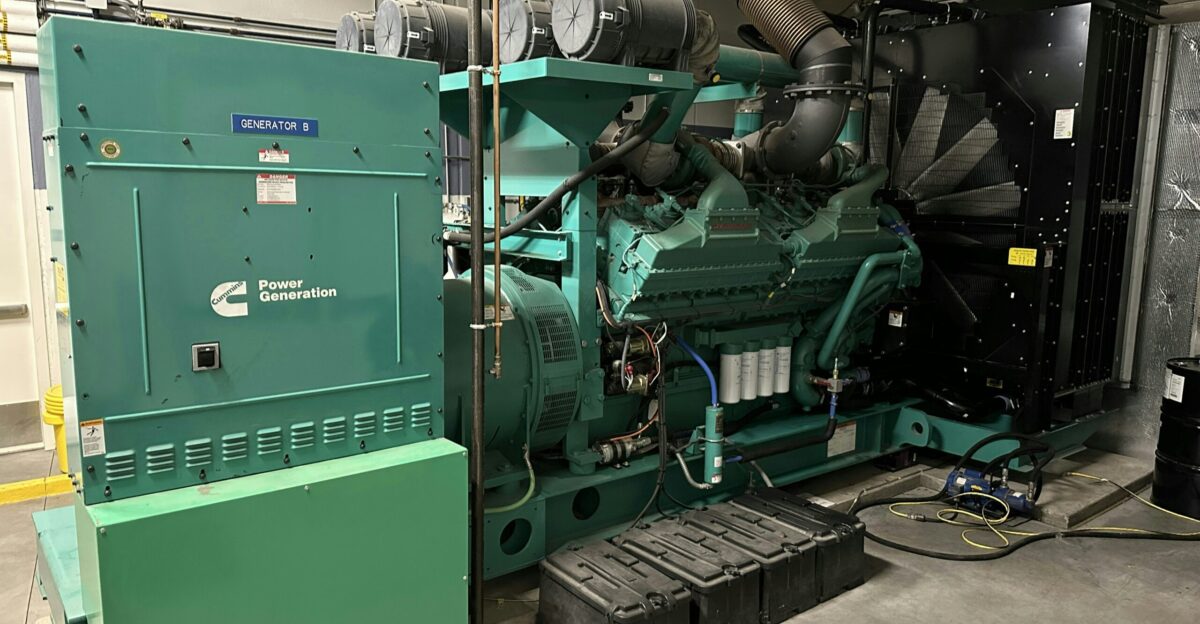
This isn’t a regional weather forecast; it’s a continental one. In the U.S. alone, 330 million people rely on the systems currently at risk. It’s the water pumps, the hospital generators, the credit card readers at the grocery store.
The sheer size of this sunspot serves as a great leveler—it doesn’t care about state lines or borders.
Riding the Solar Cycle
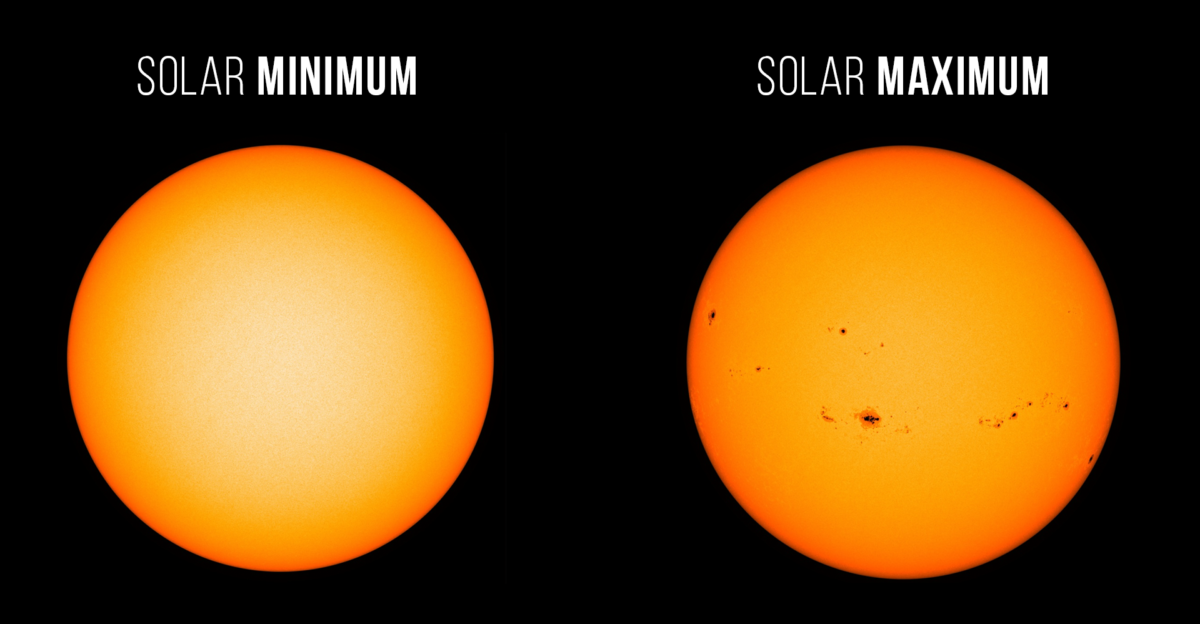
Why is this happening now? The sun breathes in cycles, roughly every 11 years, oscillating between periods of quiet and chaotic activity. We are currently surfing the peak of this cycle, known as “solar maximum.” It’s the season for monsters like this sunspot complex.
While this is business as usual for the sun, it presents a unique challenge for us, as our technology has never been this advanced—or this exposed—during a solar peak of this intensity.
Spinning Away from Disaster
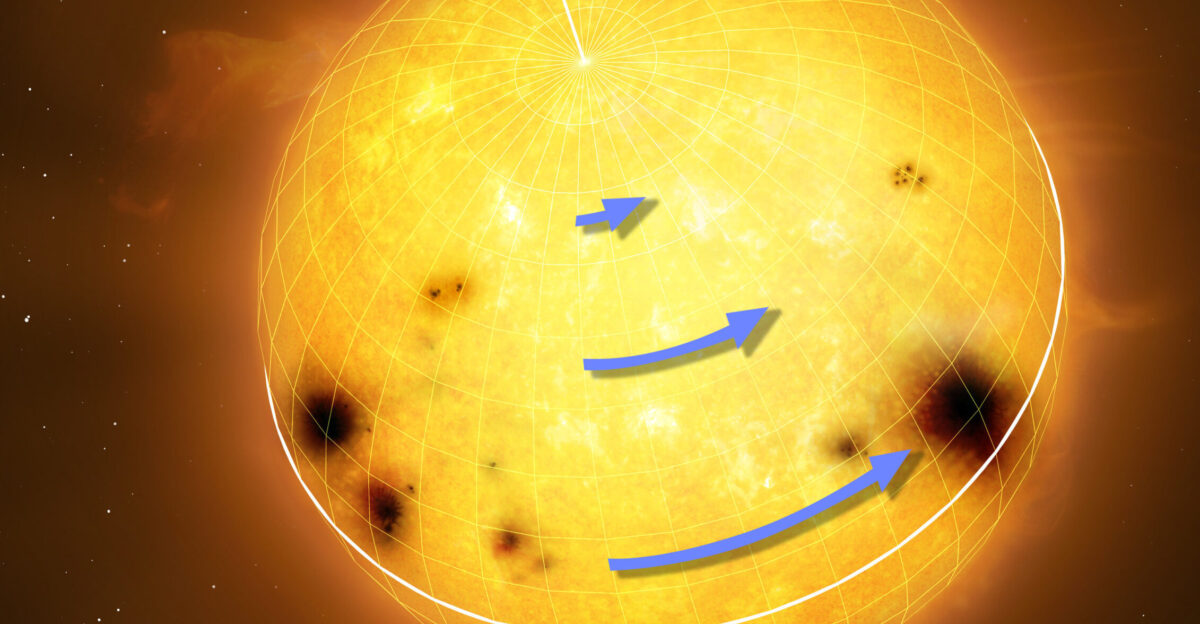
There is a silver lining, and it comes down to simple mechanics: the sun continues to spin. Just as this giant comes into our view, it will eventually rotate out of sight. If we can get through the next week or so without a major eruption, the danger zone will pass as the spot moves to the sun’s western edge.
Until then, astronomers will keep their eyes glued to the telescopes, hoping the giant decides to sleepwalk past us.
A Humble Perspective
At the end of the day, this sunspot complex is a reality check. We spend our lives looking down at our screens, forgetting the massive, burning engine that powers our solar system. This 180,000-kilometer-wide formation is a message from the cosmos: we are small, and our technology is fragile.
Whether this storm hits or misses, it has already succeeded in making us look up and respect the power of the star we orbit.
Sources:
NOAA Space Weather Prediction Center – Space Weather Story of the Week, December 1–5, 2025 (spaceweather.gov)
NASA Solar Dynamics Observatory – Active Region AR 4294–4298 imagery and analysis, December 2025 (nasa.gov)
Newsweek – “Biggest Sunspot in Decade Could Bring Giant Solar Flare, Bright Auroras,” December 1, 2025
Forbes – “Giant New Sunspot And X-Class Solar Flare Could Bring Bright Auroras,” December 1, 2025
PC World – “NASA spots huge sunspot complex facing Earth. What that means for us,” December 3, 2025