San Francisco has launched a landmark legal challenge against some of the world’s largest food companies, accusing them of deliberately designing ultra-processed products to be addictive and harmful on a scale comparable to tobacco. The case, filed by City Attorney David Chiu on December 2, 2025, names ten corporate giants and seeks to test whether manufacturers can be held liable for engineering dependence and driving a nationwide health crisis.
Origins of an Addiction Playbook

The complaint traces the roots of modern food formulation to a corporate convergence that began in the 1960s, when tobacco firms Philip Morris and RJ Reynolds bought major food brands and folded them into their existing structures. Philip Morris acquired Kraft, General Foods, and Nabisco, while RJ Reynolds took over brands such as Hawaiian Punch and Del Monte. Executives openly described a strategy in which a consumer could eat an entire meal from the company’s food portfolio and then finish with one of its cigarettes, reflecting a unified approach to maximizing repeat use across product lines. Internal know-how about how to keep people consuming cigarettes was, according to the lawsuit, deliberately repurposed for packaged foods.
A pivotal moment came on April 8, 1999, when leading food company CEOs met in Minneapolis to review research on ultra-processed products. At that meeting, Pillsbury executive James Behnke and Kraft official Michael Mudd presented evidence that these foods imposed more than $100 billion a year in health-care costs and warned that the public health burden was beginning to rival that of tobacco. Their presentation described how specific combinations of ingredients were calibrated to promote overeating. Rather than changing course, industry leaders rejected calls for reform and expanded their marketing efforts, particularly toward younger consumers.
Engineering Diets and Targeting Children
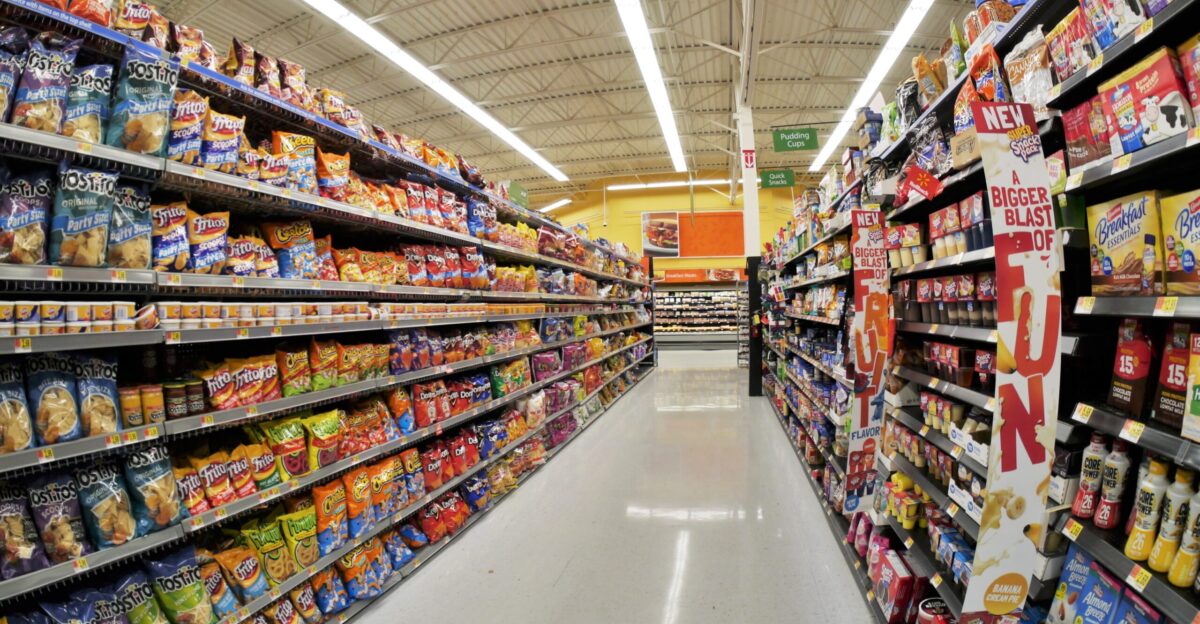
By the late twentieth century, consolidation had reshaped the American food system. A small cluster of multinationals came to dominate store shelves, pushing ultra-processed goods from a limited niche to roughly 70 percent of the national food supply. Despite the appearance of variety in supermarkets, the lawsuit argues that most packaged offerings represent different mixtures of similar industrial ingredients produced by the same few corporations. These products are built from fragmented, modified components—enhanced with colorings, flavor boosters, emulsifiers, sweeteners, and texturizers—in ways that cannot be reproduced in home kitchens and are designed to trigger strong cravings.
The case also highlights intensive promotion to children and communities of color. Documents describe a Kraft “Kids Task Force” created to reach the vast majority of children between six and twelve through characters like Tony the Tiger and tie-ins with entertainment brands such as Disney, Nickelodeon, and Marvel. According to the complaint, companies did not simply advertise broadly; they concentrated their efforts disproportionately on Black and Latino children, exposing them to about 70 percent more marketing for these products than white children. City officials characterize this as a deliberate focus on populations already facing health inequities.
Health Fallout and Soaring Costs

San Francisco’s filing links the rapid spread of ultra-processed foods to a series of overlapping health crises. As these products became embedded in everyday diets, obesity rates climbed sharply, colorectal cancer doubled among younger adults, and diagnoses of diabetes multiplied over a thirty-year period. At the same time, inflammatory bowel diseases became more common, and psychiatric conditions such as depression increasingly appeared alongside heavy consumption of packaged, highly processed items. In San Francisco alone, diabetes has risen to the city’s eighth leading cause of death and generated more than $85 million in hospital charges in 2016.
The financial impact extends far beyond any single jurisdiction. National health spending has grown from about 5 percent of gross domestic product in 1960 to close to 20 percent in recent years, with projections suggesting it could reach around $7 trillion by 2031. California’s Medicaid program, Medi-Cal, now spends over $124 billion annually, and San Francisco’s share is estimated at $3.95 billion. The lawsuit contends that a meaningful portion of these expenses stems from conditions tied to ultra-processed foods and that companies profited from patterns of illness they helped to create and sustain.
Legal Game Plan and Scientific Evidence

San Francisco has assembled a team of experienced public health litigators whose strategy draws directly from the playbook used against cigarette manufacturers in the 1990s. The complaint relies on California’s Unfair Competition Law and public nuisance statutes and asks the court to halt alleged deceptive practices, require corrective health education, and restrict advertising aimed at children. It also seeks restitution and civil penalties, arguing that corporate decisions to prioritize addictive design and aggressive promotion inflicted widespread, foreseeable harm.
Medical leaders have publicly endorsed the effort. City Health Director Daniel Tsai has described ultra-processed foods as engineered for dependence and especially damaging to low-income communities and communities of color. UCSF physician Kim Newell-Green points to growing research tying these products to Type 2 diabetes, fatty liver disease, cardiovascular problems, colorectal cancer, and depression at increasingly early ages. Mayor Daniel Lurie has framed the case as an effort to ensure residents understand what is in the items they purchase and are not misled about the risks.
The scientific foundation for the lawsuit includes a broad 2024 review of 45 meta-analyses involving nearly 10 million participants, which found links between ultra-processed foods and 32 different adverse health outcomes. Recent papers in The Lancet have reported strong associations between high intake of such products and diseases including Type 2 diabetes, liver disease, heart and kidney conditions, colorectal cancer, Crohn’s disease, and depression. One experimental study cited in the complaint showed that people eating ultra-processed diets consumed roughly 500 more calories per day than those eating unprocessed meals, gained weight, and increased their body fat even when food was offered without portion limits.
Industry Response and What Comes Next
Trade groups and manufacturers have pushed back, arguing that there is no single, universally accepted definition of “ultra-processed” and warning that focusing on processing alone ignores overall nutritional value and personal choice. They contend that the lawsuit oversimplifies a complex food landscape and that many processed items can fit into a balanced diet. However, San Francisco officials say internal documents and decades of marketing practices show that companies, like tobacco firms before them, understood the addictive potential of their products and continued to promote them, especially to vulnerable groups.
The case will move through San Francisco Superior Court over several years, with a discovery process, motions, and possible appeals. Companies are expected to challenge both the scientific evidence and the legal theories, seeking dismissal or a narrowing of the claims. At the same time, California is advancing broader policy measures, such as a new state law that will phase certain ultra-processed products out of school meals and local ordinances that steer public purchasing toward minimally processed options. If San Francisco prevails or reaches a major settlement, the outcome could reshape how food is formulated and advertised nationwide, offering a template for other governments seeking to shift the health and economic burden away from consumers and public programs and onto the corporations that design and sell these products.
Sources:
San Francisco City Attorney Official Press Release – December 2, 2025
Reuters Legal Reporting – “San Francisco sues Kraft, Mondelez over ultra-processed foods” (December 2, 2025)
The New York Times – “San Francisco Sues Ultraprocessed Food Companies” (December 2, 2025)
CDC – National Diabetes Statistics Report and Epidemiological Data
National Institutes of Health (NIH) – Ultra-Processed Food Addiction Research and Meta-Analysis Studies
Centers for Medicare & Medicaid Services (CMS) – National Health Expenditure Projections
California Department of Health Care Services – Medi-Cal Budget and Spending Reports