
U.S. employers have announced 1.17 million layoffs through November 2025, a staggering 54% increase over the same period last year. It marks the largest wave of job cuts since the 2020 pandemic crash and only the sixth time since 1993 that year-to-date cuts exceeded 1.1 million.
November alone saw 71,321 planned layoffs, signaling a sharp and accelerating shift in corporate strategies as economic pressures mount nationwide.
Why So Many Jobs Are Going

Companies cite a combination of cost-cutting, restructuring, weaker demand, AI adoption, tariffs, and government budget reductions as core drivers behind 2025 layoffs. “Economic conditions” alone account for 245,000+ job cuts this year.
Firms across sectors have been quietly preparing for slower growth since spring, and those pressures have now converged into the biggest non-recession layoff wave in 15 years, reshaping payrolls even without an official downturn.
Households Feel the First Shock

The impact of 1.17 million announced layoffs reaches far beyond the workers themselves. With typical U.S. household sizes, an estimated 3–4 million people may face financial strain. Using median wage assumptions, as much as $58–70 billion in annual income could be at risk.
Families in major metros feel the shock within weeks as rent, food, transport, and holiday budgets tighten sharply, compressing discretionary spending across the economy.
Corporations Tighten and Restructure

Major U.S. corporations are aggressively restructuring in 2025. Verizon’s 13,000 layoffs—the largest single announcement in November—underscore a nationwide shift toward leaner operations. Telecom, retail, tech, and manufacturing firms are reducing layers, trimming overhead, and accelerating automation investments.
These changes reflect not just cost pressure but long-term strategic pivots as executives prepare for slower sales, higher borrowing costs, and disruptive technological shifts moving into 2026.
Tech and AI Shift Labor Demand
The tech industry has already announced 153,000+ layoffs this year, up 17% from 2024, signaling persistent churn even after earlier waves.
In November alone, tech firms cut 12,377 jobs. Many roles being eliminated involve traditional engineering, support, and operations work. At the same time, companies are hiring aggressively in AI, automation, and data infrastructure, forcing displaced workers to retrain quickly or risk being locked out of the industry’s highest-growth segments.
Trade and Tariffs Add Pressure

Tariff-related disruptions continue to reshape manufacturing, supply chains, and import-dependent sectors. So far in 2025, companies have explicitly blamed 7,908 layoffs on tariffs—including 2,061 in November alone.
Higher input costs, unpredictable global sourcing, and shifting trade relationships have prompted firms to restructure production, close facilities, or delay expansion. The real toll may be significantly higher because many “economic conditions” cuts mask trade-related pressures beneath broader categories.
Inside the Layoff Experience

Workers receiving pink slips in 2025 often face abrupt timelines, limited severance, and immediate uncertainty about healthcare and childcare. Cuts hit everywhere—from telecom call centers to factory lines to software teams.
With more than 1.1 million Americans affected, job boards are flooded and competition is intensifying. For workers with specialized roles or limited mobility, the scramble to secure new employment before savings run out adds significant emotional and financial stress.
Policymakers Watch the Trend

A government shutdown forced the November jobs report to be delayed until December 16, leaving lawmakers without real-time data during critical budget and policy debates. Missing October data—permanently lost due to the shutdown—creates an unusual blind spot in an already uncertain labor environment.
The lack of clarity complicates decisions for congressional committees, economic advisors, and federal agencies seeking to assess whether layoffs reflect temporary adjustment or deeper economic deterioration.
Economic Signals Flash Mixed
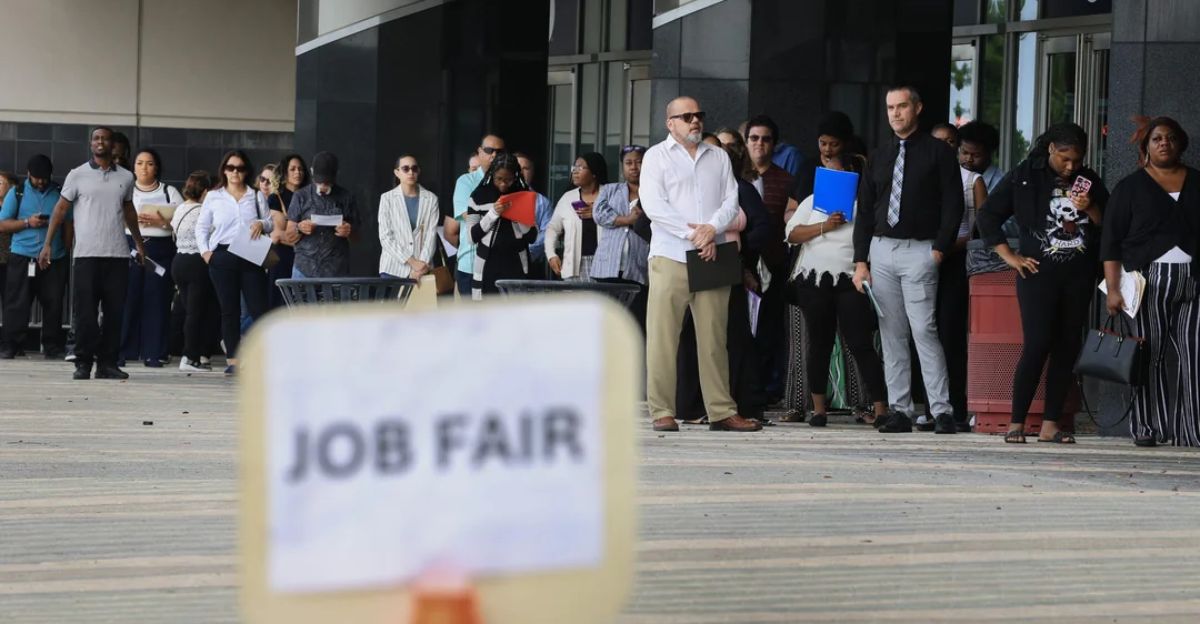
The labor market is sending contradictory signals. In September, the economy added 119,000 jobs, but unemployment rose to 4.4%, its highest level since October 2021. Then in November, private-sector payrolls unexpectedly fell by 32,000, marking the first contraction in months.
These sharp swings are raising alarms among analysts who fear that weakening consumer demand, shrinking hiring plans, and rising layoffs could converge into a broader slowdown entering 2026.
Retailers Pull Back on Hiring

Retailers have announced 497,151 planned hires in 2025—a steep 35% decline from last year and the lowest level since 2010. Seasonal hiring is even weaker: companies plan just 372,520 holiday workers, the smallest total since tracking began in 2012.
With fewer temporary jobs available, families often reliant on seasonal income face fewer options. Shoppers may also encounter longer lines, reduced hours, and thinner staff across stores this holiday season.
Restaurants and Hospitality Brace

Hotels, restaurants, and entertainment venues are preparing for unpredictable winter demand as layoffs rise and payrolls shrink. With private-sector employment falling in November and over 1.1 million job cuts announced this year, operators worry about reduced consumer spending through early 2026.
Many hospitality businesses are pausing new hiring, cutting hours, or shifting toward part-time roles, bracing for softer travel, dining, and entertainment activity during the post-holiday lull.
Knock-On Effects for Suppliers
Layoffs ripple outward through supply chains. Plant closures and restructuring reduce demand for packaging, logistics, janitorial services, and commercial real estate.
Challenger’s data show that “closings” and “restructuring” account for large portions of 2025 job cuts, hitting trucking companies, building maintenance firms, and regional contractors. When major employers downsize, dozens of smaller firms lose predictable revenue, magnifying the economic impact well beyond the initial workforce reductions.
Global Workforce Jitters

U.S. layoffs—especially in tech and telecom—are influencing global workforce decisions. Multinationals with American hubs are reconsidering hiring in Europe and Asia as cost pressures accelerate and AI investments scale.
Historically, years exceeding 1.1 million U.S. layoffs are associated with global downturns, adding to international anxiety. Analysts warn that as U.S. companies automate aggressively, similar job cuts may emerge across global markets in 2026 and beyond.
Health and Lifestyle Strain

Job loss often triggers cascading health and lifestyle challenges. Displaced workers face heightened stress, sleep disruption, and financial anxiety as savings shrink. Many households delay doctor visits, cancel gym memberships, or cut extracurriculars for children.
Research on long-term unemployment shows increased risks of chronic illness and depression. With 1.17 million layoffs announced so far, 2025’s job-cut wave may carry meaningful public-health consequences over the coming years.
The AI and Work Debate

AI has been cited in 54,694 layoffs so far in 2025, including 6,280 in November, marking a major shift in how companies justify restructuring. Firms are using automation to replace customer service, analysis, and back-office roles at rapid speed.
Lawmakers recently heard warnings that up to 100 million U.S. jobs could be at risk over the next decade as AI advances, fueling bipartisan debates over retraining, safety nets, and economic displacement.
Unexpected Winners and Losers

While AI-tool vendors, cloud-service providers, and outplacement firms see rising demand, workers in tariff-sensitive industries, government-contracting hubs, and telecom giants face disproportionate losses.
Thousands of cuts have concentrated in sectors heavily exposed to global supply chains or automation risk. Regions dependent on a single large employer—especially in manufacturing or telecom—feel the most intense strain as local tax bases and small businesses absorb the economic fallout.
Markets Watch Corporate Cuts

Investors are tracking layoffs closely for clues about future profitability. Large cuts, such as Verizon’s 13,000-job reduction, signal cost discipline that may boost short-term margins. Yet widespread job losses raise questions about the strength of consumer spending heading into 2026.
Analysts increasingly debate whether 2025’s layoffs represent routine restructuring or an early warning of broader economic cooling, especially given declining hiring plans and weakening payroll data.
What Workers and Consumers Can Do

Workers in vulnerable sectors can take proactive steps: refresh résumés, strengthen professional networks, and pursue training in fast-growing fields like AI, cybersecurity, advanced manufacturing, and healthcare.
Families worried about job security can build emergency savings, trim high-interest debt, and avoid major new financial commitments. Understanding local hiring trends helps households plan ahead as the labor market becomes more unpredictable and competition for open roles intensifies.
What to Watch in 2026
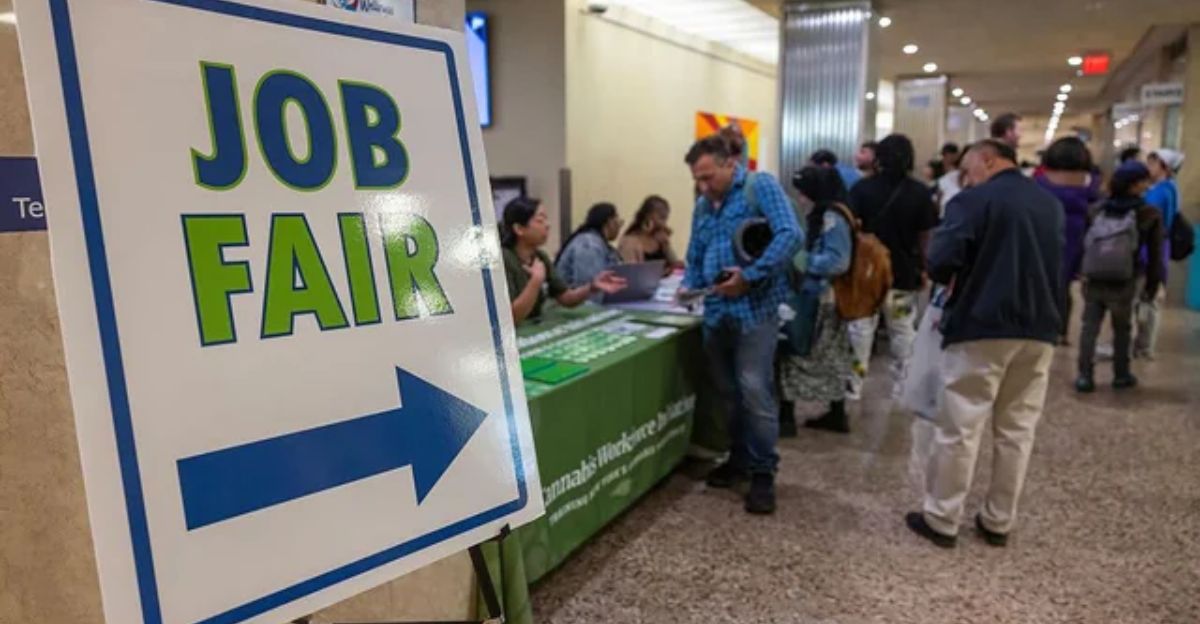
Key early-2026 data points include monthly job-cut announcements, unemployment trends, and hiring signals from major employers. If layoffs cool and seasonal hiring rebounds, 2025 may prove to be a painful but contained adjustment.
But if job cuts remain elevated and private payrolls continue to soften, pressure will mount for new federal or state policy responses. Analysts are watching whether consumer spending stabilizes—or pulls the economy further into slowdown territory.
A Defining Labor-Market Moment

The 1.17 million layoffs announced so far mark a watershed moment for the U.S. workforce—its largest job-cut wave since the pandemic.
AI adoption, tariffs, budget tightening, and shifting economic conditions are reshaping how companies hire, train, and invest. The choices employers, workers, and policymakers make in the next few months will determine whether 2025 becomes a temporary correction or a turning point that redefines the structure of U.S. employment.
Sources:
Challenger, Gray & Christmas – “Challenger Report: 71,321 Job Cuts on Restructurings, Closings …”
Reuters – “US planned job cuts fall 53% in November, Challenger says”
The Hill – “Layoffs so far in 2025 highest since 2020: Research”
ADP – “ADP National Employment Report: Private Sector Employment Shed 32,000 Jobs in November” / ADP Employment Report portal
CNBC – “Jobs report September 2025: 119,000 added, jobless rate 4.4%”
U.S. Bureau of Labor Statistics – “The Employment Situation – September 2025”