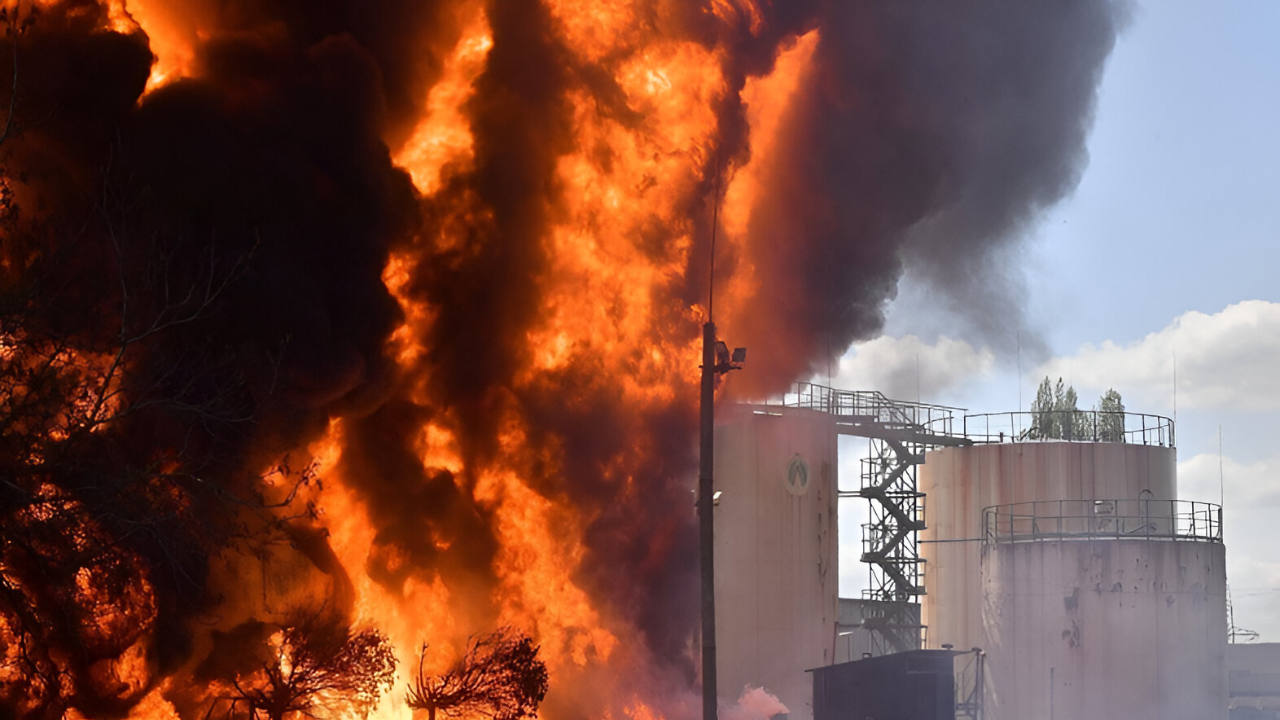
Flames rose over the Russian city of Ryazan before dawn on Saturday, November 15, 2025, as a swarm of 25 Ukrainian drones descended on one of the country’s most important oil facilities. Rosneft’s refinery there, capable of processing 262,000 barrels of crude a day and supplying fuel for Russian warplanes, was set ablaze in a strike that underscored how deeply the conflict has moved into each side’s infrastructure and economy. Local officials acknowledged only that air defenses had intercepted drones and that “falling debris” started a fire at an unnamed industrial site, even as images of the burning refinery spread widely.
Deep Strikes on Russia’s Fuel Network
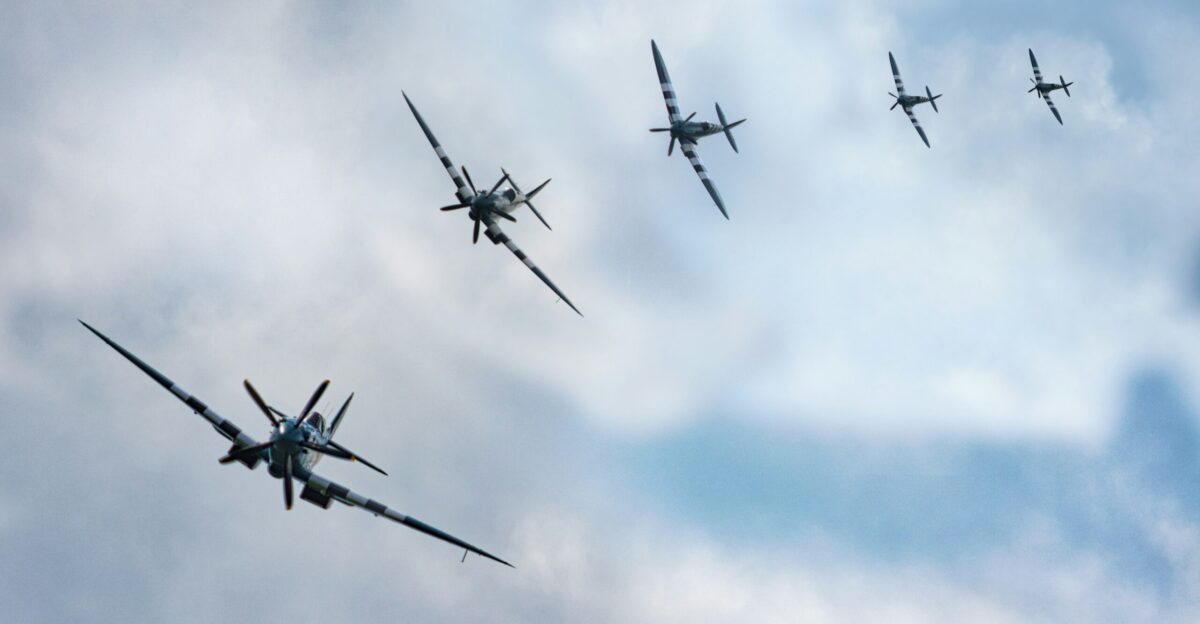
The Ryazan facility has been hit repeatedly—Ukraine struck it in January, February, and at least six more times in 2025—reflecting a deliberate strategy to degrade Russia’s ability to sustain air operations. Ukrainian military leaders say these long-range drone attacks are designed to reduce the capacity of Russian forces to carry out missile and bomb strikes, particularly the glide bombs that have pounded Ukrainian cities. Each outage at Ryazan ripples through Russia’s energy system; the refinery accounts for roughly 5 percent of national refining capacity, and after the November 15 attack, crude processing there reportedly halted completely, with no new loading expected until at least December. Fewer operating refineries means less fuel for warplanes and added pressure on Russia’s broader fuel supply.
Civilian Cost on the Ukrainian Front

Even as Ukraine targets refineries deep inside Russia, its own civilians remain exposed to daily bombardment. On the same day as the Ryazan strike, Russian artillery and drones killed four civilians inside Ukraine. Three died in the Kherson region: a man in Myklitskyi village and a man and woman in the regional capital. Another civilian was killed in Zaporizhzhia by a first-person-view drone while fishing, an attack that highlighted how ordinary attempts at daily life can end in sudden violence. Six more people were wounded in these incidents, adding to the steady toll inflicted far from front-line trenches. The contrast is stark: Ukraine employs drones to disable strategic fuel infrastructure, while Russia’s salvos frequently fall on homes, streets, stations, and fields.
Railways Under Fire and “Iron Heroes”
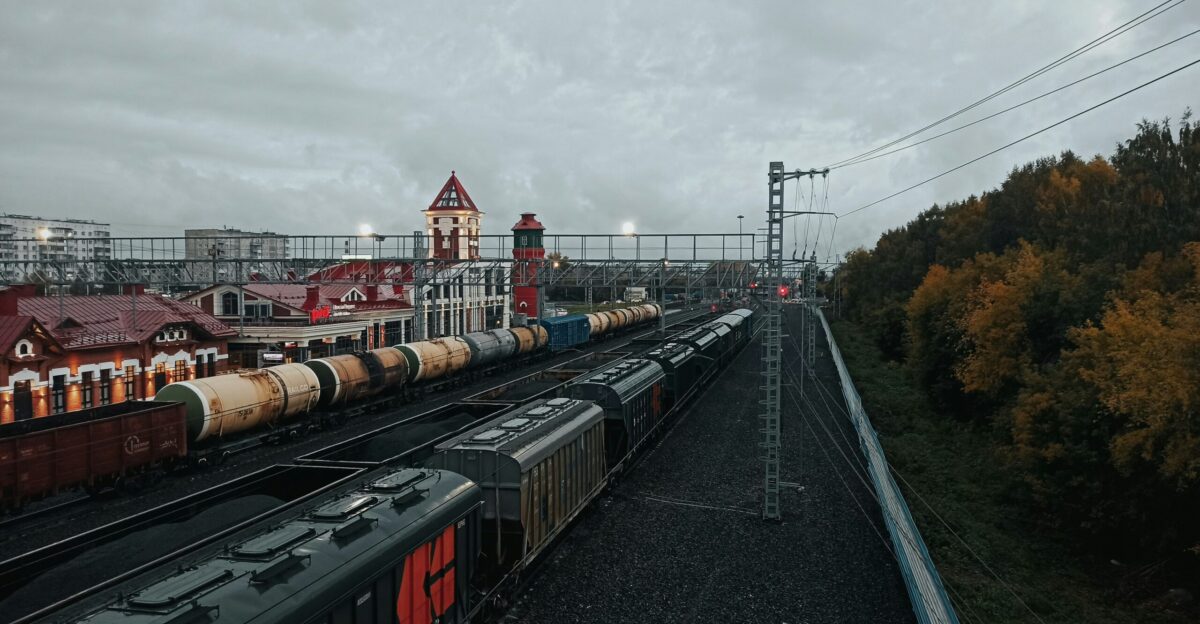
To counter Ukraine’s campaign against its refineries, Moscow has intensified pressure on the infrastructure that supplies Ukraine’s economy and military. Since July 2025, Russian forces have tripled their attacks on Ukrainian rail lines, focusing in particular on trains and their crews. Ukrainian officials report around 800 attacks on railway infrastructure, resulting in damage estimated at $1 billion. The stakes are high: rail carries about 63 percent of Ukraine’s freight, including grain exports vital to its wartime economy, and roughly 37 percent of passenger traffic. Railway workers, many of them civilians with families, have become a critical part of the country’s resilience. Since the full-scale invasion began, 221 have been wounded and 37 killed while repairing tracks and facilities, often working to restore service within hours of an attack. A double drone strike on a station in Sumy region on October 4 illustrated the danger: the second strike arrived after rescue and repair personnel reached the scene, killing one worker and 30 civilians, among them three children.
Corruption Shock Inside Ukraine’s Energy Sector

While trying to hold its rail and energy systems together, Ukraine is also grappling with a major corruption scandal at the heart of its power industry. On November 10, the National Anti-Corruption Bureau announced an investigation into the alleged embezzlement of approximately $ 100 million from Energoatom. This state-owned nuclear company generates more than half of Ukraine’s electricity. According to investigators, contractors paid kickbacks of 10 to 15 percent on deals intended to maintain or modernize nuclear facilities, siphoning funds that should have been used to keep reactors safe and operating. The case has reached into the upper ranks of Kyiv’s leadership. Former deputy prime minister Oleksiy Chernyshov, justice minister Herman Halushchenko, and Security Council secretary Rustem Umerov are among those facing charges, and Andriy Yermak, President Volodymyr Zelenskyy’s chief adviser, resigned as inquiries widened. Zelenskyy publicly demanded swift accountability and criminal penalties where wrongdoing is proven, framing the scandal as an intolerable breach for a country that relies on international support and is fighting for survival.
Serbia’s Refinery Squeeze and a Winter Test
The struggle over energy and leverage extends beyond the battlefield to neighboring states. Serbia’s only oil refinery, NIS, is under threat of U.S. sanctions because Russian companies control a majority stake: Gazprom Neft holds 45 percent and other Russian firms another 11 percent, while the Serbian state owns 30 percent. Washington has set a February 13, 2026 deadline for Belgrade to cut Russian ownership or face a shutdown that would hit fuel supplies for Serbia’s roughly seven million people. President Aleksandar Vučić has described the standoff as political rather than financial, signaling that Moscow views its stake in NIS as a strategic investment rather than a simple financial one. Serbian officials have informed their American counterparts that they will not attempt to conceal Russian shareholders behind intermediaries, but they also warn that closure could trigger blackouts, heating shortages, and wider economic disruption in the winter. The Ryazan attack, Serbia’s refinery dilemma, and Russia’s assaults on Ukrainian railways all point to the same reality: as the war drags into a fourth winter, fuel, infrastructure, and public trust are as central to the outcome as territory. Ukraine is betting that drones and endurance can wear down Russia’s industrial base faster than it can be rebuilt, while Russia is wagering that pressure on civilians and supply networks, combined with Kyiv’s internal strains, will erode Ukrainian resolve. Neither side appears close to a decisive breakthrough, but both face mounting risks as the conflict and its energy battles grind on.
Sources
Reuters – Ryazan oil refinery drone strike and shutdown reporting
Reuters – Russia’s systematic attacks on Ukraine’s rail network and railway casualties
Reuters – Ukraine’s $100 million Energoatom energy graft investigation and ministerial fallout
CNN – Coverage of Ukraine’s energy-sector corruption scandal and $100 million embezzlement estimate
BBC – Verification of Ryazan refinery fire and prior Ukrainian strikes on the facility