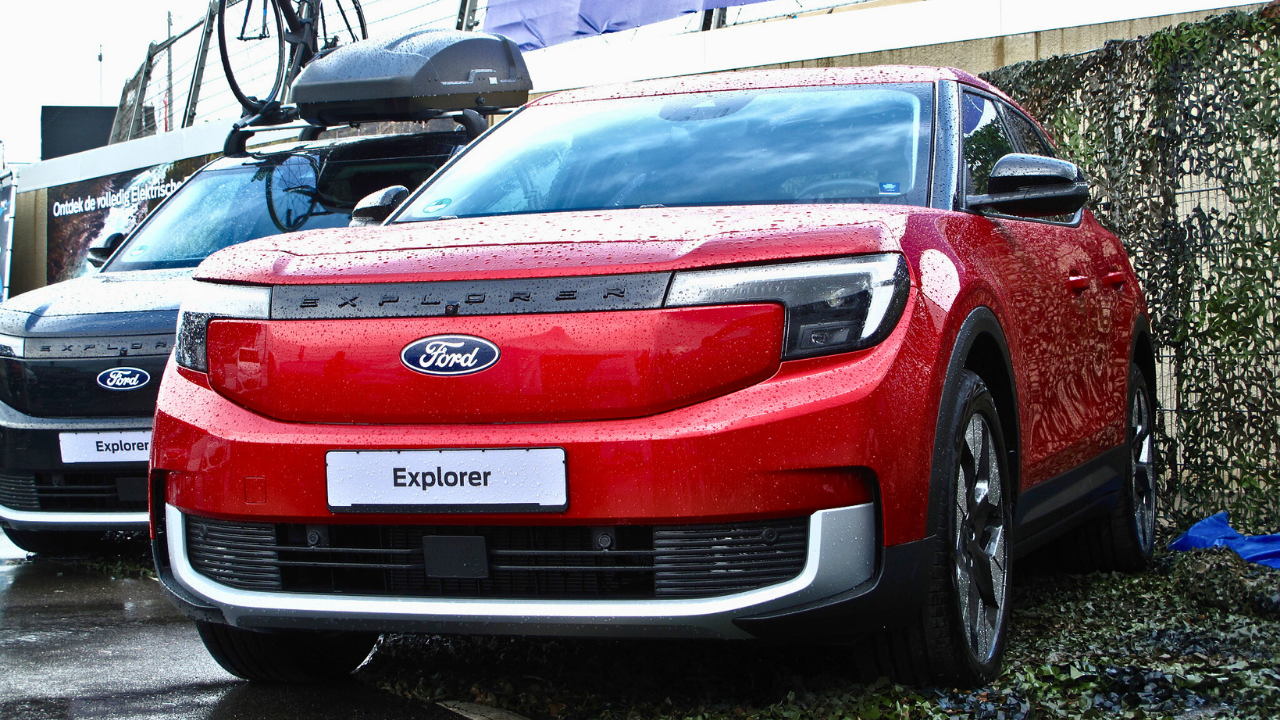
Ford’s November 2025 EV sales report read like a market death certificate. Just 4,247 all-electric vehicles were sold, compared to 10,800 units exactly one year prior. The F-150 Lightning plummeted 72% to merely 1,006 units. Dealerships nationwide suddenly held 134,000 unsold electric vehicles.
But the story wasn’t about manufacturing failures—it was about a policy decision made three months earlier that reshapes automotive strategy.
Immediate Context: Understanding the Shock
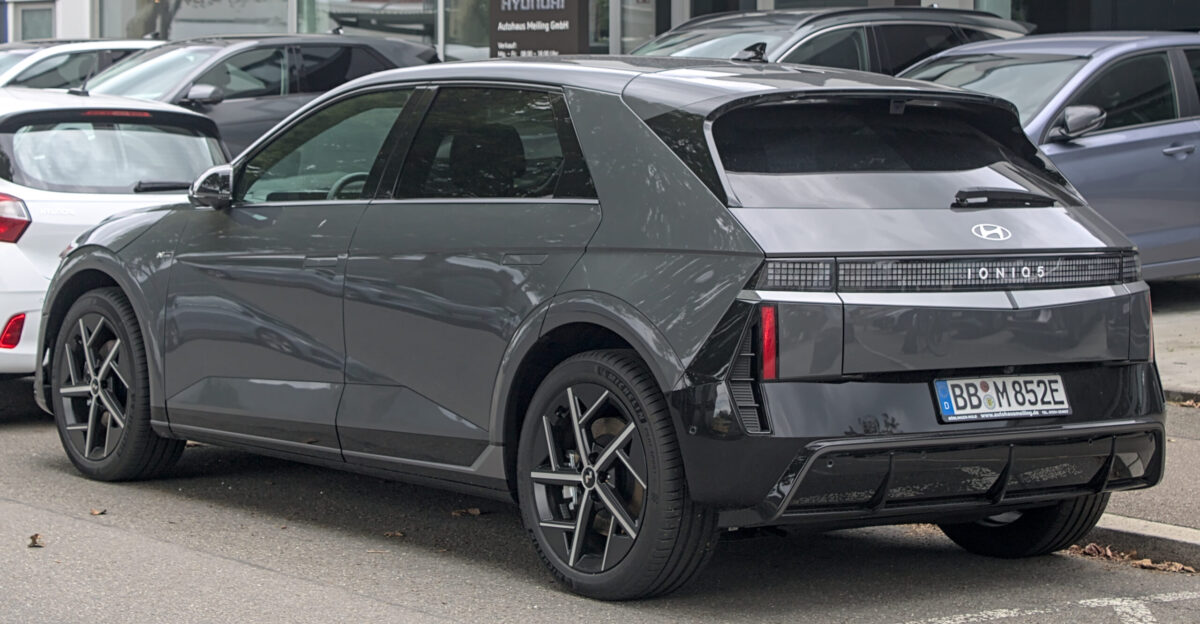
Every major automaker experienced a simultaneous collapse in EV sales in November 2025. Hyundai’s Ioniq 5 dropped 55%, Subaru’s Solterra crashed 78.3%, and Kia’s EV6 declined 68%. The universality of this decline signaled a systemic market shock rather than company-specific challenges.
This wasn’t gradual demand erosion—it was a cliff-edge collapse triggered by a single policy change. How does an entire market segment disappear in sixty days?
OBBBA Ends EV Subsidies
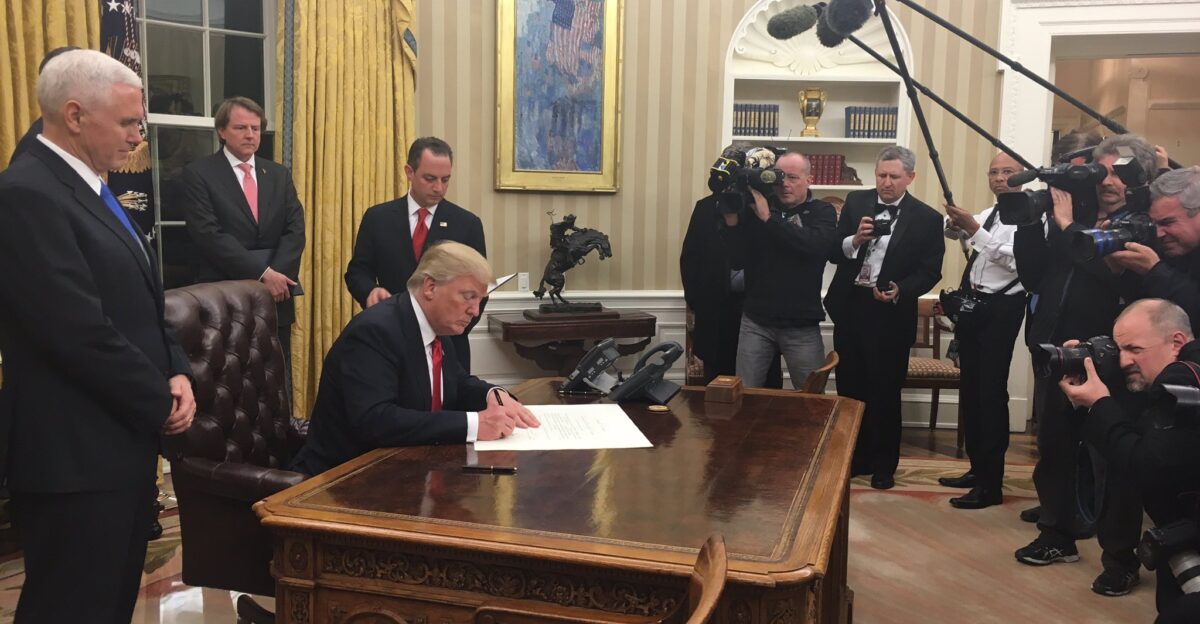
President Trump signed the One Big Beautiful Bill Act into law on July 4, 2025. The legislation accelerated the expiration of federal EV tax credits from their original 2032 sunset to September 30, 2025. The $7,500 consumer credit and $4,000 used EV credit vanished overnight.
Buyers could no longer deduct these subsidies from federal tax returns. The legislation passed both chambers on strict party-line votes, with Vice President Vance’s tie-breaking vote in the Senate.
The Broader Industry Implications

Before September 30, automakers experienced a last-minute sales surge as buyers rushed to claim credits before expiration. This artificially inflated Q3 2025 EV sales, pulling forward demand from Q4 and beyond.
When October arrived, the market faced a dramatic correction. The U.S. light-vehicle market overall declined an estimated 8% in November 2025. Industry analysts described this phenomenon as “bringing sales forward” rather than creating genuine growth.
Why Credit Mattered So Much

The $7,500 credit represented 15-25% of the sticker price of most electric vehicles. For price-sensitive consumers, this subsidy wasn’t optional—it was the primary purchase incentive making EVs competitive with gasoline alternatives.
Edmunds’ research revealed that 60% of EV buyers factored the tax credit directly into purchasing decisions. Remove the credit overnight, and a $45,000 vehicle suddenly costs $52,500. This exposed fundamental market truths automakers had avoided acknowledging.
Financial Pressure Mounts

Dealerships nationwide accumulated approximately 134,000 unsold new electric vehicles by late 2025. This massive inventory overhang created unprecedented pressure on pricing and profitability across the industry.
Manufacturers faced an ugly choice: cut prices aggressively to move inventory, or watch losses mount as vehicles depreciated on lots. Neither option proved palatable for companies already struggling with EV profitability. The inventory crisis forced dealerships to dramatically mark down vehicles.
Ford’s Specific Challenge
Ford’s Model e division lost $1.4 billion in Q3 2025 alone, bringing year-to-date losses to $3.6 billion. Cumulative losses totaled $2.2 billion in 2022, $4.7 billion in 2023, and $5.1 billion in 2024. Ford projects full-year 2025 Model e losses of $5 to $5.5 billion.
Approximately $3 billion of these losses stem from first-generation EVs, including the Mustang Mach-E and F-150 Lightning. Management acknowledged that the premium EV strategy had fundamentally failed.
First-Generation EV Strategy Failed Without Subsidies
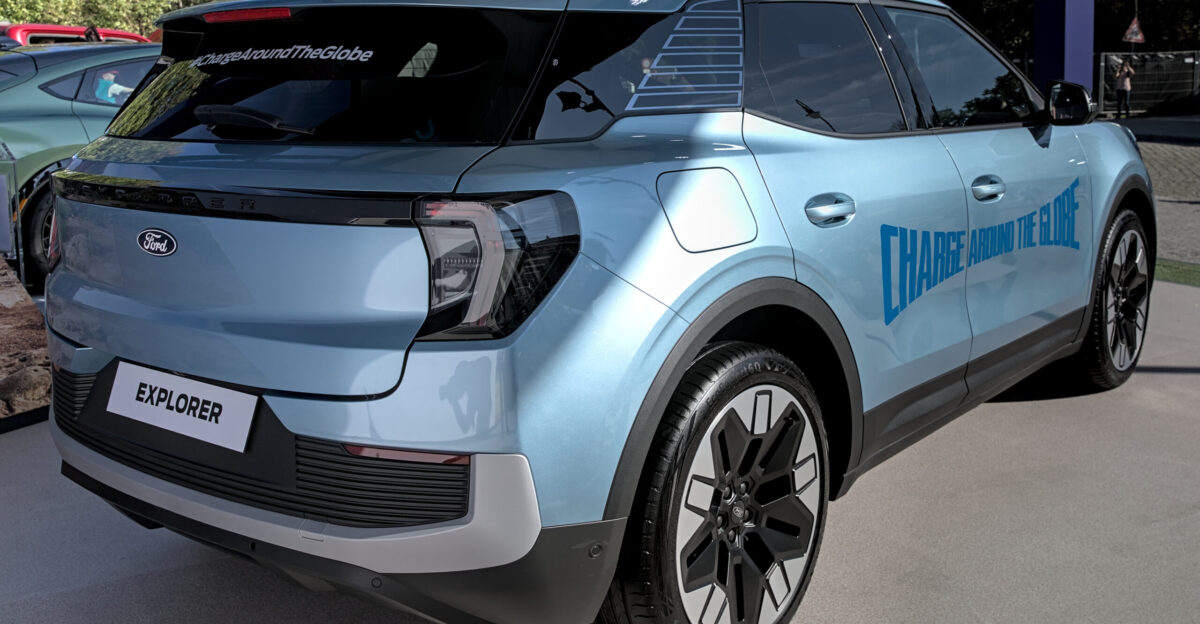
Management acknowledged that the premium EV strategy—featuring large batteries and high prices justified by subsidies—failed when subsidies vanished. The company implemented $1.4 billion in cost cuts despite maintaining production volumes.
An additional $600 million was invested in next-generation electric vehicles, which are expected to arrive in 2027. The mounting losses compelled Ford executives to reassess their electrification strategy and timelines. This represented admission that the EV business model required government support.
Production Disruptions

A catastrophic fire at Novelis, a critical aluminum supplier in upstate New York, forced Ford to halt F-150 Lightning production indefinitely in October 2025. With aluminum supplies severely constrained and EV demand collapsing simultaneously, Ford prioritized production of more profitable gasoline and hybrid F-150s. The
The Wall Street Journal reported that Ford was considering discontinuing the Lightning entirely. This represented a shocking strategic reversal from just months earlier.
Where Consumers Actually Went

As electric vehicle sales plummeted across the industry, hybrid vehicles experienced a remarkable resurgence in consumer demand. Ford’s hybrid sales jumped 13.6% to 16,301 units in November 2025. Honda reported that hybrids accounted for over 54% of brand sales, a historic high. Hyundai posted its best-ever hybrid month.
When the EV price advantage disappeared, buyers opted for hybrids, which offered efficiency without infrastructure concerns.
Is This Temporary or Permanent?

Thomas King, president of OEM solutions at JD Power, characterized the collapse as “temporary market disruption” rather than permanent demand destruction. He explained that the credit expiration “prompted many shoppers to accelerate buying decisions,” creating an artificial surge in Q3.
Most industry analysts predicted the market would stabilize and “reset” by spring 2026 as inventory cleared. However, Cox Automotive warned effects would “persist for several months minimum.”
Industry Leaders Respond

Randy Parker, Hyundai’s North America CEO, acknowledged the dramatic shift: “We need to create our own excitement within the marketplace” without government subsidies.
Ford CEO Jim Farley predicted EV market share could plummet to just 4-5% of total sales by year-end 2025, compared to approximately 10% before the credit expired. His pessimistic forecast reflected recognition that the credit’s expiration represented a fundamental market inflection point.
Consumer Price Sensitivity Exposed by Market Collapse

Ivan Drury, director of insights at Edmunds, stated bluntly: “If you’re already struggling to sell vehicles at current prices, there’s no chance you’ll manage with this credit disappearing.”
Automakers attempted to compensate through aggressive price cuts and increased dealer incentives, but these adjustments proved insufficient to maintain pre-subsidy demand levels. The gap between EV sticker prices and consumer willingness proved larger than manufacturers had acknowledged.
What Happens Next: Ford’s Strategic Pivot

Facing mounting losses and a collapse in demand, Ford announced a fundamental strategic shift for its electric vehicle division. CEO Jim Farley is committed to developing next-generation EVs built on a new Universal EV Platform designed for affordability and efficiency rather than premium features.
Ford plans to launch a $30,000 midsize electric pickup in 2027. The company reduced planned battery capacity by 35% on future models.
The New EV Economics
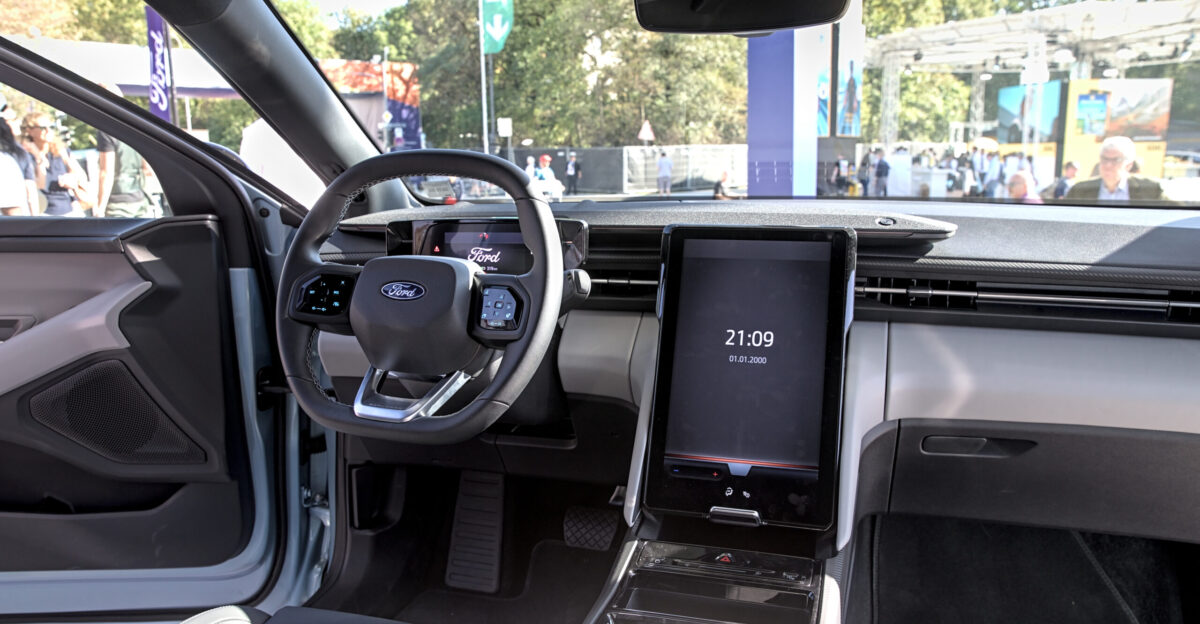
Ford implemented aggressive cost reduction measures across Model e, cutting approximately $1.4 billion from operations while maintaining production volumes. Engineering teams refocused on designing smaller, more efficient vehicles profitable at mainstream price points.
This represented a clear admission that the first-generation EV strategy had failed once subsidies were withdrawn. The company also expanded hybrid vehicle production, tacitly acknowledging that hybrids represented a more commercially viable path.
Implications for the Industry
Ford’s collapse signals a fundamental inflection point for the entire American electric vehicle market. The rapid shift from EV enthusiasm to skepticism suggests consumers view electrification differently in the post-subsidy environment.
Automakers must now demonstrate that electric vehicles can succeed on the basis of pure economic and practical merit, without government support. Companies that built business models dependent on subsidies face existential questions about future viability.
Broader Electrification Questions Emerge

The tax credit expiration raised fundamental questions about the timelines and trajectories of automotive electrification. Automakers invested billions in EV development based on assumptions of continued government support and accelerating climate policy.
The sudden policy reversal necessitated immediate recalibration of strategies across the industry. Battery costs are declining more slowly than predicted. These challenges, previously masked by subsidies, now demand direct industry confrontation.
Critical Questions for Market Stabilization

The coming months will determine whether Ford and the broader industry can stabilize EV demand without subsidies. Will automakers succeed in reducing EV prices to truly competitive levels?
Will consumers gradually accept higher upfront costs in exchange for long-term fuel savings? Will hybrid technology delay full electrification by decades or represent a legitimate transition bridge? Ford’s 2027 affordable EVs will provide critical market evidence.
Can Electrification Survive Without Government Support?

The automotive industry now faces a pivotal question: can electrification succeed without government subsidies? Ford’s transformation from an EV-focused strategy to a hybrid-centric approach signals deep market doubts about the economic viability of pure electric vehicles.
The coming years will prove whether battery costs, consumer preferences, and manufacturing economics can align without policy support. This market reset will fundamentally reshape the entire automotive industry’s competitive dynamics.
What’s Next for the Industry

The November 2025 EV sales collapse represents a watershed moment for automotive electrification. Market forces, rather than government policy, will now determine which automakers succeed in the transition to electric vehicles.
Ford’s commitment to affordable, practical EVs reflects the new reality: electrification must compete on merit, not subsidies. The industry’s survival depends on delivering genuine value to consumers who are willing to invest in electric vehicles, without government support influencing their purchasing decisions.
Sources:
Wall Street Journal – Ford Electric-Vehicle Sales Sink After Key Tax Credit Ends (December 2, 2025)
CNBC – Ford U.S. sales down slightly in November as EVs drag (December 2, 2025)
Electrek – Ford’s EV sales plunge 60% with the F-150 Lightning still on hold (December 1, 2025)
Reuters – Ford, Hyundai US sales down slightly in November as EVs drag (December 2, 2025)
IRS – Clean vehicle tax credits and One Big Beautiful Bill provisions (July 29, 2025)
JD Power – Industry analysis and market disruption commentary (December 2025)
Edmunds – EV pricing analysis and consumer purchasing behavior research (December 2025)