In November 2025, one of Earth’s most inhospitable environments experienced an extraordinary transformation. Death Valley, a landscape defined by aridity and desolation, received torrential rainfall that shattered records and reshaped both the physical terrain and scientific understanding of how extreme weather affects arid regions. The event exposed vulnerabilities in infrastructure designed for consistent dryness and sparked urgent conversations about climate adaptation in an era of intensifying weather extremes.
A Century of Records Broken
In November 2025, one of Earth’s most inhospitable environments experienced an extraordinary transformation. Death Valley, a landscape defined by aridity and desolation, received torrential rainfall that shattered records and reshaped both the physical terrain and scientific understanding of how extreme weather affects arid regions. The event exposed vulnerabilities in infrastructure designed for consistent dryness and sparked urgent conversations about climate adaptation in an era of intensifying weather extremes.
A Century of Records Broken
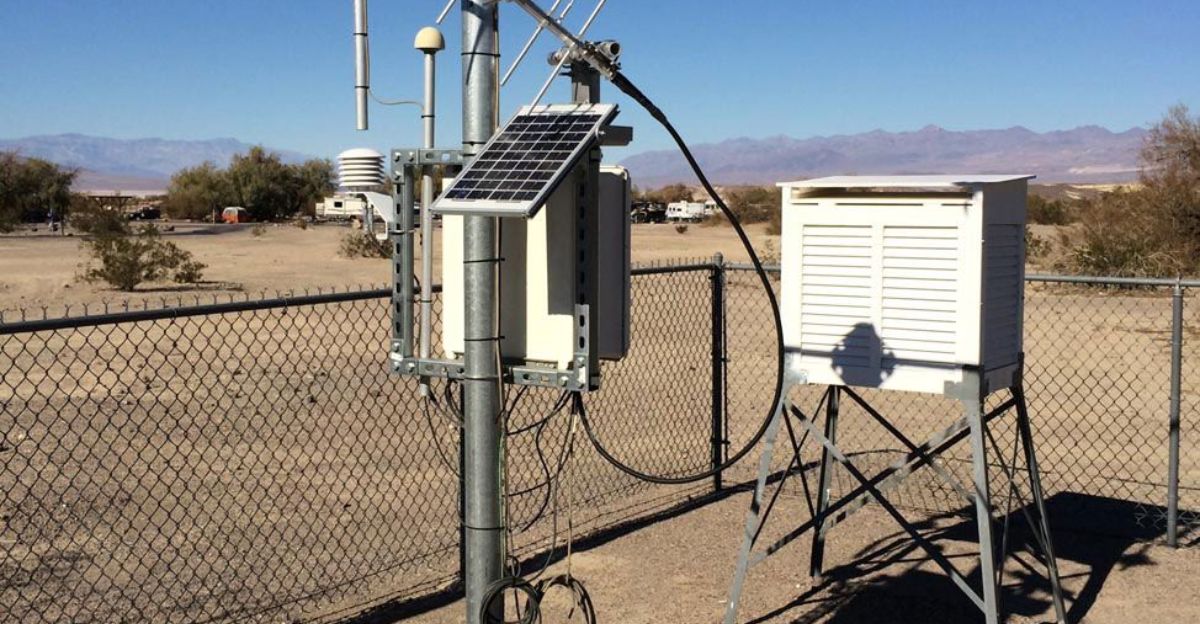
Since 1911, the weather station at Furnace Creek has documented precipitation patterns across Death Valley’s harsh terrain. For over a century, the data told a consistent story: minimal rainfall and extended periods of drought. That narrative changed dramatically in November 2025 when the region received 1.76 inches of rain, shattering the previous November record of 1.70 inches set in 1923—a mark that had stood for 102 years. This single month delivered approximately 74 percent of Death Valley’s typical annual rainfall of 2.36 inches.
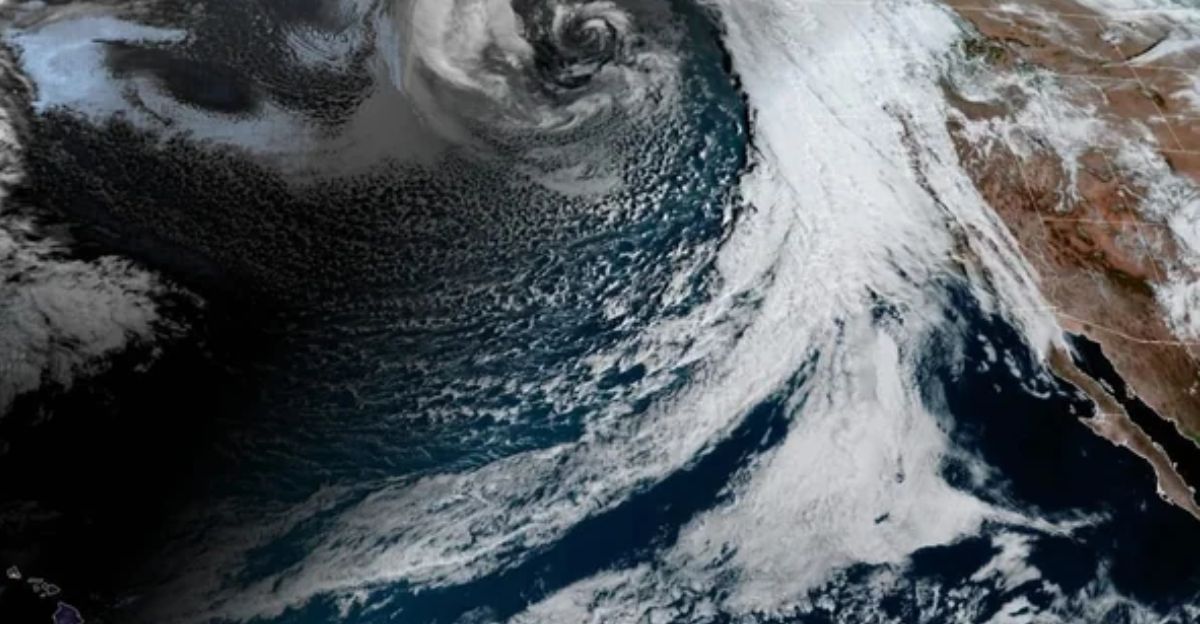
The intensity became apparent on November 15, when Furnace Creek recorded 0.6 inches in a single day, an occurrence virtually unheard of in a desert known for its extreme dryness. The atmospheric river storm that began mid-November initially seemed significant but not exceptional. By November 18, however, the event’s unprecedented nature became undeniable as rainfall overwhelmed drainage systems designed for minimal precipitation and rendered roads impassable.
Infrastructure Under Siege
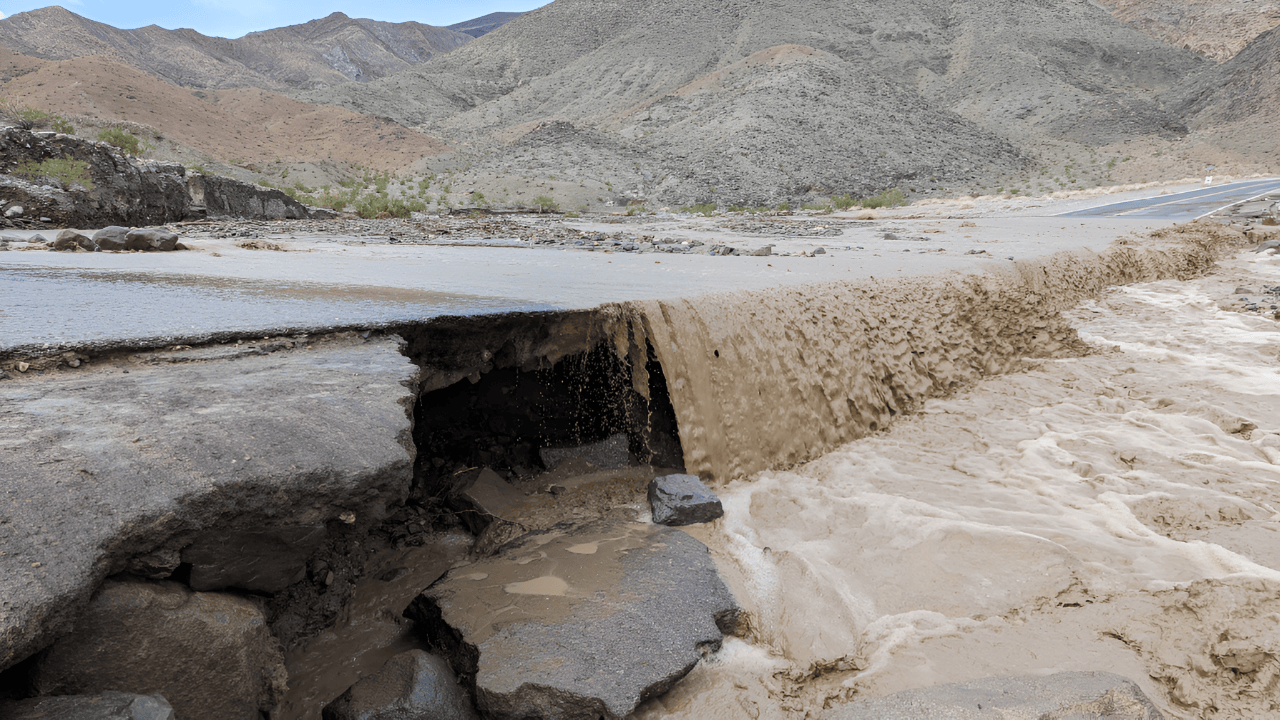
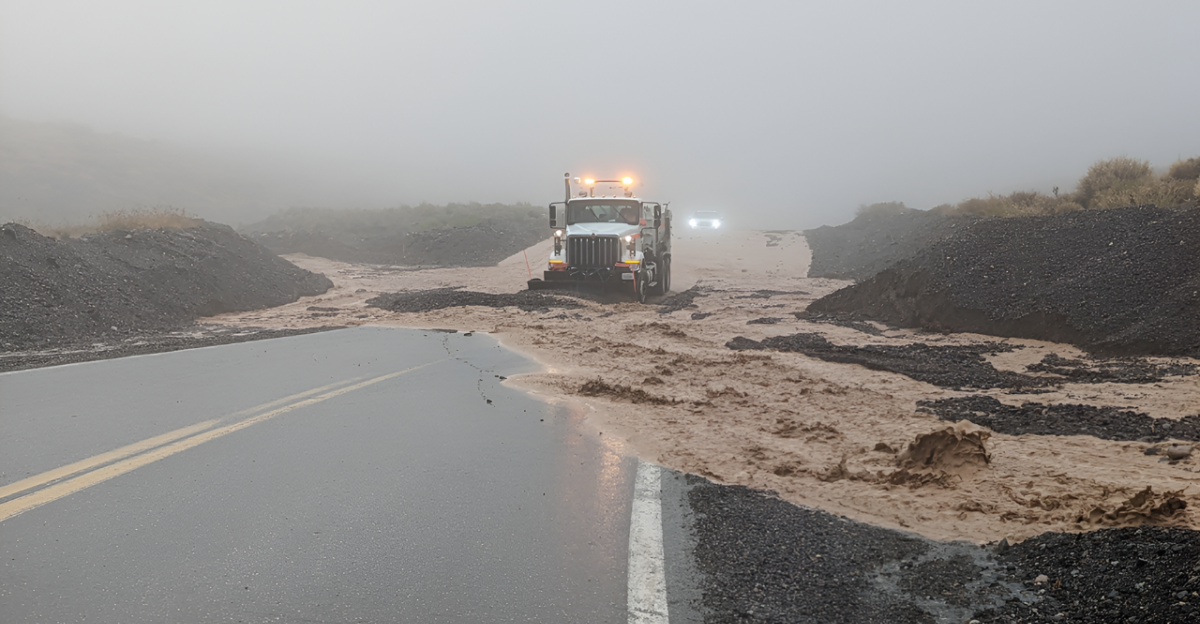
The flooding exposed critical vulnerabilities in Death Valley’s infrastructure. Iconic routes including Badwater Road and Artist Drive became impassable, while many other roads including West Side Road, Salt Creek Road, Lower Wildrose Road, Darwin Falls Road, Titus Canyon Road, 20 Mule Team Canyon, Mustard Canyon, Upper Wildrose Road, Devils Golfcourse Road, Cottonwood/Marble Canyon Road, and Warm Springs Road suffered severe damage or closure. Flash floods carved new channels through the landscape, temporary lakes formed in previously dry basins, and asphalt disappeared as embankments collapsed. The park’s physical appearance was fundamentally altered overnight.
Park officials now face substantial reconstruction challenges. Engineering teams began assessing damage and planning repairs, with estimated reopening timelines ranging from late 2025 for Salt Creek Road to fall 2026 or later for roads like Titus Canyon Road, Lower Wildrose Road, and Darwin Falls Road. Badwater Road, a vital artery through the park, is set to undergo extensive repairs to ensure future resilience. The critical question facing decision-makers is whether to rebuild using traditional designs or adapt infrastructure to reflect changing climate realities.
Ecological Awakening and Uncertainty
In the storm’s aftermath, dormant seeds germinated across Death Valley’s soil, triggering an ecological response rarely witnessed in such an arid environment. Wildflowers, roadrunners, and bighorn sheep emerged to capitalize on temporary water abundance. Ecologists are discussing the possibility of a “superbloom” in 2026 as a potential consequence of the unprecedented moisture delivery.
This revival carries inherent risks. If rainfall patterns do not sustain, the desert may revert to its harsh baseline conditions, leaving newly emerged life vulnerable. Environmental agencies investigated potential contamination as floodwaters receded, with particular concern about abandoned mining operations around Death Valley. Early water samples showed elevated trace metals, though experts remain confident the overall impact remains minimal due to rapid evaporation. Questions persist regarding invasive species spread and long-term ecological consequences.
Climate Science and Future Uncertainty
Atmospheric rivers—intensified by rising ocean temperatures—are becoming more frequent and severe. Death Valley’s 2025 flooding mirrors other extreme weather events across California, including 2017’s rain-on-snow incidents and 2023’s aftermath from Tropical Storm Hilary. This pattern signals a fundamental shift in how desert ecosystems interact with precipitation.
Climatologists urge caution in drawing permanent conclusions from single events. While such occurrences may become more frequent, one extreme weather episode does not alter long-term climate trajectory. Scientists are now asking probabilistic questions: when and how often will such events recur? The storm remains a stark reminder of changing extreme weather patterns, yet the broader implications for desert climates require sustained observation and analysis.
Broader Implications and Recovery
Death Valley’s experience reflects a global phenomenon. Desert regions worldwide, from Morocco’s Atlas Mountains to Australia’s Outback, are witnessing similar extreme weather events. For international researchers studying desert ecosystems, the 2025 storm serves as a critical data point offering insights into how arid environments respond to intensified precipitation.
The flooding raised larger questions about climate adaptation policy. Environmental advocates argue for increased funding to prepare national parks for extreme weather, while others question whether single events justify sweeping policy changes. Both perspectives point to this flooding as evidence relevant to broader discussions about infrastructure resilience and climate preparedness in federal parks.
For locals and visitors alike, November 2025 reshaped perceptions of Death Valley. What was once a symbol of desolation became a testament to the desert’s resilience and adaptability. Park spokesperson Nichole Andler noted that while water levels weren’t high enough for water sports in Badwater Basin, the mountains reflecting in the water across the valley offered a striking and rare sight. As the region recovers and infrastructure repairs progress, the event will be remembered as both a cautionary tale and a critical data point in understanding how iconic landscapes respond to our changing climate.
Sources
Newsweek – California’s Death Valley breaks 115-year-old rainfall record
Published: December 1, 2025
Climate Judiciary Project – Michael F. Wehner profile
Published: January 31, 2025
Yahoo News – Death Valley National Park breaks century-old weather record
Published: December 2, 2025
IFlScience – Death Valley Sees 25 Percent Of Its Yearly Rainfall In A Single Day
Published: November 19, 2025
National Park Service – Alerts & Conditions, Death Valley National Park
Current information
NOAA/NWS – Weather and Climate of Death Valley National Park
Official documentation