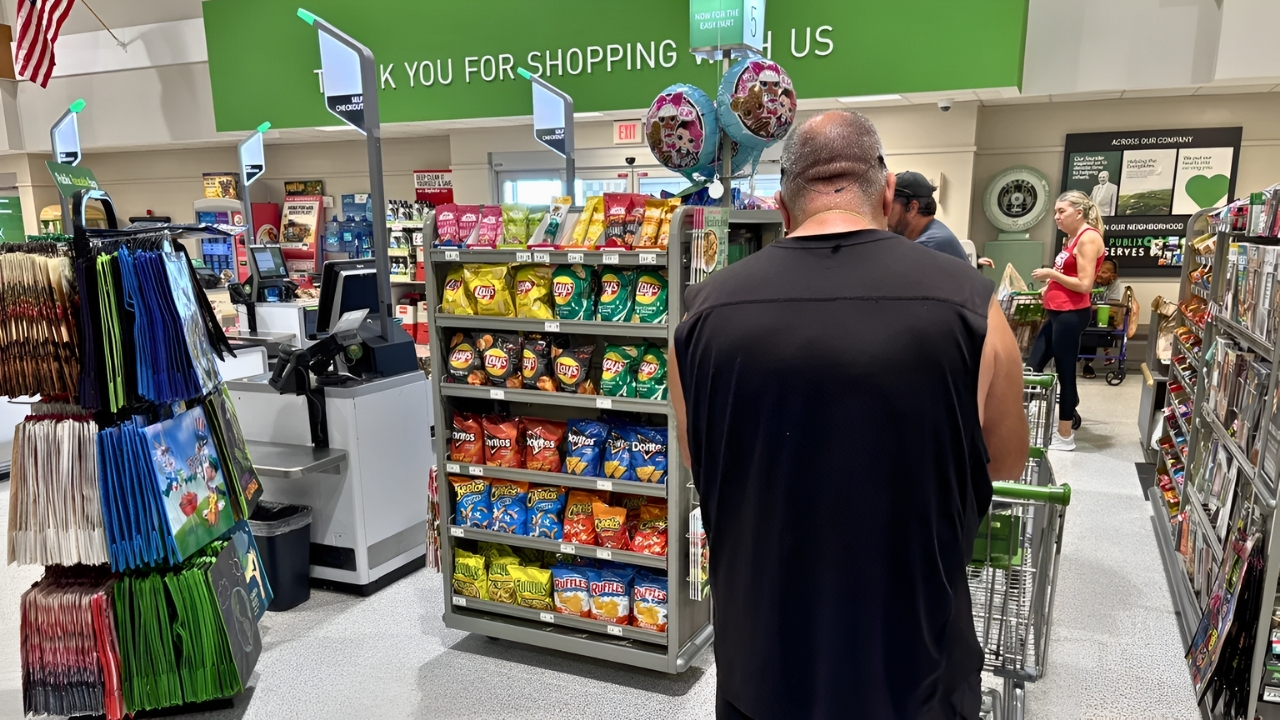
Matt Chapman hasn’t eaten beef in months. The Iowa resident’s grocery bill has climbed so steeply that red meat—once a dietary staple—has become unaffordable. His struggle mirrors a broader crisis unfolding across the state as tariff policies drive up living costs, pushing families toward food insecurity and financial strain. With Iowa’s population of approximately 3.2 million residents, nearly all households are confronting structural economic disruption that touches every sector from grocery aisles to farm fields.
The Tariff Framework and Its Reach
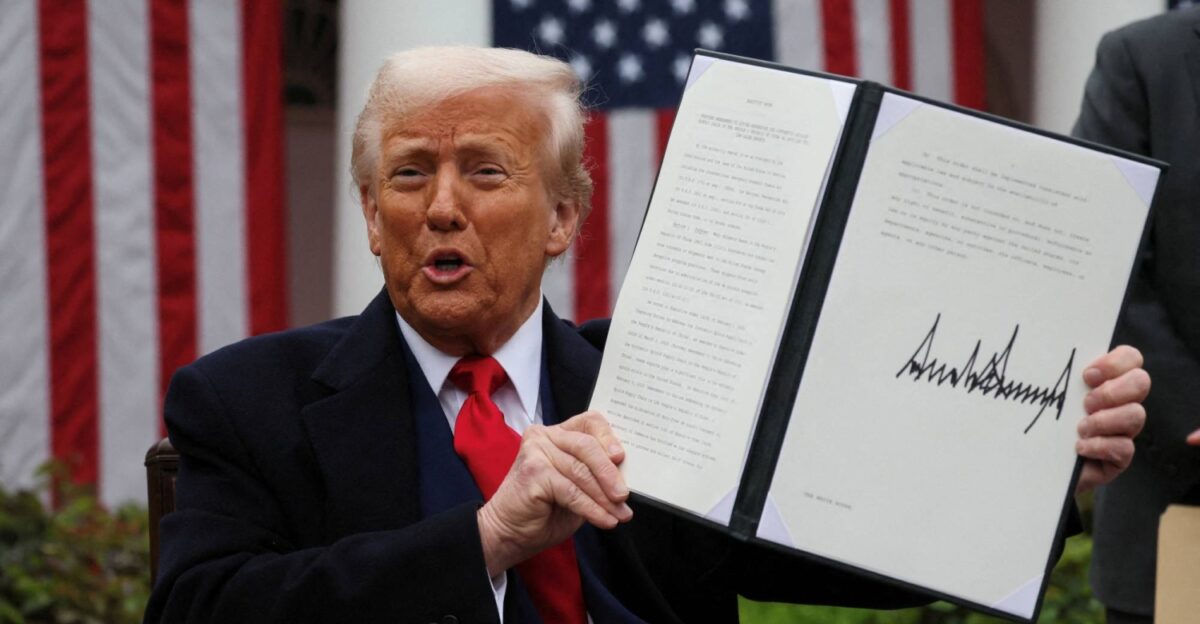
The Trump administration’s tariff strategy, beginning with 10% baseline duties in April 2025 and escalating to reciprocal rates targeting specific nations, fundamentally altered the economic landscape for consumers and producers alike. By mid-2025, the tariff framework had expanded to cover the vast majority of U.S. import categories, with countries facing China receiving duties as high as 30%, while major trading partners like Brazil faced 25% levies on beef exports—directly triggering domestic price inflation.
Governor Kim Reynolds initially supported the tariff approach, anticipating it would protect American farmers and manufacturers. However, the immediate fallout hit the heartland hard. Reynolds later acknowledged she was “working directly with the administration to ease the short-term impact” of the tariffs on Iowa, signaling recognition that the promised benefits had not materialized as expected.
Rising Food Costs and Household Strain
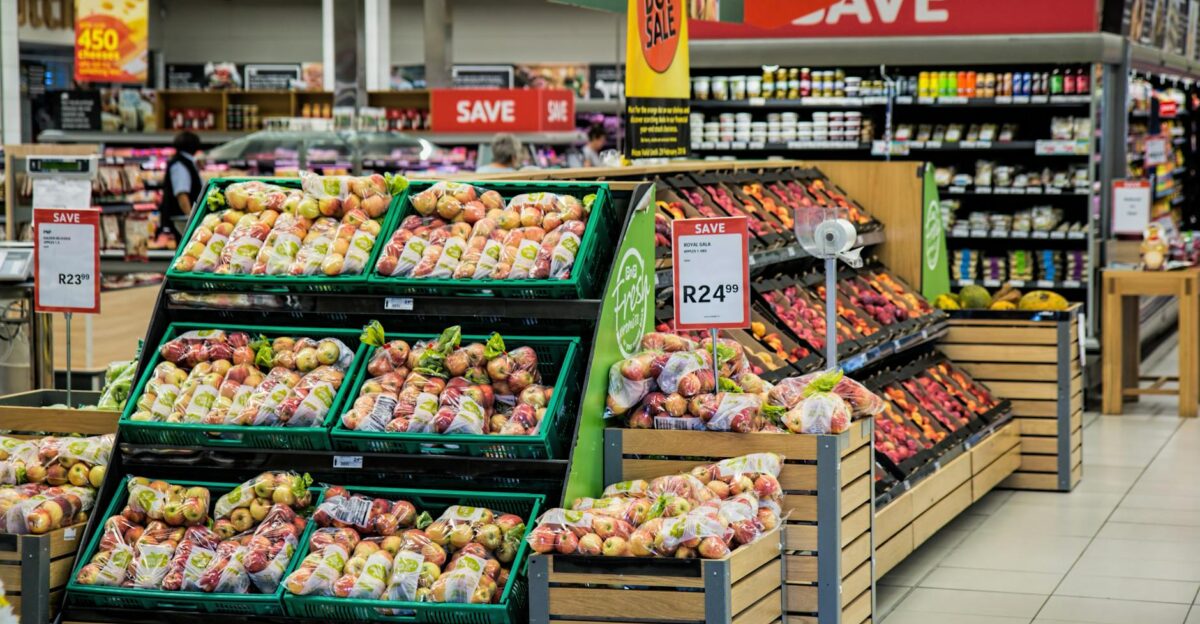
Ground beef prices surged 11.6% in 2025 as tariffs on major suppliers like Brazil compressed supply. Fresh produce, dairy, and other essentials now consume larger portions of household budgets across Iowa’s 3.2 million residents. Families unable to absorb these increases are turning to credit cards for everyday purchases, while others have begun shifting toward cheaper, processed alternatives.
Food pantries across Iowa report demand has surged dramatically. Des Moines area food pantries served approximately 70,000 individuals in 2024 compared to 59,000 the previous year, reflecting the mounting food insecurity. The Food Bank of Iowa reported 2024 marked its highest distribution year on record—surpassing a 40-year history—as tariff-driven inflation pushed families deeper into hardship.
Agricultural and Manufacturing Pressures
Iowa farmers face a double squeeze. Tariffs on imported fertilizers and chemicals raise production costs they cannot control, while retaliatory tariffs from countries like China make Iowa’s agricultural exports more expensive globally. Iowa State University’s Center for Agricultural and Rural Development (CARD) projects potential soybean losses exceeding $1.5 billion, while hog producers confront $200 million to over $1 billion in additional losses depending on tariff escalation scenarios.
John Deere, headquartered in Iowa’s agricultural heartland, has absorbed tariff costs estimated at $600-800 million annually, forcing multiple rounds of workforce reductions. In September 2025, John Deere announced additional layoffs affecting hundreds of Iowa workers due to decreased demand and the inability to absorb tariff costs without raising prices in an uncertain market.
Specialized manufacturers like Kinze Manufacturing face an equally difficult calculus: absorb tariff costs and shrink margins, or raise prices and risk losing customers who postpone purchases amid policy uncertainty. Company leadership confirmed they are absorbing tariff expenses on imported components, compressing profitability across Iowa’s equipment manufacturing sector.
Niche Industries and Long-Term Viability

Specialized sectors face severe disruption. Cedar Ridge Distillery, a local bourbon producer headquartered in Guthrie County, pulled shipments from Canada after the Canadian government removed American whiskey from shelves in retaliation for U.S. tariffs. CEO Jeff Quint confirmed the halt in Canadian distribution, eliminating a valuable export market.
Iowa’s ethanol industry faces losses in the millions as retaliatory tariffs devastate niche export markets, with projections ranging from $40 million to $168 million depending on tariff rate progression. These industries, which require years to develop and operate on thin margins, are suffering setbacks that undermine their long-term viability and the rural communities dependent on them.
Broader Economic Consequences
The tariff environment has frozen business investment across Iowa. Companies uncertain about future trade policy have halted capital expenditures, hiring, and expansion plans. State and local governments are also feeling the impact, with the Iowa Revenue Estimating Committee projecting state tax revenue could drop by $800 million in fiscal 2026—representing a 9% decline—due to economic slowdown and reduced consumer spending.
Iowa’s economic performance reflects this disruption. Iowa’s GDP contracted 6.1% in Q1 2025, though it rebounded 3.7% in Q2 after partial tariff relief on select commodities. These fluctuations underscore the structural uncertainty created by tariff policy and the inability of businesses and households to make long-term financial commitments.
Note on Recent Policy Shifts: In mid-November 2025, President Trump announced tariff reductions on select food commodities including beef, coffee, tropical fruits, and certain fertilizers in response to voter concerns about inflation and recent election results. However, this represents a partial rollback that does not address the core tariff framework or its ongoing impacts on Iowa’s broader manufacturing, agricultural export, and regional economy sectors.
Conclusion
Iowa’s experience demonstrates that trade policy is not abstract—it directly reshapes household finances, business decisions, and public services. For the state’s 3.2 million residents, tariffs have transformed from theoretical economic policy into daily financial pressure at checkout lines and deepening uncertainty in farm operations. Until trade policy stabilizes or structural alternatives emerge, the state’s economy will remain in a state of uncertainty, with families, businesses, and farmers all navigating the consequences of tariff-driven economic disruption.
Sources
Iowa State University Center for Agricultural and Rural Development (CARD) “Modeling the Impacts of Reciprocal Tariffs on the 2025 Iowa Economy” Policy Brief 25-PB 48
Feeding America “Map the Meal Gap” 2025 Study; Food Bank of Iowa
Des Moines Area Religious Council (DMARC) Food Pantry Network Records and Reports