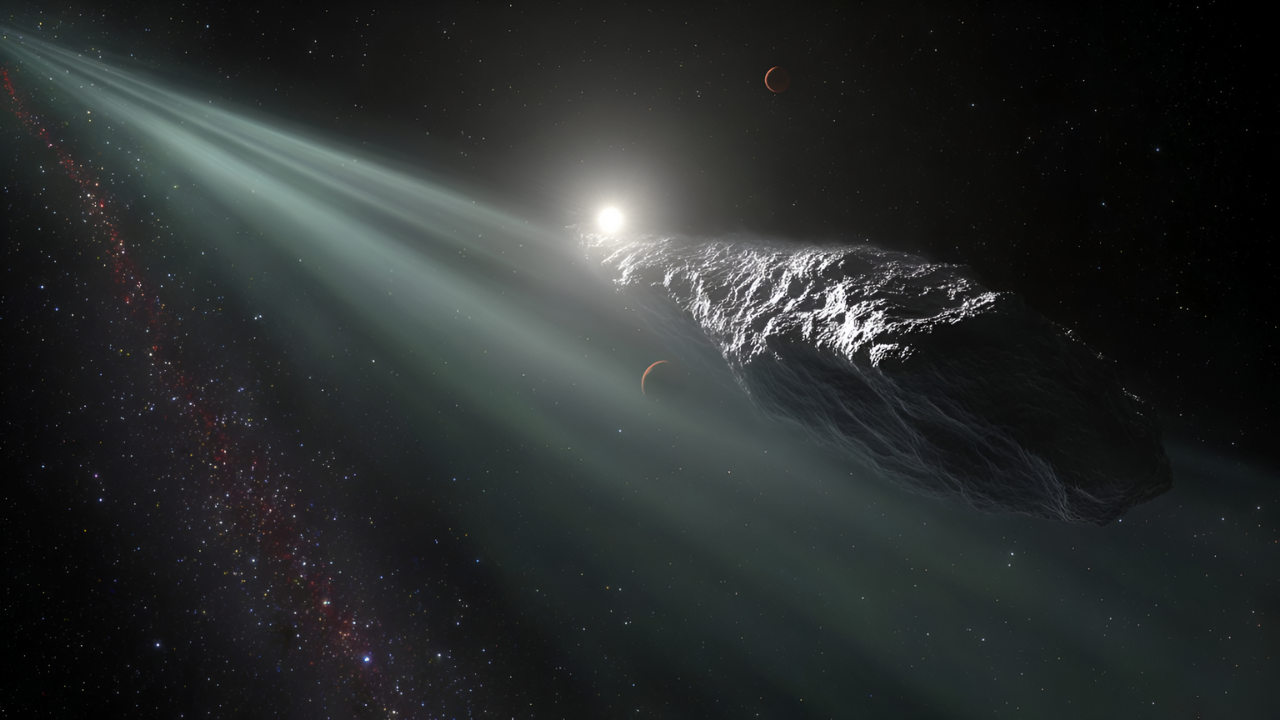
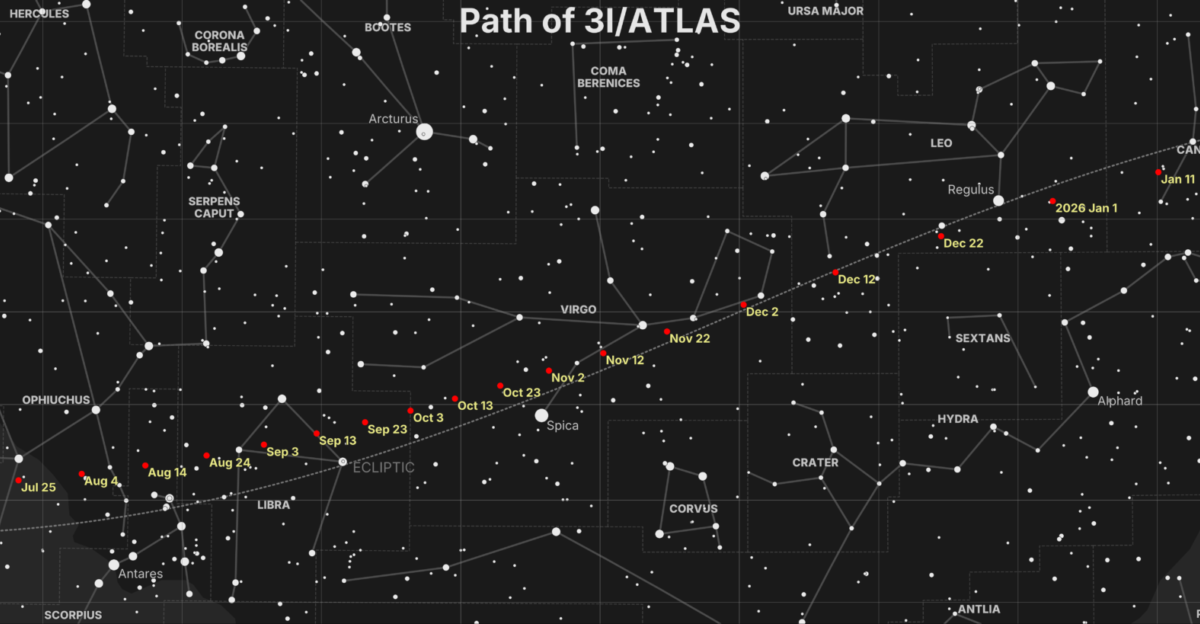
The comet known as 3I/ATLAS is only the third object ever confirmed to come from another star system. Measuring roughly 5.6 kilometers across, it is racing past the Sun on a one-way journey, filled with frozen gases that formed in a completely different environment from our solar system. Scientists first spotted it in July 2025 when it was about 670 million kilometers away. What makes this comet so special is not just its alien origin, but also its rich and unusual chemical makeup.
Before 3I/ATLAS, astronomers had discovered just two other interstellar visitors. The first was ‘Oumuamua, found in 2017, which had a mysterious cigar-like shape. The second, 2I/Borisov, appeared in 2019 and behaved more like a traditional comet, confirming that objects from other star systems can indeed wander into ours. Now 3I/ATLAS joins this rare group, giving scientists another chance to study materials that formed far beyond the Sun’s reach. Each of these visitors helps researchers learn how matter forms and evolves in different corners of the universe.
How ALMA Helped Unlock the Mystery
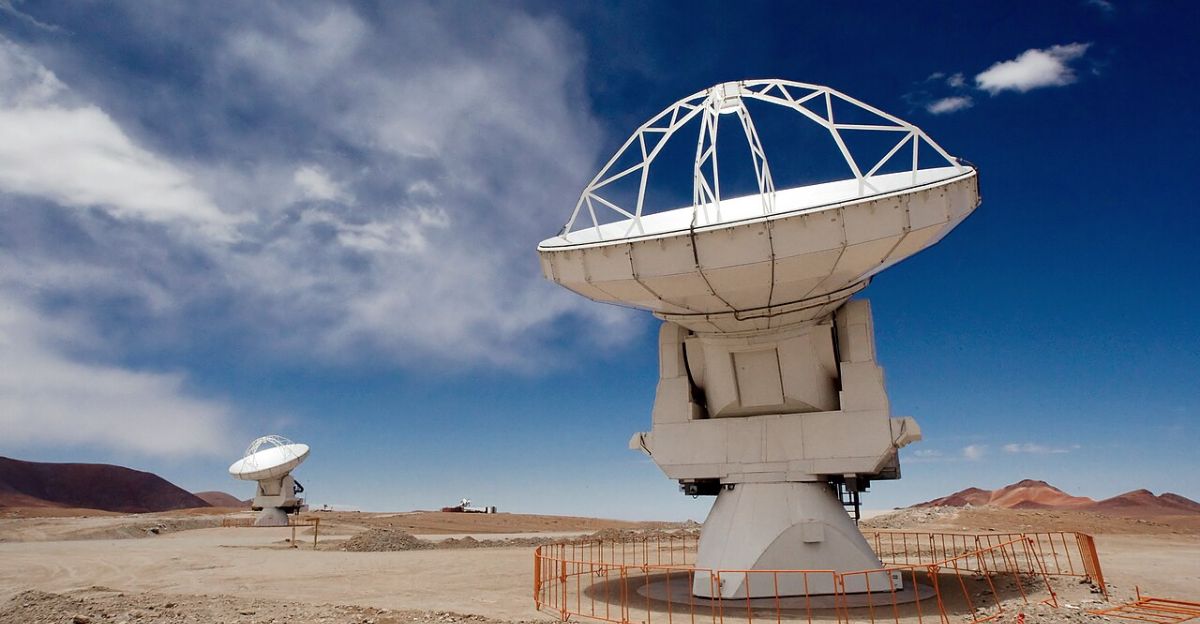
The breakthrough in understanding 3I/ATLAS came from the Atacama Large Millimeter/submillimeter Array (ALMA) in Chile. ALMA sits more than 5,000 meters above sea level in the Atacama Desert and uses 66 radio antennas that work together as a single super-sensitive telescope. Instead of visible light, ALMA observes invisible radio waves, allowing astronomers to detect faint signals from molecules hidden inside gas and dust in space. This makes it one of the best tools for studying the chemical ingredients of distant comets.
Between August and October 2025, scientists hurried to observe 3I/ATLAS before it moved too far away. Using ALMA, they tracked the comet’s gases during several observation sessions. They focused on two key chemicals, methanol and hydrogen cyanide, since both are important for understanding how organic molecules form. Over multiple days, ALMA collected detailed measurements that revealed incredible amounts of these compounds, far stronger than expected from any comet of known origin.
Unprecedented Chemical Findings
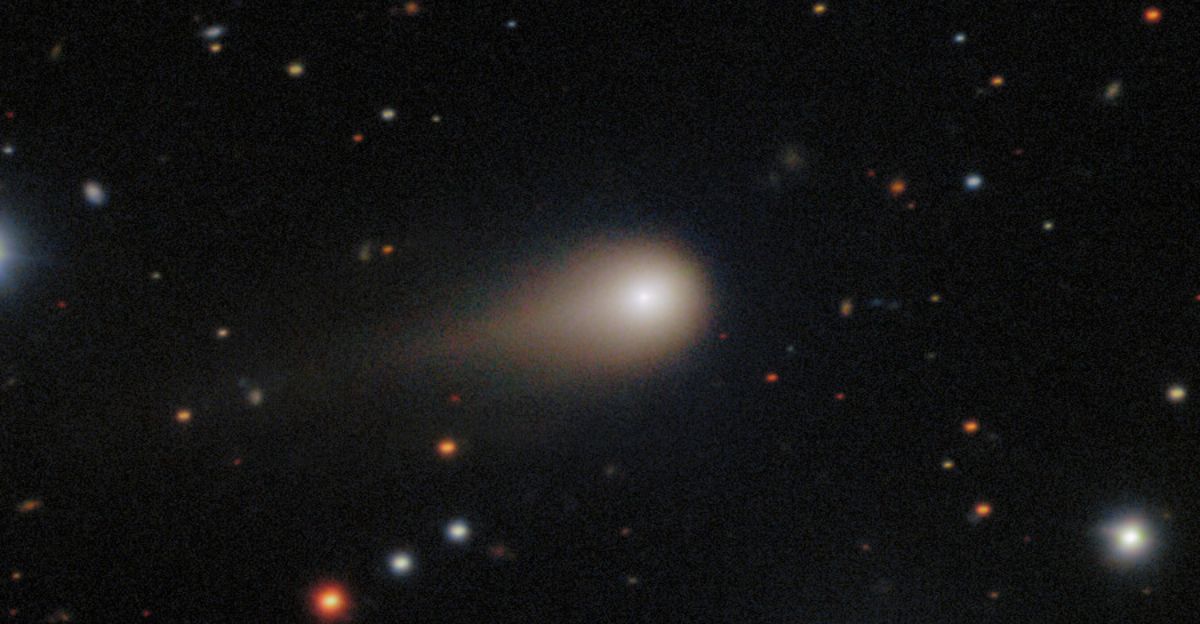
The results astonished scientists. ALMA’s data showed record-breaking levels of methanol, a simple alcohol that commonly appears in comets but almost never in such large quantities. On September 12 and 15, 2025, readings revealed amounts even higher than those found in most solar system comets. Only one known comet, C/2016 R2, showed higher levels of methanol. This made 3I/ATLAS the second most methanol-rich comet ever observed.
In addition to methanol, ALMA detected exceptionally strong signals of hydrogen cyanide, a molecule considered vital in forming amino acids, which are the building blocks of life. The ratio between methanol and hydrogen cyanide was particularly striking. On some days, it reached 124 to 1, far higher than what astronomers usually find in solar system comets. These measurements proved that 3I/ATLAS carries an unusual blend of chemicals, likely reflecting the unique conditions where it was born. It was, in short, a time capsule preserving clues about the chemistry of another star system.
What 3I/ATLAS Teaches Us About the Cosmos
The chemical wealth inside 3I/ATLAS gives researchers a peek into the distant environment where it formed. Its high levels of organic molecules suggest it originated in a cold, outer region of a different solar system where ices and gases could easily combine into complex compounds. These conditions likely resembled those found in the icy edges of our own solar system but may have been even colder or richer in certain elements.
As the comet approached the Sun, scientists noticed a dramatic increase in methanol production. This happened in a region known as the sublimation zone, where solar heat turns frozen materials directly into gas. The spike helped researchers understand how energy from the Sun interacts with ices in real time. Observing these changes during a single flyby offered a rare glimpse into how comets evolve and release gases as they heat up.
These discoveries also challenge old ideas about comets. Until now, most comet models were based only on objects from our solar system. But 3I/ATLAS shows that interstellar comets can be chemically richer than anything seen before. This finding suggests that volatile-rich comets, those packed with easily evaporating materials, might be common around other stars. As technology improves, scientists hope to analyze more interstellar visitors and deepen their understanding of how planetary systems form and share materials across the galaxy.
Though 3I/ATLAS will soon drift back into deep space forever, the data it left behind will guide future research for years to come. With new telescopes under construction and better observation techniques, the next interstellar visitor could reveal even more secrets about how the universe builds and recycles its matter on cosmic scales.
Sources
3I/ATLAS overview and trajectory – Wikipedia
News coverage of the third known interstellar visitor – NBC News
NASA facts and FAQ on comet 3I/ATLAS – NASA