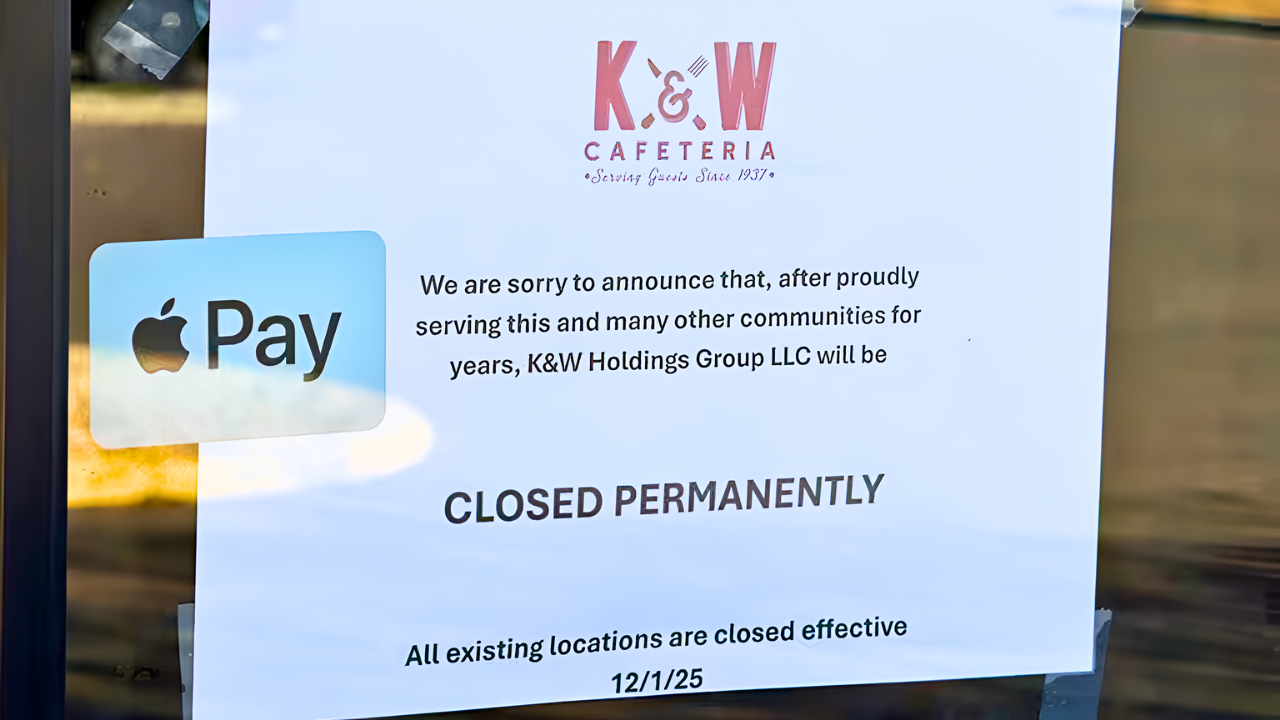
K&W Cafeteria’s sudden shutdown after 88 years marks more than the end of a restaurant chain and it feels like the closing of a familiar chapter in Southern life. Overnight, a place where families gathered after church, seniors met for comfort food, and communities shared Sunday traditions simply disappeared.
This moment captures how quickly even long-loved institutions can vanish when financial pressures, changing tastes, and new ways of dining collide. The story of its rise and fall shows how nostalgia, community, and economics can meet in ways that are both deeply human and painfully final.
The Day Everything Changed
On December 1, 2025, K&W Cafeteria announced something shocking: all nine remaining restaurants would close immediately. In a single day, an 88-year-old Southern icon shut down completely. No warning. No goodbye meals. No transition period. Just an announcement on Facebook and then silence.
Hundreds of employees lost their jobs. Thousands of loyal customers lost their favorite gathering place. It wasn’t just the end of a restaurant chain, it was the end of a way of life for many families across North Carolina and Virginia.
From 1937 to 2025

K&W Cafeteria was born in 1937 and survived almost everything America threw at it. The Great Depression’s tail end, World War II, multiple recessions, and massive changes in how people eat, K&W weathered it all. For nearly nine decades, it adapted and kept going. The restaurant saw customers transition from Sunday church dinners to weekday lunches to holiday family gatherings.
It watched American dining change from home-cooked meals as the norm to eating out becoming routine. Yet K&W remained. Its longevity was remarkable, but it also couldn’t protect the chain from the pressures that would eventually prove too strong to overcome.
Nine Restaurants, Zero Survivors
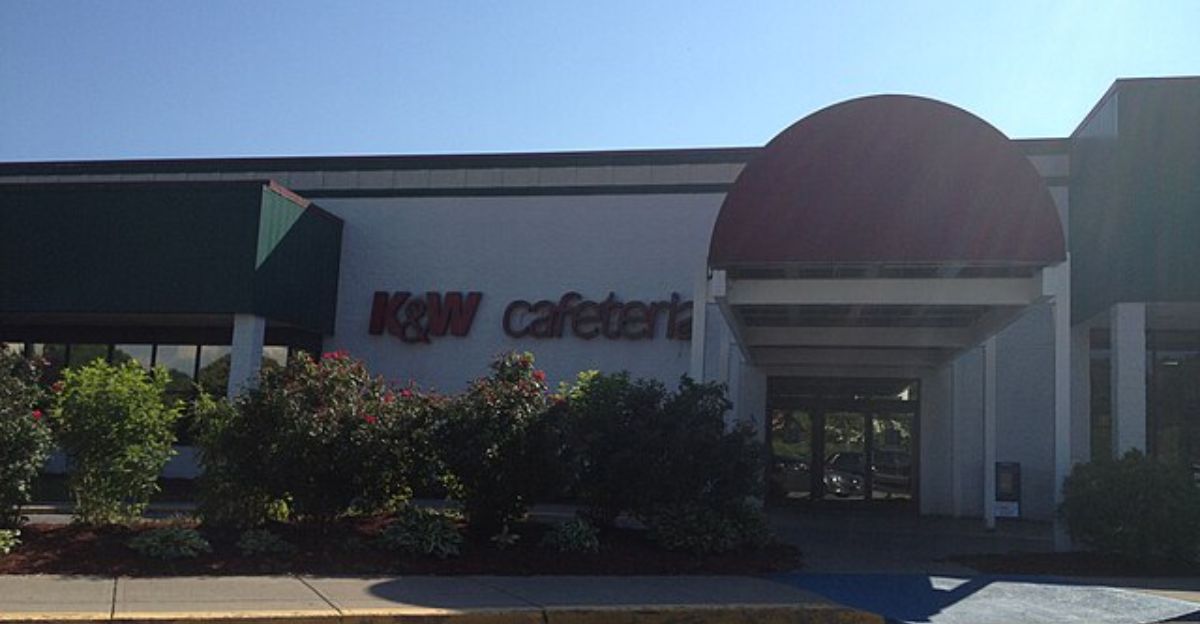
At the time of shutdown, K&W operated eight locations in North Carolina and one in Virginia. These nine restaurants had become neighborhood institutions. They were where families celebrated birthdays, where church groups gathered after services, where regulars had their favorite tables.
On December 1, all nine closed at exactly the same moment. There were no partial closures, no negotiations to keep select locations open, no last-minute rescue attempts. The entire physical footprint of K&W, everything customers could see and touch, vanished overnight. It left nothing behind except memories and an empty space where a beloved restaurant used to be.
How They Said Goodbye
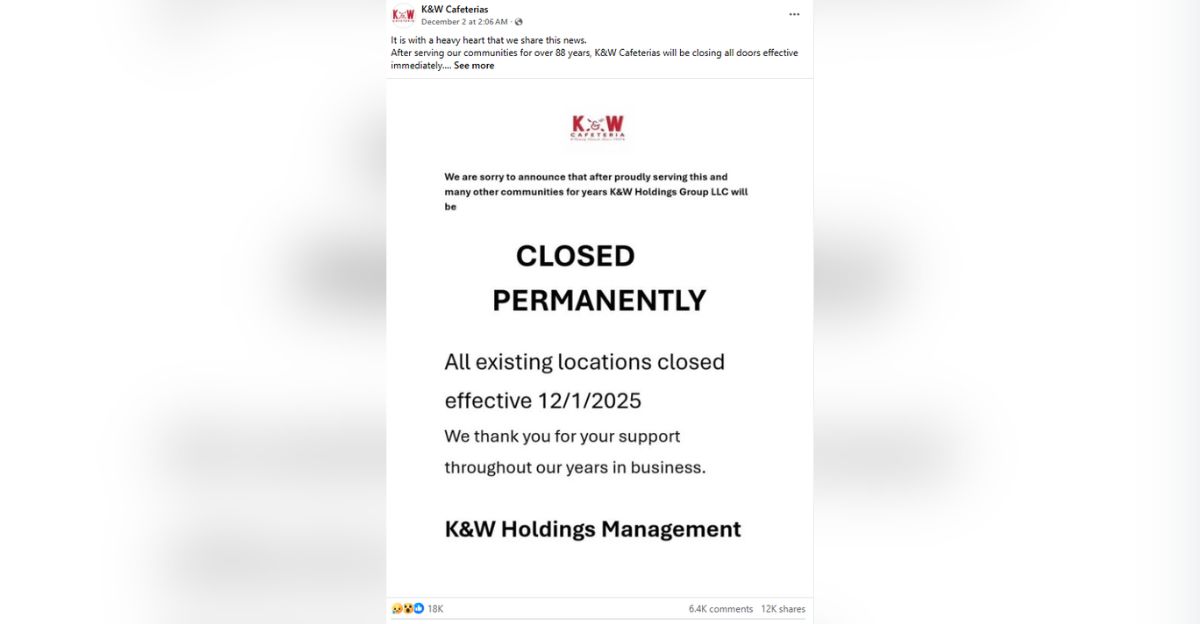
K&W announced its closure through a Facebook post on December 1, 2025. In the message, the company thanked customers for nearly 90 years of support and called itself more than a restaurant. The post emphasized that K&W had been a gathering place, a home for Sunday traditions spanning generations.
It was a heartfelt message, but it was also final. No second chances. No hope of reopening. No special farewell events where long-time customers could say a proper goodbye. For many people, a social media post felt like an inadequate way to end such a meaningful chapter of their lives. Yet that’s how a Southern institution said goodbye to millions of people who had grown up with it.
The Heart of K&W Stops Beating
K&W’s headquarters was in Winston-Salem, North Carolina. For decades, this office was the nerve center, the place where decisions were made, strategies were planned, and the entire operation was managed. It was the heart pumping life into the whole system. After the closure, the Winston-Salem headquarters stood empty with no restaurants to oversee and no corporate future announced.
The building that once buzzed with activity and purpose became just another empty office. For the city that had been home to K&W for generations, losing the company meant losing jobs, losing a major local employer, and losing a piece of North Carolina’s business heritage and community identity.
A Shield That Wasn’t Enough

In September 2020, K&W filed for Chapter 11 bankruptcy protection. The pandemic was crushing restaurants everywhere, and K&W needed legal protection to survive the economic shock. The bankruptcy process was supposed to give the company time to restructure, reduce costs, and bounce back stronger.
And technically, K&W did emerge from bankruptcy and continued operating for five more years. But the closure suggests that bankruptcy bought time without fixing the underlying problems. The restructuring made the company leaner but not healthier. It lasted five more years, but five years wasn’t enough to build a sustainable future. Bankruptcy protected K&W from immediate collapse, but it couldn’t protect it forever.
Fewer Restaurants, Fewer Customers

Before the pandemic, K&W had as many as 28 to 35 locations across the region. COVID-19 forced closures and changed dining habits practically overnight. The chain never fully recovered. By 2022, it was down to just 11 locations. By late 2024, only nine remained. Sales fell about 10 percent year-over-year in 2024, and 2025 forecasts looked even worse.
Each closure meant fewer employees, fewer neighborhoods served, and less revenue to keep the whole operation going. The downward spiral became harder to reverse with each passing month. The chain that once thrived with dozens of locations simply couldn’t adapt quickly enough to survive in a world where eating out meant quick delivery apps and fast-casual chains instead of leisurely cafeteria-style dining with tray lines and big dining rooms.
When Traditions Don’t Adapt
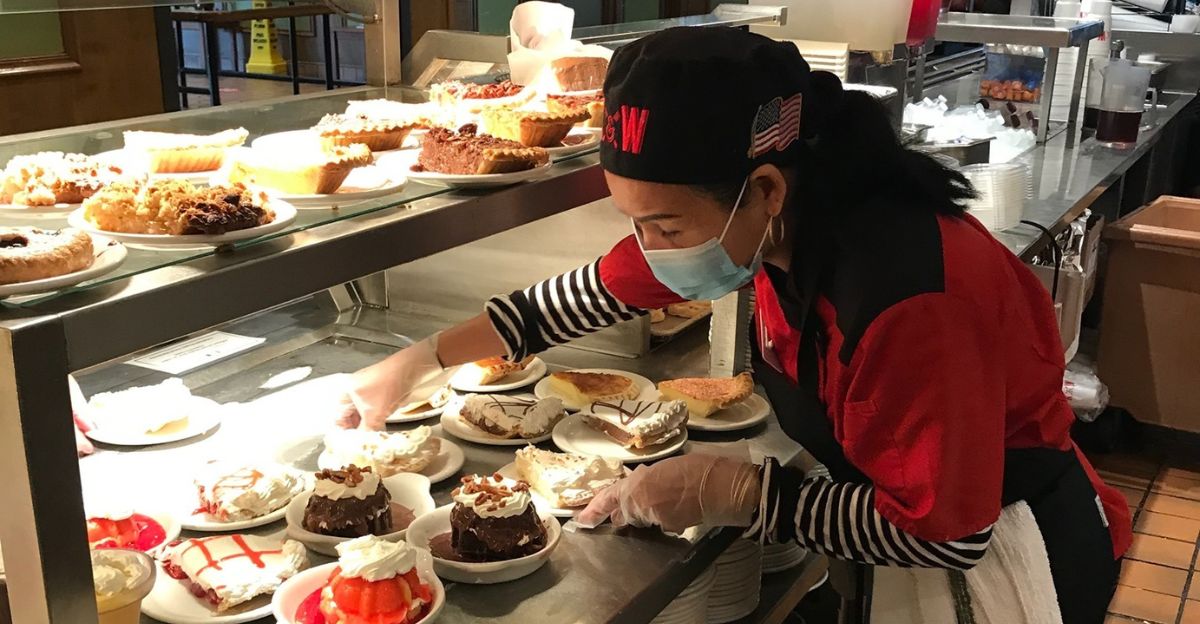
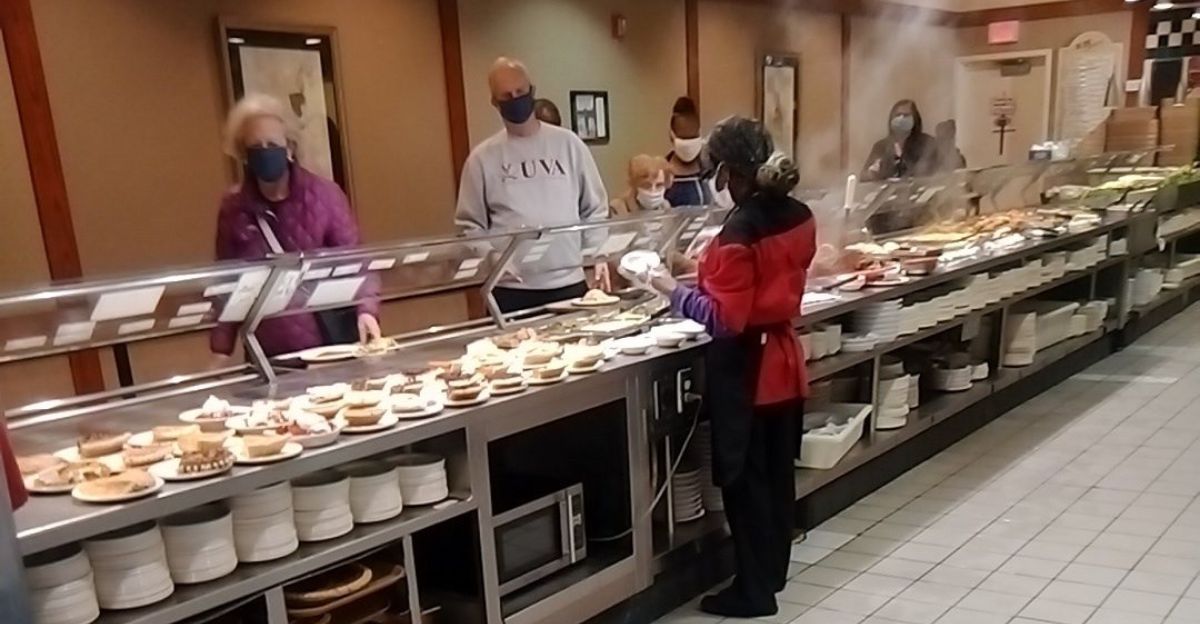
Cafeteria-style dining used to be everywhere. You’d go through a line with a tray, pick your food from display cases, and sit in a big dining room full of families and regulars. K&W symbolized this format. It meant church crowds, senior citizens who came every week, and big family dinners after church on Sunday. But the world changed.
Fast-casual restaurants boomed. Food delivery apps put meals in people’s hands. Nobody wanted to wait in line anymore. They wanted speed, convenience, and digital ordering. The traditional cafeteria, with its slower pace and ritual-driven experience, became less about feeding people and more about creating memories. That’s beautiful, but it’s hard to turn beautiful memories into profit. As dining trends shifted away from this model, K&W lost its competitive advantage.
The Human Cost
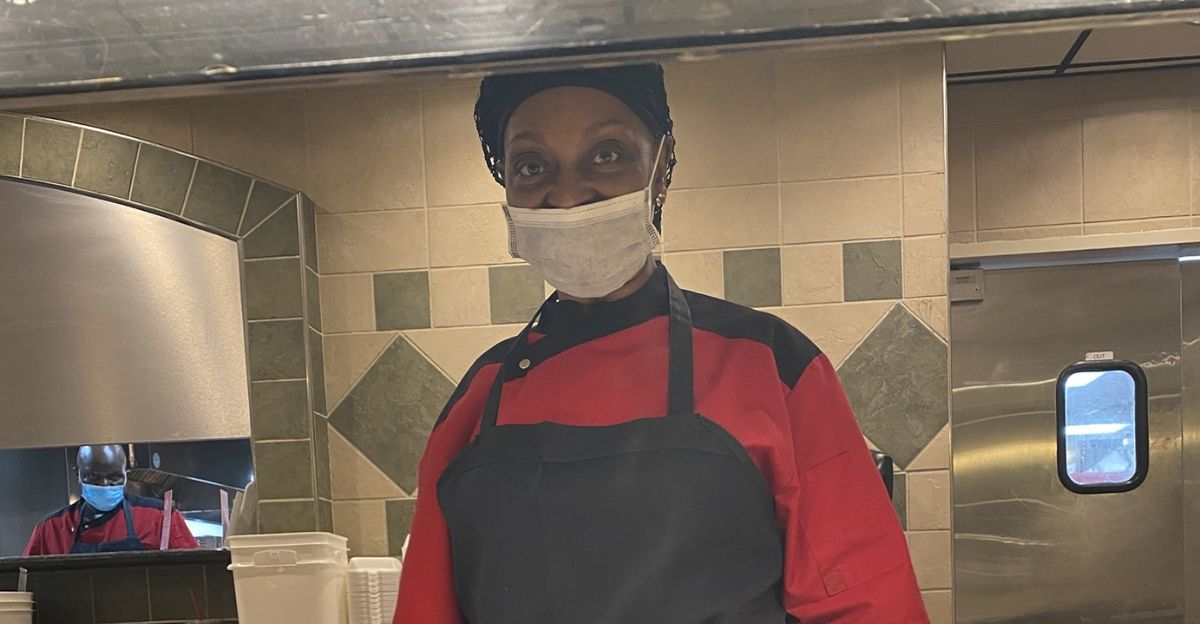
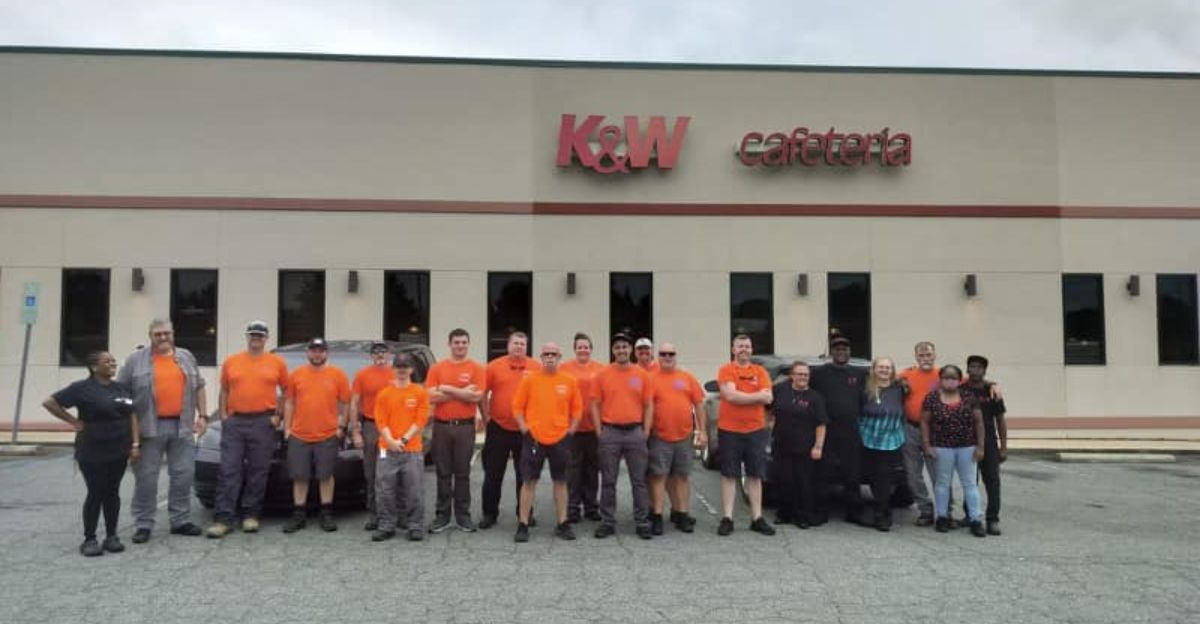
The December 1 closure likely affected more than 100 employees, with some reports suggesting over 300 workers across North Carolina and Virginia. K&W’s nine locations would typically employ 15 to 25 people each including cooks, servers, dishwashers, managers, cashiers. All of them suddenly lost their jobs on the same day.
For many, K&W wasn’t just an employer; it was part of their identity. Some had worked there for decades. Others saw it as steady work in their community. The closure created immediate hardship. People needed to find new jobs quickly, with no severance announcement or transition support. For workers in smaller towns especially, losing a major employer meant having to search harder or travel farther to find work. The shutdown created a ripple of job loss and uncertainty across both states.
Where Memories Can’t Be Recreated
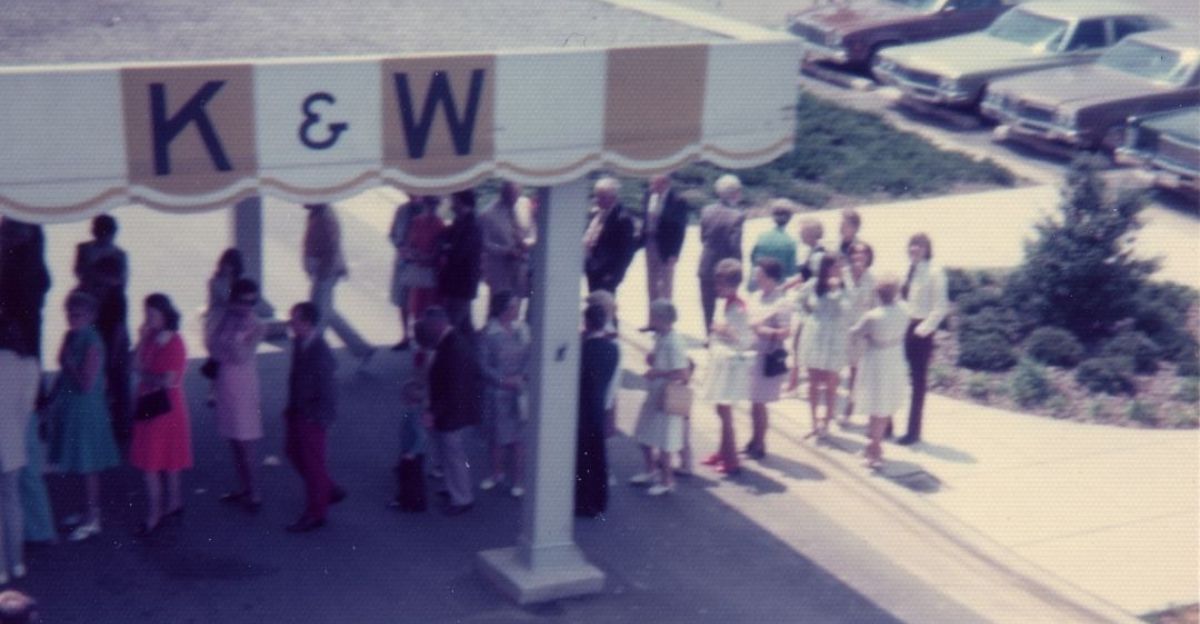
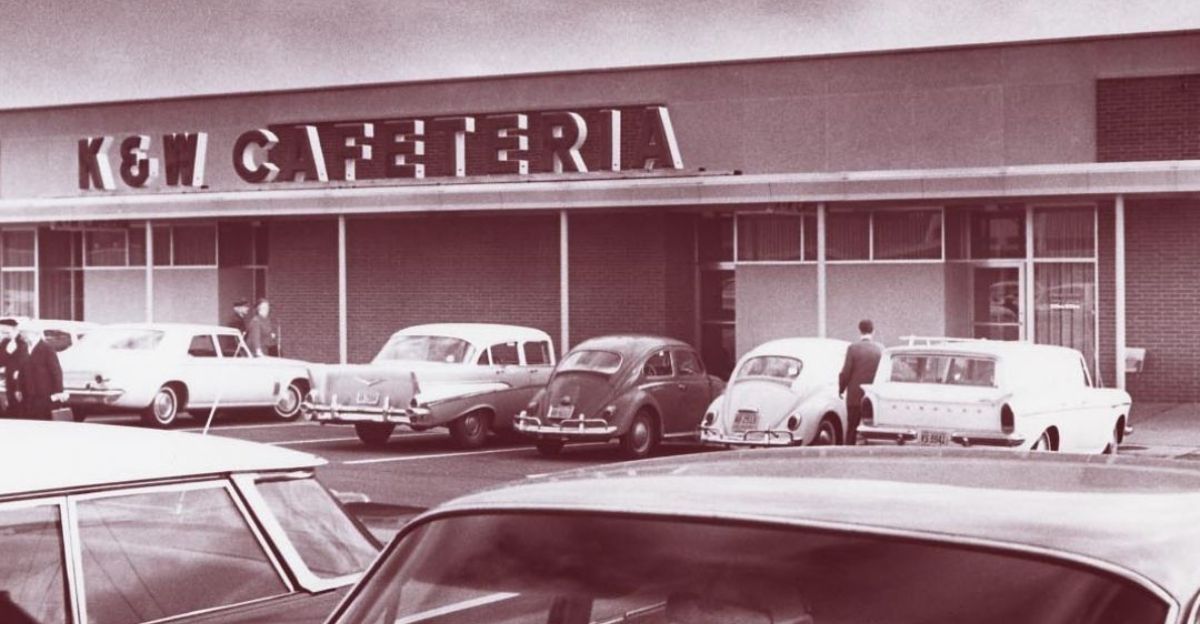
For tens of thousands of regular customers, K&W wasn’t a restaurant, it was a ritual. Sunday after church meant K&W. Holiday family gatherings happened there. Grandparents brought grandchildren to the same tables they’d sat at with their own parents decades before. Multi-generational traditions unfolded in those dining rooms week after week, year after year.
When you close all nine locations at once, you don’t just take away a place to eat. You take away a gathering space where people felt at home. That’s what K&W offered, a place to gather, connect, and be together. Those regulars now have no place to go where that same feeling exists. Some traditions survived by moving to other restaurants, but many simply faded away.
The Money That Vanished
K&W’s nine locations likely generated somewhere between $9 to $18 million in annual restaurant sales. That’s not just profit for K&W; that’s revenue that supported suppliers, landlords, utility companies, and many other businesses connected to the restaurants. When all nine close overnight, that entire money stream stops. Local food suppliers lose a major customer.
Landlords lose reliable tenants. Utility companies lose monthly payments. Workers lose paychecks. The shutdown created a domino effect of financial loss across entire regions. Small communities that depended on steady K&W traffic lost more than just a restaurant, they lost economic activity.
No Knight in Shining Armor
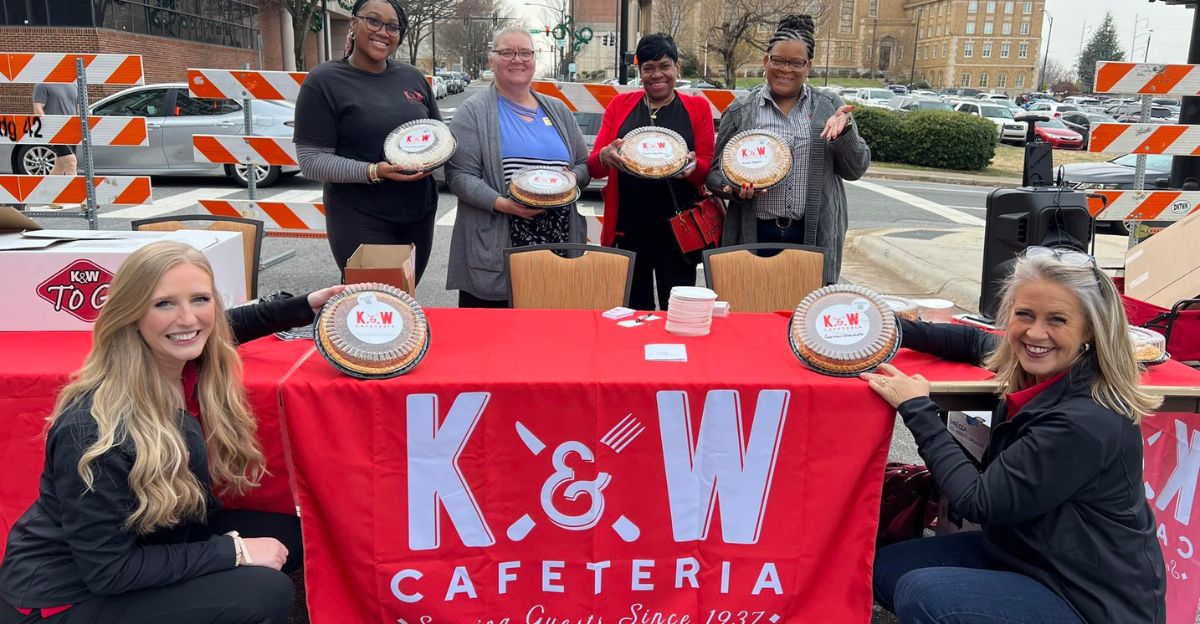
K&W had a strong regional brand with deep recognition in North Carolina and Virginia. You might think that would attract buyers or investors interested in rescuing such a beloved institution. But K&W’s economics didn’t appeal to them. Cafeterias are labor-intensive as they need people working all day.
They occupy large dining spaces with expensive to rent. Profit margins are thin in the restaurant business generally. K&W’s older customer base meant weekday traffic was unpredictable. Even after Falcon Holdings acquired K&W in 2022 (Falcon owns another cafeteria brand), there was no publicly announced plan to save, rebrand, or selectively revive any K&W locations.
K&W Wasn’t Alone
K&W’s closure is just one chapter in a larger story. In 2024 and 2025, multiple established restaurant chains closed locations or shut down entirely. Iron Hill Brewery & Restaurant faced closures. Rite Aid closed thousands of pharmacy locations. Industry data shows restaurant failures hitting their fastest rate in decades. According to the National Restaurant Association, about 80 percent of restaurants fail within five years of opening.
The challenges K&W faced are affecting the entire restaurant industry. The difference is that K&W was 88 years old, established, well-known, and still couldn’t adapt fast enough.
The End of a Sunday Tradition

K&W showed us that food is more than fuel, it’s connection, tradition, and memory. Yet social media filled with nostalgia after the closure, revealing both the power and limits of emotional attachment. Hundreds of posts showed families grieving the loss of their favorite gathering place.
That grief is real and valid. K&W touched millions of lives. But emotional connection couldn’t overcome rising costs, thinning weekday crowds, and competition from restaurants built around speed and convenience. The Sunday tradition that defined K&W for generations has now disappeared. Families will find other places to gather, or perhaps they’ll gather less often.
Sources:
Independent: K&W Cafeterias set to close all locations after 88 years
K&W Cafeterias official Facebook announcement
The Economic Times: K&W Cafeteria closed after 88 years as chain announces immediate shutdown
ZoomBangla iNews: Why K&W Cafeteria closing left communities shocked after 88 years