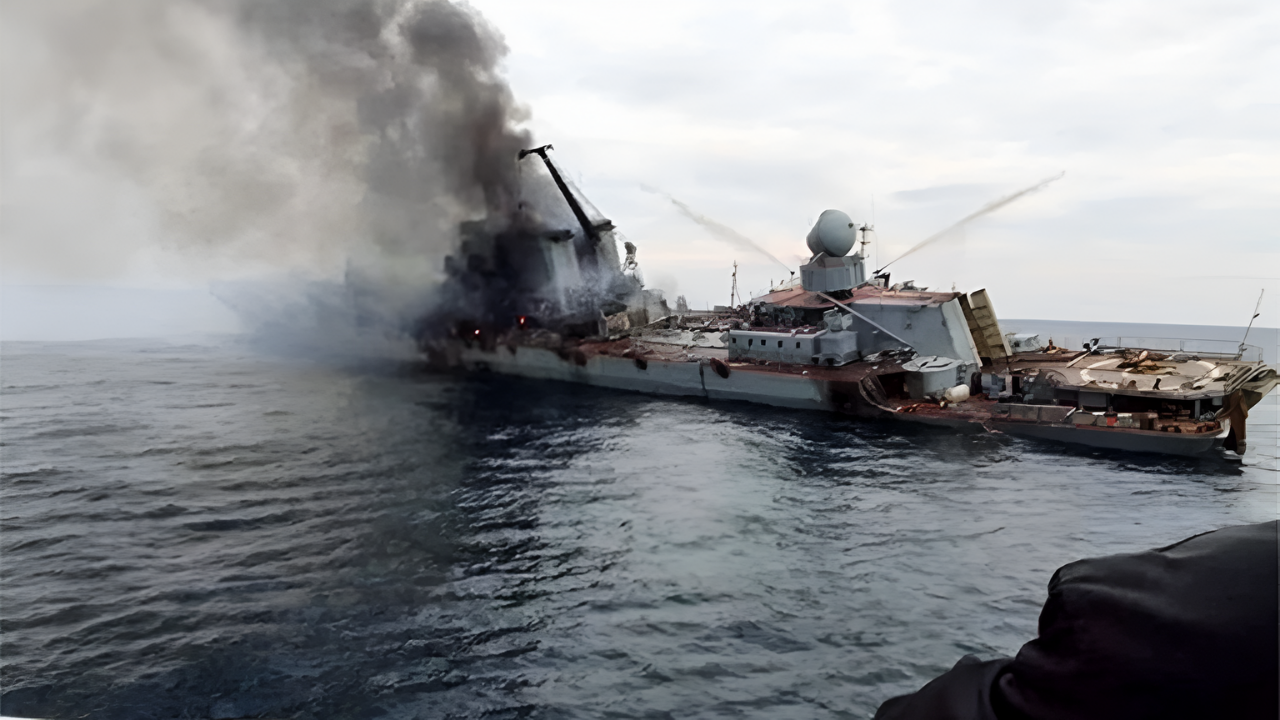
On 14 April 2022, Russia’s $750 million Black Sea flagship Moskva sank after two Ukrainian Neptune missiles struck, marking the largest Russian warship lost since World War II. Infamous for demanding Snake Island’s surrender with “Russian warship, go screw yourself,” the Moskva’s destruction shocked military analysts and global audiences alike.
This strike revealed Ukraine’s rising naval capability and exposed vulnerabilities in Russia’s defenses. The consequences rippled through strategy and morale, setting the stage for a dramatic shift in the Black Sea. Here’s what unfolded and why it matters.
What Sparked Worldwide Attention?
On 24 February 2022, the first day of the invasion, Ukrainian border guard Roman Hrybov famously refused Moscow’s surrender demand from Snake Island. His bold response quickly became a global emblem of Ukrainian courage, inspiring protests and media coverage around the world.
Fifty days later, the same warship sank, creating a near-poetic narrative. This moment underscored how a single act of defiance can shape morale and international perception, leaving a lasting mark on naval history and the unfolding conflict.
How a Stamp Echoed Defiance
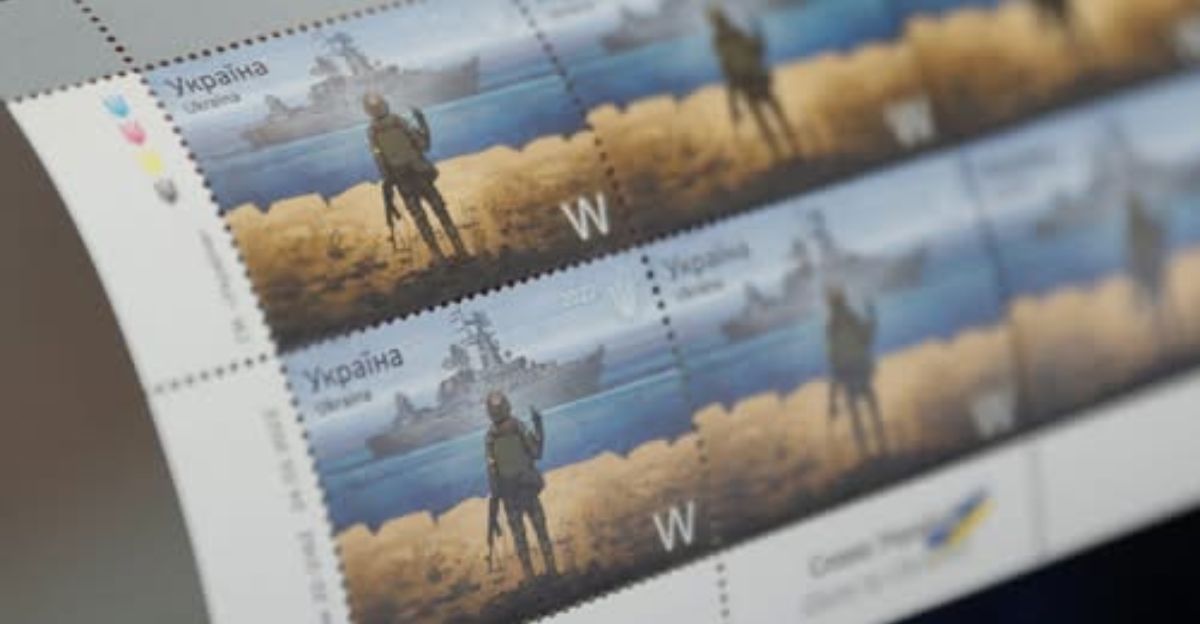
On 1 March 2022, Ukraine’s postal service launched a competition for a stamp featuring the legendary phrase. Artist Boris Groh’s design of a soldier flipping the bird at Moskva won popular vote across Instagram and Facebook. The image captured the nation’s defiant spirit.
Released on 13 April, one million stamps coincided with the missile strike. Queues formed, with 700,000 sold by 20 April. The timing was uncanny, intertwining cultural symbolism with military action, and setting the tone for how Ukraine leveraged both narrative and strategy in this pivotal naval moment.
Who Led Ukraine’s Naval Victory?
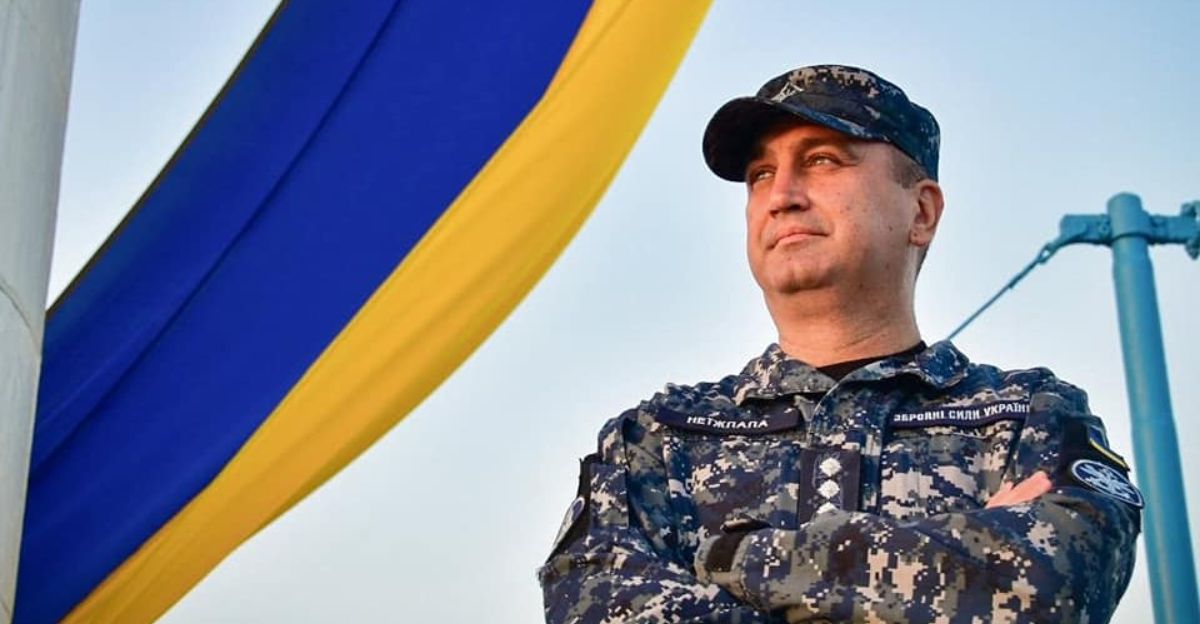
The Southern Command oversaw the strike, with Rear Admiral Oleksiy Neizhpapa commanding the Ukrainian Navy. Shore-based Neptune missile teams, positioned near Odesa, targeted Moskva 60–65 nautical miles offshore. Neizhpapa’s strategy transformed Ukraine’s naval posture almost overnight, demonstrating the precision of well-coordinated shore-to-ship operations.
President Zelenskyy promoted Neizhpapa to Vice Admiral on 16 April. Zelenskyy adviser Victoria Strakhova described the operation as “lightning” in nature, directly linking his leadership to Moskva’s destruction. This recognition highlighted the strike’s strategic brilliance and its role in reshaping Ukraine’s naval capabilities.
What Is the Neptune Missile?
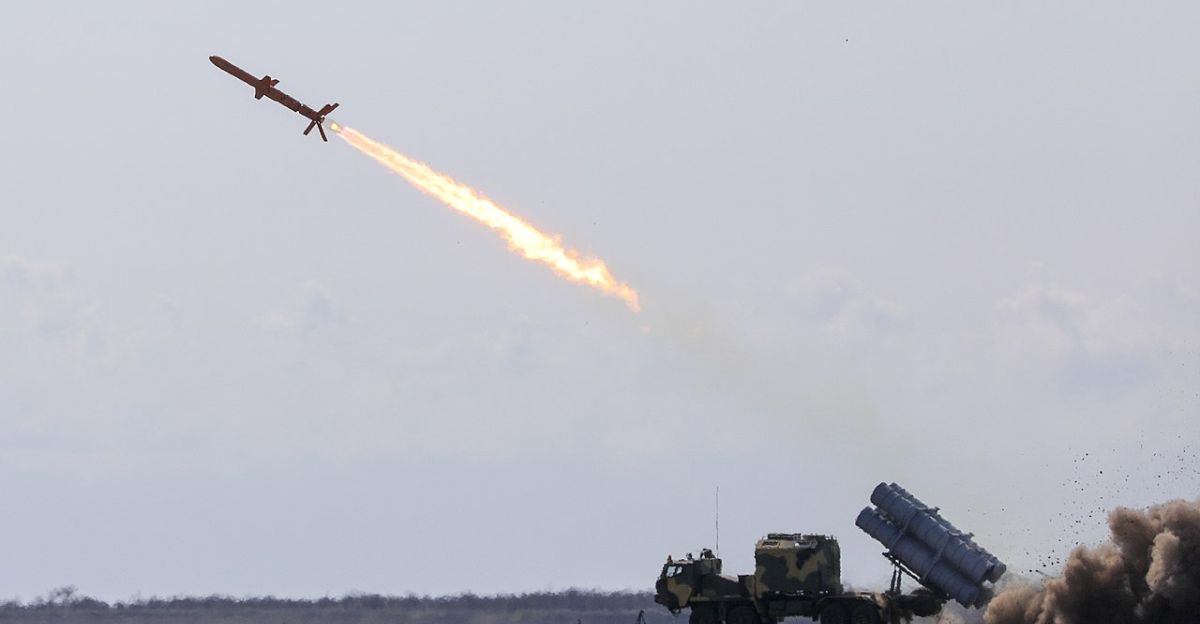
The R-360 Neptune is Ukraine’s domestically-developed, land-based anti-ship missile, designed by Luch Design Bureau in Kyiv. It evolved from the Soviet Kh-35 system, with improved range, targeting, and electronics. It carries a 150-kilogram warhead, designed to neutralize heavily armed vessels.
Entered into service in March 2021, Neptune saw its combat debut on 13 April 2022. Two missiles fired at Moskva became the most consequential naval shots since World War II. Its success demonstrated Ukraine’s growing capability to strike high-value targets with precision.
Why Moskva Was a High-Value Target
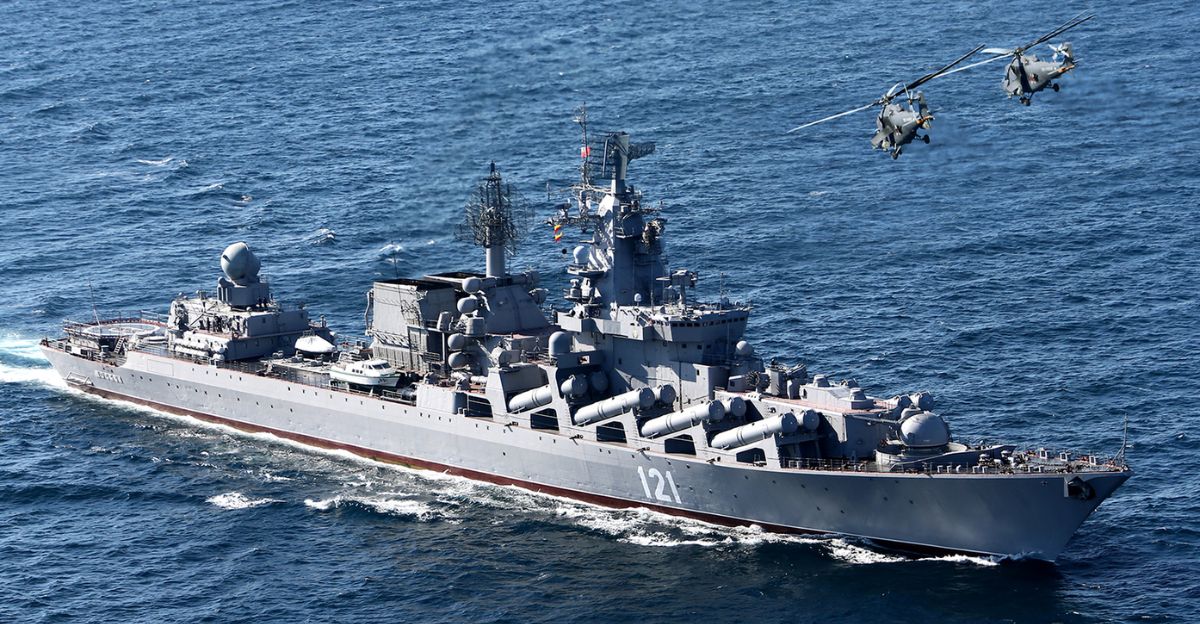
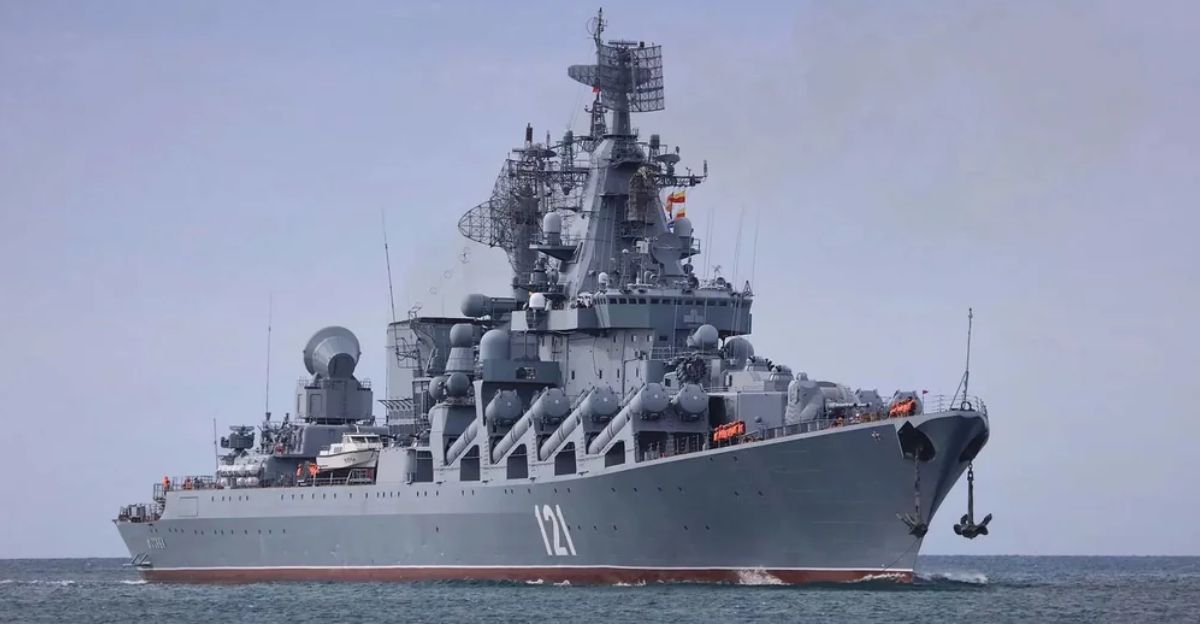
The Slava-class cruiser Moskva displaced 12,490 tonnes and measured 186 meters. As Black Sea Fleet flagship, it commanded amphibious operations and carried 16 anti-surface missiles, 104 surface-to-air missiles, 6 CIWS, and 10 torpedoes. Its S-300F long-range air defense system uniquely protected the fleet.
Destroying Moskva removed a critical shield, leaving Russian vessels vulnerable to Ukrainian missiles. The ship’s loss meant not only a financial setback but also a strategic blow to Russia’s control of the Black Sea, changing naval calculations for months.
How Did Defenses Fail Completely?
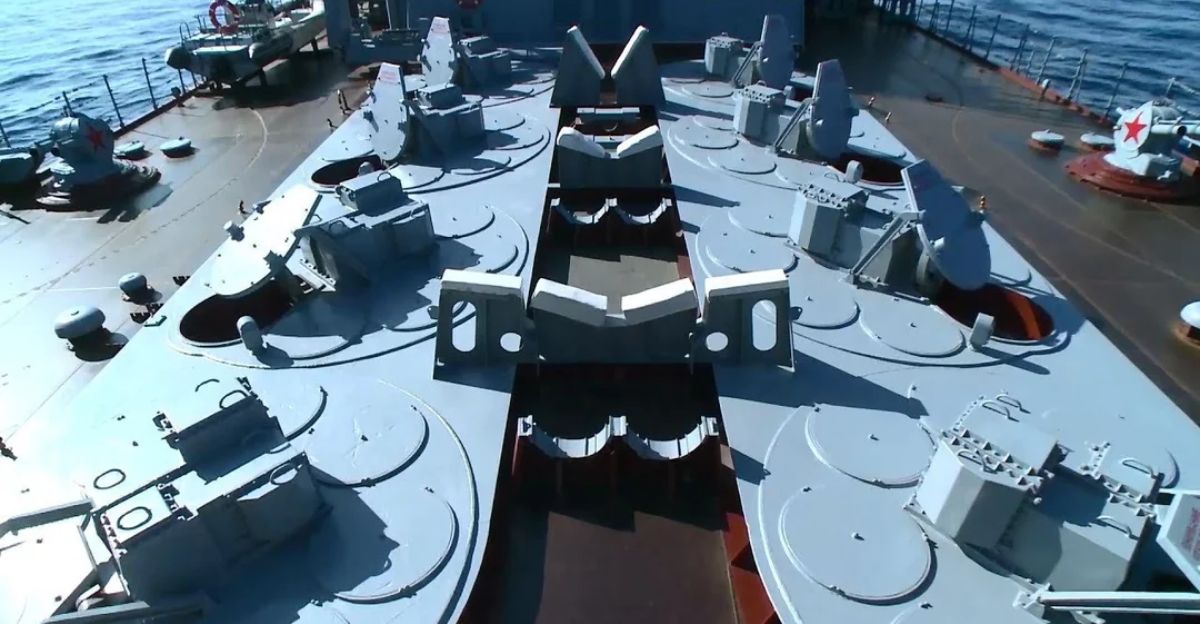
Moskva had triple-layered air defenses: S-300F long-range, 9K33 Osa medium-range, and AK-630 close-in weapons. Yet on 13 April 2022, no systems activated. Ukrainian Naval Commander Oleksiy Neizhpapa said missiles “struck at an opportune time—during the admiral’s hour in the afternoon when crew vigilance was lower.”
Human factors contributed to the failure. Crew rest periods created a temporary command vacuum, allowing missiles to penetrate unchallenged. This revealed that even sophisticated systems can fail if human protocols are not rigorously maintained, emphasizing operational readiness over mere hardware strength.
Did a Bayraktar Drone Assist?
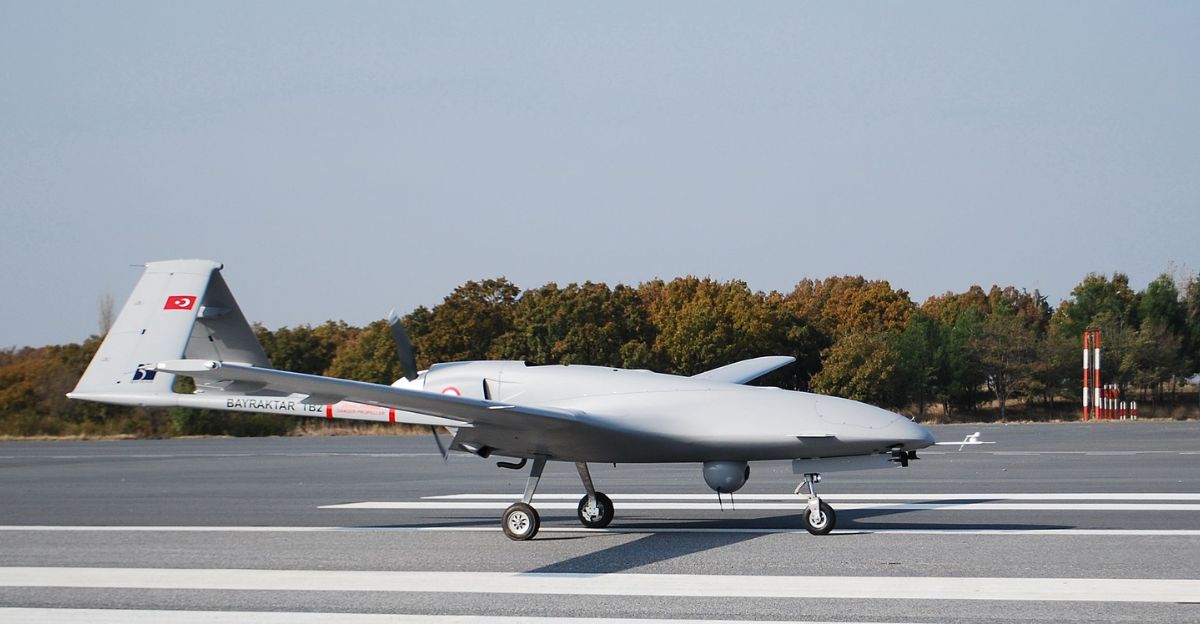
Unconfirmed reports suggest that a Turkish Bayraktar TB2 drone assisted the strike, possibly by providing radar distraction or targeting reconnaissance. A ground-control station was observed in Odesa on 10 April, days before the missile attack. Ukrainian videos showed Moskva burning at night, potentially captured by drone cameras.
Can Kasapoglu, director at Turkey’s EDAM think tank, said, “Reports that Turkish TB2 drones were involved as a distraction or location spotter are both quite possible.” The drone’s role remains strategically significant, illustrating the modern blend of missile and unmanned technology in warfare.
When Did the Missiles Hit?
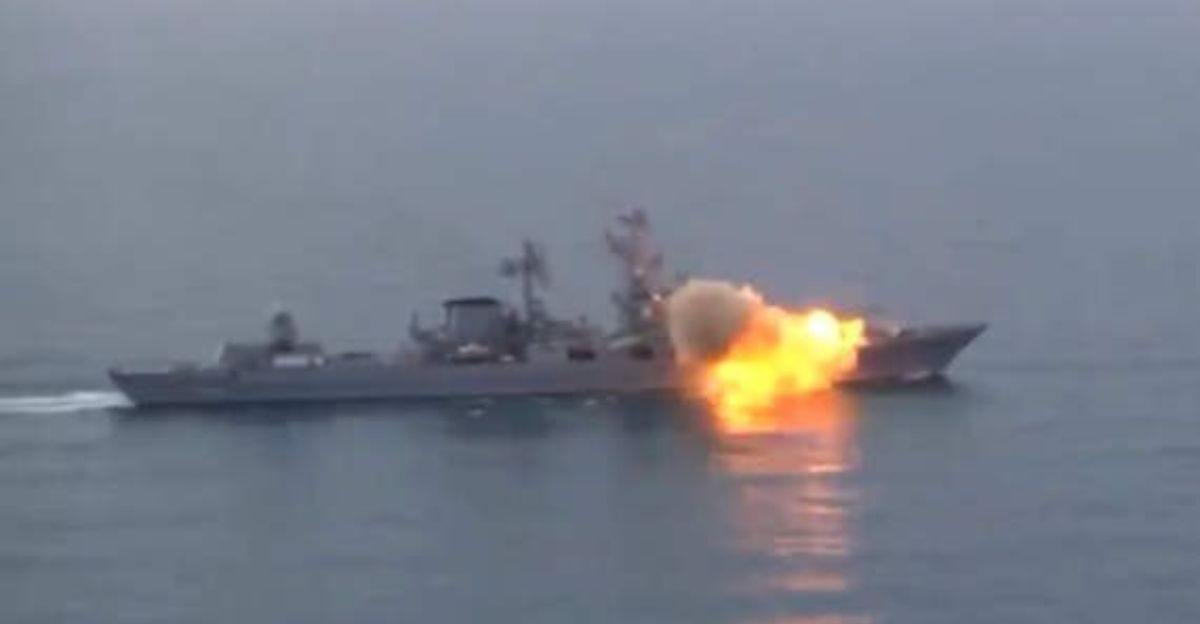
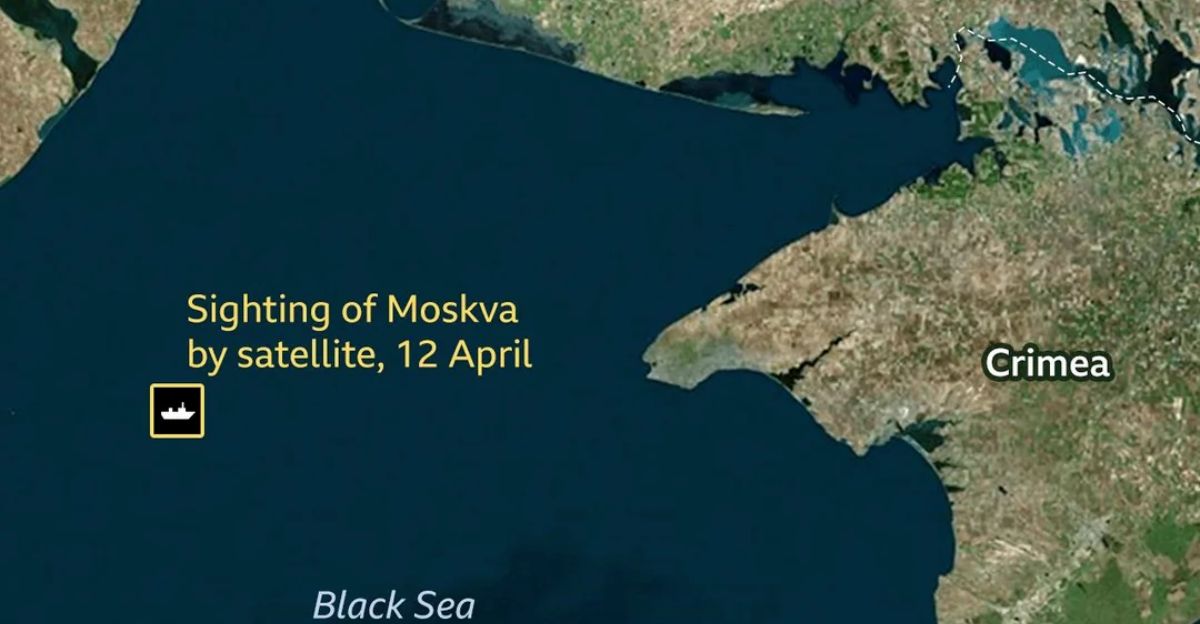
At 18:52 on 13 April 2022, satellite imagery located Moskva at 45°10′43″N 30°55′31″E, about 80 nautical miles south of Odesa. At 20:42, the first reports appeared on Facebook. A Ukrainian volunteer wrote, “The cruiser Moskva has just been hit by 2 Neptune missiles. It is standing, burning.”
The Neptune missiles took 10–15 minutes from launch to impact. Located well within range, Ukrainian crews had optimal firing geometry. This precise timing and positioning underscored meticulous planning and highlighted vulnerabilities in even the most advanced naval defenses.
How Fast Did Moskva Sink?
Moskva’s final hours were catastrophic. SOS signals at 01:05 on 14 April, rolled to port side by 01:14, electricity lost at 01:30, and Turkish ships reportedly evacuated 54 sailors at 02:00. By 03:00, the ship had fully submerged beneath the Black Sea.
From first impact to total loss—less than nine hours passed. Catastrophic flooding and secondary ammunition explosions cascaded through compartments, rendering damage control ineffective. The speed of the sinking shocked observers, highlighting the devastating impact of modern precision strikes.
What Was the Human Cost?

Russian claims: 1 killed, 27 missing, 396 rescued. Ukrainian sources: only 58 rescued from 510 crew, suggesting roughly 452 dead. Analysts estimate 240–300 deaths. Around 200 injured sailors were hospitalized in Sevastopol, creating uncertainty for families and echoing the 2000 Kursk submarine disaster.
One mother said, “I look at my government differently.” The lack of transparency caused distress, illustrating how military losses reverberate socially, extending beyond immediate tactical or financial consequences, and highlighting the human stakes of strategic operations.
How Did Russia React Militarily?
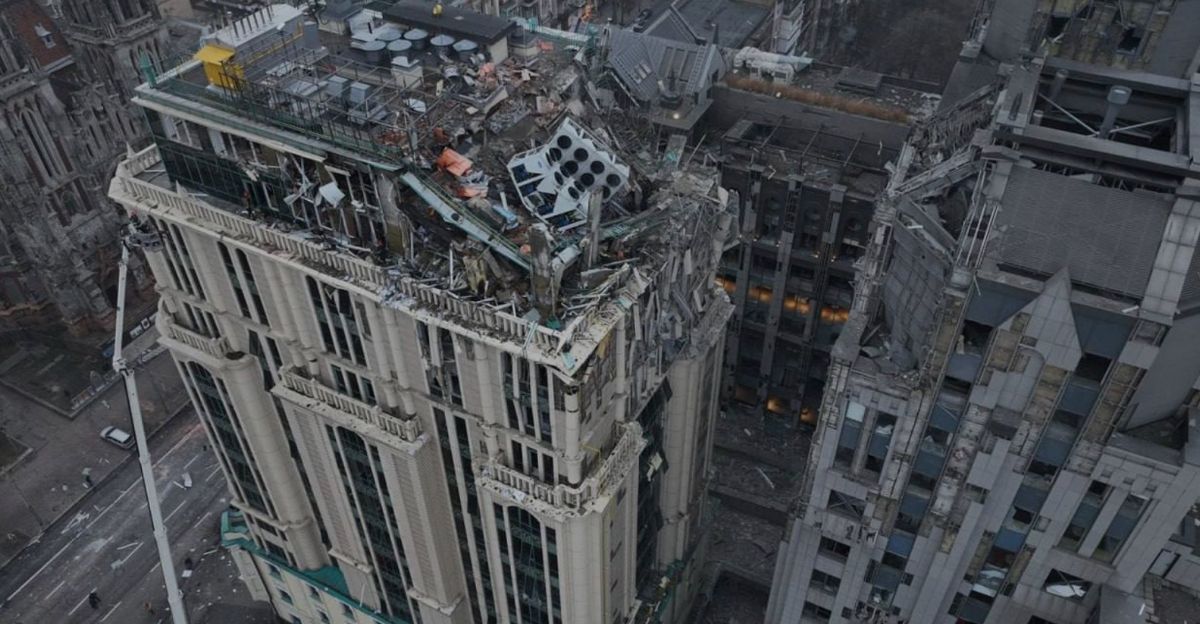
On 15 April, Russia retaliated by striking the Luch Design Bureau in Kyiv, responsible for Neptune missiles. The Ministry of Defense stated that the attacks targeted the developer of Neptune systems and the Olkha MLRS. The strike reflected both revenge and deterrence motives, aiming to punish Ukraine’s technological edge.
The rapid retaliation highlighted Moscow’s psychological shock at losing its flagship. Targeting military developers rather than personnel or frontlines emphasized Russia’s strategic priority: safeguarding future naval dominance by deterring advanced weapon development.
U.S. Response and Support

National Security Adviser Jake Sullivan confirmed Moskva’s sinking on 14 April 2022, calling it “a big blow to Russia.” He noted Moscow was split between narratives of incompetence and attack. U.S. intelligence provided situational awareness without directly sharing targeting information via the P-8A Poseidon aircraft.
Spokesman John Kirby clarified, “There was no provision of targeting information by any United States Navy P-8 flying in these air policing missions.” This nuanced support exemplified Western balancing acts, which involved aiding Ukraine while limiting direct operational involvement.
Why Russia’s Story Kept Shifting
Initially, Russia blamed an accidental ammunition fire. The narrative shifted to “sinking while being towed in stormy weather.” Video evidence contradicted storm claims. Russian media largely minimized coverage, reflecting an institutional struggle over accountability and reputation.
State TV presenter Vladimir Solovyov asked, “How the hell did you let Moskva be sunk?” This rare critique illustrated internal embarrassment, showing the political cost of the strike beyond military losses.
How Missiles Targeted Moskva Precisely
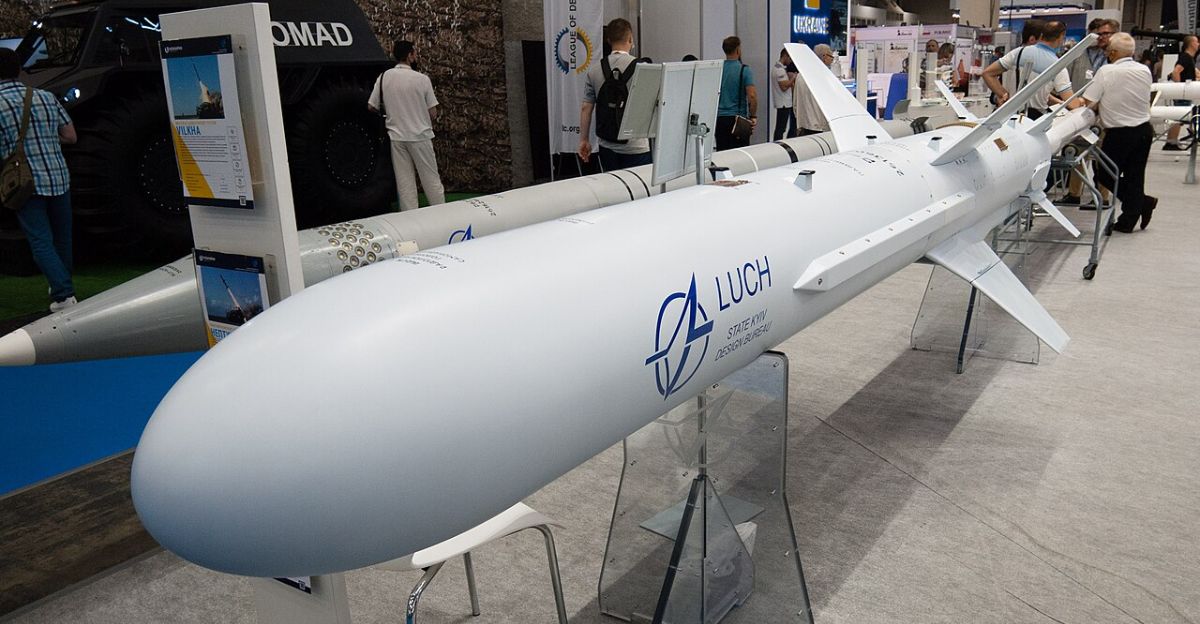
Neptune missiles struck surgically. One warhead hit the mess hall above engine rooms and damage control posts, destroying personnel and structural integrity. The second hit the stern, puncturing the Vulkan anti-ship missiles and causing fuel-fed fires.
Chris Parry wrote to The Guardian, “Secondary explosions cascaded through densely-packed ammunition magazines uncontrollable by degraded crews.” The attack’s pattern maximized destruction efficiently, revealing sophisticated planning and target knowledge that left minimal chance for ship survival.
How Black Sea Strategy Shifted
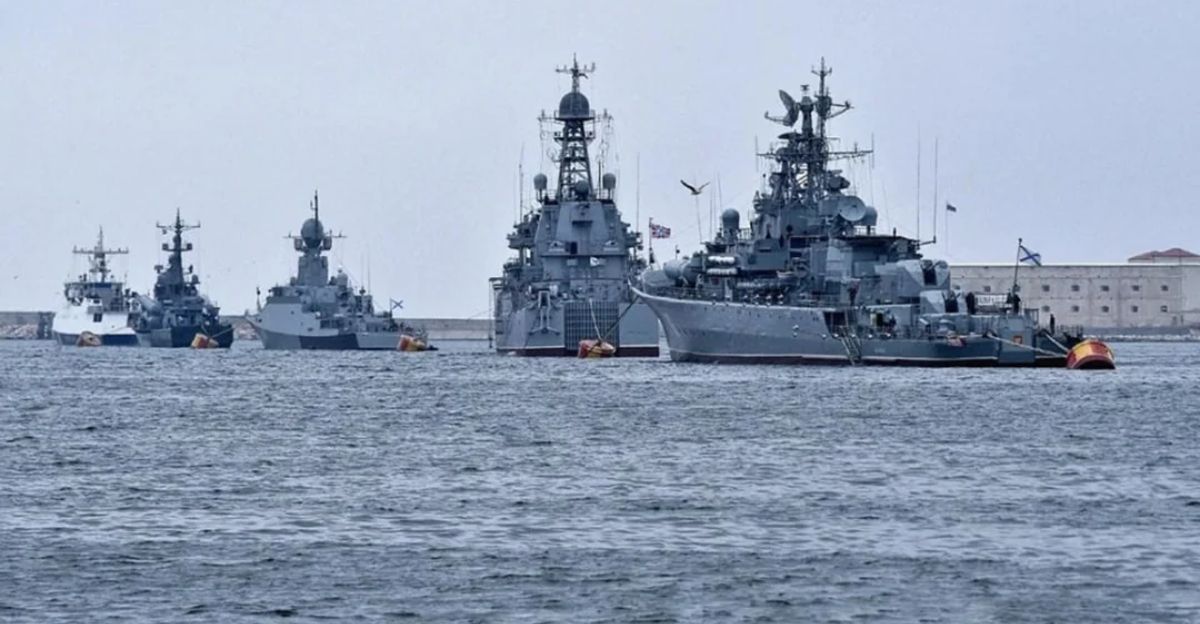
Russia repositioned its fleet 80 nautical miles offshore. Five vessels moved away from Ukrainian coastal weapons. Losing Moskva meant no long-range air defense, forcing all remaining ships to rely on shore-based systems, weakening strategic control.
Kyiv Independent reported that Russia later moved forces to Novorossiysk, over 200 kilometers east. Dmitry Gorenburg said, “From the initial perception that the Black Sea Fleet was dominant, we came to a situation where it is really a very limited factor.” This signaled a significant decline in regional naval power.
Symbolic Victory on Snake Island
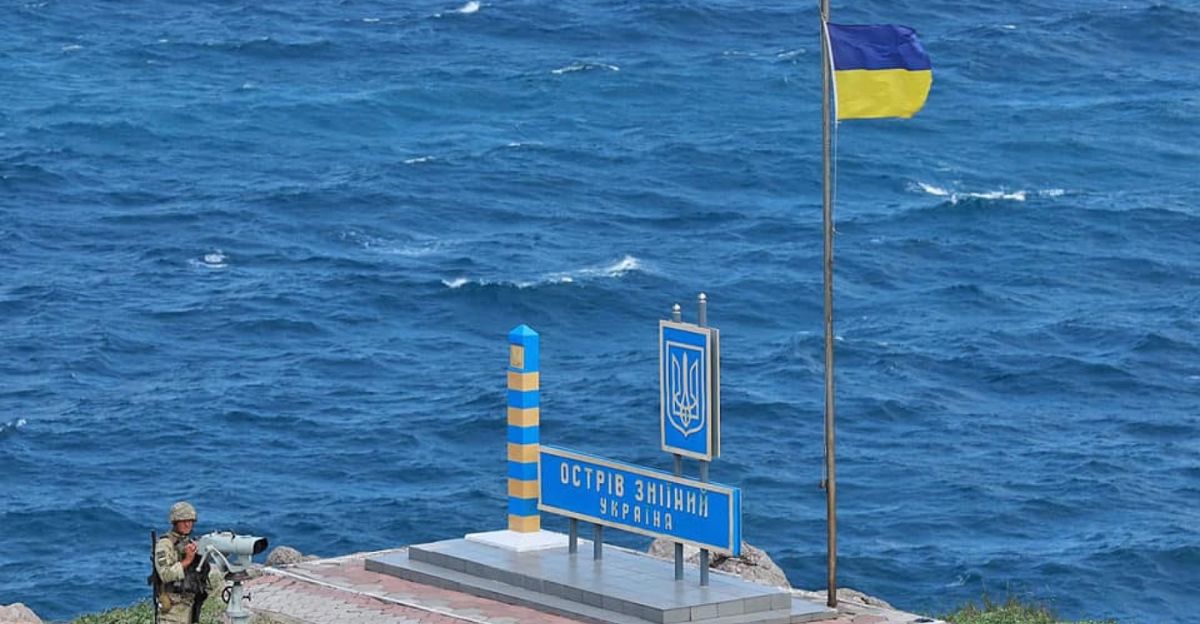
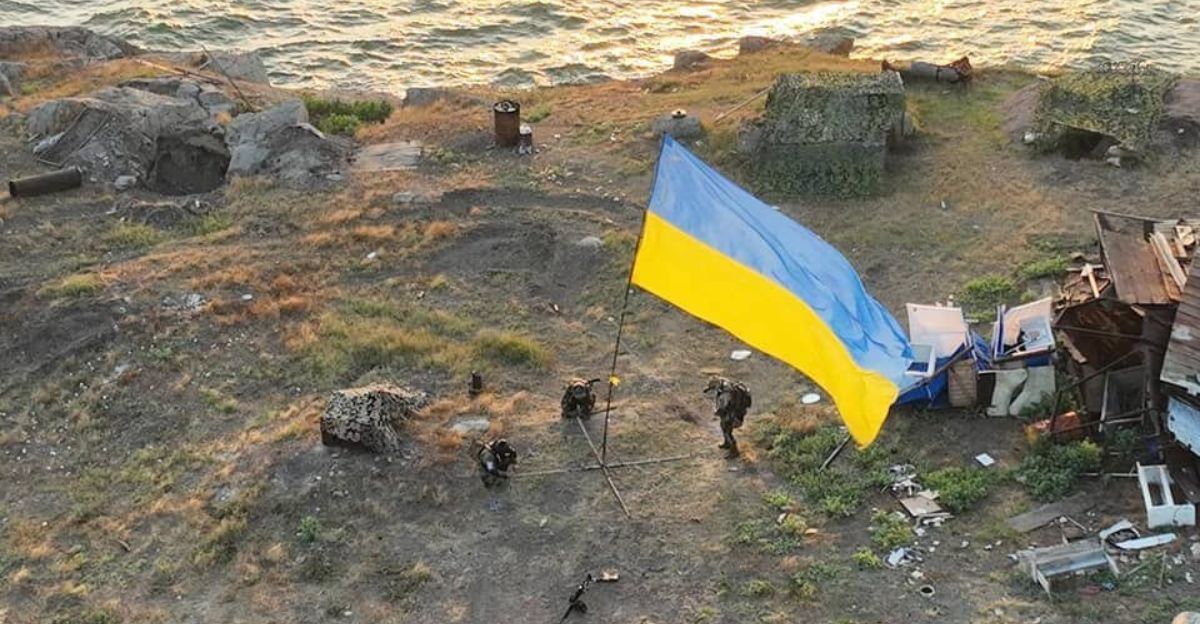
After the Moskva sank, the circle of symbolism was complete. On June 30, Russia withdrew from Snake Island. By July 4, Ukrainian forces raised the flag, reversing the February 24 surrender demand and confirming strategic control.
The narrative arc—from defiance to sinking to flag-raising—became cultural mythology. The incident transcended its military significance, illustrating how symbolism and morale intertwine with battlefield success, thereby defining Ukraine’s spirit in the public consciousness.
What Happened to Moskva’s Wreck?
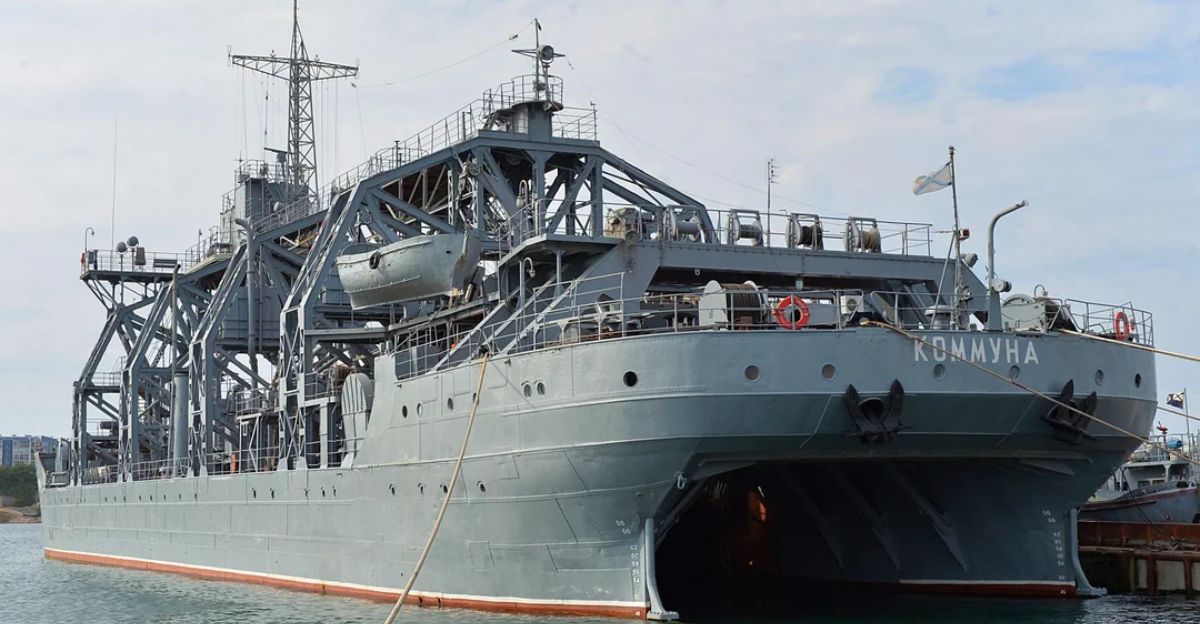
Moskva settled at 45–50 meters depth at 45°10′43″N 30°55′31″E. Russia deployed the 110-year-old salvage ship Kommuna with an AS-28 submersible to recover encryption, weapons, bodies, and sensitive equipment. Eight ships worked for two weeks removing classified materials.
The operation reflected Russia’s desperation. Ukrainian sources reported five to seven ships involved. Moskva’s irreplaceable status as a flagship and air defense vessel underscored the strategic and symbolic cost beyond monetary value.
What Putin Really Lost
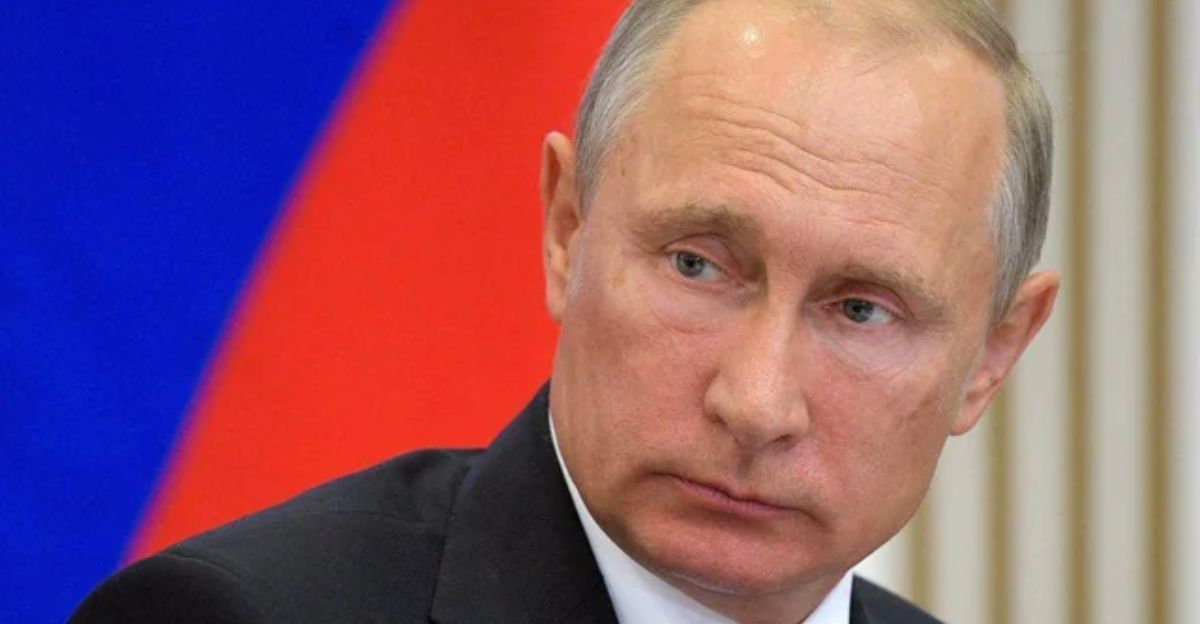
The Moskva cost $750 million to replace. Strategically, it eliminated Russia’s only vessel capable of defending the fleet against air and missile attacks. Ukraine showcased domestic weapon efficacy, reshaping Black Sea balance.
The strike shattered Russian naval dominance. What began as a legendary phrase evolved into a cultural and tactical impact. One ship’s sinking signaled Ukraine’s capacity to resist blockades, undermining Putin’s control of the Black Sea entirely.
Sources
Wikipedia – Sinking of the Moskva; R-360 Neptune; Russian warship, go screw yourself; Baykar Bayraktar TB2
New York Times – U.S. Intelligence Helped Ukraine Strike Russian Flagship Moskva
Business Insider – Zelenskyy Promotes Ukraine Navy Leader After Russia Flagship Sank
U.S. Naval Institute – Antiship Missile Lessons from Sinking of the Moskva
Kyiv Independent – Russia’s Battered Black Sea Fleet Relief
Odessa Journal – Ukrainian Navy Commander Details Moskva Sinking
Military Watch Magazine – Evolution of Russia’s S-300 Air Defence System
BBC – Profile: Russia’s S-300 missile system