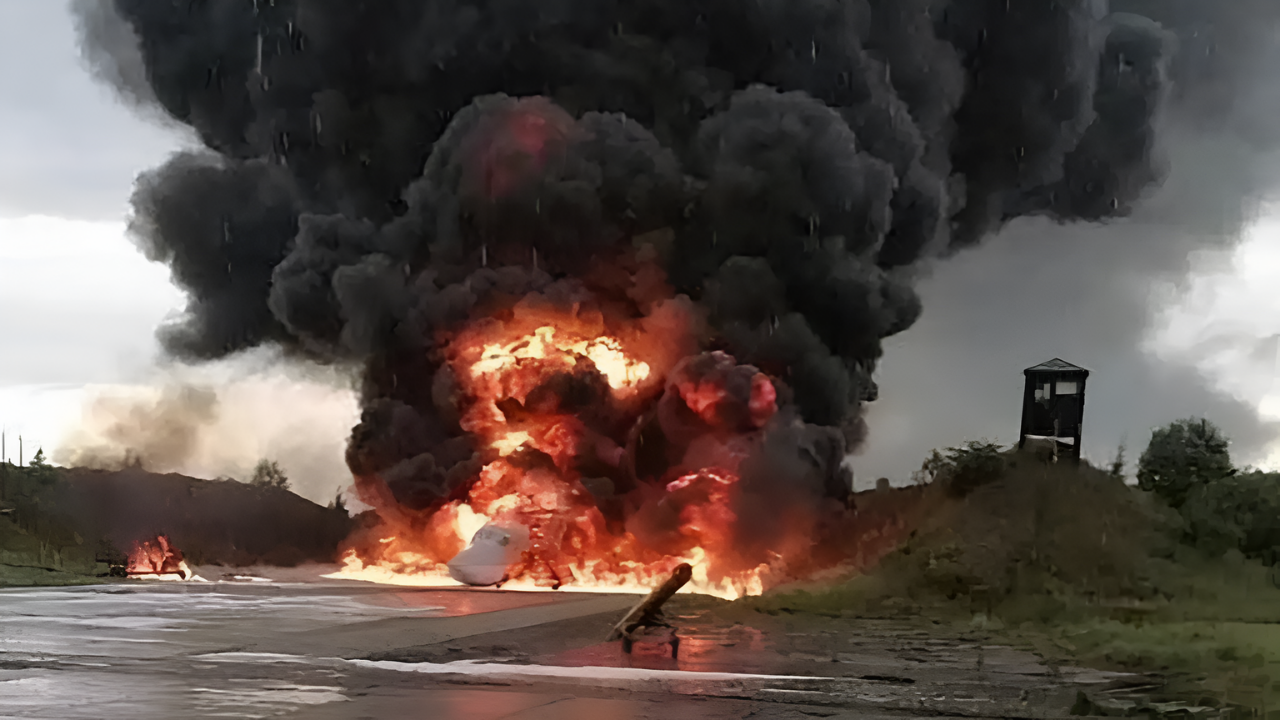
The cost of modern warfare is inverting. In July 2024, Ukraine destroyed a Russian TOS-1A flamethrower system a rare, heavily armored launcher with a drone that cost less than a high-end gaming console. Military analysts now track these exchanges obsessively: a $400 unmanned aircraft eliminating equipment valued at millions. The gap keeps widening.
As drone production scales across Ukrainian workshops and volunteer networks, the economic calculus of battlefield survival has shifted. Russia still commands numerical superiority in tanks and artillery, but Ukraine’s cost-exchange advantage is becoming the war’s defining asymmetry. What happens when the side with fewer resources can afford to lose a hundred drones for every thousand-dollar target they neutralize?
Russia’s Rare Weapons Burning
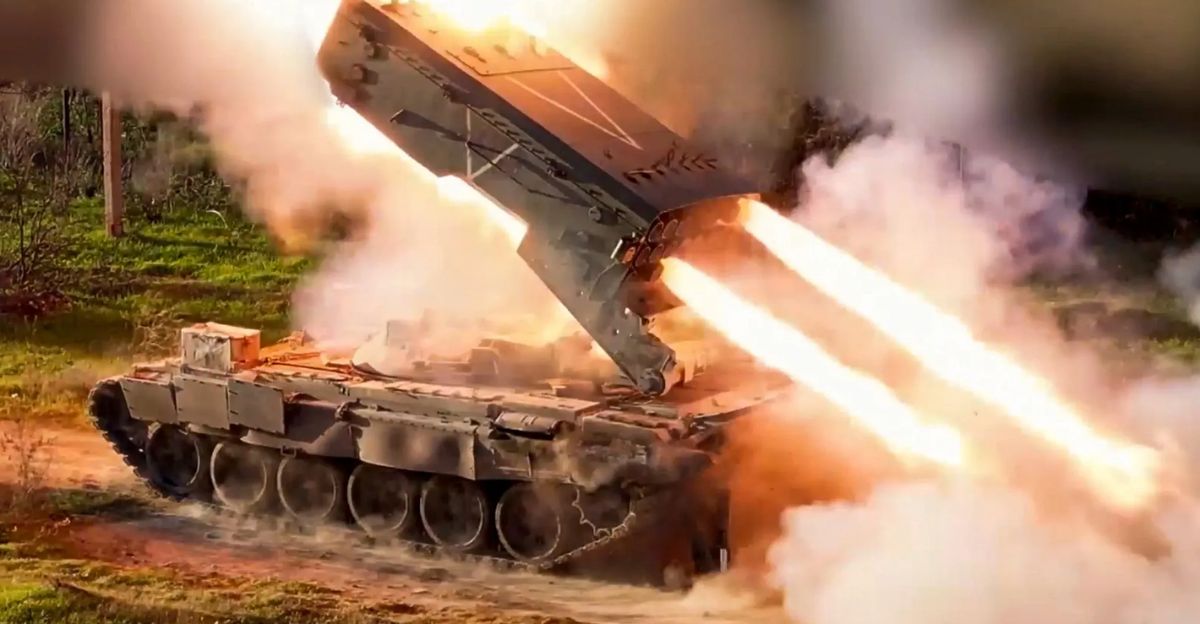
Russian commanders in eastern Ukraine face an uncomfortable reality: their most devastating systems are also their most vulnerable. The TOS-1A Solntsepyok Russia’s heavy thermobaric flamethrower fires 24 unguided 220mm rockets that obliterate fortifications across a 1–3 kilometer saturation zone. Only a handful of these platforms exist per Russian army corps.
They’re too valuable to abandon, too conspicuous to hide, and increasingly, too exposed to small, persistent drones. Since 2023, Ukrainian operators have recorded at least a dozen confirmed strikes against TOS-1A systems, forcing Russia into a costly defensive posture. Every loss represents months of factory production and millions in replacement costs. The question is no longer whether Ukraine can strike these weapons it’s how many Russia can afford to lose.
The Thermobaric Threat
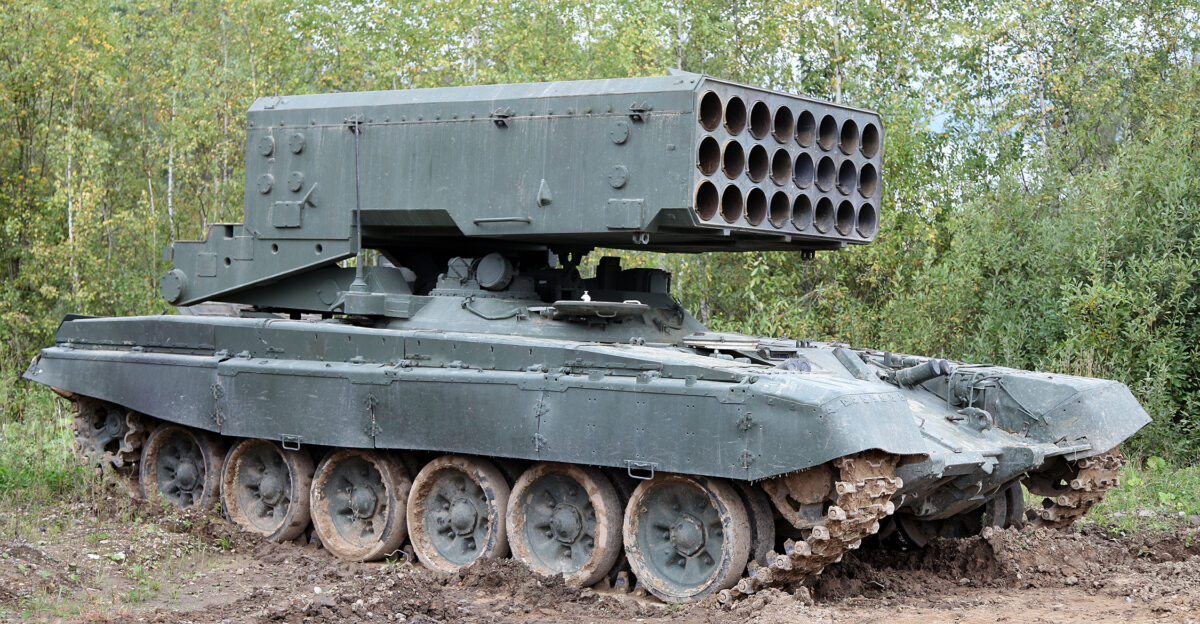
To understand why this strike matters, understand the weapon. The TOS-1A Solntsepyok is mounted on a T-72 tank chassis and designed by Russia’s military-industrial base to break defensive lines through overwhelming overpressure and thermal effects. Thermobaric munitions also called “vacuum bombs” ignite a fuel cloud above ground, creating a shockwave and oxygen-depleting fireballs that collapse fortified bunkers and trenches.
Ukrainian soldiers have called it one of Russia’s most psychologically devastating weapons; its deployment signals an imminent assault or saturation strike. Since February 2022, thermobaric systems have been central to Russian assault tactics across the Donbas. Ukraine’s air defense often struggles to engage them at standoff range, making close-range drone strikes a rare counter-option. Understanding this context is essential to grasping why a single successful drone strike generates disproportionate strategic impact.
Lyman’s Grinding Frontline
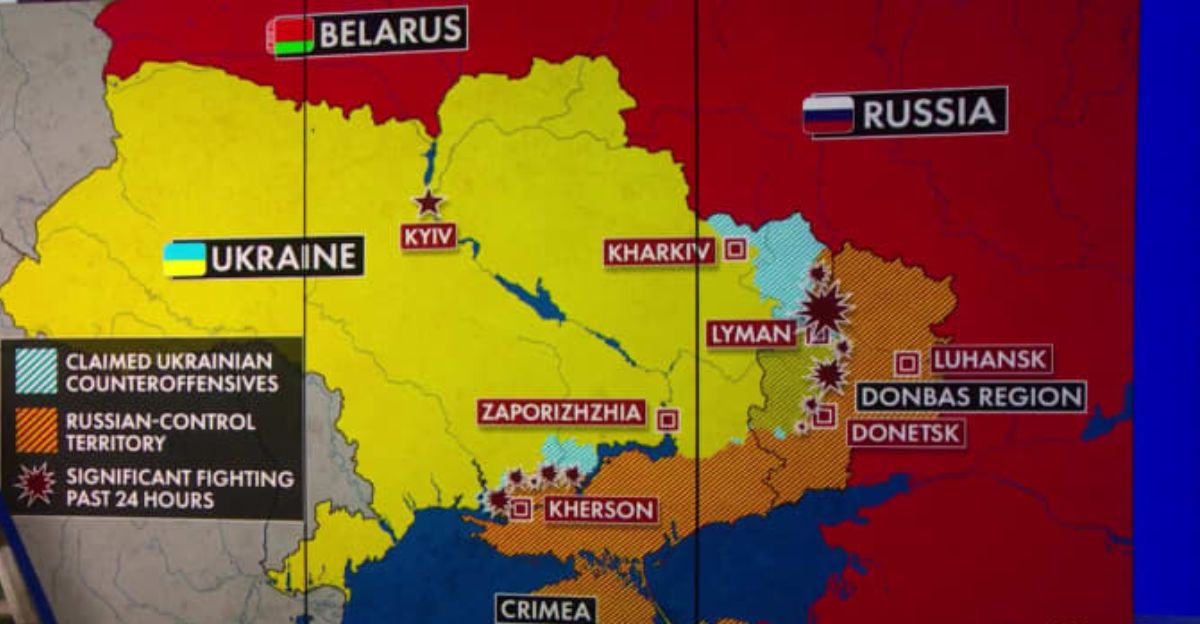
The Lyman front in Donetsk Oblast has become one of the war’s most contested zones. Russian forces, seeking to consolidate gains and pressure Ukrainian defenses toward Pokrovsk, deploy heavy flamethrower systems to neutralize fortified positions and create psychological pressure. Ukrainian forces, dug in but under constant assault, have reciprocated with increasingly sophisticated drone tactics. By November 2025, the Lyman sector was a proving ground for asymmetric warfare Ukrainian drone teams testing homemade and repurposed FPV aircraft against Russian armor and indirect-fire systems.
Casualty rates on both sides remained high; momentum shifted with successful strikes. Into this grinding contest, on November 25–26, a Ukrainian drone team from the Third Army Corps identified an opportunity. A Russian thermobaric launcher sat exposed, munitions loaded, crew in position. The conditions were set for a strike that would reshape local perceptions of the balance of power.
The Strike
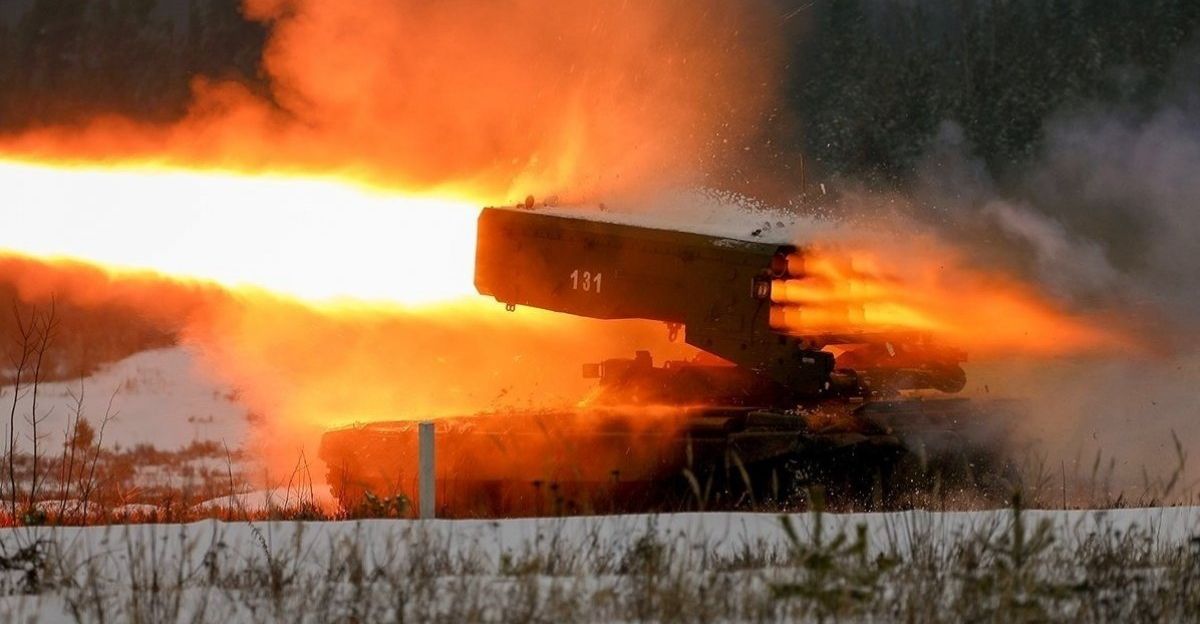
On November 25–26, 2025, Ukrainian operators from the Third Army Corps, embedded with the 63rd Separate Mechanised Brigade (“Stalevi Levy”), launched an FPV drone attack against a Russian TOS-1A Solntsepyok system near Lyman. The drone, costing a few hundred dollars to assemble from commercial components, threaded air defenses and struck the launcher’s ammunition payload. The impact detonated the system’s loaded 220mm thermobaric rockets in catastrophic secondary explosions captured in video footage released by the Ukrainian unit.
The Solntsepyok was destroyed, rendered permanently inoperative. Military analysts estimate the destroyed system’s value at $6.5 million to $15 million, depending on platform age, ammunition load, and replacement costs in Russia’s wartime economy. Ukraine’s 63rd Brigade posted: “Maximum damage worth millions of dollars and a detonating rocket payload thanks to an FPV drone costing a few hundred dollars and the priceless work of UAV pilots.” The strike was neither unique nor unprecedented, but its documentation and scale made it emblematic.
Lyman’s Strategic Reversal
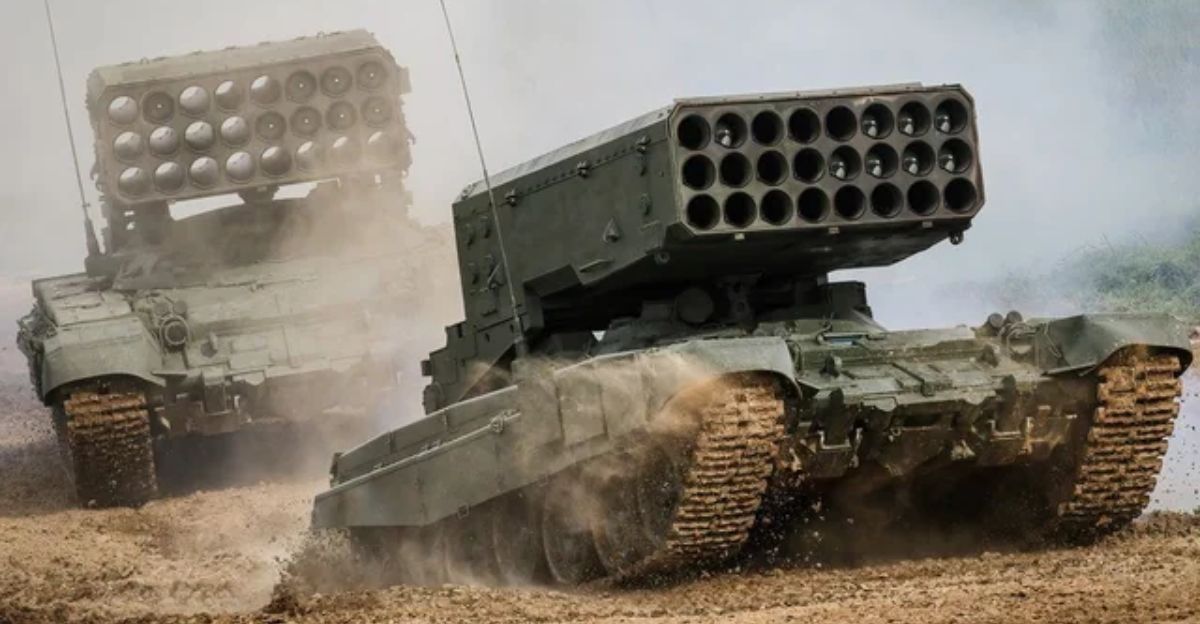
The destruction of a single TOS-1A might seem marginal in a conflict where hundreds of armor units are engaged daily. But in the Lyman sector, thermobaric systems represent force multipliers for Russian assault tactics. Ukrainian defenders credit their survival partly to the unpredictability of these systems they arrive without warning, strike broad areas, and disrupt defensive planning. The loss of this particular launcher removed a key threat from a 10-15 kilometer arc of the front.
Ukrainian units in the sector reported reduced pressure for approximately 72 hours a tactical window to reinforce positions, evacuate wounded, and reposition reserves. For the Third Army Corps, the strike demonstrated that drone teams could now credibly threaten Russia’s most valuable indirect-fire assets. For Russia, it signaled that even heavily guarded systems were no longer sanctuary weapons. The psychological and operational effects rippled across the Lyman front, shifting risk calculations for Russian commanders and Ukrainian defenders alike.
The Drone Teams’ Perspective
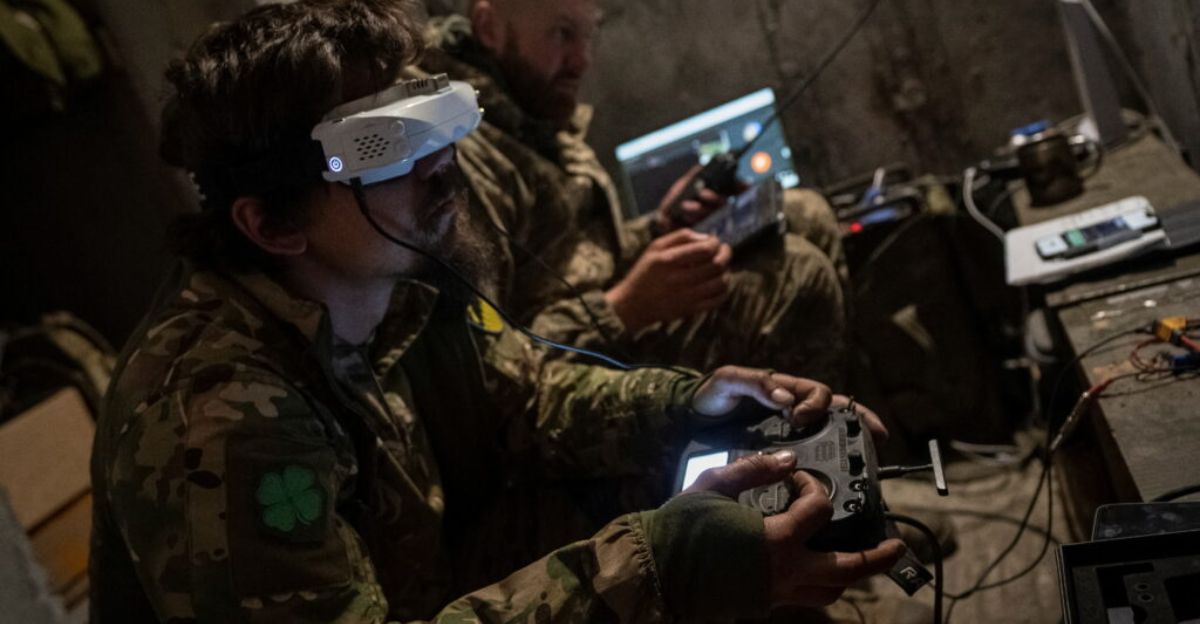
Behind every successful strike is a human story. The Ukrainian FPV drone operators who conducted the November 2025 strike represent a new class of combatant volunteers and conscripts trained in rapid drone assembly, piloting, and mission planning over months, not years. These teams operate from forward positions, often within 5–10 kilometers of Russian lines. They communicate via encrypted channels, coordinate targeting with ground units, and fly sorties multiple times daily under constant counter-drone threats. One Ukrainian operator, speaking to international media, described the November 2025 strike: “We saw the launcher from a distance.
It was moving, but we tracked it. When it stopped to load, we had maybe ten minutes. One pilot flew the drone; three others spotted, communicated, and relayed targeting data. When we saw the secondary explosion, we knew we had succeeded.” These teams operate with minimal equipment, rare real-time intelligence support, and the knowledge that their next mission could be their last. Yet morale remains high each confirmed strike against Russian heavy weapons validates the drone program’s strategic importance.
Ukraine’s Drone Industrial Base
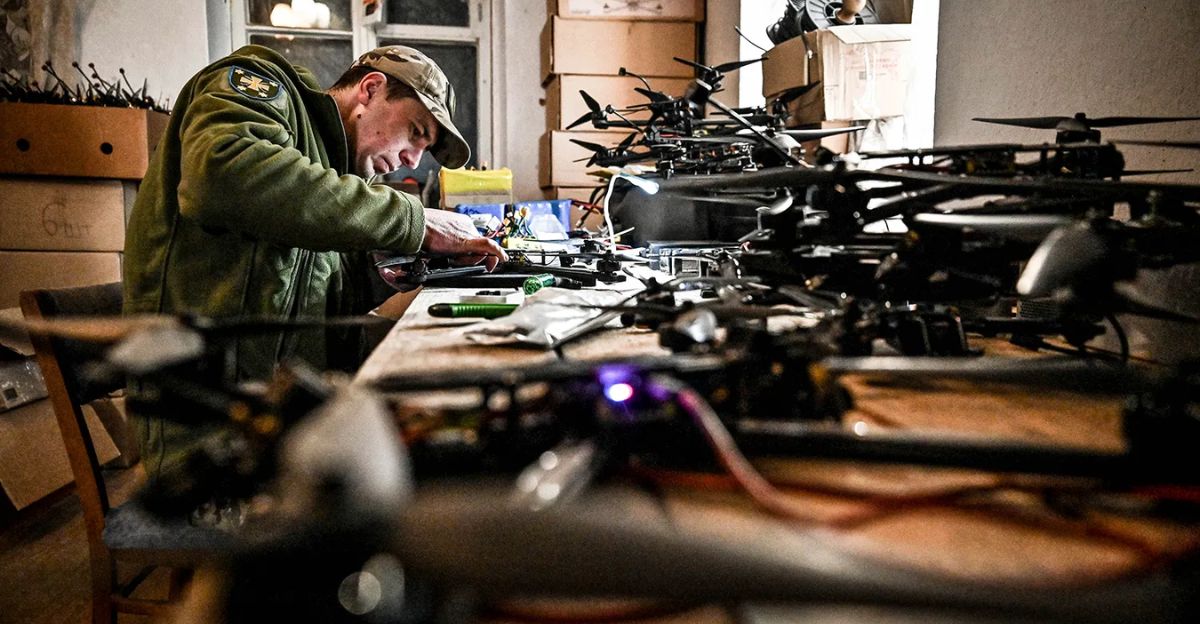
The November 2025 strike was not an anomaly it was the product of Ukraine’s rapidly scaling drone manufacturing ecosystem. Before 2022, Ukraine had no significant military drone industry. By mid-2025, Ukrainian workshops, volunteer collectives, and government agencies were producing an estimated 200,000 drones annually, with FPV models costing $300–$500 each. Commercial components racing-drone frames, GoPro cameras, Li-Po batteries, and off-the-shelf flight controllers were repurposed into weapons systems.
Factories operated around the clock; innovation cycles compressed from months to weeks. Ukrainian engineers experimented with payload delivery, anti-radiation seekers, and swarm tactics. International donors supplied some advanced components, but Ukraine’s supply chain remained largely domestic and resilient. By contrast, Russia faced sanctions-driven shortages in precision electronics and struggled to adapt Soviet-era manufacturing to modern drone warfare. Ukraine’s drone advantage was not technological sophistication it was adaptive production capacity, willingness to iterate rapidly, and access to Western components. This industrial edge underpinned every strike like the November 2025 operation.
Russia’s Anti-Drone Scramble
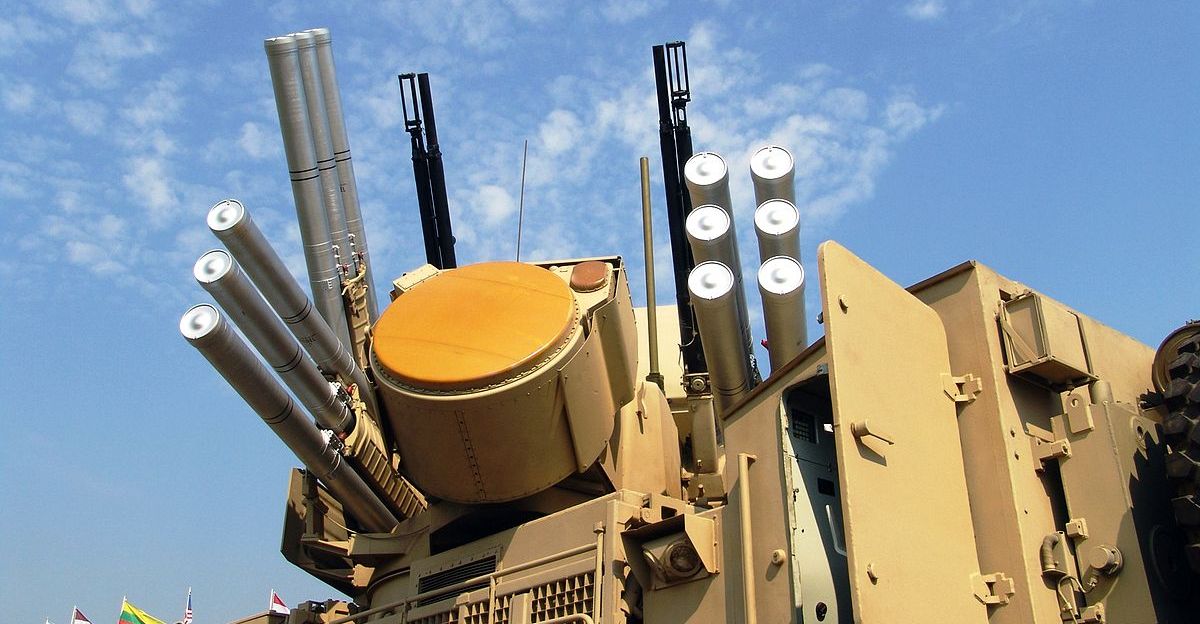
Russia did not remain passive. By late 2025, Russian forces had deployed layered counter-drone defenses around high-value systems like the TOS-1A. These included short-range air defense guns (Shilka, Tunguska), electromagnetic jamming systems, and swarms of Russian reconnaissance drones designed to detect and intercept Ukrainian FPV platforms. A Russian military source acknowledged in November 2025 that “drone losses have become a strategic concern.” Russia requested additional air-defense resources from central command and experimented with mobile shelters and dispersed positioning to reduce system vulnerability.
Russian industry accelerated production of its own FPV drones, though supply chains remained constrained. The cat-and-mouse escalation was evident: Ukraine innovated new attack vectors; Russia deployed countermeasures; Ukraine adapted tactics. By November 2025, the cost of protecting a single TOS-1A system had risen substantially requiring dedicated air-defense coverage, increased crew training, and restricted operational patterns. Some Russian commanders questioned whether the TOS-1A’s firepower justified its vulnerability in an environment saturated with cheap enemy drones.
The Supply-Chain Collapse Signal
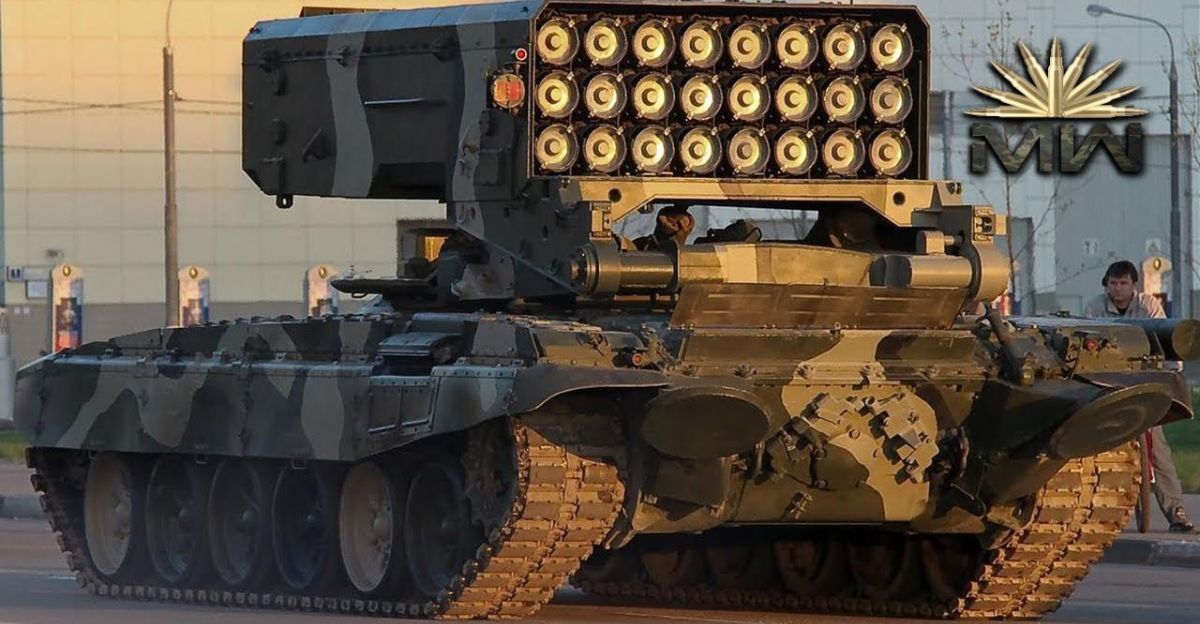
The November 2025 strike carried a secondary implication: Russia could not replace this system quickly. The TOS-1A Solntsepyok is manufactured by a handful of Russian defense factories, each producing only 20–30 units annually under wartime conditions. Component shortages microchips, hydraulic systems, precision bearings due to Western sanctions were slowing production. When Russia loses a TOS-1A to enemy action, the replacement timeline stretches to 18–24 months. Ukraine, aware of this constraint, had shifted drone targeting priorities toward irreplaceable systems: heavy flamethrowers, air-defense radars, and electronic warfare vehicles.
The strategy was asymmetric not just in cost but in replacement capacity. Russia was burning through equipment faster than its defense industry could replenish. Ukrainian commanders understood that every Solntsepyok destroyed was a permanent reduction in Russian firepower not a temporary setback but a durable strategic loss. This realization transformed drone strikes from tactical nuisances into a systematic method of degrading Russian military capacity. The November 2025 strike was one data point in a larger pattern of supply-chain attrition.
Russian Commanders’ Frustration
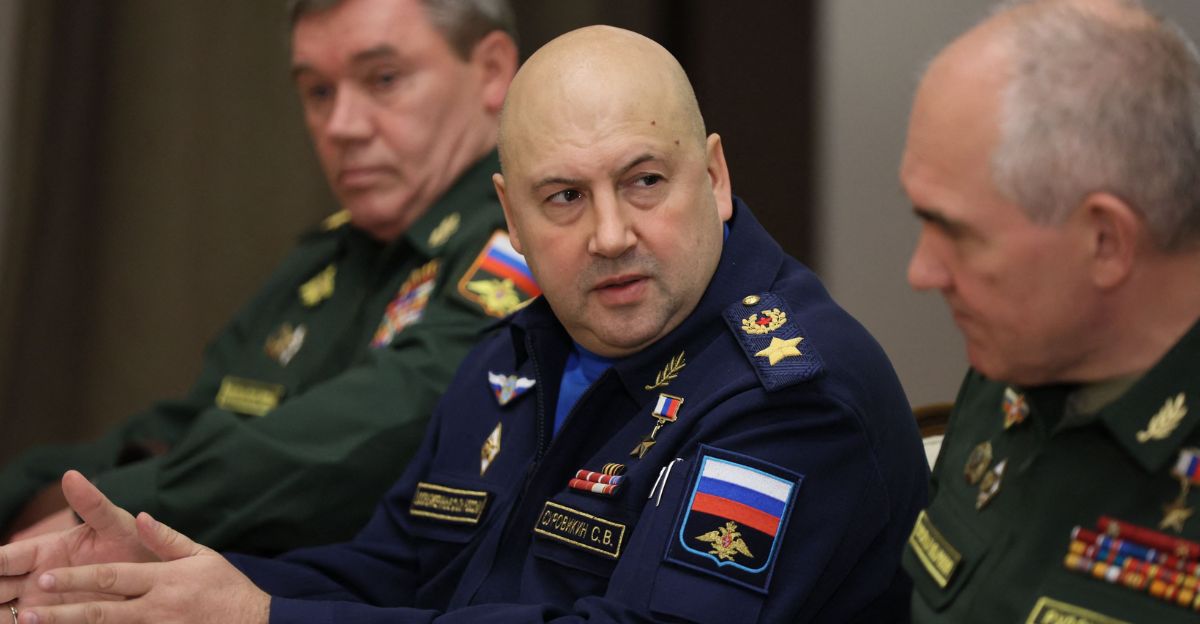
Internally, Russian military communications (intercepted and analyzed by Ukrainian intelligence) revealed frustration over the TOS-1A losses and the broader drone problem. One intercepted message from a Russian brigade commander stated: “We are losing irreplaceable systems to cheap drones. How long can this continue?” Another commander complained that defensive measures air-defense coverage, dispersal, reduced operational tempo were degrading the TOS-1A’s effectiveness. If a launcher sits hidden 20 kilometers from the front to avoid drone strikes, it cannot provide fire support to assault units. Russian logistics officers reported shortages of replacement ammunition and system components.
The human cost was also mounting: experienced crews were becoming scarce, and training pipelines were strained. By November 2025, Russian senior command was aware that the drone-versus-heavy-weapons calculus had shifted decisively against them. The solution accelerating domestic drone production and deploying more air defenses required resources already stretched across multiple fronts. Russian military planners faced a dilemma with no easy resolution.
Ukrainian Strategic Recalibration
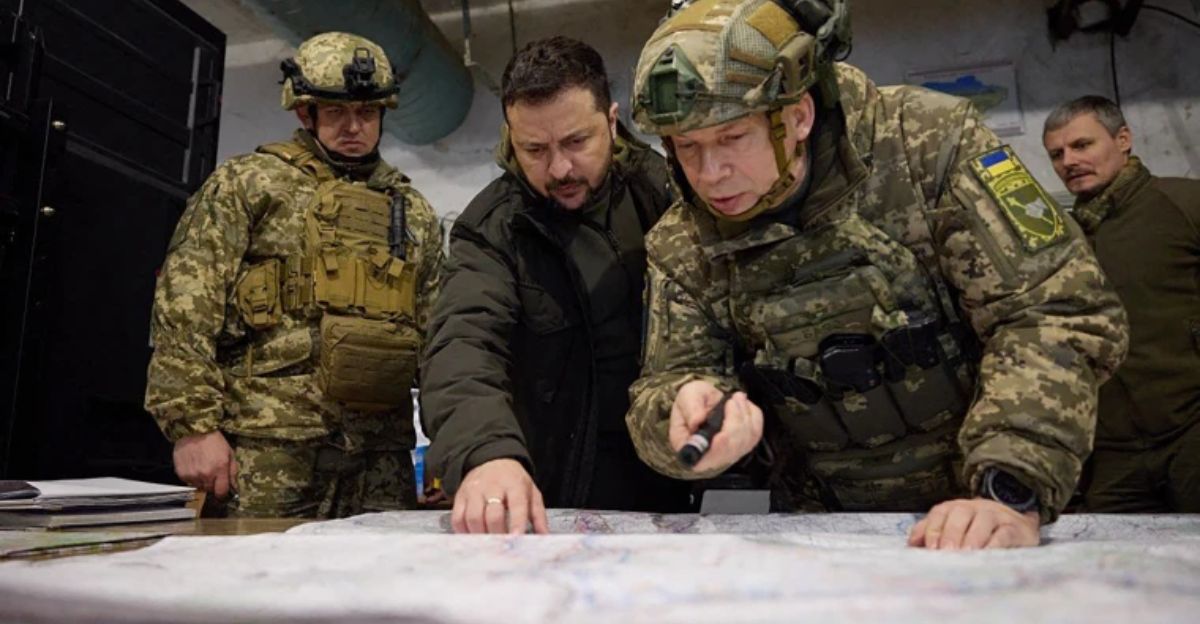
Ukraine’s military leadership recognized the opening. If cheap drones could systematically degrade Russia’s irreplaceable heavy weapons, then the long-term strategic calculus shifted. Instead of attempting to match Russia’s tank and artillery production (impossible given industrial constraints), Ukraine could focus on drone production, which required fewer factories, less precision manufacturing, and rapid iteration. By November 2025, Ukrainian defense ministry planning documents (declassified partially) showed a strategic pivot: shift 30–40% of military production toward FPV and reconnaissance drones, reduce emphasis on traditional artillery, and accelerate anti-armor drone development.
This meant fewer tanks and artillery pieces for Ukraine but exponentially more drone sorties. The gamble was that a war of attrition favored the side that could sustain cheaper losses and Ukraine’s Western allies, particularly the United States and Poland, were supplying components, funding, and logistics support to amplify this advantage. The November 2025 strike reflected this new strategy in action: a small team, minimal resources, maximum effect against a rare, irreplaceable system.
Western Support’s Hidden Role
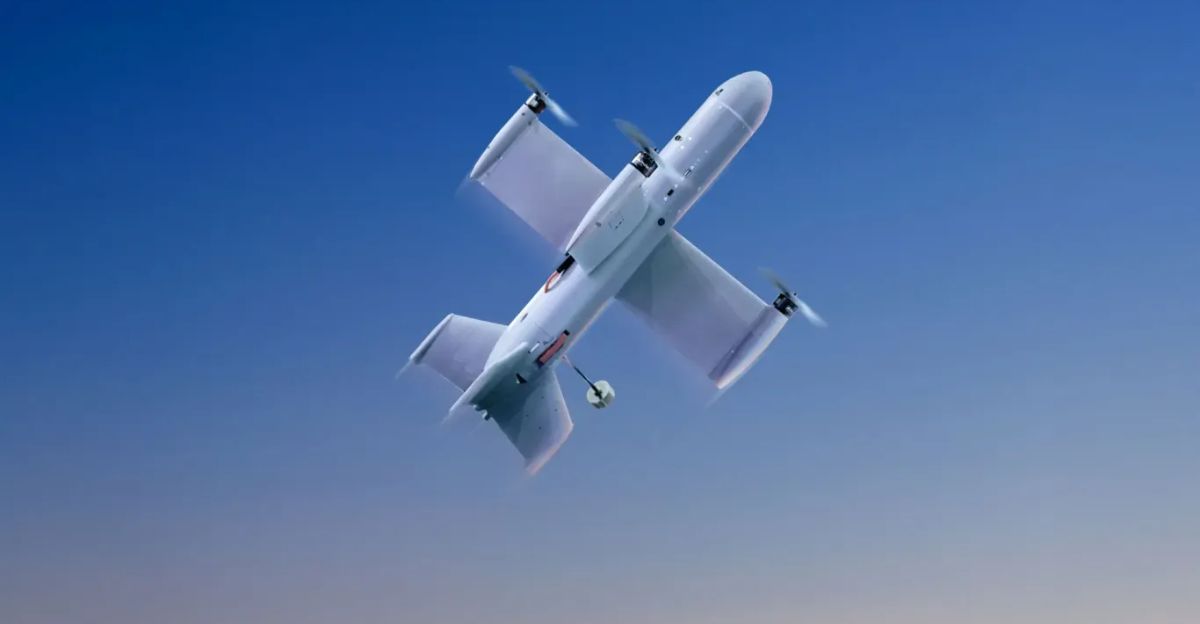
Few observers noted that the FPV drone used in the November 2025 strike contained components supplied, directly or indirectly, by Western nations. The drone’s camera module was built in Japan; its flight controller used processors from Taiwan; its battery cells came from South Korea; its frame materials were sourced from European suppliers. The assembly occurred in Ukraine, but the global supply chain was visible in every component. Western nations had quietly encouraged Ukrainian drone innovation by relaxing export restrictions on dual-use electronics, providing direct financial support to drone manufacturers, and allowing technology transfer from NATO contractors.
The U.S. had approved over $2 billion in funding for Ukrainian drone programs by late 2025. This represented a tacit strategic acknowledgment: if Ukraine could win a war of attrition against Russian heavy weapons using cheap, mass-produced drones, Western military support would achieve maximum return on investment. The November 2025 strike, then, was not purely a Ukrainian achievement it reflected a coordinated Western-Ukrainian strategy to weaponize commercial supply chains against Russian military assets. This dimension remained largely unreported in mainstream coverage.
The Prediction Problem
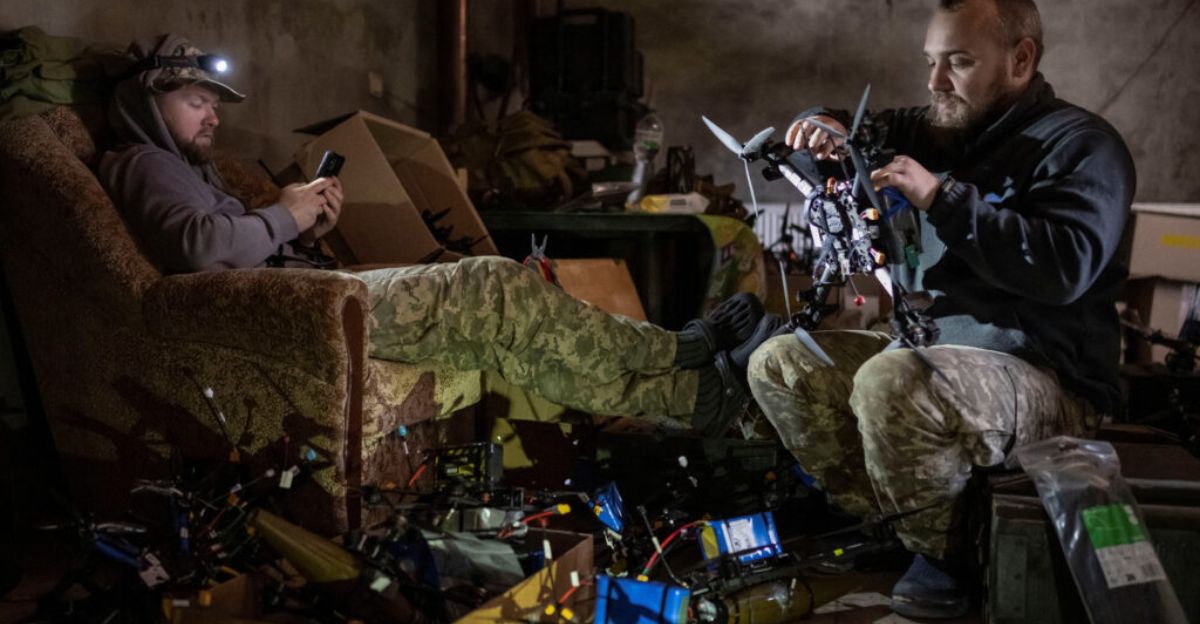
Defense analysts and military strategists faced a puzzle: if Ukraine could sustain drone production at 200,000+ units annually, and if the kill cost remained favorable ($300–$500 drone destroying $6.5M–$15M system), how long could Russia continue heavy weapons deployments? The math was stark. Russia had, at most, 60–80 TOS-1A systems in active service across all theaters. At a loss rate of one per month (November 2025 pace), Russian thermobaric capacity would be exhausted in 5–7 years unless production accelerated dramatically or operational losses slowed.
But Western analysts expected neither. Russian factories, under sanctions and constrained by chip shortages, were unlikely to produce more than 30–40 systems annually. Losses would exceed production indefinitely. Other Russian heavy weapon systems faced similar pressure: self-propelled guns, air-defense radars, electronic warfare vehicles. Ukrainian drone strategy targeted all of these, creating a cascading degradation across the Russian arsenal. Some experts predicted that by 2027–2028, Russia would face a critical shortage of irreplaceable heavy weapons. Others remained skeptical, noting that Russia might simply abandon exposed platforms in favor of dispersed, concealed tactics. The November 2025 strike was a single data point in a long-term calculus of attrition.
The Closed Loop Question
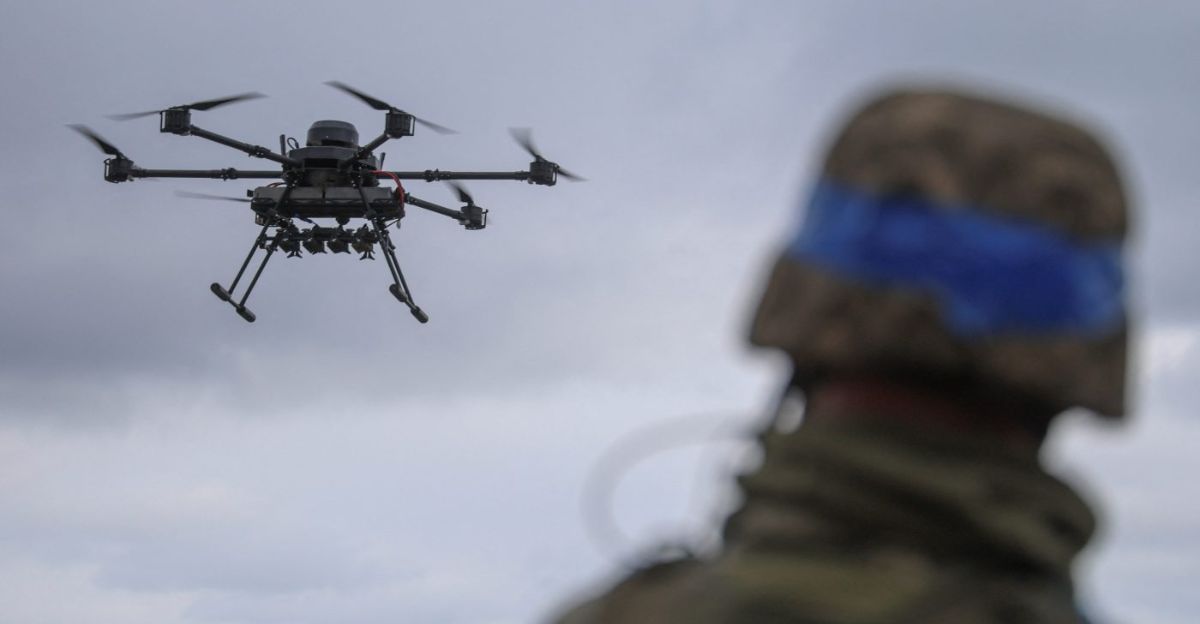
The November 2025 strike raises a question that will define the next phase of the Ukraine war: Can a nation win a war of attrition using predominantly defensive drone tactics against a numerically superior adversary? Ukraine’s answer, reflected in its November 2025 strategic pivot, was yes but only if Western support remains constant, component supply chains hold, and Ukrainian innovation sustains. Russia’s counter-question was equally stark: Can we afford to deploy valuable heavy weapons systems into an environment saturated with cheap drones? By December 2025, neither side had a definitive answer.
Ukraine accelerated drone production; Russia deployed countermeasures and experimented with concealment tactics. The strike against the TOS-1A was neither victory nor defeat it was a data point in an emerging paradigm of warfare. Future strategists will examine this moment and ask: Did asymmetric drone tactics represent a genuine shift in military power, or a temporary advantage that conventional doctrine will eventually neutralize? The answer will reshape military planning for the next decade.
Sources:
Newsweek – Ukraine Video Shows Destruction of Russia’s $15M Thermobaric Flamethrower
United24Media – Ukrainian FPV Team Vaporizes Russia’s TOS-1A Thermobaric Solntsepyok on Lyman Front
Critical Threats – Russian Offensive Campaign Assessment, November 29, 2025
Jamestown Foundation – Ukraine Leads World in Drone Innovation and Production
Army Recognition – Russia Dispatches New TOS-1A Solntsepek Flamethrowers with Upgraded Anti-Drone Protections
Ukrainska Pravda – Ukrainian Drones Destroy Russian Solntsepyok Flamethrower System