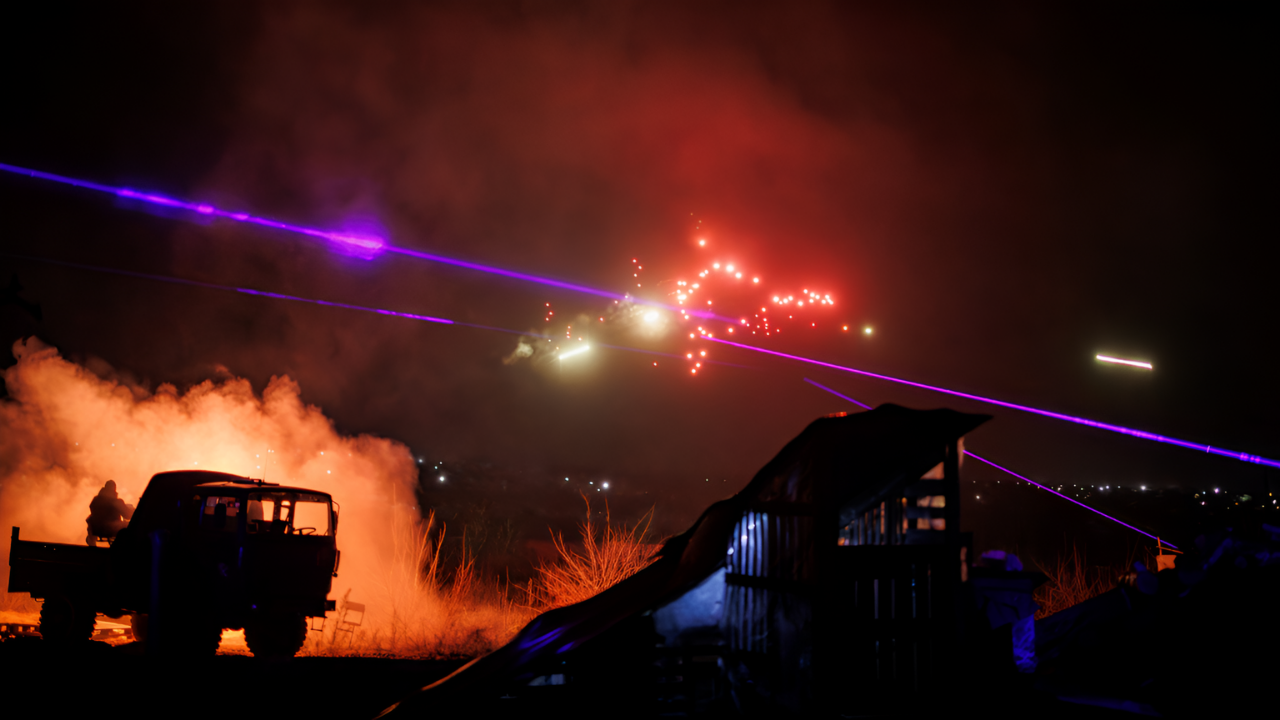
Ukraine’s Unmanned Systems Forces, led by Commander Vadym Sukharevskyi, have unveiled the Tryzub laser system, marking the country as the fifth globally with operational directed-energy air defense. Developed over several months during active hostilities, the prototype utilizes domestic talent and industrial resources to facilitate rapid innovation.
This system highlights Ukraine’s wartime ingenuity and cost-effective defense strategy, combining industrial expertise with commercial laser technologies. It also signals a shift in air-defense tactics, demonstrating the country’s growing technological edge. However, understanding its range and function is key to grasping its battlefield impact.
What Makes Tryzub Unique?
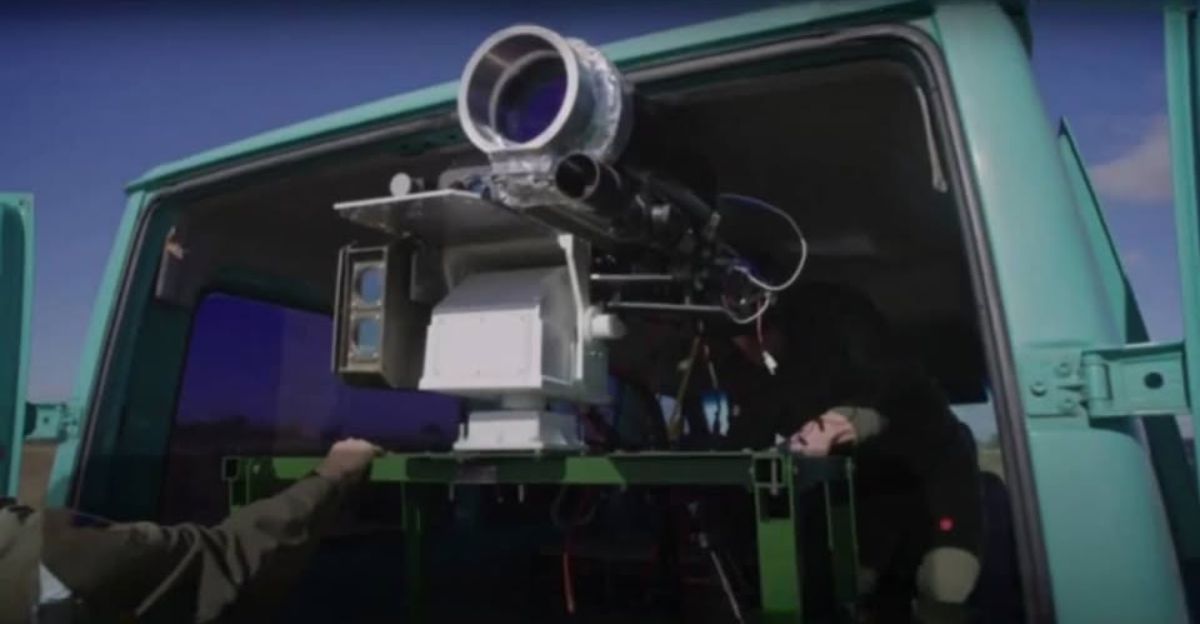
Tryzub combines commercial off-the-shelf welding lasers with precision targeting tools to intercept drones, bombs, cruise missiles, and ballistic threats. Its destruction range reaches 3,000 meters, while its blinding capability extends up to 10,000 meters, offering significant coverage against persistent aerial attacks.
Designed for urban centers and infrastructure protection, Tryzub addresses Ukraine’s high exposure to drones—roughly 1,000–2,000 per month. Its affordability and flexibility offer an asymmetric advantage, reshaping defensive priorities. However, the real breakthrough lies in its cost, which drastically undercuts that of traditional missile systems.
A Game-Changer in Cost Efficiency
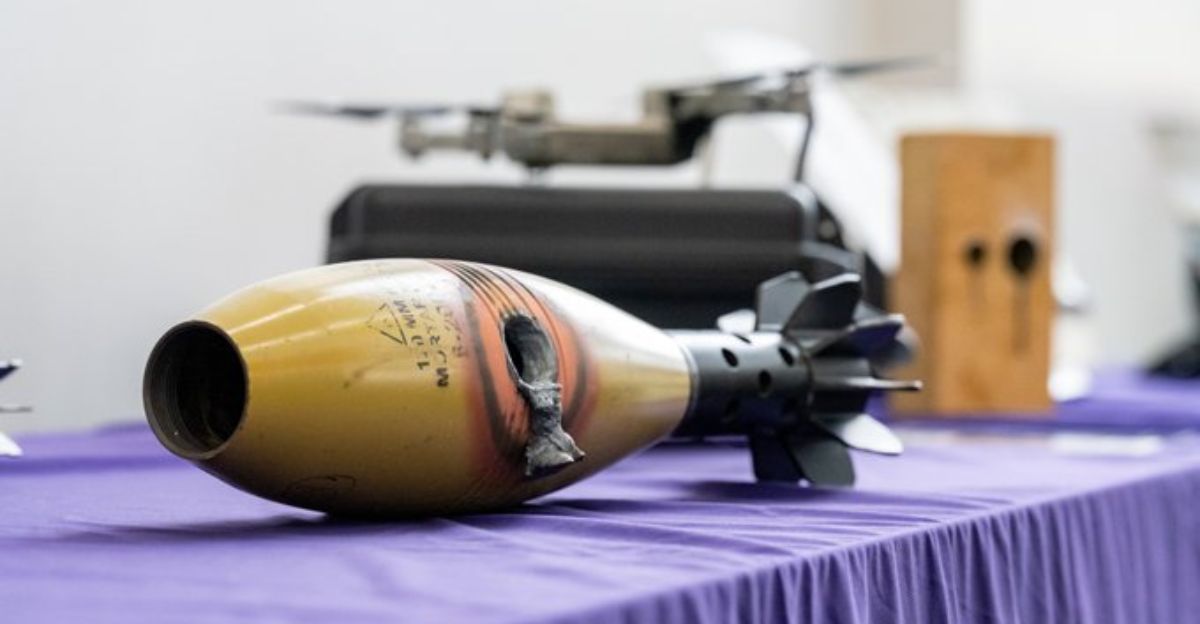
Each Tryzub shot costs approximately $13, compared to $100,000–$3 million per missile, resulting in a 90–95% reduction in engagement expenses. This significant cost advantage could enable Ukraine to sustain long-term defensive operations without depleting its budget.
Such economics challenge conventional missile-heavy approaches and demonstrate a new strategic model for combat air defense. Yet, the question remains—how did Ukraine manage to develop this in wartime conditions so quickly?
Rapid Wartime Development

The program began in 2024 and was announced to the public by December 18, 2024. Additional technical details were shared in April this year, highlighting the prototype’s operational status and ongoing refinement plans. Ukraine closed an 11-year gap with the US Navy’s LaWS system, demonstrating rapid wartime innovation.
Although mass production is pending, field deployment is underway, with a focus on high-threat regions. This accelerated timeline contrasts sharply with typical multi-year R&D cycles.
Domestic Innovation at the Core

Development relied heavily on Ukraine’s own industrial facilities and research teams. Commercial laser tech, mounts, and optoelectronic targeting stations were integrated locally, minimizing dependence on foreign contractors. Commander Sukharevskyi emphasized local talent as central to success.
The system complements existing defense sectors without disrupting jobs. Local manufacturers may gain from scale production if demand for mounts, optics, and control systems grows. Yet, effectiveness in real battlefield conditions remains closely guarded.
Protecting Against Shahed Drones
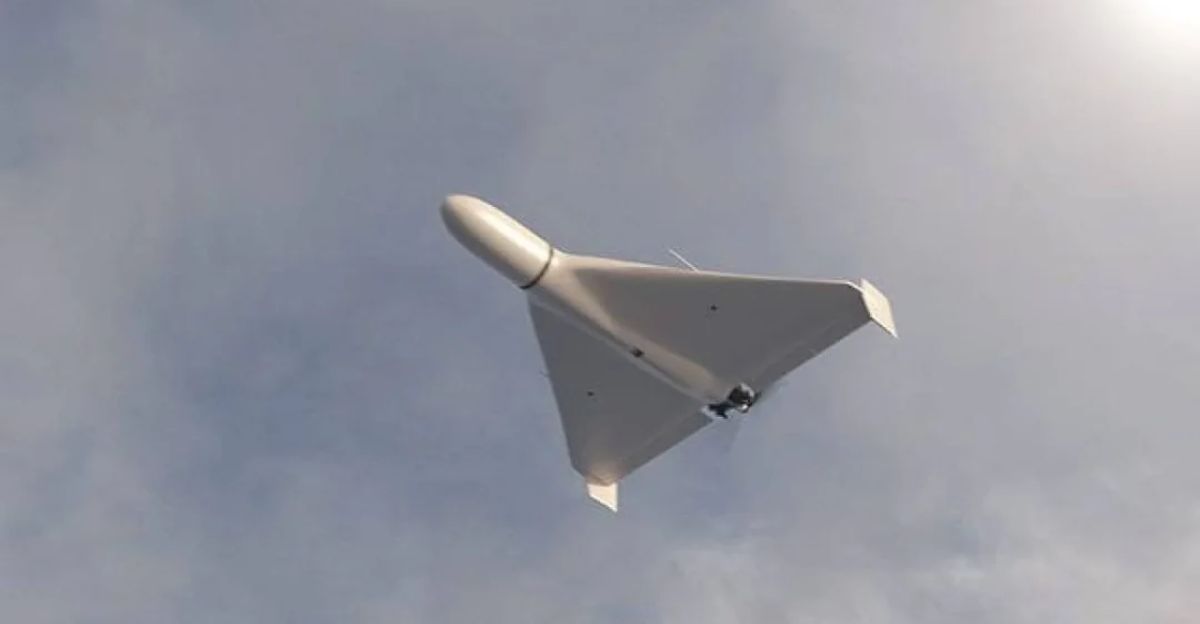
Tryzub’s primary mission targets Iranian-designed Shahed-136/Geran-2 drones, a persistent threat throughout 2024. With up to 2,000 drones attacking monthly, Ukrainian cities, infrastructure, and front-line assets face constant pressure.
The system’s 10km blinding range ensures strategic coverage, potentially reducing damage to critical sites. This defensive leap is crucial for sustaining morale and operational resilience. Still, challenges such as weather dependency may impact real-world outcomes.
A Low-Cost, High-Power Laser
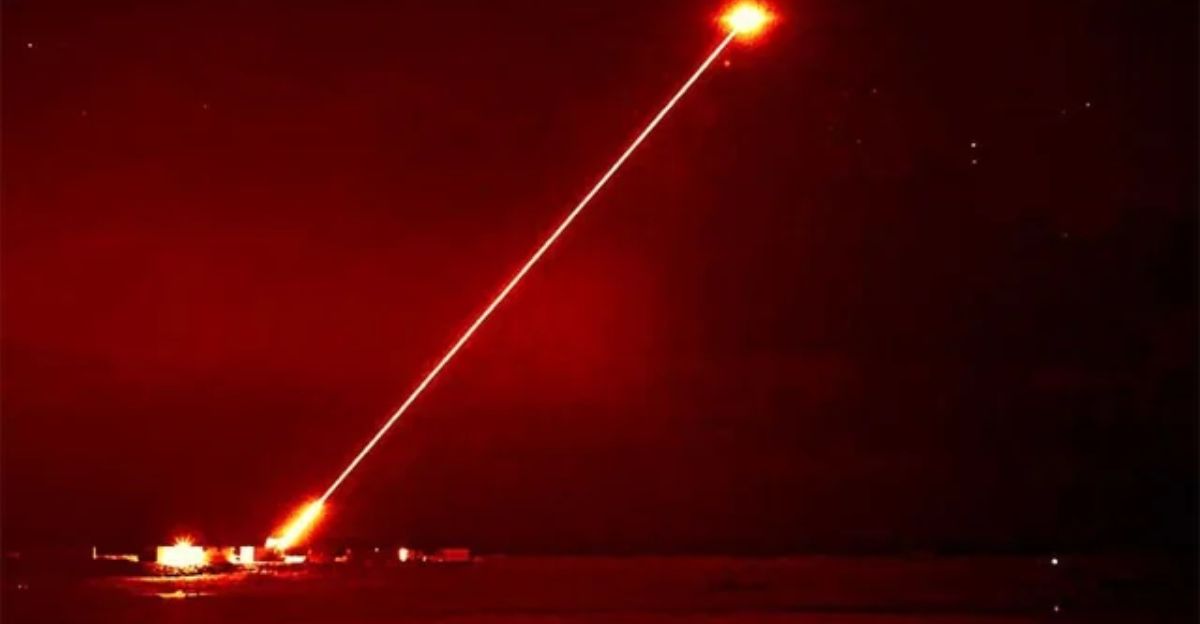
The prototype produces an estimated 50–100 kW, aligning with US and UK laser programs. By integrating low-cost laser components, Ukraine strikes a balance between performance and affordability, thereby maximizing combat utility.
This approach represents a new philosophy in air defense: operational efficiency over expensive munitions. While impressive, questions remain about the system’s automation and targeting capabilities under combat stress, highlighting areas for future upgrades.
Commander Confirms Operational Success

“Today, we can already shoot down aircraft with this laser at an altitude of over 2 kilometers. It truly works, it truly exists,” said Commander Vadym Sukharevskyi on December 18, 2024, affirming Tryzub’s functionality.
This declaration signals real operational capability, boosting confidence in domestic development. However, the extent of combat-proven results remains classified, leaving experts curious about its full effectiveness in sustained engagements.
Strategic Symbolism Behind Tryzub

Beyond practical defense, Tryzub represents national pride and morale. It asserts Ukraine’s technological parity with established military powers, demonstrating asymmetric capability against higher-cost munitions.
Such symbolism strengthens public confidence and sends a deterrent message to adversaries. Yet, while impressive on paper, the real-world impact will depend on operational integration across the Ukrainian defense network.
Bypassing Traditional R&D Hurdles
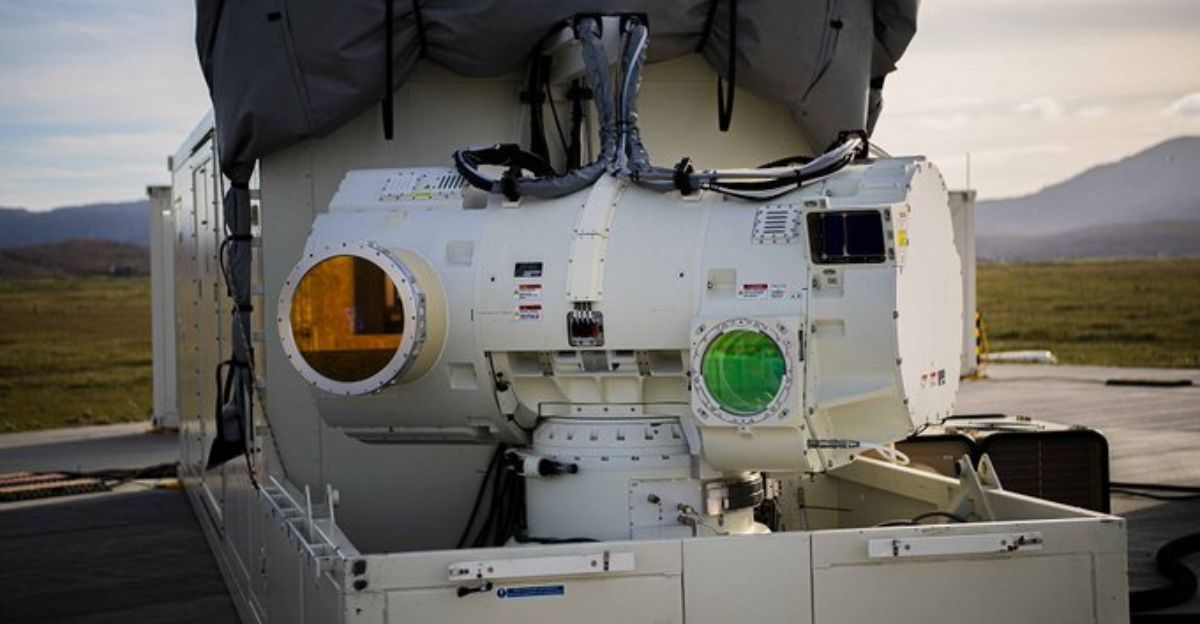
Unlike US or UK programs, Tryzub avoided multi-year procurement cycles. Its rapid prototype model leverages commercial hardware, custom mounts, and a joystick-operated control station for immediate deployment.
This streamlined method exemplifies wartime ingenuity, reducing development timelines from years to months. Still, questions about scaling automation and tracking systems for mass deployment remain a critical next step.
Operational Limitations
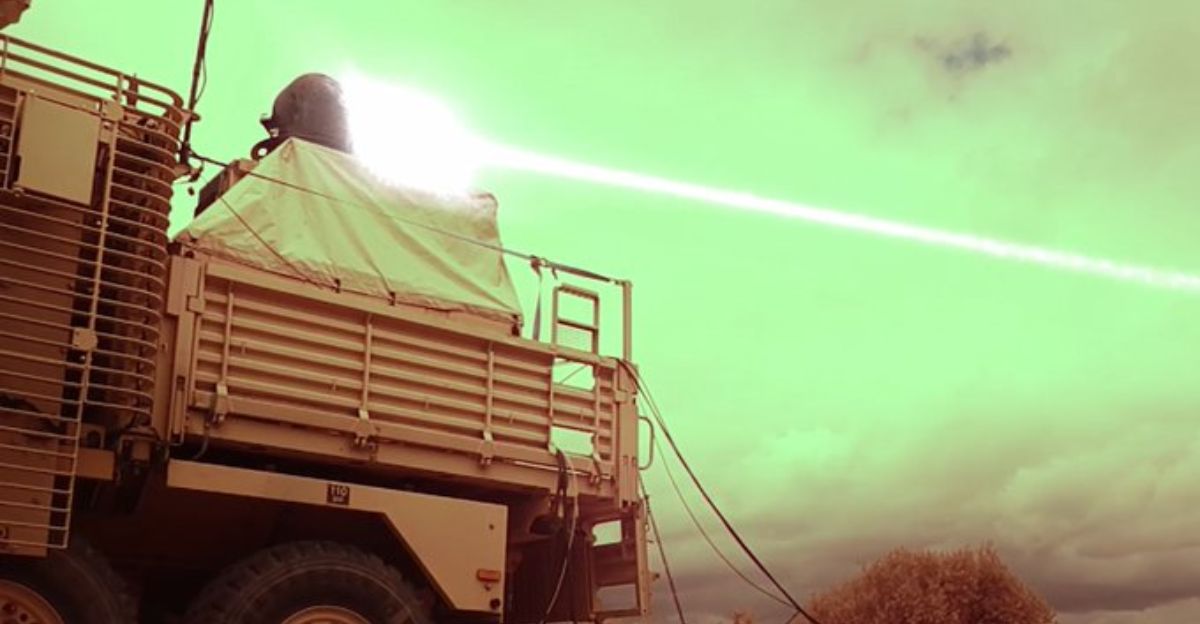
Tryzub requires clear weather and line-of-sight targeting. Manual operation currently restricts sustained engagement rates, and validated kill counts remain undisclosed.
Despite these limitations, the system complements traditional air-defense methods rather than replacing them, offering flexibility and cost efficiency. The upcoming focus will be on refining automation and confirming performance in full-scale combat scenarios.
Financial and Industrial Impacts

Defense budgets could see significant savings from $13 shots versus $100,000 missiles. Small and medium manufacturers may benefit from increased orders for components, mounts, and optics if production scales.
This creates potential economic growth without displacing existing defense jobs. Future funding and combat experience will determine how widely Ukraine can deploy and maintain these low-cost, high-impact laser defenses.
Closing the Technology Gap
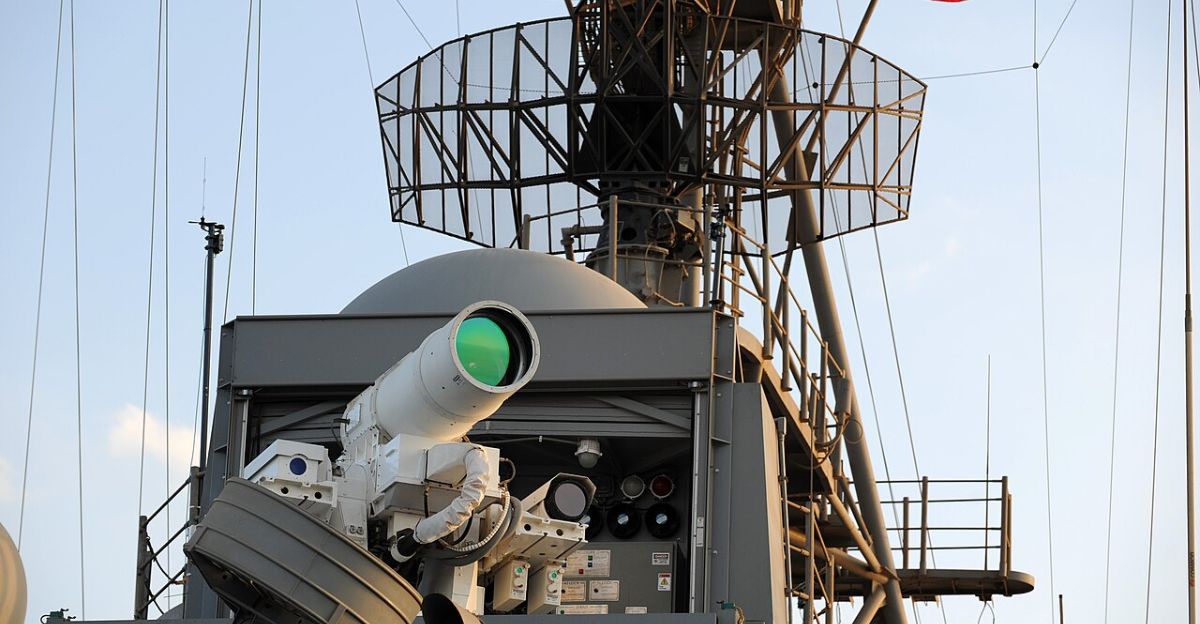
Tryzub represents Europe’s first combat-zone operational tactical laser system, bridging gaps with US LaWS and UK DragonFire programs. It highlights how urgent need drives technological leaps under wartime pressure.
The system positions Ukraine as a leader in rapid, cost-efficient air defense. Yet, global observers remain eager to see how these lasers perform in ongoing conflicts, shaping future defense strategies.
Looking Ahead

Future improvements include automation, tracking, and integration with other defensive systems. Operational expansion may encompass more urban centers and frontline positions, thereby increasing protective coverage.
As Ukraine refines Tryzub, other nations may adapt lessons learned in cost-effective, directed-energy defense. The coming months will reveal whether Tryzub’s potential translates into sustained battlefield advantage.
A Revolutionary Step in Warfare
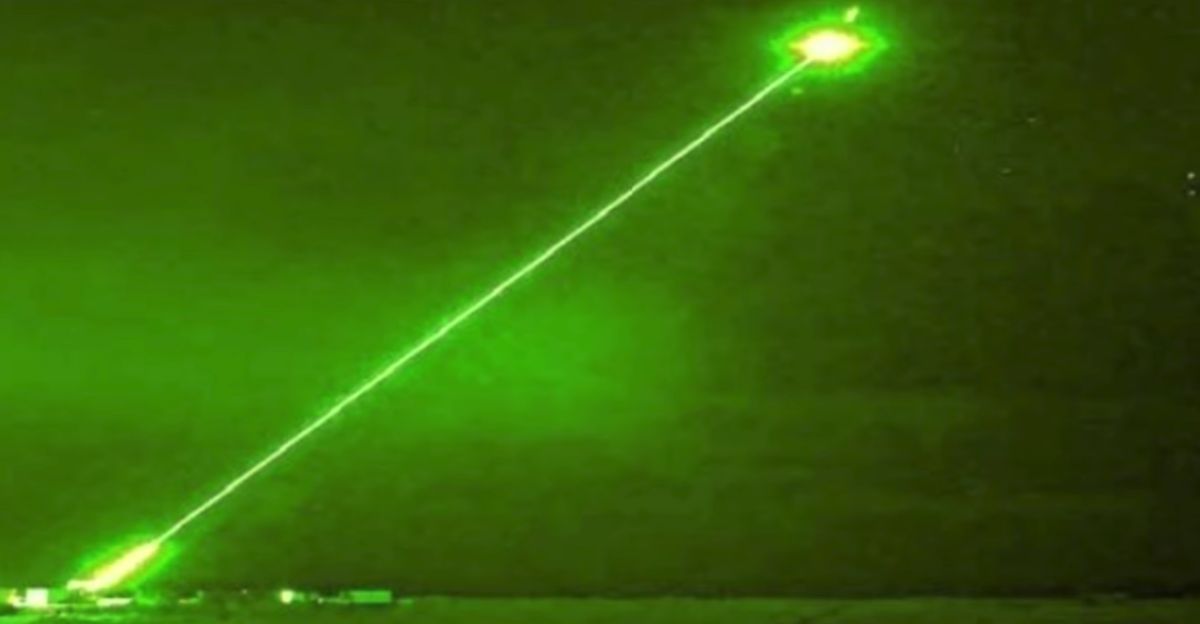
Ukraine’s operational laser marks a historic moment: practical, affordable, and domestically produced defense technology under fire. It signals a shift in air-defense priorities, balancing cost, speed, and innovation.
This milestone may redefine the economics and strategy of modern warfare, inspiring both allies and adversaries. The question remains: how will this influence global air defense development in the near future?
Sources
CNN, “Ukraine says it has a laser that can shoot down aircraft,” 17 December 2024
Defence Blog, “Ukrainian Tryzub Laser System Shown for the First Time,” 12 April 2025
United24 Media, “Ukraine Confirms Use of Secret Laser Weapon on Russian Targets,” 2 February 2025
CSIS Analysis, “Drone Saturation: Russia’s Shahed Campaign,” 12 May 2025
Euromaidan Press, “Frontline report: Ukraine’s sci-fi laser weapon Tryzub blinds Russian pilots and melts drones,” 18 April 2025