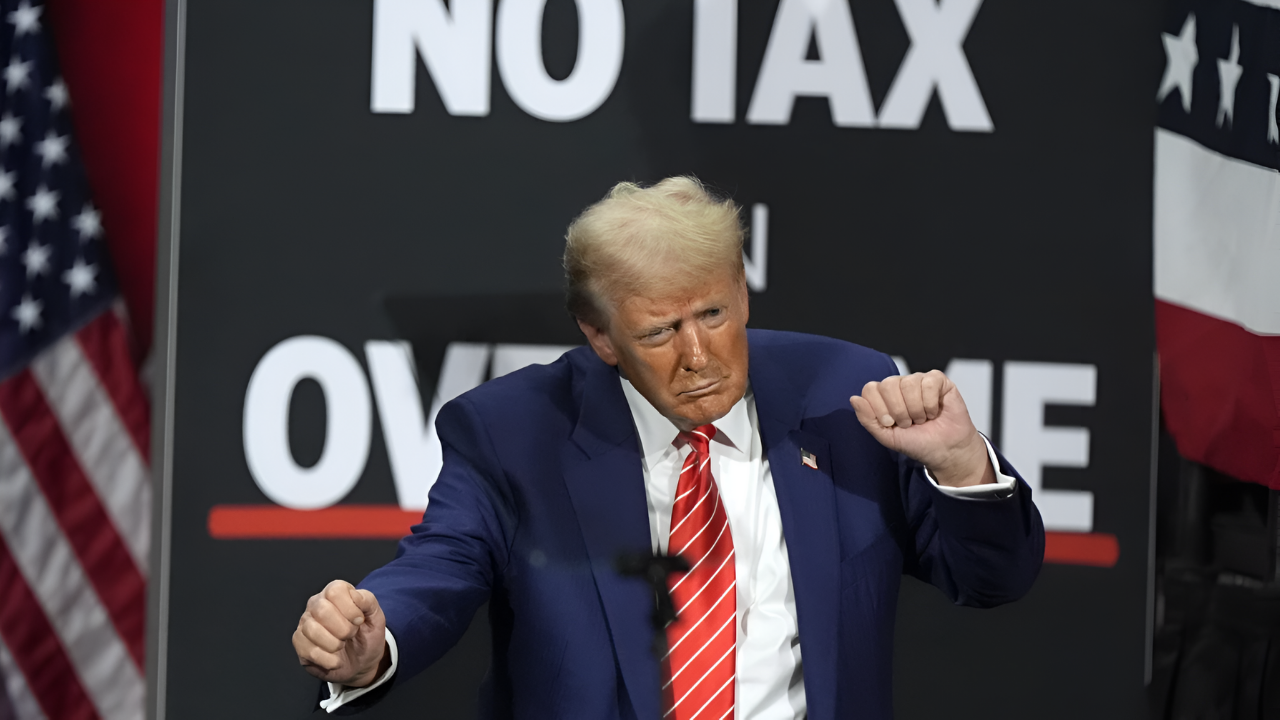
President Donald Trump announced on 28 November 2025 during a Thanksgiving address from Mar-a-Lago, Florida, that “over the next couple of years, I think we’ll substantially be cutting—and maybe cutting out completely—income tax. We could be almost completely cutting it because the money we’re taking in is going to be so large.”
This represents the most aggressive income tax elimination proposal by a sitting president in modern American history. The plan has drawn immediate attention from economists, lawmakers, and the public. Here’s what’s unfolding across the U.S. and in global trade as this proposal enters uncharted territory.
Who Would Be Affected Most?

Approximately 160 million American workers could feel the impact if income taxes were eliminated. Current federal revenue from individual income taxes averages $16,875 per worker annually, totaling $2.7 trillion. The scale of this plan is unprecedented in U.S. fiscal history.
Small businesses, especially retailers, could face steep challenges. Aaron Brown of Town Center Music said, “Our merchandise becomes more expensive, leading to fewer overall sales, all at a lower margin due to manufacturers raising prices to compensate.” The ripple effects would reach households and industries nationwide.
Experts Sound the Alarm

Erica York, Senior Economist at the Tax Foundation, called the proposal “mechanically impossible” and “mathematically impossible,” noting “the tax base is a lot smaller than the income base.” Similarly, Kimberly Clausing warned that increasing tariffs could shrink the tax base and trigger recession.
Marc Goldwein added, “We don’t have a full proposal,” highlighting the lack of detail. Michael Graetz contextualized the fiscal challenge: federal debt is at its highest level since World War II. Experts stress that even partial implementation is fraught with risk.
The Proposal’s Three Pillars
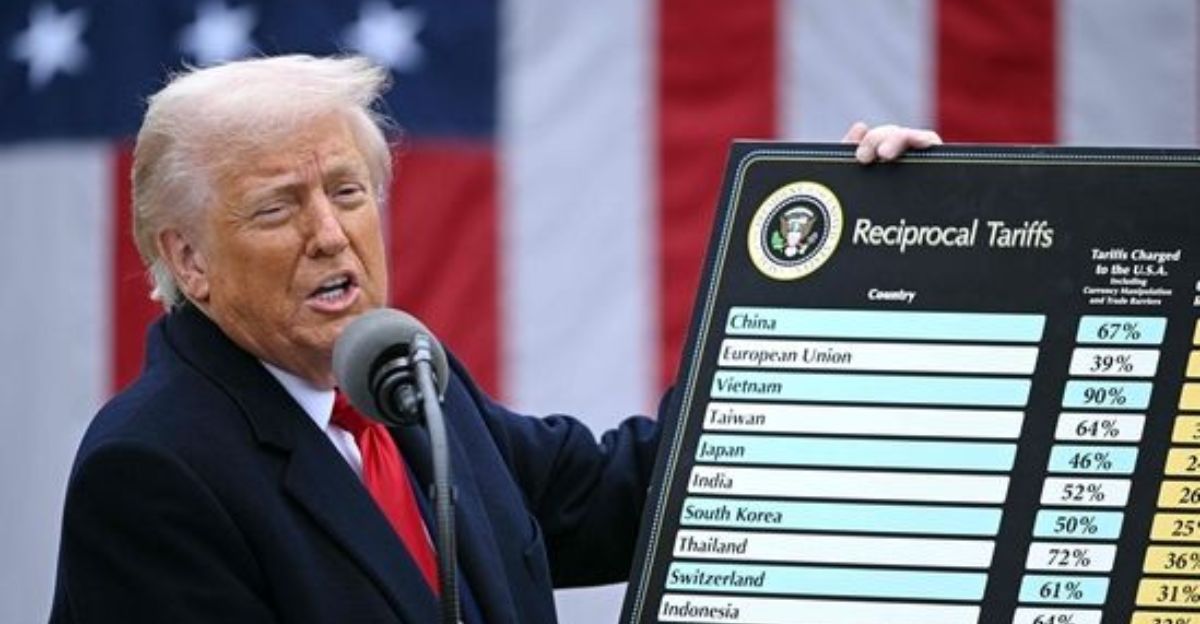
Trump’s revenue strategy relies on tariffs, foreign investment pledges, and income tax elimination. Fiscal Year 2025 tariffs generated $195 billion, up 250% from the previous year. The administration claims $21 trillion in investment pledges from Japan, South Korea, and the European Union.
Despite record tariffs, income tax still accounts for $2.7 trillion annually. Even combining tariffs with investments produces only $1.695 trillion, leaving a $1.005 trillion shortfall. Economists warn this math gap makes the plan highly unrealistic. But how do tariffs alone measure up?
Tariffs: A Revenue Mirage
October 2025 alone saw $31 billion in tariffs collected. Yet, to replace $2.7 trillion in income tax, tariff rates would need to rise to roughly 70% on all imports. Such rates would drastically reduce trade, shrink the tax base, and likely induce a recession.
The Peterson Institute found a 15-point tariff increase would generate $150 billion annually—just 5.6% of income tax revenue. Even optimistic scenarios fall far short, highlighting the structural limits of replacing income tax with tariffs. The next question: what about foreign investments?
Investment Pledges vs Reality

Trump’s administration cites $21 trillion in investment commitments. Bloomberg Economics verified only $7 trillion, translating to roughly $1.5 trillion annually when adjusted for timing and private sector allocations. Most funds do not enter federal coffers.
Even if fully realized, these investments could not replace income tax revenue. They remain valuable for job creation and manufacturing, but the math gap persists. Could partial tax cuts be a safer alternative?
The Fiscal Hole Widens
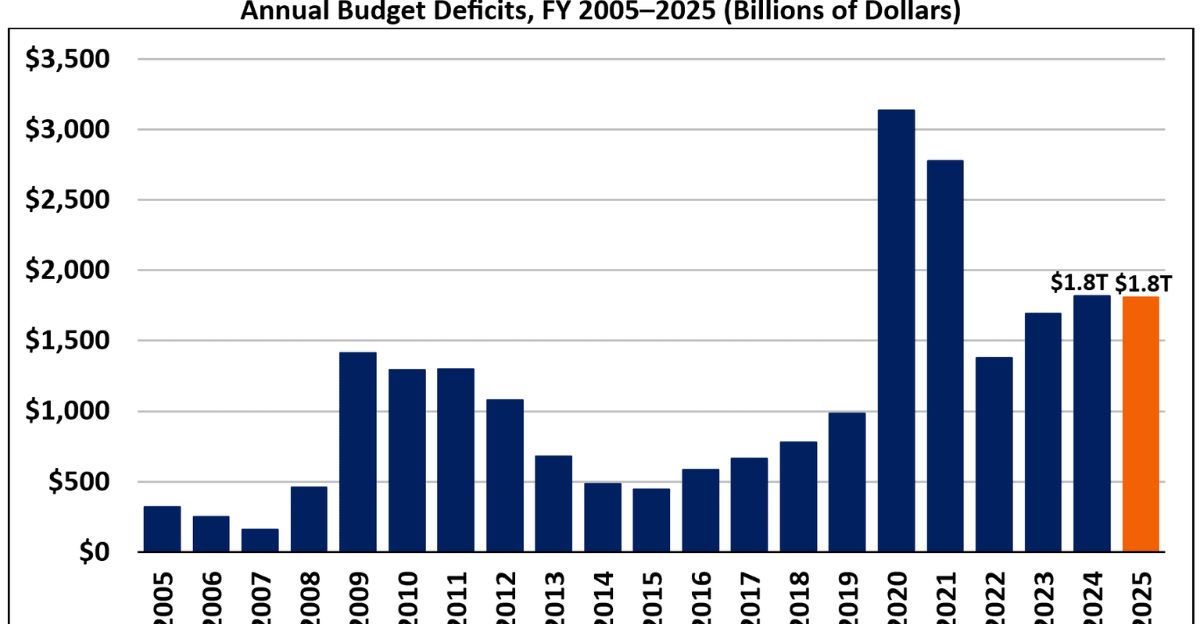
Fiscal Year 2025 posted a $1.8 trillion budget deficit, or 5.9% of GDP, despite income tax growth of $230 billion. October alone recorded a $284 billion deficit. Interest on the federal debt surpassed $1 trillion, the second-largest expenditure behind Social Security.
These deficits underscore that even historic tariff revenues cannot offset current spending, let alone replace $2.7 trillion in income tax. This context frames the extreme scale of Trump’s proposal and why economists label it impossible.
Legal Challenges Loom

Trump’s tariff authority stems from the 1977 IEEPA, which courts have already questioned. On 5 November 2025, the Supreme Court examined whether the president can impose sweeping tariffs normally controlled by Congress. Lower courts ruled Trump exceeded this authority.
If tariffs are invalidated, the revenue replacement plan collapses. The administration warned this would be “devastating.” Legal uncertainties amplify economic risks, leaving both domestic policy and international trade exposed to disruption.
Spending Cuts Required

No specific spending cuts have been announced. To offset $2.7 trillion in lost revenue, roughly 39% of total federal spending would need to be slashed. Mandatory programs, net interest, defense, and discretionary spending would all face historic reductions.
Social Security, Medicare, and Medicaid rely partially on general revenue. Cuts here would affect hundreds of millions of Americans. The numbers illustrate why complete tax elimination without offsets is considered unworkable by experts.
Partial Tax Elimination Option

Commerce Secretary Howard Lutnick proposed cutting income tax for households earning under $150,000. This would affect 50–70 million households, roughly 60% of U.S. households. It reduces political risk compared to full elimination.
Yet challenges remain. Low-income households already benefit from credits exceeding their tax contributions. Eliminating income tax here while tariffs raise prices could worsen their situation. The path forward is complex.
Aspirational vs Immediate Goals
Jason Miller, senior adviser, framed full income tax elimination as a future “aspirational goal” in October 2024. Near-term priorities focus on extending 2017 tax cuts and targeted exemptions.
Even scaled-back proposals risk adding hundreds of billions in deficits. The Committee for a Responsible Federal Budget estimates these priorities could cost $5–12 trillion over a decade, illustrating the gap between political promises and fiscal reality.
Full Elimination: Impossible Math

Full replacement of $2.7 trillion through tariffs and investments is mathematically impossible. Tariff limits, investment shortfalls, and economic impacts all compound. Clausing explained, “the more you increase the tariff rate, the more you drive down the tax base.”
Economists warn this would shrink trade, trigger recessions, and create regressive effects. The math gap remains a central barrier to Trump’s plan.
Who Bears the Burden?

Small businesses face acute pressure. Tariffs raise costs while eliminating de minimis exemptions, reducing flexibility. Supply chains in Bangladesh, Vietnam, India, and China have reported halted orders and reduced production hours.
Consumers would see price increases: 12.5% for apparel and 18.1% for footwear. Lower-income households spend a higher share of income on these goods, intensifying regressive effects. Tariffs alone cannot protect Americans from these impacts.
Historical Context Matters

Trump cites pre-income-tax America of the 1890s, claiming tariffs funded growth. Yet the federal government then was far smaller and did not finance Social Security, Medicare, Medicaid, or a global military presence.
Modern government spending consumes roughly 23% of GDP, compared with 3% in 1890. Scaling tariffs to current needs is vastly different, reinforcing why experts label the proposal impossible.
Progressive Tax vs Regressive Tariff

Income taxes are progressive; the top 50% of earners pay nearly 98% of federal taxes. Tariffs are flat, affecting all households equally.
Lower-income families would pay proportionally more for essential goods, creating a regressive outcome. Economists emphasize that this policy shift would redistribute costs upward politically appealing but economically damaging.
Political Appeal vs Fiscal Reality
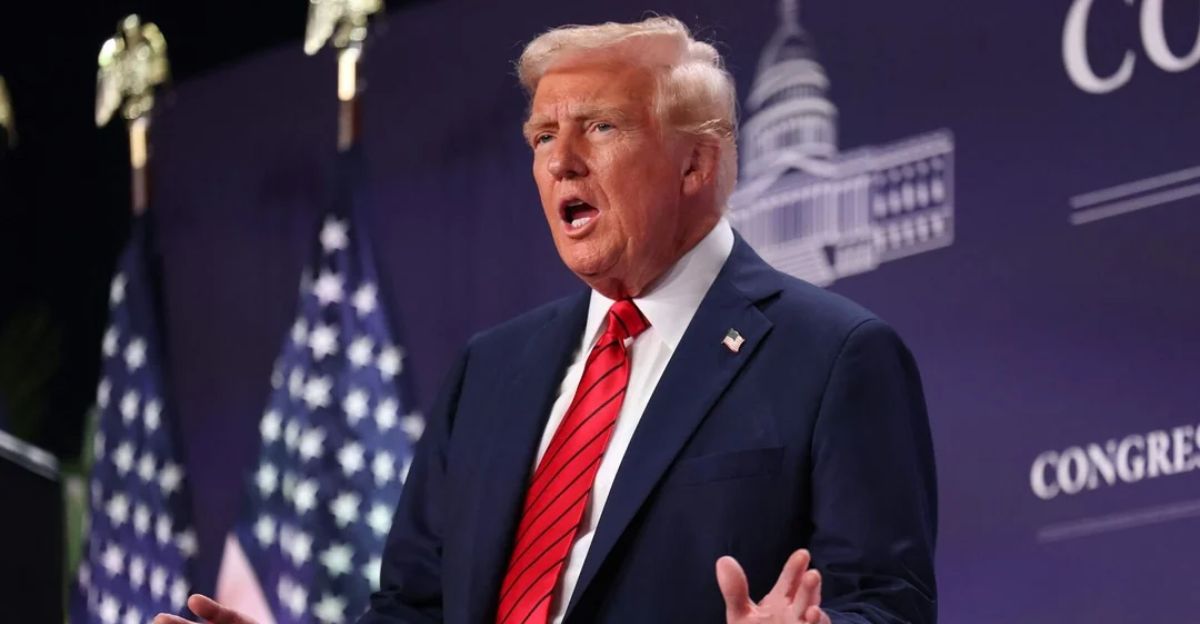
Trump’s elimination of income tax carries clear voter appeal. Theoretically, middle-class households could retain thousands annually.
Yet economists caution this illusion ignores tariffs’ hidden costs and fiscal shortfalls. With federal debt at its highest since WWII, interest exceeding $1 trillion, and spending commitments rising, political enthusiasm clashes with economic feasibility.
International Trade Pressure
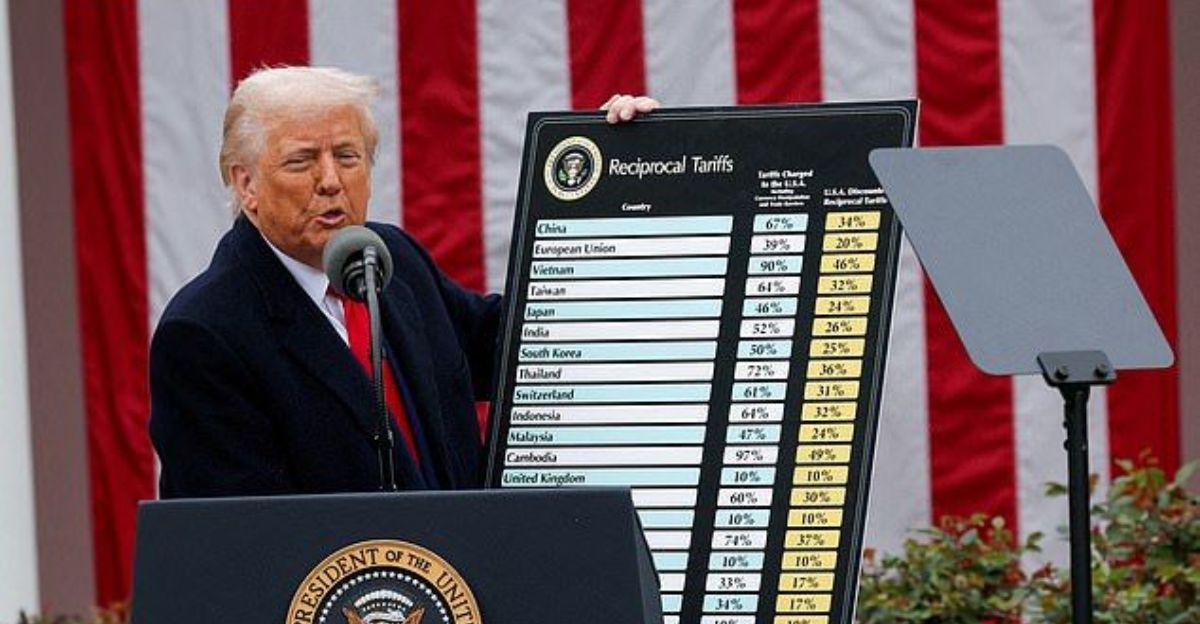
Trump’s tariffs directly affect trading partners like China, Japan, South Korea, and the EU. Chinese tariffs reached 145% as of late 2025, leading to reduced orders and factory slowdowns globally.
Vietnam and India report three-day work weeks, while U.S. buyers pause shipments. International resistance further undermines revenue replacement plans, compounding economic risks domestically and abroad.
States and Households Impacted

All 50 states and territories would experience effects. States with higher numbers of households under $150,000 income could see short-term gains, but tariff-driven price increases might offset these benefits.
Port cities like Los Angeles, New York/Newark, and Savannah would feel heightened trade disruptions. The plan creates uneven economic effects, amplifying risk to consumers and businesses alike.
Implementation Pathways
Three pathways exist: partial elimination for under $150,000 earners, aspirational goals over years, or complete elimination. Each faces challenges in fiscal gaps, trade effects, and congressional approval.
Even scaled approaches encounter the “bad trade” problem York identified: lower-income Americans would pay more through higher prices, while large deficits remain unresolved.
Why Economists Call It Impossible

Tax base limits, Laffer curve effects, and regressive impacts create structural barriers. IMF growth projections for 2025 fell to 1.8% amid trade tensions. Retail sales growth also slowed.
Peterson Institute calculations show tariffs generate less revenue if rates rise. Even partial scenarios cannot replace $2.7 trillion, confirming the proposal’s economic and mathematical impossibility.
What’s Next Legally and Politically

The Supreme Court’s expected ruling could decide the fate of Trump’s tariff strategy. If IEEPA authority is denied, replacement revenue collapses, triggering potential refunds and fiscal chaos.
Congressional action remains required for tax law changes. Political hurdles, legal uncertainty, and economic consequences converge to make this proposal historically unprecedented and practically unworkable.
Sources:
Reuters reporting on Trump Mar-a-Lago Thanksgiving address, 27–28 November 2025
Congressional Budget Office Monthly Budget Review FY 2025, October–November 2025
U.S. Treasury Department FY 2025 revenue data
Committee for Responsible Federal Budget FY 2025 tariff revenue analysis, 3 November 2025
Bloomberg Economics, “Breaking Down Trump’s $21 Trillion Investment Boom Claims,” 24 November 2025
Peterson Institute for International Economics, “The US Revenue Implications of President Trump’s 2025 Tariffs,” April 2025
U.S. Supreme Court case documentation, Trump v. V.O.S. Selections, Inc., oral arguments 5 November 2025