
As 2025 ends, America faces the most severe corporate layoffs since the 2009 Great Recession. Over 1.1 million positions were cut from January through October—a 65% increase from last year. October alone saw 153,074 layoffs, the worst month in 22 years.
From September through November, 14 major U.S. companies slashed more than 150,000 jobs, driven by AI automation, tariffs, collapsing EV demand, and restructuring. These giants illustrate the scale and speed of this historic downturn.
1. UPS (United Parcel Service) — 48,000 Jobs Cut
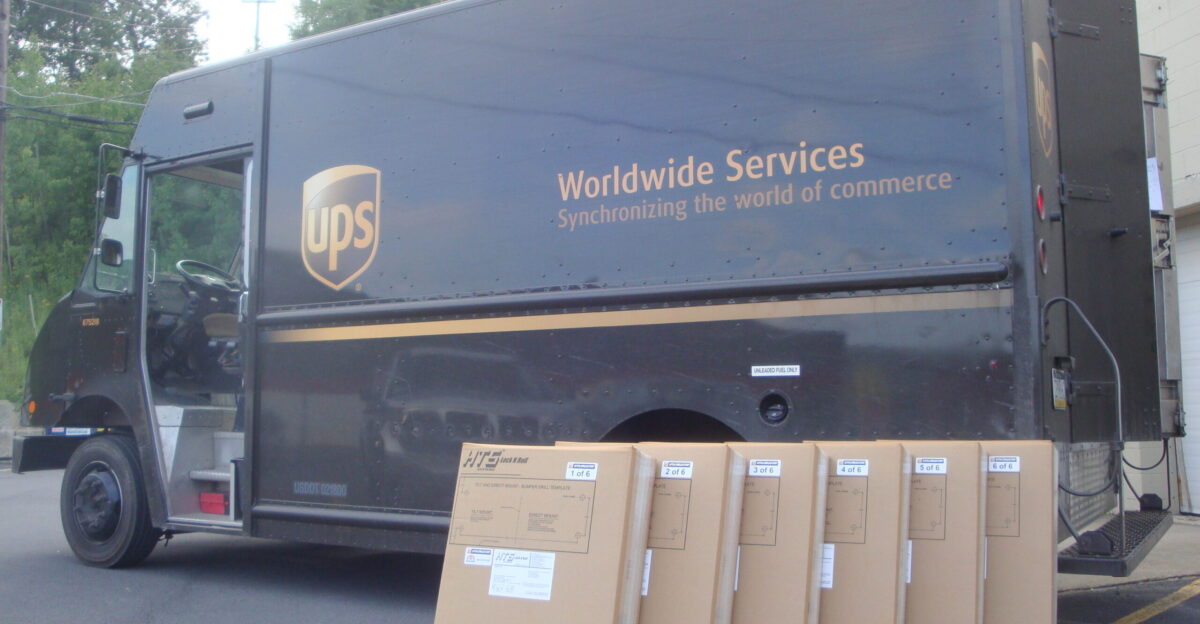
UPS has eliminated approximately 48,000 positions throughout 2025, accounting for roughly 10% of its global workforce of 490,000. In October, the company revealed that 14,000 management roles and 34,000 operations jobs were cut, affecting drivers, sorters, and logistics workers. UPS attributes the reductions to automation across 35 facilities, declining Amazon package volume, and companywide restructuring.
The shipping giant also shut down 93 leased and owned facilities during the first nine months of this year. These layoffs represent the most significant workforce reduction in the company’s 116-year history, surpassing April’s projection of 20,000 cuts. Productivity gains from automation made many roles redundant.
2. Intel — 24,000+ Jobs Eliminated

Intel is undertaking one of the tech industry’s largest downsizings, eliminating more than 24,000 jobs across 2025. Its workforce will drop from 99,500 to about 75,000 employees by year-end. In November, Intel filed notices for another 669 layoffs in Oregon, bringing that state’s total to more than 3,100 job losses.
Additional reductions are in effect at Washington, Arizona, California, and international sites. New CEO Lip-Bu Tan, who succeeded Pat Gelsinger early this year, said the cuts are necessary to make Intel “leaner, faster and more efficient” amid shrinking market share and a $19 billion fiscal 2024 loss. Intel aims to save $10 billion annually, and the U.S. government has acquired nearly a 10% stake through an $8.9 billion CHIPS Act investment.
3. Verizon — 13,000+ Positions Terminated
Verizon launched the most extensive layoffs in its history in November 2025, cutting more than 13,000 jobs, or roughly 13-15% of its U.S. workforce. Terminations began on November 20 under new CEO Dan Schulman, who joined in October. In a memo, Schulman said Verizon’s cost structure prevents essential customer-experience investments and requires a major “realignment.”
The cuts heavily target non-union management roles, with estimates suggesting more than 20% of management could be affected. Verizon also plans to convert about 180 corporate retail stores into franchise locations. The company has already shed nearly 20,000 jobs since 2022 and continues to face rising wireless competition, despite investing $52 billion in spectrum and acquiring Frontier Communications’ assets.
4. Amazon — 14,000 Corporate Jobs Slashed

Amazon cut 14,000 corporate jobs in October 2025, representing approximately 4% of its 350,000-person corporate workforce. It marks the most significant single corporate layoff in the company’s 31-year history. Nearly 40% of documented reductions affected engineers, along with significant losses in product and program management roles.
Every division felt the impact, including Amazon Web Services, devices, retail, advertising, grocery operations, and gaming studios in California. CEO Andy Jassy said the company must operate “like the world’s biggest startup,” eliminating layers and accelerating decision-making in an AI-driven era. Reuters reports that as many as 30,000 corporate jobs could ultimately be cut, with another round expected in January 2026.
5. Microsoft — 15,000+ Jobs Cut Across Five Months

Microsoft eliminated more than 15,000 positions between May and September 2025, affecting roughly 8% of roles across several divisions. The company cut 6,000 jobs in May and 9,000 in July, its largest single reduction in over two years. Smaller rounds continued through August and September, creating ongoing uncertainty for employees.
More than 3,200 jobs were cut in Washington state, including 1,151 at the Redmond campus. Teams affected include engineering, legal, Xbox gaming, LinkedIn, and sales. The cuts coincide with Microsoft’s aggressive AI pivot and an $80 billion AI infrastructure investment. A spokesperson said such workforce changes are a “necessary and regular part of managing our business.”
6. HP — 4,000–6,000 Positions Being Eliminated

HP announced in November 2025 that it will reduce its workforce by between 4,000 and 6,000 employees by the end of fiscal 2028, representing approximately 10% of its 58,000-person workforce. CEO Enrique Lores stated that the restructuring aims to enhance customer satisfaction, drive product innovation, and increase AI-driven productivity.
Roles across product development, operations, customer support, and administration will be affected, with some white-collar positions replaced by automation. HP expects to achieve $1 billion in annual savings by 2028, along with $650 million in restructuring costs, including $250 million in fiscal 2026. The move follows a February 2025 announcement of 1,000 to 2,000 additional cuts.
7. Target — 1,800 Corporate Jobs Eliminated

Target eliminated 1,800 corporate roles in October 2025, its first significant corporate downsizing in a decade. The cuts include 1,000 layoffs and 800 closed vacancies, representing approximately 8% of its corporate workforce. Incoming CEO Michael Fiddelke said the actions will position Target to become “stronger, faster and better prepared” for the years ahead.
Minnesota records show 815 permanent layoffs, including 528 at Target’s downtown Minneapolis headquarters. The reductions do not affect store or supply-chain workers. Target faces three straight quarters of declining sales, controversy over its DEI pullback, and fierce competition from Walmart and Amazon. The company’s stock has dropped by roughly 30% this year.
8. General Motors — 3,400+ Auto Workers Laid Off

General Motors announced more than 3,400 layoffs in October and November 2025 as electric-vehicle demand collapsed following the removal of the $7,500 federal EV tax credit on September 30. The cuts include 1,750 indefinite layoffs and 1,670 temporary layoffs across Michigan, Ohio, and Tennessee facilities.
GM shuttered Detroit Factory Zero through January 5, 2026, and will reopen with only one shift, leaving 1,200 workers indefinitely laid off. The company also cut 200 salaried roles at its Warren technical center and closed an IT facility in Georgia. GM recorded a $1.6 billion charge tied to reduced EV plant values and workforce-related costs.
9. Paramount — 2,000+ Jobs Cut Post-Merger

Paramount began eliminating approximately 2,000 jobs in late October 2025, following its $8 billion merger with Skydance. CEO David Ellison announced the first wave of cuts for October 29, stating that the company must eliminate roles that “no longer correspond with our shifting priorities.”
The reductions affect the film, streaming, and linear TV divisions, forming part of a plan to achieve $2 billion in savings. Approximately 1,000 employees were laid off in the initial round, with further reductions planned for the remainder of the year. Paramount is also eliminating 1,600 roles tied to Chile divestitures and consolidating CBS Evening News anchor positions.
10. Salesforce — 4,000+ Customer Support Roles Eliminated
Salesforce cut more than 4,000 customer-support roles between September and November 2025, reducing the division’s workforce from approximately 9,000 to 5,000 employees. CEO Marc Benioff confirmed the cuts, saying “I need less heads” because AI automation now handles half of all customer interactions.
The company filed additional notices in November for 262 layoffs in San Francisco, following earlier cuts in Seattle and Bellevue. Salesforce is aggressively expanding hiring in AI product sales even as it eliminates support roles. The company previously cut 8,000 jobs in January 2023.
11. IBM — 2,700 Jobs Being Cut

IBM announced on November 4, 2025, that it would eliminate approximately 2,700 jobs before the end of the year. The reductions represent a low single-digit percentage of its 270,000-person workforce and support IBM’s shift toward software, hybrid-cloud services, and AI.
IBM said U.S. employment will remain “roughly stable,” indicating cuts may fall more heavily outside the country. A spokesperson noted that IBM routinely reviews staffing to ensure it has “the right people with the right skills.” The company announced these cuts despite strong third-quarter financial results.
12. Nestlé — 16,000 Jobs Over Two Years
Nestlé announced in October 2025 that it will eliminate approximately 16,000 jobs worldwide over the next two years, accounting for nearly 6% of its workforce of 277,000. The plan aims to deliver $3.7 billion in savings by 2027. Twelve thousand of the cuts will come from white-collar positions that are being replaced through automation.
An additional 4,000 jobs will be cut from manufacturing and supply-chain operations. New CEO Philipp Navratil said the company must adapt quickly amid stagnant growth, weakening demand in China, and heavy U.S. tariffs, including a 39% tax on Swiss imports. Nestlé shares rose more than 8% following the announcement.
13. Rivian — 600 Employees Laid Off

Rivian laid off more than 600 employees in late October , representing approximately 4.5% of its workforce, as the electric vehicle market deteriorated. CEO RJ Scaringe told employees the cuts were necessary given the “evolving operational environment” and Rivian’s need to reassess its scaling strategy.
The company is preparing to launch its R2 midsize SUV in 2026 while demand weakens following the removal of the federal EV tax credit. Cuts spanned engineering, manufacturing, and corporate roles. Affected staff received 90 days’ notice and severance.
14. Oracle — 3,000+ Jobs Eliminated

Oracle cut more than 3,000 jobs worldwide from August through November 2025, marking one of the company’s largest workforce reductions in years. U.S. filings indicate that 254 roles were cut in California and 101 in Washington, with additional rounds expected in September.
In India, approximately 10% of Oracle’s workforce—up to 3,000 people—were laid off across major tech hubs. Oracle Health experienced the deepest losses, including those in care delivery, consulting, and implementation roles. Cuts also impact cloud, ERP, data center operations, and AI/ML project teams. The reductions come weeks after a $30 billion AI infrastructure announcement involving Oracle and OpenAI.
What It Means for Workers — The Human Cost of Corporate Transformation

Over 150,000 workers face uncertainty from September to November 2025 layoffs. Most receive 30–90 days’ notice with severance, while Amazon, Rivian, and Target extend benefits through January 2026. Salesforce, Oracle, and Microsoft provide outplacement support, yet a saturated market leaves no guarantee of reemployment.
Nearly half of U.S. employees are “job hugging,” staying in place out of fear. Layoffs cluster in high-cost metro hubs like Seattle, Bay Area, Memphis, Detroit, and New Jersey. Remote roles shrink, AI-driven contract jobs expand, and gig work rises, reducing security and benefits. With hiring frozen, displaced workers face 6–12 months of unemployment. These stories point to a larger economic reshaping, signaling what comes next.
The Bigger Picture

These 14 companies eliminated over 150,000 jobs in late 2025, contributing to a total of 1.1 million layoffs this year—the worst since 2009. AI automation, cost-cutting for tech investment, collapsing EV demand, tariffs, and post-merger restructuring remain key drivers.
Labor economist Joanne Song McLaughlin notes: “The tremendous level of uncertainty in the economy makes it hard for employers to predict, so they will most likely reduce investment and employment.” Nearly half of U.S. workers are now “job hugging,” delaying career moves amid this unprecedented wave.