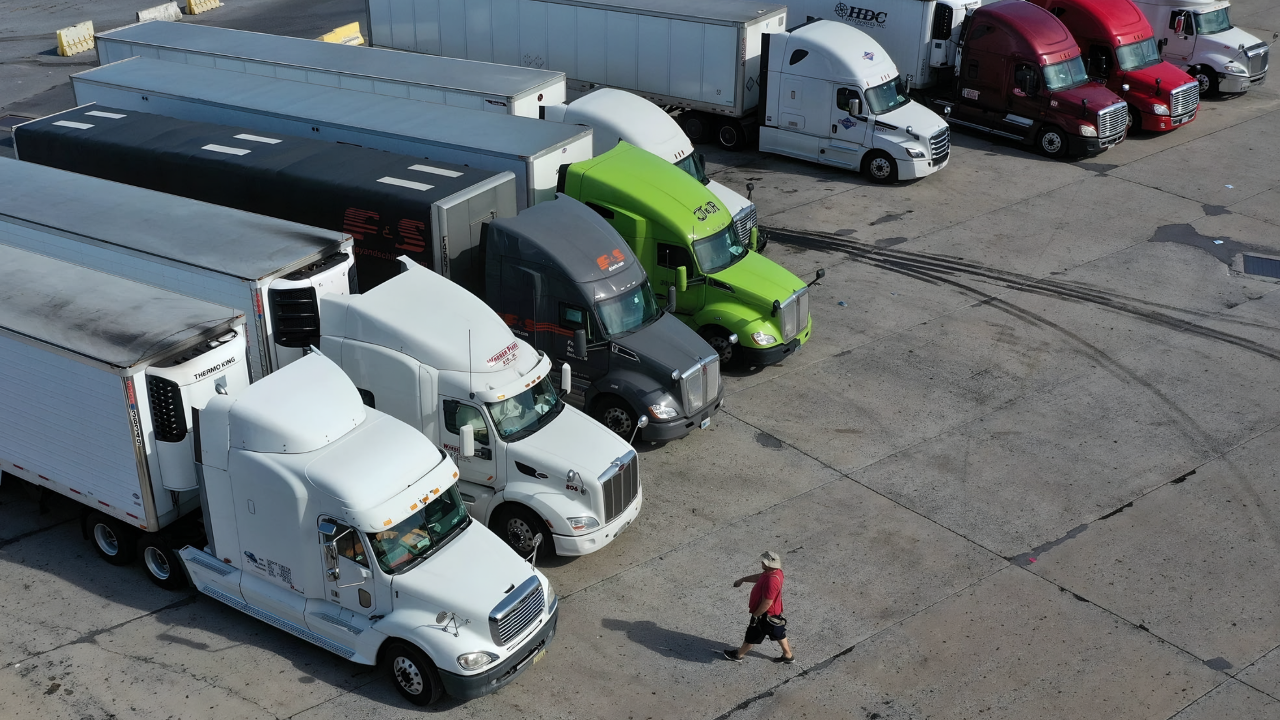
Two major logistics employers in Cumberland County have announced simultaneous layoffs that signal deeper structural upheaval in America’s freight industry. Keen Transport will eliminate 52 positions on January 20, 2026, while GXO Logistics Worldwide will reduce its workforce by 69 employees between January 12 and May 30, 2026. These reductions, formalized through Worker Adjustment and Retraining Notification filings, represent far more than local employment setbacks—they exemplify a systemic crisis reshaping the trucking and logistics landscape across the nation.
The Immediate Impact on Local Workforce
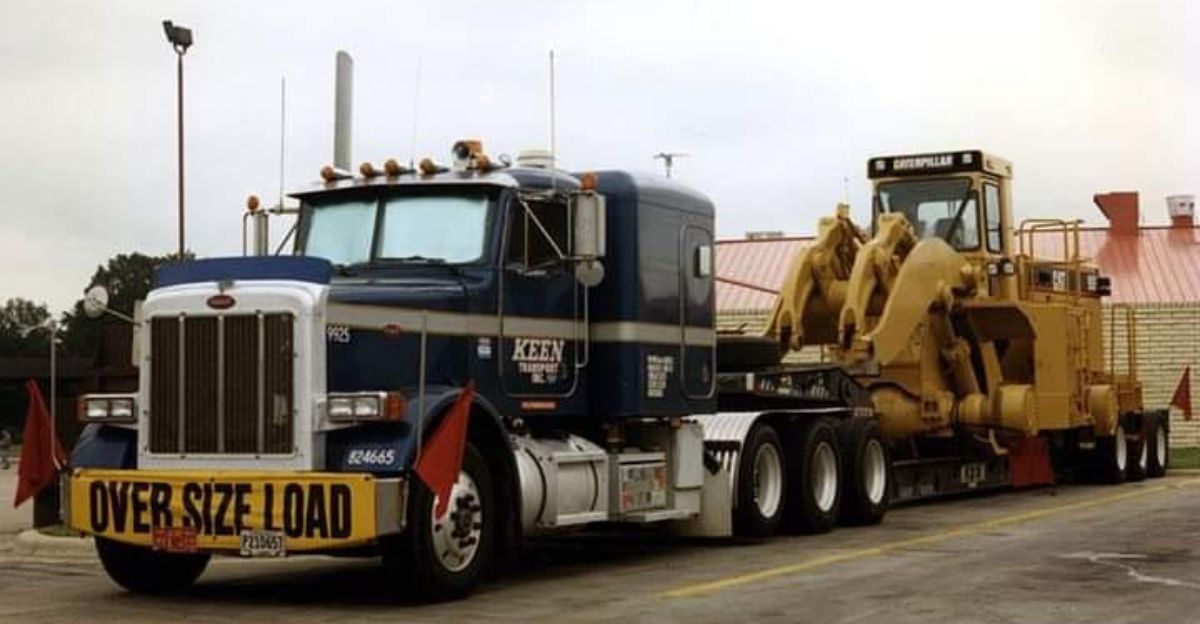
Keen Transport, headquartered at 1951 Harrisburg Pike in Carlisle, will execute its layoffs on a single date, concentrating displacement rather than phasing it gradually. This compressed timeline means affected workers face immediate rather than staggered job loss, potentially straining local social services and unemployment systems simultaneously. The company has provided no public statements detailing specific reasons for the reduction or whether any positions might be reinstated.
GXO Logistics Worldwide operates at 100 Carolina Way in Carlisle but has pursued systematic facility consolidation across multiple states. The company has filed more than 30 WARN notices since August 2021, affecting thousands of employees nationwide. Most significantly, GXO previously shuttered its Middletown facility in Dauphin County, eliminating 91 positions and permanently closing the location. Industry observers report the Carlisle facility will likely close permanently despite official documentation classifying it as a layoff rather than a closure.
Understanding the Broader Freight Crisis
The freight downturn represents one of the most severe demand slumps since early 2022, marked by broad pressure on rates and profitability across many carriers. Unlike traditional cyclical downturns lasting 12 to 18 months, this downturn has stretched for more than two years and remains unusually prolonged, with no clear recovery timeline. The combination of excess truck capacity, soft freight demand, and elevated operating costs has created what many industry analysts describe as a perfect storm.
During 2021 and 2022, pandemic stimulus measures, elevated freight rates, and low-cost financing drove unprecedented growth in the trucking industry. Many drivers obtained operating authority to capitalize on high spot rates and abundant freight, creating a structural capacity imbalance that now weighs heavily on the market. Unlike temporary cyclical booms, this expansion added capacity that is difficult to absorb in a weaker demand environment.
Consumer Behavior Shift Reshapes Demand

Post-pandemic consumer behavior has fundamentally rebalanced away from physical goods toward experiences and services. During lockdowns, stimulus-funded consumers purchased durable goods—furniture, electronics, and vehicles—creating unprecedented freight demand. This pattern reversed sharply in 2023 and 2024 as consumers shifted spending toward travel, dining, entertainment, and experiences.
The Outbound Tender Volume Index, which measures freight demand from shippers to carriers, has dropped to roughly the mid‑9,000s—down about 18 percent year-over-year—reflecting demand near pandemic-era lows. Freight tonnage has similarly contracted, with volumes in several sectors resembling those of prior recessionary periods. Demand weakness extends across automotive, retail, consumer goods, and construction freight sectors, leaving few segments untouched.
Insurance and Profitability Collapse
Commercial truck insurance premiums have reached all-time highs, fundamentally altering carrier economics. Auto liability coverage increased roughly 7 to 20 percent, while umbrella and excess coverage rose around 12 to 30 percent, depending on risk profile and market. In addition, motor truck cargo insurance has seen increases of up to around 12 percent in many markets, adding further cost pressure for carriers.
Most single-truck operations now pay on the order of $10,000 to $17,000 annually for primary liability and cargo coverage alone, straining small operators’ finances. In the truckload sector, average operating margins have turned negative at about minus 2.3 percent, meaning many carriers lose money on each mile when all costs are considered. When combined with fuel, maintenance, equipment depreciation, and driver wages, revenues are often insufficient to cover expenses, forcing smaller fleets to either shrink, shut down, or operate at unsustainable levels.
Industry Consolidation and Bankruptcy Wave
Motor carrier exits ran significantly above normal in the first half of 2025, with revocations of operating authority running roughly mid‑teens percent higher than the same period in 2024 and signaling a meaningful decline in total carrier capacity. Elevated exit levels underscore how thin margins and weak rates are pushing many small and mid-sized operators out of the market. Freight carrier bankruptcy filings also remained elevated through the third quarter of 2025, continuing the heightened failure rates seen earlier in the year.
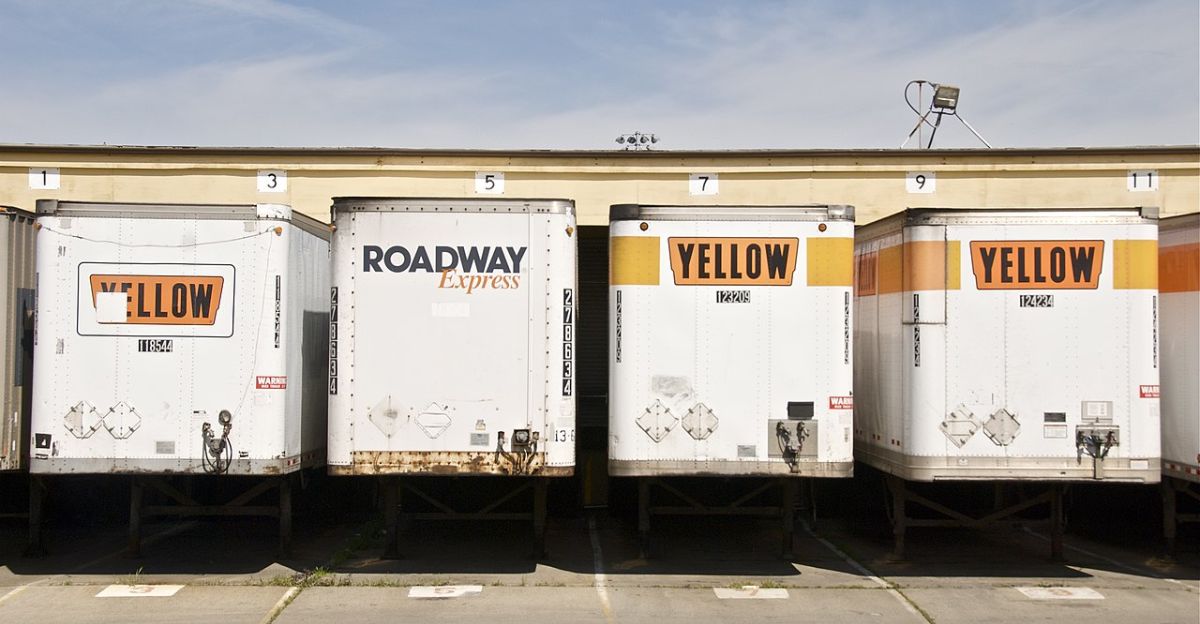
Yellow Corp’s August 2023 bankruptcy stands as one of the largest freight company failures in history, eliminating roughly $5 billion in annual revenue and directly affecting about 30,000 jobs. The collapse created supply chain disruptions and reflected years of financial strain, difficult labor costs, and an eroding market position. Adding to public concern, Yellow had received a $700 million pandemic relief loan, making taxpayers indirect stakeholders in the failure.
Regional Economic Vulnerability
Carlisle’s location within a two-day drive of about 80 percent of the U.S. population, at the intersection of I-81, I-83, I-76, and US-11/15, makes it a critical logistics hub. Approximately 3,000 long-haul truckloads originate daily in Cumberland County, with another 3,000 terminating there and roughly 60,000 passing through each day. This concentration reflects deliberate development of logistics infrastructure over several decades and ties the region’s fortunes closely to freight cycles.
The trucking industry provides about 260,000 jobs and $10 billion in annual wages in South Central Pennsylvania, underscoring its role as a cornerstone employer. Cumberland County’s 3.2 percent unemployment rate as of August 2025 reflects strong logistics sector performance, significantly below Pennsylvania’s roughly 4.0 percent average. However, this advantage can quickly reverse when logistics contracts are reduced; concentrated industry dependence means widespread layoffs create disproportionate local impact.
Looking Forward

Many industry forecasts call for low single‑digit freight demand growth in 2026—on the order of a few percent—as consumer spending stabilizes and slowly rebalances toward goods. Spot rates are expected to see modest increases, while contract rates could come under slight downward pressure as carrier exits gradually reduce excess capacity and shippers seek price stability. However, most outlooks suggest overcapacity could persist well into the latter half of the decade, even with continued bankruptcies and carrier exits.
Warehouse automation is likely to eliminate additional traditional logistics roles while creating demand for more technical and maintenance-intensive positions. Pennsylvania’s WARN Act implementation provides comprehensive support for displaced workers through Rapid Response services, including reemployment assistance, career guidance, resume preparation, interview coaching, job fairs, and access to retraining programs. Industry recovery is expected to favor disciplined, well-capitalized carriers that track metrics closely, while smaller operators without financial cushions will continue to face intense pressure as the sector undergoes fundamental restructuring.