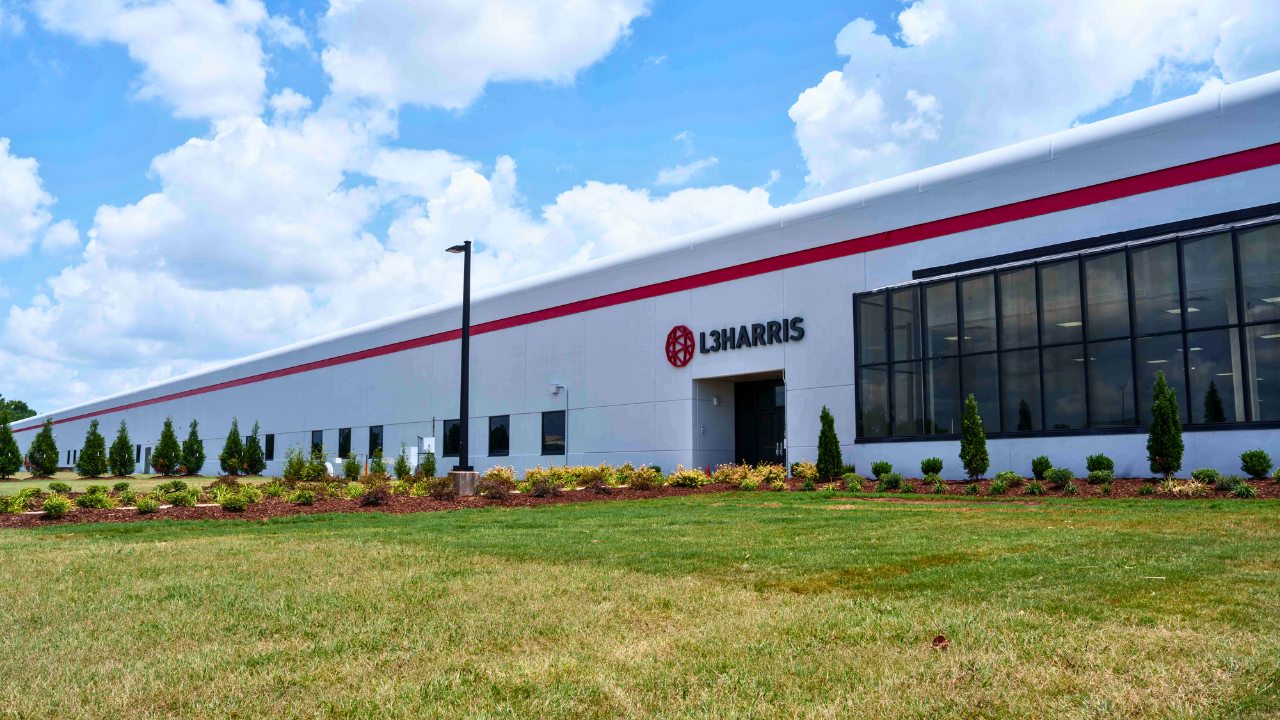
On November 18, 2025, L3Harris Technologies broke ground on a transformative industrial project in Camden, Arkansas. The company announced a $400 million expansion of solid rocket motor production through its Aerojet Rocketdyne subsidiary, signaling a fundamental shift in how America approaches defense manufacturing. For a town of roughly 10,000 residents, the Arkansas Advanced Propulsion Facilities (AAPF) represents far more than a construction project—it reflects a national recalibration of industrial strategy driven by recent conflicts and emerging security threats.
The Historical Foundation

The Camden site carries decades of continuous military production. The U.S. Navy established the Shumaker Naval Ammunition Depot on more than 68,000 acres in Ouachita and Calhoun counties in 1944, supporting rocket loading, assembly, and ammunition storage through World War II and the Korean War. Aerojet Rocketdyne began operations at Camden in 1979 and has maintained uninterrupted solid rocket motor production for over four decades. The new expansion builds directly on this industrial lineage, transforming a facility that has never truly left active service.
The Ukraine Catalyst
The war in Ukraine exposed a critical vulnerability in U.S. defense capacity. Between 2022 and 2023, Ukraine consumed Western-supplied missiles—including Javelin, Stinger, and GMLRS systems—at rates that exceeded American peacetime manufacturing capacity. Pentagon assessments concluded that the defense industrial base was not optimized for sustained, high-intensity conflict. Depleted stockpiles could not be rapidly replenished. Camden’s expansion directly addresses this capacity gap, transforming production from a peacetime model to one capable of supporting prolonged, high-demand scenarios.
Scale and Investment

The AAPF project spans 110 acres and includes over 20 new buildings with more than 230,000 square feet of manufacturing and office space. Once complete, the overall Camden complex will exceed 1.5 million square feet. L3Harris confirmed that nearly half of construction and sourcing expenditures will go to Arkansas-based businesses, embedding the project deeply into the state economy. Of the $400 million total investment, approximately $193 million is expected to flow to Arkansas suppliers, creating secondary job growth and tax revenue beyond direct payroll.
The facility is designed as program-agnostic manufacturing, meaning it can produce propulsion systems for multiple weapons programs without being locked into a single missile design. This modular approach allows L3Harris to rapidly shift production among different defense programs as Pentagon priorities evolve. The AAPF will incorporate robotic manufacturing systems, autonomous vehicles for internal transport, and automated quality inspection platforms. Real-time monitoring and predictive maintenance technologies are intended to improve throughput and consistency while reducing safety risks associated with handling energetic materials.
Production Capacity and Workforce Transformation
Before expansion, the Camden facility produced more than 115,000 solid rocket motors annually. The AAPF is designed to increase large solid rocket motor production capacity by up to six times once fully operational. This level of output would represent one of the largest propulsion manufacturing footprints in the Western Hemisphere. Production is expected to begin in 2027 following a multi-year construction timeline.
L3Harris added approximately 500 employees to the Camden operation in the year leading up to the expansion announcement. At full staffing, total employment at the Camden site could reach between 1,500 and 2,000 workers. For a town of 10,000 residents, this represents a major economic transformation. Defense manufacturing wages significantly exceed regional income averages, producing a substantial payroll impact on the surrounding region.
Strategic Scope and National Context
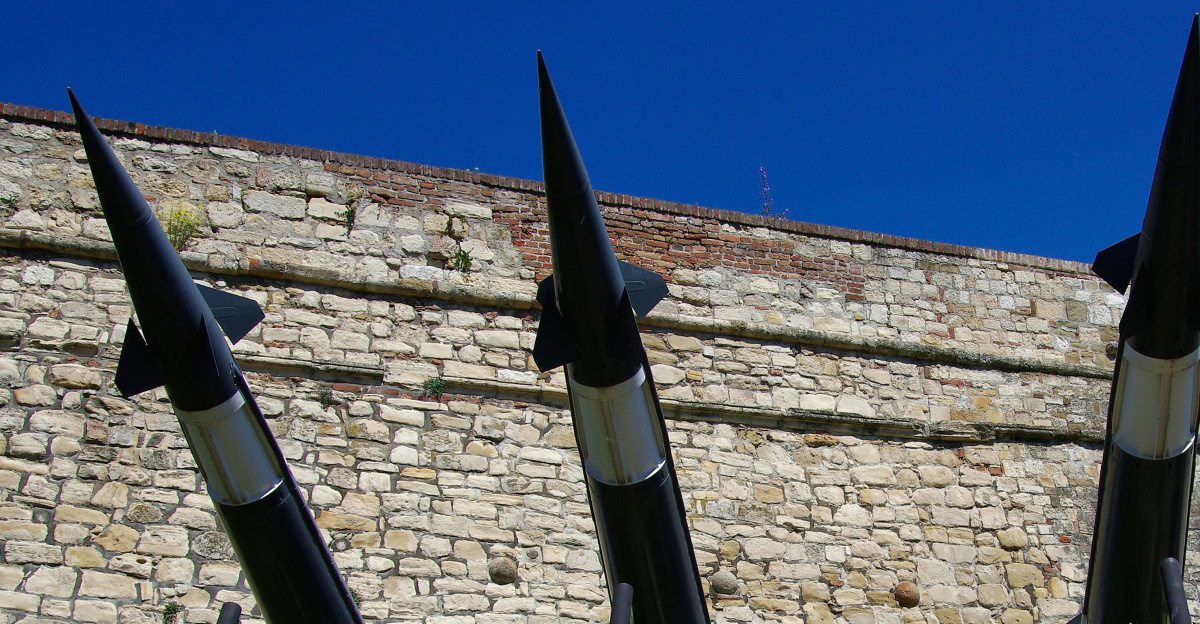
Camden produces propulsion systems for a diverse portfolio of U.S. weapons systems, including THAAD missile defense interceptors, Patriot air-defense missiles, Navy Standard Missiles, Tactical Tomahawk cruise missiles, and the Javelin anti-tank weapon. The site also produces components for emerging hypersonic and missile defense systems. This diversified portfolio ensures Camden remains a core engine of U.S. and allied missile readiness across multiple domains.
The Camden project is part of a broader national expansion strategy exceeding $500 million across multiple L3Harris propulsion sites. In Huntsville, Alabama, the company opened a 379,000-square-foot advanced manufacturing facility in 2024 for inert missile components. In Virginia, new facilities are under development in Orange County. This geographically distributed model increases redundancy, reduces supply-chain vulnerability, and strengthens national manufacturing resilience.
The Inflection Point

The $400 million AAPF project marks a fundamental reset in U.S. defense-industrial strategy. For decades, efficiency replaced redundancy as the guiding principle. Recent conflicts reversed that logic. Camden’s expansion reflects a national decision to prioritize durability, surge capacity, and domestic production over minimum-cost preparedness. Whether or not future conflicts ever consume its full output, the facility now stands as physical proof that U.S. industrial mobilization is once again a central pillar of defense planning.
Sources:
Defense Production Act Title III cooperative agreements, Pentagon, 2023–2025
Polish Institute of International Affairs, US Defence Sector Challenges Related to Support for Ukraine, May 2023
Pentagon Office of Manufacturing Capability Expansion and Investment Prioritization
Think Defence, August 26, 2025
Defense News, July 26–27, 2023
Manufacturing Dive, August 4 & 28, 2025
Forecast International, July 26, 2023
Inside Defense, November 14, 2025