In early 2026, more than 40 underperforming stores of Bed Bath & Beyond are set to close. These closures are part of a strategic consolidation following a definitive merger agreement announced in November 2025 with The Brand House Collective (formerly Kirkland’s).
The merger will eliminate overlapping corporate positions and duplicate functions across the combined entity. The company, which had been reborn after a bankruptcy in 2023, now undertakes a critical restructuring aimed at operational efficiency and improved financial viability.
A Bankruptcy Revival and Strategic Partnership
After filing for bankruptcy in April 2023 and liquidating its store base, Bed Bath & Beyond’s journey took an unexpected turn. In October 2024, Bed Bath & Beyond Inc. entered a strategic partnership with The Brand House Collective (formerly Kirkland’s). Under this partnership, Kirkland’s would operate small-format ‘neighborhood’ Bed Bath & Beyond stores (up to approximately 15,000 sq ft) under a license agreement.
While the collaboration showed promise initially, financial pressures mounted at Kirkland’s, leading to a merger agreement announced in November 2025. This merger would consolidate the two entities under unified leadership, with the transaction expected to close in the first quarter of 2026, pending shareholder approval and lender consent.
Financial Struggles

The Brand House Collective faced significant financial challenges in 2025. CEO Amy Sullivan pointed to tornado damage at the company’s distribution center in May 2025 and the deliberate liquidation of select inventory as major factors affecting financial results. By mid-2025, the company carried $38.9 million in outstanding debt, with minimal credit availability.
To support operations, Bed Bath & Beyond provided crucial capital: a $17 million term loan and an $8 million equity subscription under the original partnership agreement. Despite these measures, financial pressures persisted, leading to the merger.
The Merger Deal

In November 2025, Bed Bath & Beyond finalized a definitive merger agreement to acquire The Brand House Collective. Based on the companies’ respective closing stock prices on November 21, 2025, the transaction implies an equity value of approximately $26.8 million, which includes The Brand House Collective stock already held by Bed Bath & Beyond as previously disclosed.
The deal reflects an exchange ratio of 0.1993 shares of Bed Bath & Beyond common stock for each Brand House Collective share. The deal is expected to close in the first quarter of 2026, pending shareholder approval and lender consent from Bank of America. The merger marks a shift from collaboration to consolidation, signaling a unified strategy to stabilize both companies’ retail operations.
Store Closures on the Horizon
As part of the merger, more than 40 underperforming or non-strategic stores have been identified for closure in early 2026. This represents the largest wave of closures for the merged entity as it consolidates its retail footprint.
The closures are deemed essential for reducing costs, optimizing inventory, and supporting bottom-line improvement. Bed Bath & Beyond aims to streamline its operations to compete more effectively in a turbulent retail environment. These closures are part of a broader efficiency strategy aimed at ensuring the long-term viability of the combined company.
Job Impact from Consolidation
The closure of more than 40 stores will result in the elimination of duplicate positions across store-level operations and corporate functions. The merger is focused on eliminating overlapping roles in corporate functions, distribution, merchandising, and supply chain operations.
While a specific job count has not been formally disclosed in official statements, the scale of the store consolidation combined with corporate redundancy elimination is expected to result in significant workforce adjustments. The human cost of the restructuring reflects the scale of operational consolidation.
Nationwide Retail Network
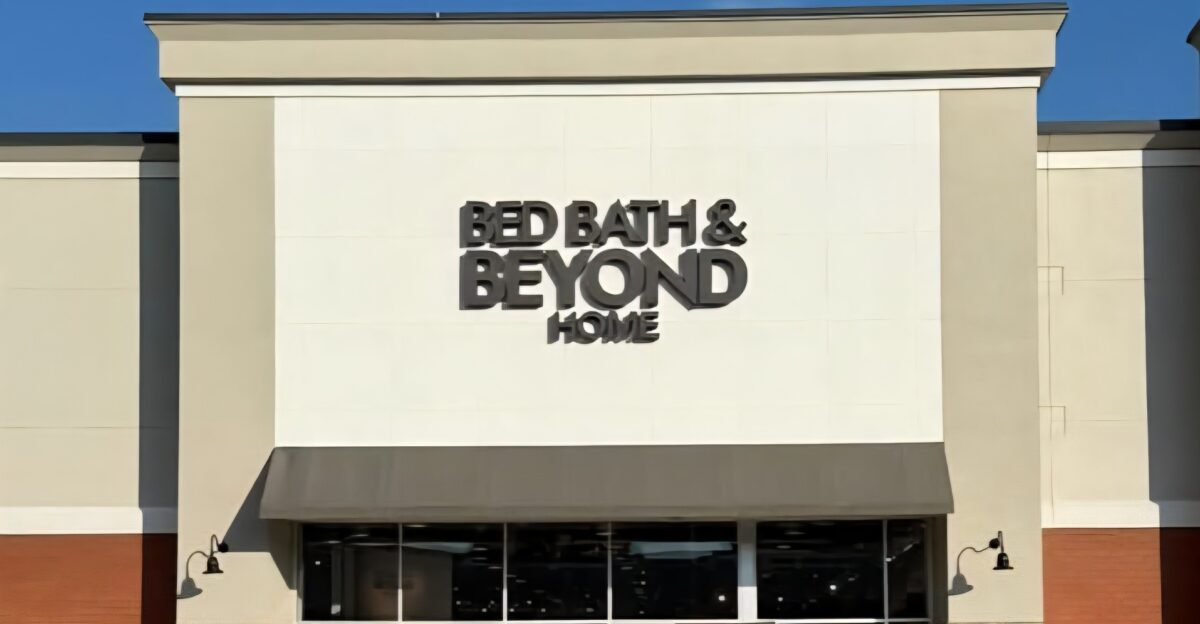
The store closures will affect The Brand House Collective’s retail footprint, which operates more than 300 stores across 35 states. Both the Brand House Collective and Bed Bath & Beyond had significant retail presence across the country prior to this consolidation.
This restructuring will impact store employees, local real estate markets, and community retail landscapes where these retailers operated. The consolidation highlights the scale of operational restructuring across a nationwide retail network.
$20 Million Efficiency Push
Bed Bath & Beyond and The Brand House Collective are targeting $20 million in annual cost savings through the merger. These savings are expected to come from removing duplicated functions, eliminating overlapping systems, and addressing operational inefficiencies.
This “efficiency push” aims to enhance profitability and improve the financial viability of the combined company. The cost-saving strategy is fundamental to the companies’ integration plan, though execution success remains critical.
Retail Landscape Pressure
The merger occurs at a time when larger retailers, such as Walmart, Costco, and Target, are expanding aggressively, while mid-sized players face consolidation or shutdown pressures. Bed Bath & Beyond and The Brand House Collective have combined operations to increase efficiency in response to these competitive headwinds.
This strategy represents an acknowledgment that smaller retailers must achieve scale through consolidation to remain competitive against retail giants benefiting from greater resources and market reach. The merger represents a defensive consolidation rather than a growth strategy.
Real Estate Opportunities

As store closures occur, retail real estate vacated by Bed Bath & Beyond locations has been quickly reoccupied by competitors. These companies have seized opportunities to expand into prime retail locations previously occupied by Bed Bath & Beyond.
This trend reflects the ongoing reshuffling in the retail sector, where well-capitalized chains capitalize on real estate vacated by struggling brands, reshaping the competitive retail landscape.
Stakeholder Adjustments

The merger represents a significant shift from the original partnership strategy. The smaller-format Bed Bath & Beyond stores were originally designed to serve as neighborhood fixtures, but the focus has now transitioned to full operational consolidation.
This change affects stakeholders who had invested in the partnership model, as the combined company redefines its strategy toward unified operations rather than multi-format approaches.
Leadership Structure

Significant leadership appointments are part of the merger integration. Amy Sullivan, CEO of The Brand House Collective, will serve as Chief Executive Officer of the newly organized “Beyond Retail Group” division, overseeing all omnichannel retail operations across Bed Bath & Beyond’s brands including Bed Bath & Beyond, buybuy BABY, Overstock, and Kirkland’s Home.
Marcus Lemonis will remain as executive chairman, providing strategic oversight. The leadership structure reflects the urgency of navigating the challenges posed by full operational consolidation.
Brand Integration Strategy

The merger brings together four distinct brands: Bed Bath & Beyond, buybuy BABY, Overstock, and Kirkland’s Home. Each brand serves different customer segments and retail channels. The challenge for the combined entity will be balancing operational consolidation to maximize efficiency while maintaining the distinct positioning of each brand.
Additionally, Bed Bath & Beyond acquired the Kirkland’s Home trade name and brand assets for $10 million in September, expanding its intellectual property control over the brand portfolio.
Market and Integration Outlook

The combined entity faces a critical period of integration and execution. Success depends on achieving the $20 million annual cost savings target through effective consolidation of overlapping functions.
While the cost-saving opportunity is well-defined, market observers will closely watch whether the companies can successfully integrate operations while maintaining customer relationships and brand positioning. The next 12–18 months will be crucial in determining whether this consolidation achieves its efficiency objectives.
Path Forward

The merged entity faces a period of significant operational integration. Key questions include whether the $20 million cost-savings strategy can be fully realized, whether the consolidated company can effectively compete against larger retailers, and whether the combined operations will achieve financial stability.
The transaction is expected to close in the first quarter of 2026, pending shareholder approval and lender consent, marking the formal completion of this retail consolidation strategy.
Sources:
Retail Dive merger announcement and cost reduction report, November 2025 press release
SEC Filings Digest; Bed Bath & Beyond merger agreement and loan terms, November 24, 2025
AP/Reuters coverage of Bed Bath & Beyond–Brand House Collective merger, store closure, and restructuring
Yahoo Finance market and transaction summary; Beyond/Kirkland’s Home integration and job impacts, November 2025