
On November 22, 2025, Ukrainian drone pilot Voyazh of the Phoenix border guard unit achieved a significant tactical victory by striking a rare Russian air-defense command post deep behind enemy lines in the Donetsk region.
This precision operation targeted and destroyed a PPRU-1 “Ovod” system, a critical piece of Russia’s military infrastructure that had been expertly camouflaged and mobile, making it extremely difficult to locate. The State Border Guard Service of Ukraine confirmed the destruction with photographic evidence captured moments before impact. Ukrainian officials emphasized that eliminating this command post directly reduces Russia’s ability to maintain coordinated air-defense operations, weakening Russian capabilities across the region.
The Strike in Detail
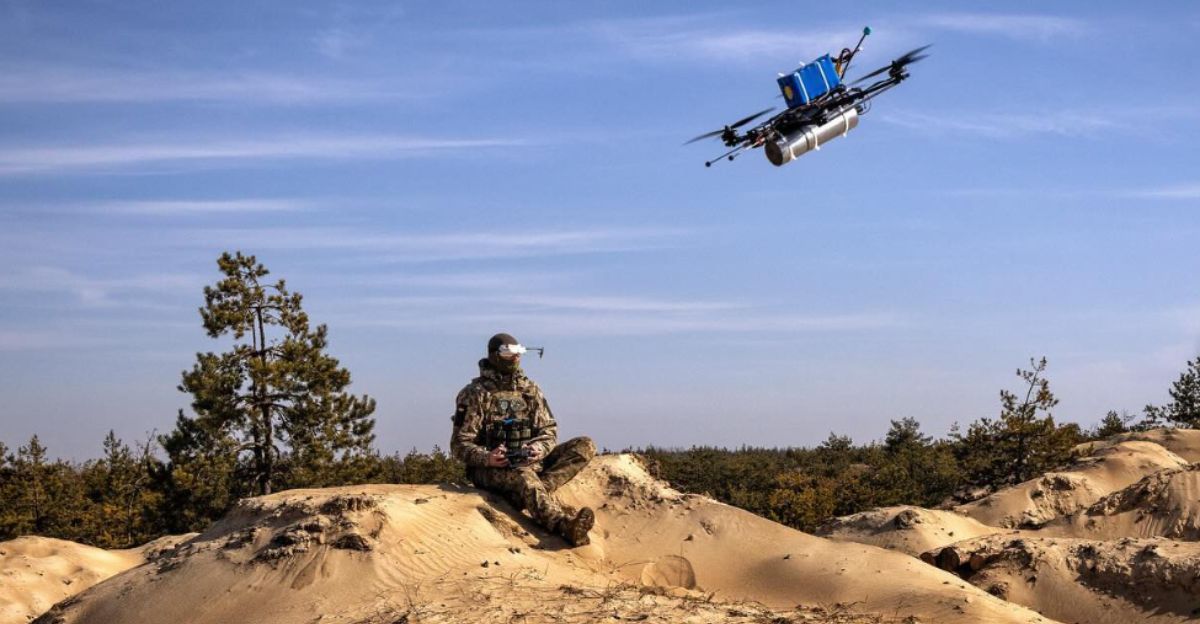
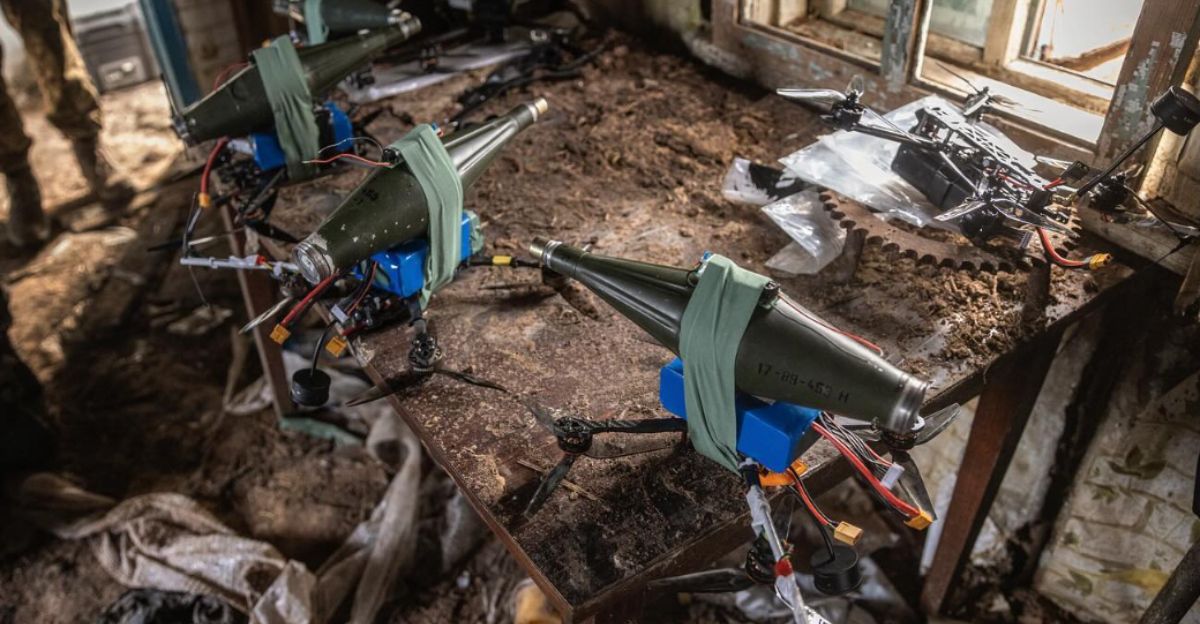
Using an FPV (first-person-view) drone, pilot Voyazh navigated kilometers into Russian-controlled territory, maintaining situational awareness despite limited visual information and challenging conditions. The operator detected unusual military activity near a camouflaged position and made the tactical decision to engage. As the Phoenix unit reported, the operator set course for the target and struck it with precision accuracy.
The successful strike demonstrates months of Ukrainian experience developing advanced FPV drone tactics for eliminating high-value targets. What began as improvised drone modifications by Ukrainian forces has evolved into systematic, sophisticated capability for degrading Russian military infrastructure. Ukrainian military leadership has prioritized FPV drone development, recognizing this technology provides an asymmetric advantage against Russian forces.
Finding Hidden Targets

The PPRU-1 command post was expertly camouflaged and designed to be mobile, making it extremely difficult for Ukrainian forces to locate and track. The Phoenix unit conducted a deep-penetration reconnaissance mission that exposed where Russia had hidden this critical system. FPV drone operators navigated kilometers behind enemy lines, constantly searching for targets moving under camouflage netting and concealment.
Ukrainian forces have developed increasingly sophisticated capabilities to identify and strike Russian air-defense infrastructure despite Russian efforts at concealment. The capability threatens Russia’s ability to maintain secure and hidden command-and-control operations across occupied territories, forcing Russian commanders to operate less safely and with greater risk of detection and destruction. Rather than relying solely on conventional military intelligence, Ukrainian forces have developed systematic drone-based reconnaissance procedures that enable operators to locate, identify, and engage hidden targets.
Understanding the PPRU-1 Ovod-M-SV
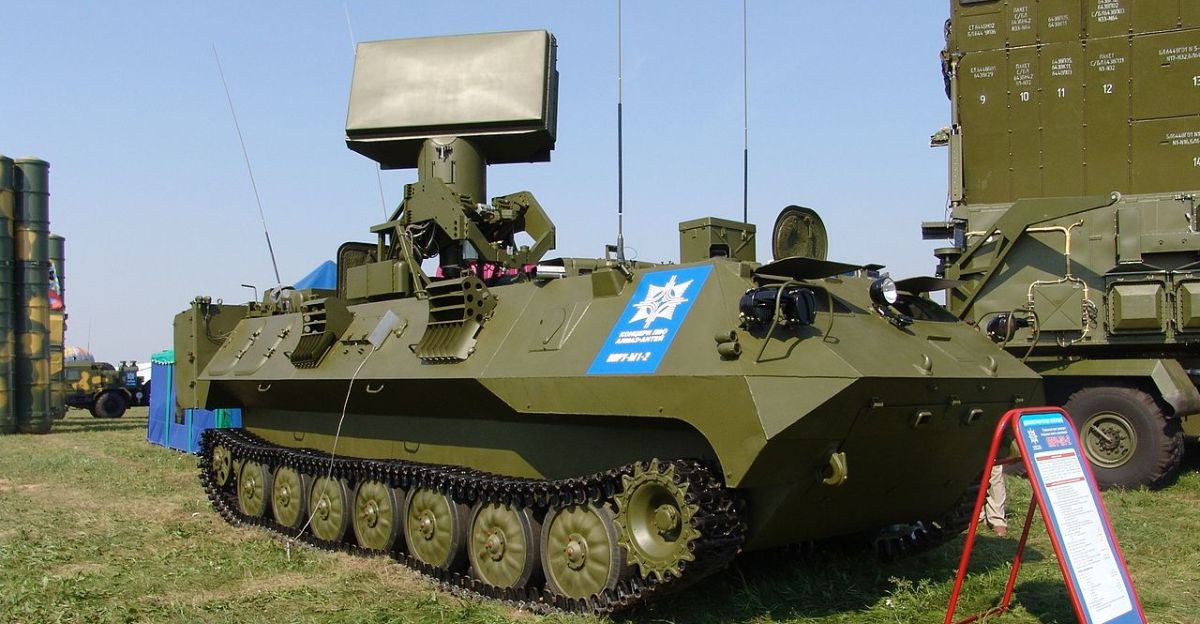
The PPRU-1 Ovod-M-SV emerged from Soviet military engineering in 1978, designed as a mobile reconnaissance and command post for tactical air-defense coordination. Built on the MT-LBu armored chassis, the system integrates radar and communications equipment to manage multiple air-defense batteries simultaneously. NATO designated the platform Dog Ear, reflecting its distinctive antenna configuration.
The system features impressive technical capabilities. The PPRU-1 can detect aircraft targets at ranges exceeding 40 kilometers and simultaneously track up to 99 separate objects. Despite being nearly 50 years old, Russia continues operating the PPRU-1 because modern air-defense networks depend on legacy systems to maintain integrated defense coverage across multiple regions.
How the System Coordinates Defense Operations
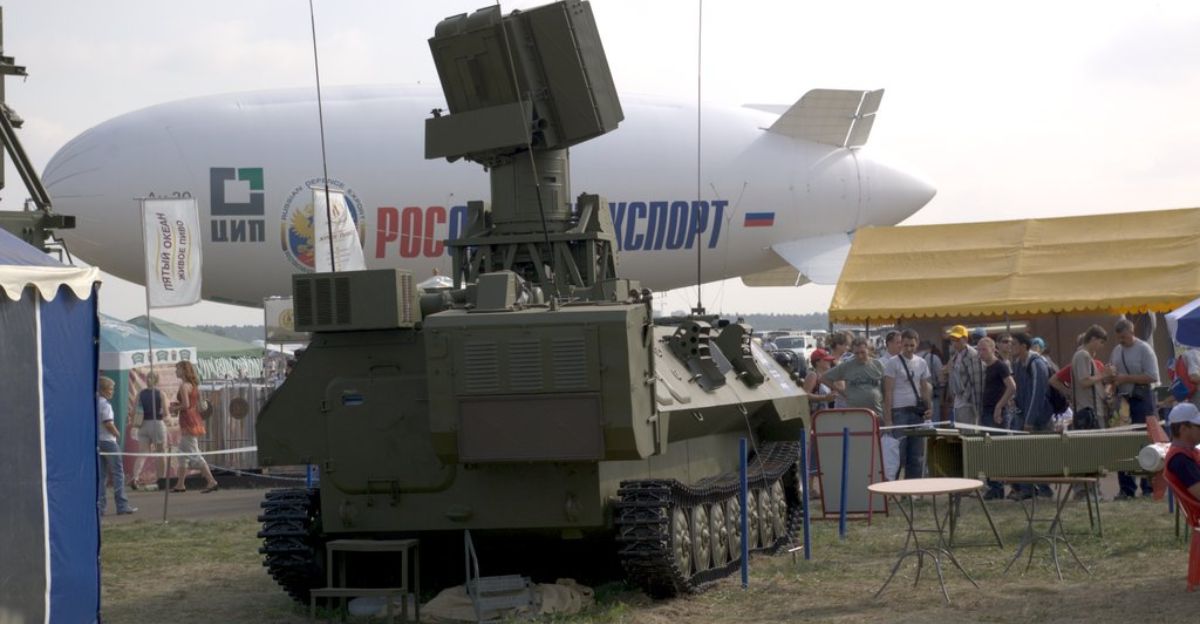
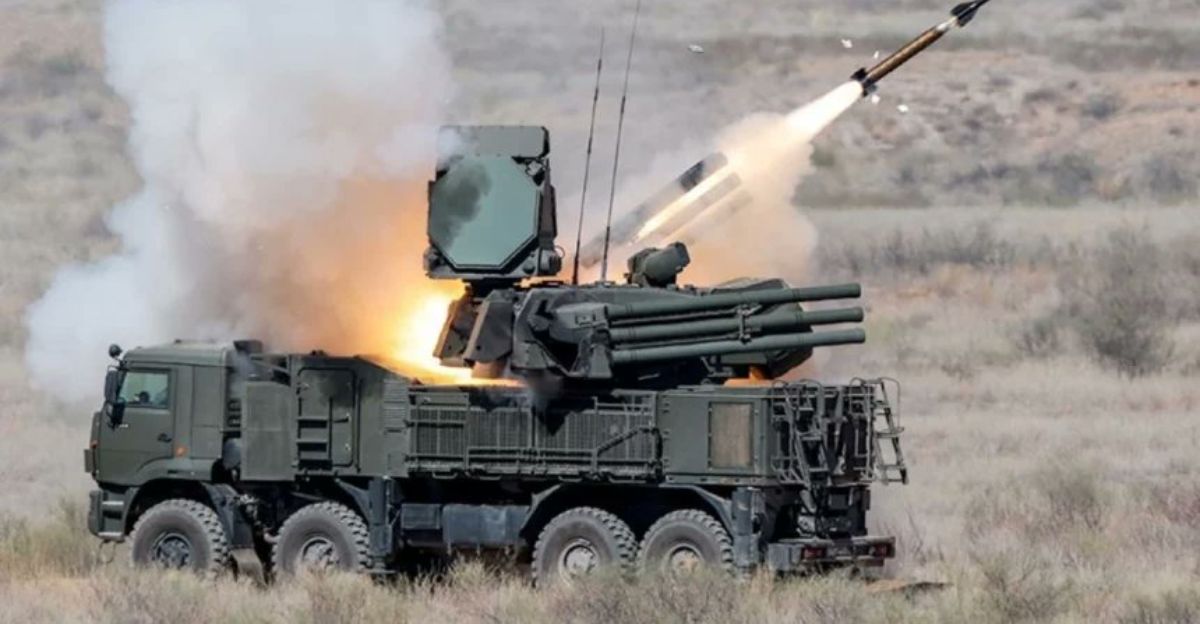
The PPRU-1 functions as the nerve center for Russian short-range air-defense operations, enabling centralized coordination of multiple weapon system types across a tactical sector. A single PPRU-1 can simultaneously manage fire control for up to four Tor-M1 or Osa-AKM missile systems, six Tunguska or Strela-10 platforms, and multiple gun systems.
Loss of such a command node forces Russian air-defense operators to either operate systems independently which significantly reducing effectiveness, or redistribute remaining command posts across wider areas. On the night of the PPRU-1 destruction, Ukrainian forces neutralized 89 of 104 Russian drones attacking the area, adding extreme pressure to Russian air-defense networks simultaneously managing the loss of command infrastructure.
Impact Beyond a Single Vehicle
Russian air-defense personnel trained to operate under centralized coordination must adapt to degraded command structures and work with limited information from alternative command sources. The Phoenix unit noted that eliminating this command post reduces the Russian army’s air-defense coordination capabilities in this sector, acknowledging the broader network impact. This collateral effect extends far beyond the destroyed vehicle itself, affecting dozens of air-defense personnel and multiple weapons systems across the region simultaneously.
Russian commanders face pressure to rapidly redistribute remaining command infrastructure while Ukrainian forces continue pressing attacks, creating a difficult operational environment.
Why This System Is Rare
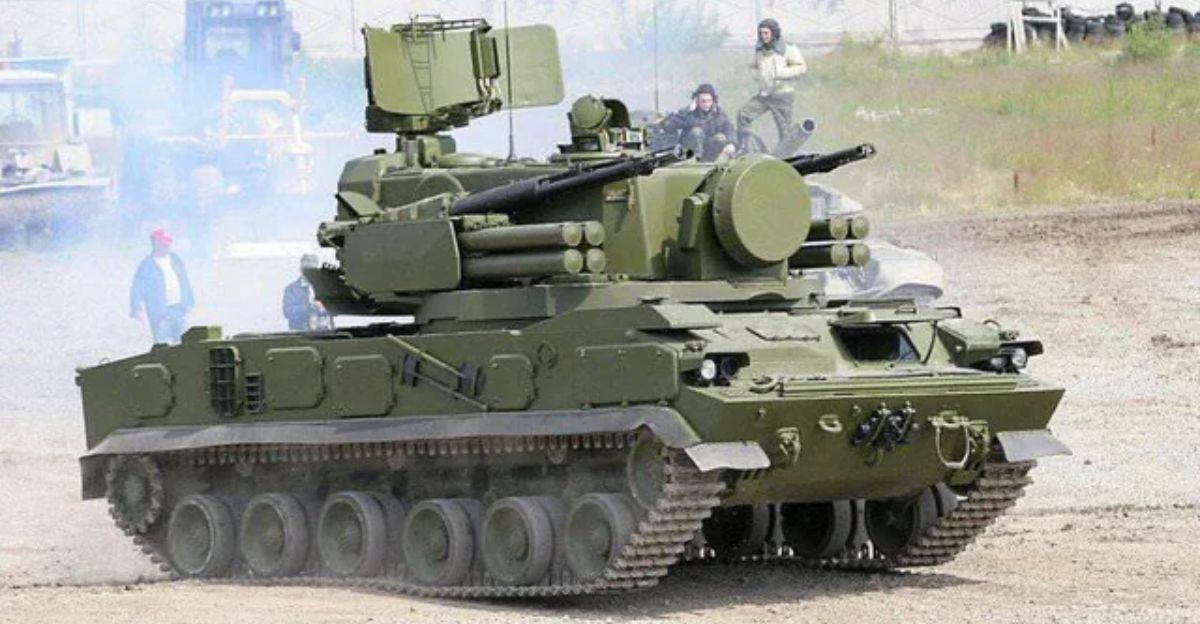
The PPRU-1 qualifies as rare because Russia produced limited quantities of the original system decades ago and has since developed modernized successors. Russia introduced upgraded PPRU-M1 and PPRU-M1-2 variants that offer improved capabilities, meaning the original PPRU-1 has been partially replaced by newer technology. However, Russia continues operating legacy PPRU-1 systems due to limited new-system production and high battlefield losses from the ongoing conflict.
The scarcity reflects Russia’s inventory constraints during prolonged conflict, where attrition rates exceed production capacity for replacement systems. Newer variants offer improved capabilities, but production capacity and logistics challenges limit availability.
The Drone Pilot’s Skill

FPV drone pilot Voyazh executed the strike during a deep-penetration patrol kilometers behind Russian lines, demonstrating exceptional tactical skill. The operator navigated through difficult conditions while maintaining situational awareness despite limited visual information. Upon detecting Russian personnel moving in an exposed area near the concealed command post, Voyazh made the critical tactical decision to engage the target directly.
This success reflects months of Ukrainian experience developing sophisticated FPV drone tactics for eliminating high-value targets. What began as improvised drone modifications has evolved into highly professional military capability rivaling conventional aviation in precision and effectiveness. Ukrainian military leadership has prioritized FPV drone development because this capability provides asymmetric advantage against
Targeting of Air-Defense Infrastructure
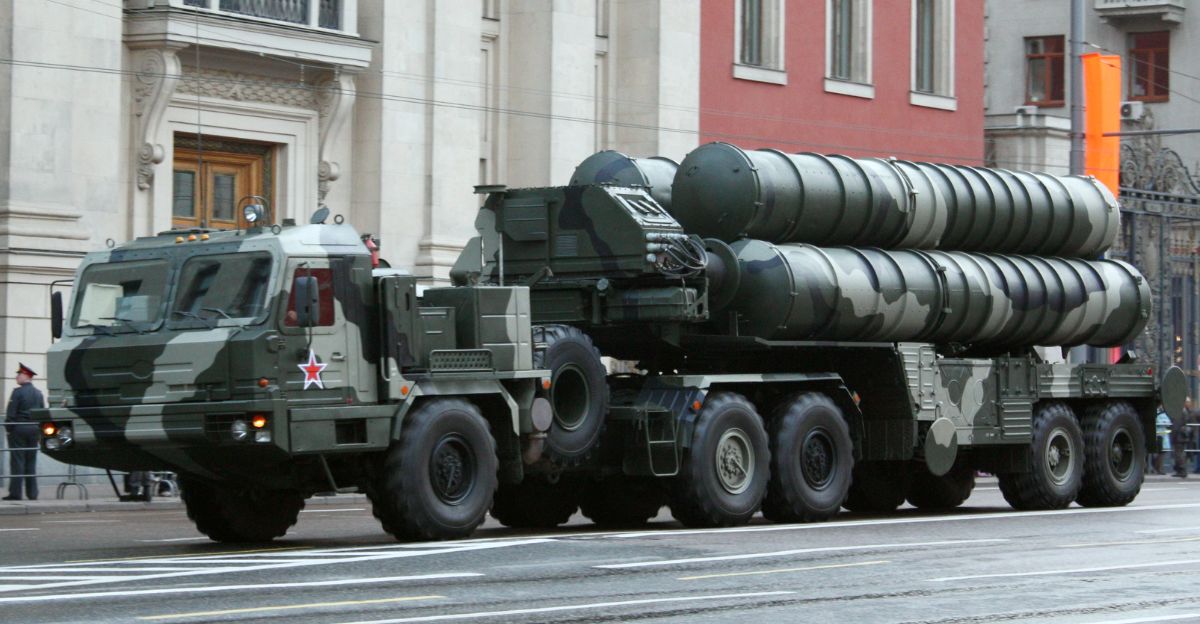
The PPRU-1 destruction represents part of a broader Ukrainian campaign systematically targeting Russian air-defense infrastructure. On the same operational period, Ukraine’s Defense Intelligence Directorate confirmed precision strikes against multiple Russian air-defense assets in occupied Crimea, including an S-400 92N6E radar system, its power unit, and additional surveillance systems.
These coordinated strikes across multiple regions suggest Ukrainian targeting strategy prioritizes air-defense command-and-control nodes and radar systems rather than lower-level equipment. Ukrainian military strategy appears designed to systematically eliminate the command infrastructure that enables Russia’s overall air-defense effectiveness. By targeting command posts, radar systems, and communications equipment simultaneously across different regions, Ukraine reduces Russia’s ability to defend against expanded air operations.
Donetsk as a Critical Air-Defense Battleground

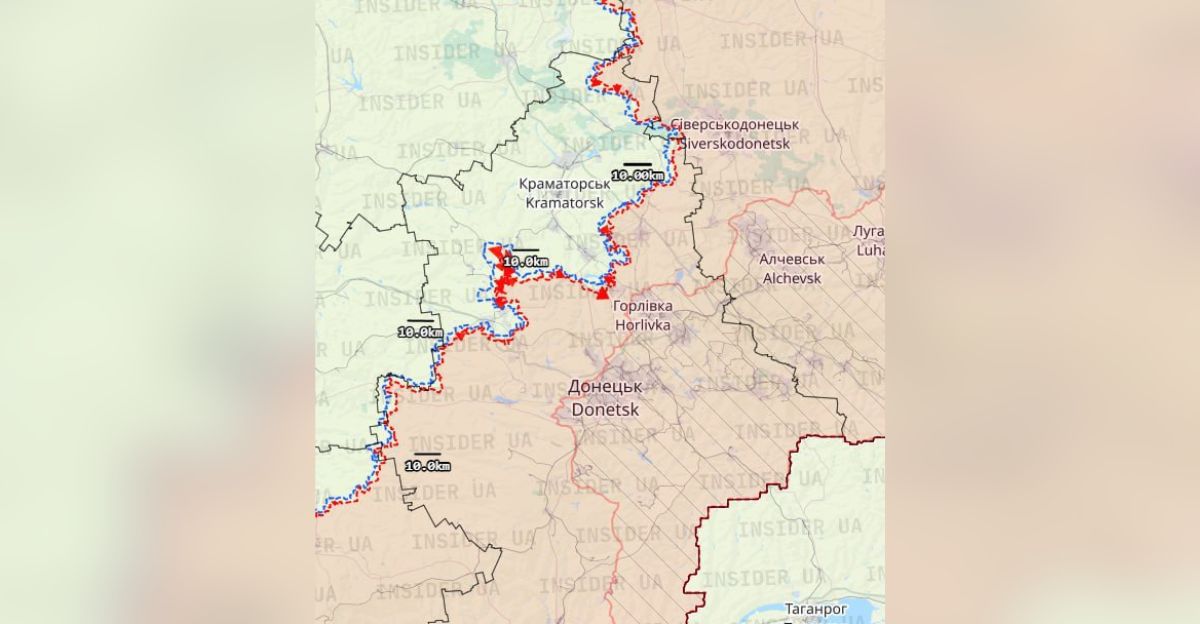
The destruction of the PPRU-1 in Donetsk region directly impacts how effectively Russia can defend against air attacks across a critical sector of the front line. Donetsk has become a major focus area where Ukrainian and Russian forces compete intensely for air-defense superiority. Loss of the command post forces Russian air-defense units in the area to operate with reduced coordination, making them significantly more vulnerable to Ukrainian air strikes and additional drone attacks.
Russian commanders must now redistribute remaining command infrastructure across other sectors or accept degraded air-defense performance in Donetsk with both options carry significant operational risk.
Russian Response Constraints
Russian military planners now confront a difficult strategic problem: they cannot quickly replace the destroyed PPRU-1, and remaining systems must cover expanded geographic areas. Russia has not publicly announced plans to replace or reinforce air-defense command infrastructure in Donetsk, suggesting either unavailability of spare systems or decision to prioritize other sectors.
Ukrainian forces have proven they will continue targeting air-defense command posts, creating persistent pressure on Russian logistics and personnel to maintain system availability. The tension between maintaining current operations and replacing destroyed equipment creates cascading operational difficulties for Russian military planners.
Disruption Beyond Equipment

The destruction of the PPRU-1 affects not only equipment but also Russian personnel trained to operate integrated air-defense networks. Air-defense crews trained specifically on PPRU-1 command procedures must adapt to degraded coordination capabilities or transition to alternative command systems with completely different interfaces and operating procedures.
Ukrainian officials estimated the destroyed system likely affected 15–25 Russian air-defense personnel in the immediate command structure. The loss compounds existing Russian personnel challenges, including combat rotation pressures, casualty replacement needs, and limited training capacity.
Balancing Replacement and Maintenance
The ongoing conflict has accelerated attrition of Russian air-defense assets, forcing Russia to deploy legacy systems that might otherwise have been retired from service. Ukrainian targeting of command infrastructure creates additional pressure on Russian logistics, as each destroyed system requires replacement or alternative compensation arrangements.
This tension between modernization requirements and immediate operational needs constrains Russian air-defense development and deployment strategies across the entire conflict zone[5].
Ukrainian Tactical Evolution

Ukrainian forces transformed commercial FPV drone technology into precision strike weapons, enabling deep-penetration operations previously impossible with traditional military aircraft. The Phoenix unit’s successful strike demonstrates how Ukrainian forces systematized FPV drone operations through developing targeting procedures, pilot training protocols, and mission planning that rival professional military aviation.
The PPRU-1 strike represents the culmination of months of Ukrainian experience developing sophisticated FPV tactics for air-defense targeting. Ukrainian military leadership has prioritized FPV drone development because this capability provides asymmetric advantage against Russian forces.
Sustainable Advantage or Tactical Success

The destruction of this rare PPRU-1 raises a critical strategic question: can Ukraine systematically degrade Russian air-defense coordination faster than Russia can replace or repair lost systems?
If this pattern continues, Russian air-defense networks may fragment into independent, less-effective units unable to coordinate integrated defense. The coming months will reveal whether Ukrainian targeting of air-defense command posts represents a sustainable strategic advantage or a temporary tactical success.
Sources:
State Border Guard Service of Ukraine. (2025, November 22). The “Phoenix” UAV unit destroyed a unique target: the PPRU-1 “Ovod.”
Stanford Security Studies. (2024). Small, low-altitude drones and detection challenges. Military Technology Assessment.
Military Review. (2025, November). The evolution of air defense: Adapting to emerging threats. U.S. Army Publications.
Commander Syrskyi, Ukrainian Armed Forces. (2025, August 7). Ukrainian military report on drone operations. Kyiv Independent.