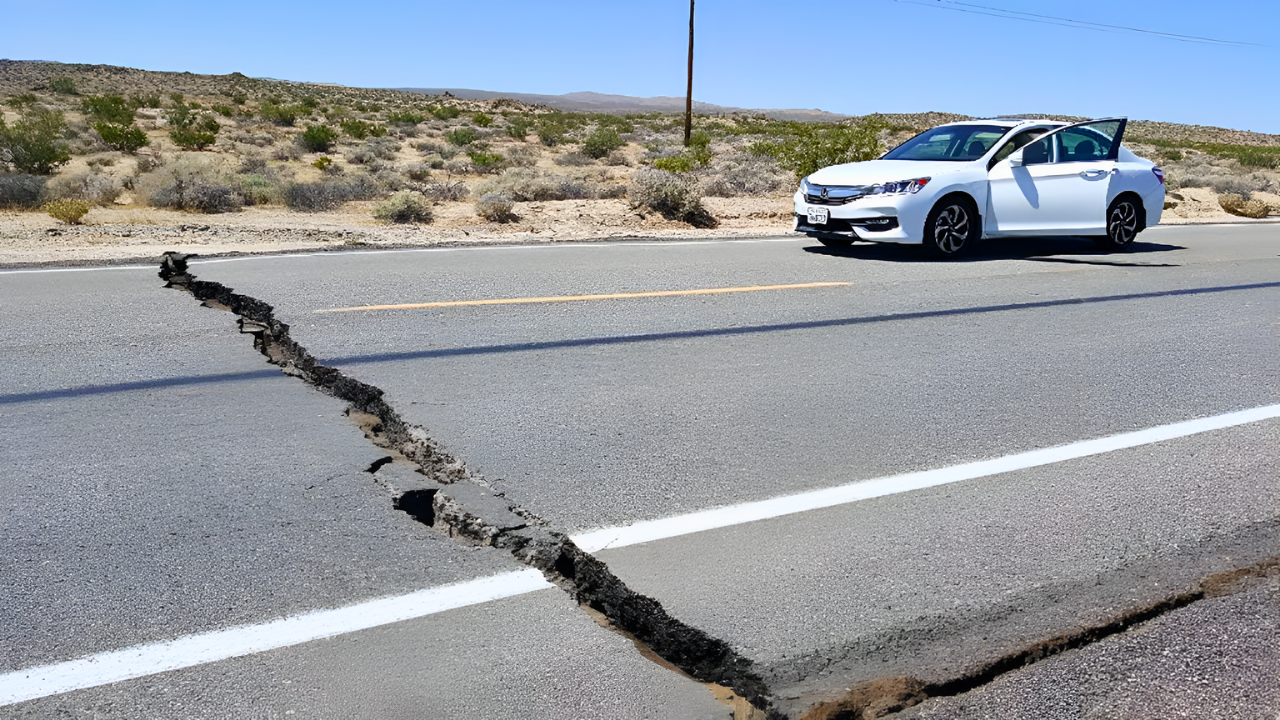
In California’s East Bay, a recent swarm of small earthquakes has pushed long-standing seismic risks back into public view. Since early November 2025, at least 90 minor quakes have been recorded around San Ramon, which sits directly on the Calaveras Fault, one of the state’s most active fault lines. The strongest, a magnitude 3.1 event on December 16, produced rattling but no major damage. Still, for the Bay Area’s roughly 7.5 million residents, the activity has revived questions about safety, insurance, infrastructure, and the broader economic consequences of a major earthquake.
The most consequential risk remains the long-term outlook. The U.S. Geological Survey’s 2014 Working Group on California Earthquake Probabilities, updated in 2016, estimates a 72% chance that a magnitude 6.7 or larger earthquake will strike somewhere in the Bay Area by 2043. Scientists emphasize that the recent small events do not significantly change that probability; the forecast reflects decades of fault behavior and geologic data rather than short-term swarms. For residents and policymakers, the current shaking is less a new warning than a reminder of a hazard that has been on the books for years.
Insurance, Housing, and Economic Strain
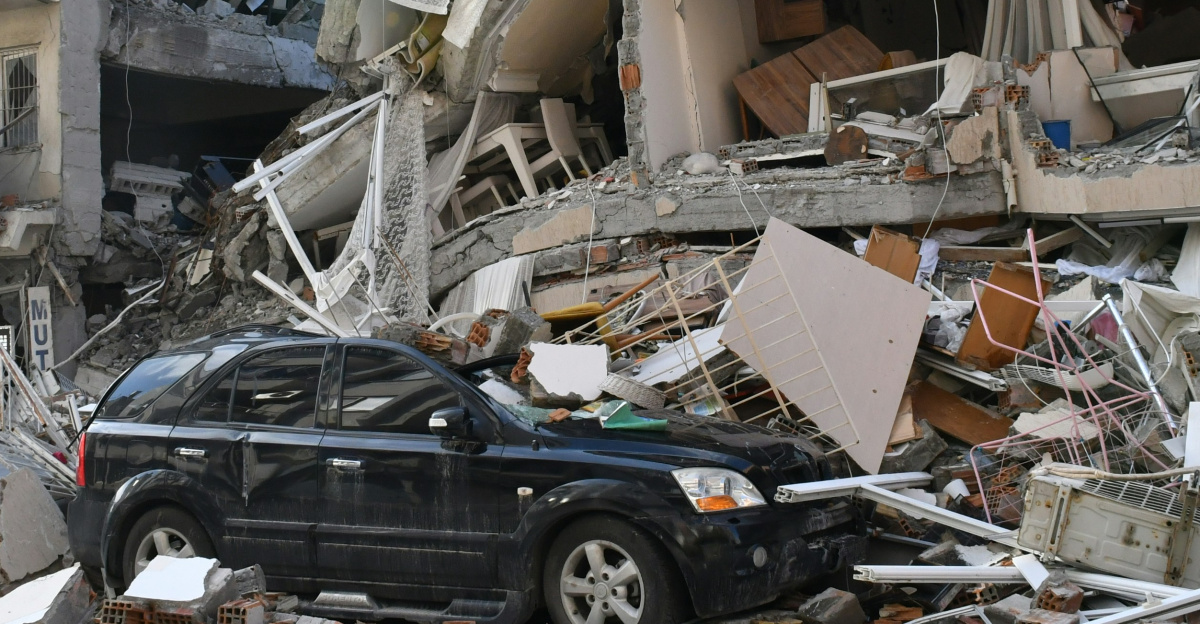
The renewed attention to seismic risk comes amid steep and rising costs for protection. In California, earthquake insurance averages about $3.54 per $1,000 of coverage, or roughly $2,478 a year for a home insured for $700,000. The California Earthquake Authority (CEA), which provides most residential earthquake policies in the state, raised rates by 6.8% in January 2025, adding around $70 a year to a typical policy. Households in the Bay Area often pay considerably more: in Alameda County, average annual earthquake coverage runs close to $4,550.
These costs are reshaping housing decisions. Prospective buyers are increasingly asking whether properties have been seismically retrofitted or lie outside the highest-risk zones. Real estate professionals report more questions about foundation work, cripple-wall bracing, and soft-story vulnerabilities. As awareness grows, some owners invest in upgrades, while others worry that ongoing anxiety over seismic risk could weigh on property values and slow recovery in the wake of a major event.
For insurers, the evolving risk picture has prompted a re-examination of pricing and coverage. The CEA and private companies are placing greater emphasis on mitigation—such as structural retrofits and securing critical equipment—as a way to keep policies available and premiums within reach. Policyholders are being urged to study deductibles, exclusions, and limits closely so they understand what damage a future quake would and would not cover.
Retrofitting, Infrastructure, and Health Systems

Demand for seismic retrofitting has grown sharply across the Bay Area. Engineering firms report backlogs stretching into 2026 as homeowners seek to strengthen older structures. Research from Stanford University suggests that a magnitude 7.2 earthquake on the Hayward Fault in the region could cause about $115 billion in damage. Analysts estimate that widespread retrofitting could reduce those losses by up to $41 billion and prevent the collapse of approximately 5,000 housing units. These projections are helping drive investment in foundation anchoring, shear walls, and other reinforcement measures.
Public programs are also playing a role. California’s Earthquake Brace + Bolt initiative offers grants of up to $3,000 to help owners of vulnerable homes complete basic seismic upgrades. At the same time, state officials are tying resilience to broader infrastructure spending. In December 2025, Governor Gavin Newsom announced $1.1 billion in transportation investment that includes projects designed with seismic performance in mind. These efforts align with federal disaster-preparedness frameworks that emphasize hardening critical networks before disaster strikes.
Hospitals and healthcare facilities are another focus. Medical centers around the Bay Area are updating emergency response plans to account for potential surges in patients, power interruptions, and disrupted pharmaceutical supplies. Many are running regular drills and coordinating regionally to share resources during an emergency. Studies indicate that a large quake could quickly overwhelm emergency departments if facilities are not prepared for both structural stresses and logistical challenges.
Business Continuity and Global Supply Chains

Seismic risk is compelling large corporations to reassess how they would operate through and after a major quake. Companies such as Google, Meta, and Wells Fargo are updating business continuity plans, emphasizing backup data systems, redundant communications, and alternative worksites. Following standards such as ISO 22301, organizations are conducting Business Impact Analyses to identify critical operations, determine acceptable downtime, and map supply chain weak points.
The concern extends far beyond the Bay Area. California plays a central role in the production and distribution of semiconductor tools and other advanced technology hardware. A prolonged shutdown of facilities in the region could ripple through global supply chains. In response, firms including ASML and Tokyo Electron are diversifying manufacturing, warehousing, and logistics hubs to reduce dependence on any single seismic zone. Insurers for high-value industrial goods are adjusting premiums to reflect the potential for disruption stemming from major West Coast earthquakes.
Within California, agriculture and food processing introduce additional vulnerabilities. Farmers in the Central Valley, which supplies a substantial share of the nation’s fruits and vegetables, worry that a powerful quake could damage irrigation networks, storage facilities, and processing plants. Equipment dealers report increased interest in seismic monitoring tailored to agricultural operations. Many farmworkers—especially undocumented laborers—are concerned about the stability of both housing and employment if a large event affects the systems that support field work and distribution.
Human Impact, Inflation Pressures, and the Road Ahead

Beyond physical damage, repeated tremors and long-term forecasts are taking a psychological toll. Mental health professionals in the East Bay and other high-risk areas report rising stress tied to living with the prospect of a major quake. In response, local organizations and agencies are offering more counseling services, preparedness workshops, and community meetings that aim to pair practical guidance with emotional support.
Economists warn that preparing for and recovering from earthquakes could add to inflation pressures in certain sectors. The cost of construction materials and skilled labor has already climbed, and a surge in retrofitting and post-disaster rebuilding would likely push prices higher. Insurance costs are another concern, as carriers recalibrate models to account for both structural risk and the broader economic fallout from a large seismic event.
At the same time, many residents and institutions are moving from abstract concern to concrete action—retrofitting homes, purchasing or adjusting insurance, organizing neighborhood response teams, and participating in public drills. Policymakers, businesses, and local communities are increasingly focused on building a culture of resilience that treats earthquakes as an enduring, manageable hazard rather than an unpredictable shock. The coming years will test whether those efforts can keep pace with the region’s growth, protect its most vulnerable residents, and safeguard its role in national and global economies as the Bay Area continues to live with the likelihood of a future major quake.
Sources:
U.S. Geological Survey (USGS), December 2025 – Earthquake swarm monitoring and Calaveras Fault analysis
CBS News San Francisco, December 16, 2025 – Magnitude 3.1 earthquake reporting
USGS Fact Sheet 2016-3020 – “Earthquake Outlook for the San Francisco Bay Region”
USGS Research Geophysicist Annemarie Baltay Interview, December 2025
California Earthquake Authority (CEA), January 2025 – Rate increase documentation and premium analysis
Hippo Insurance Cost Analysis, 2025 – California earthquake insurance pricing