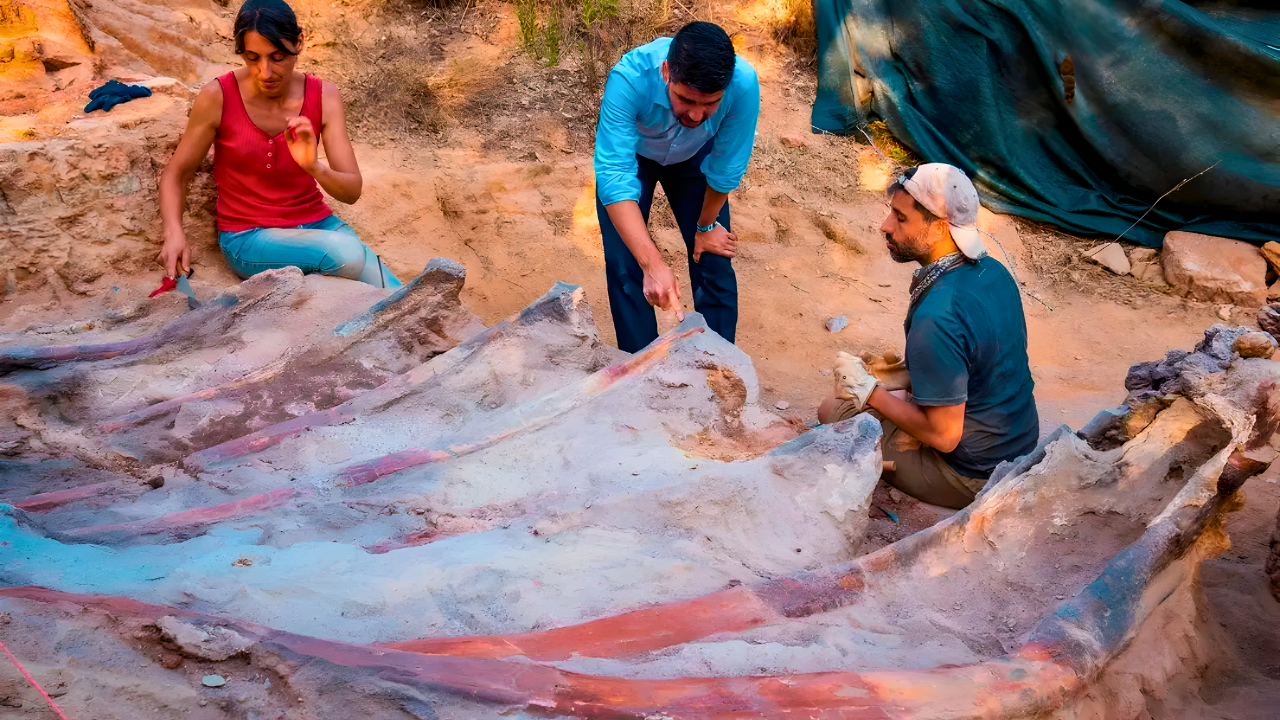
In 2017, something extraordinary happened in the small Portuguese town of Pombal. A homeowner was digging in his backyard for a construction project when he discovered large, unusual bones in the soil. He immediately stopped work and called paleontologists (scientists who study fossils) at the University of Lisbon.
This simple decision led to one of the most important dinosaur discoveries in European history. A team led by Dr. Elisabete Malafaia spent five years carefully excavating the site, which scientists named Monte Agudo. Between 2017 and 2022, they unearthed an almost complete skeleton of a massive sauropod—a long-necked dinosaur that walked on four legs.
In August 2022, the team revealed a ribcage measuring almost ten feet long, still arranged exactly as it had been when the animal died, approximately 145 to 150 million years ago, during the Late Cretaceous period. Researchers consider this 82-foot-long, 39-foot-tall dinosaur the largest ever discovered in Europe.
The Lusitanian Basin, where Pombal is located, was once a landscape filled with rivers and floodplains that created ideal conditions for preserving the bones of these giant creatures.
Rare Skeleton Reveals Secrets About Ancient Giants
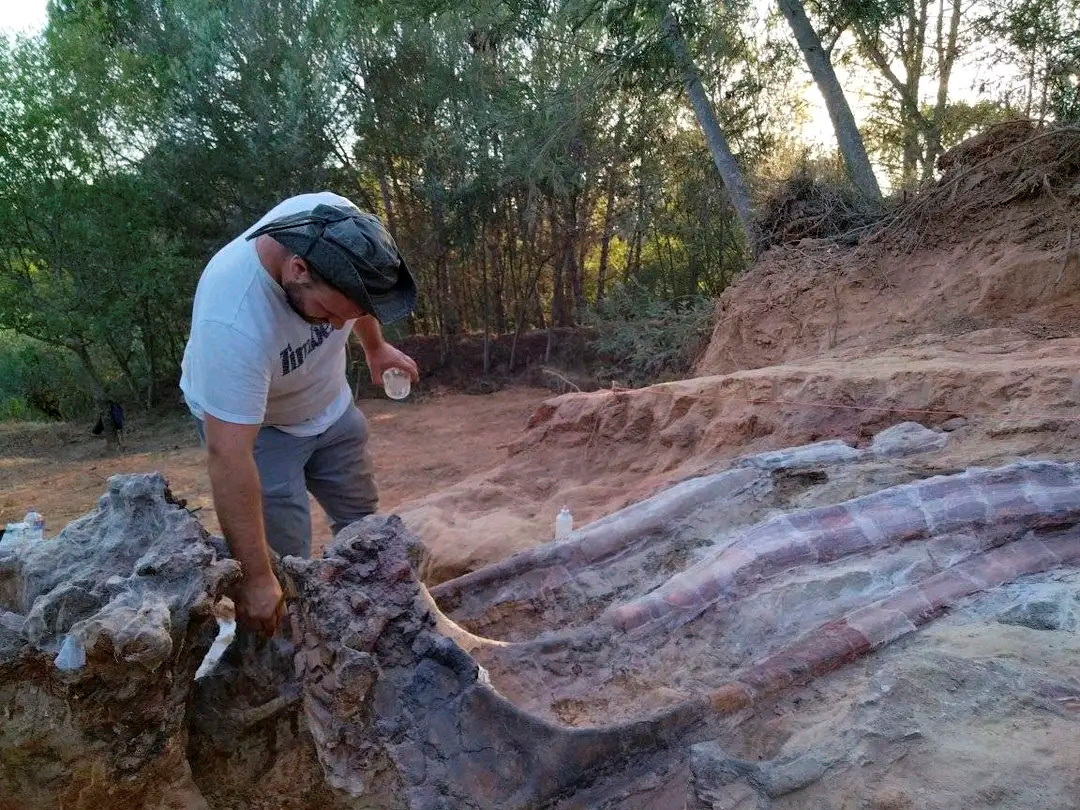
The discovery of such a complete skeleton is extremely rare and of incredible value to science. Most large dinosaur bones scatter and disappear after death, broken apart by scavengers or swept away by water. Rapid burial from a sudden flood or mudslide kept the bones perfectly undisturbed.
This rapid burial protected the skeleton from decay and damage, preserving it much better than most fossils found in the region. Dr. Malafaia called it “one of the biggest specimens discovered in Europe, perhaps in the world.” Scientists can now study every detail of the dinosaur’s skeleton, learning how these animals lived, grew, and evolved.
The skeleton belongs to the Brachiosauridae family, likely that of a species called Lusotitan atalaiensis, known for its extremely long neck, which allowed it to feed on vegetation high above the ground. Extracting these massive bones required extreme care and precision. Teams carefully wrapped and covered each rib, measuring nearly ten feet long, with soft materials and plaster-soaked burlap to prevent damage during removal.
Teams used hand tools and special chemicals to preserve the delicate fossils. Once transported to the University of Lisbon, specialists spent months slowly removing rock and plaster from the bones. Advanced imaging technology, including CT scans, allowed researchers to examine the internal structure of the bones, revealing details about the dinosaur’s health and growth patterns.
The discovery challenges what scientists previously believed about European dinosaurs. Until now, the largest known sauropods from Europe were thought to be smaller than their South American relatives, such as Patagotitan, which could weigh up to 80 tons. This Portuguese specimen, at 82 feet long, rivals these giants and shows that Late Jurassic Portugal could support truly enormous dinosaurs.
How This Discovery Benefits Science and Community
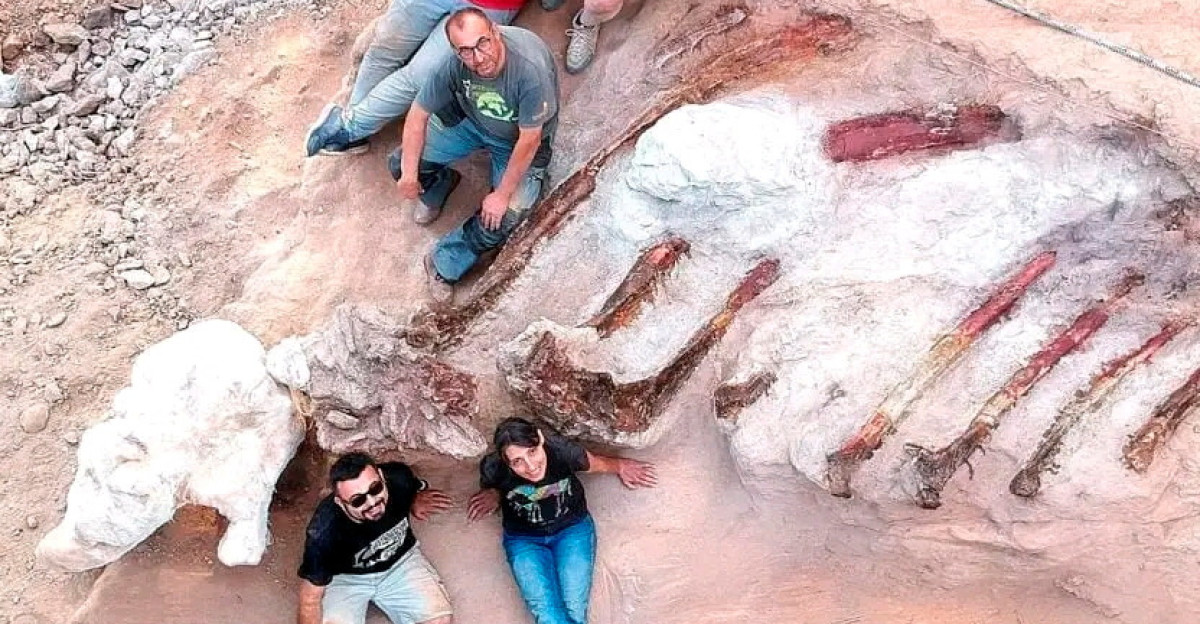
The Monte Agudo discovery has benefits extending far beyond science. Local authorities in Pombal recognized the tourism potential and supported the ongoing research. Nearby Lourinhã, already famous as Portugal’s “Dinosaur Capital,” attracts thousands of visitors each year to its dinosaur park and museum, generating significant revenue for the region.
Pombal officials hope this new discovery will bring similar economic benefits to their town. The find also attracted worldwide attention when images of the backyard dinosaur went viral on social media. People everywhere connected with the story’s relatability—an ordinary homeowner accidentally discovering a prehistoric giant.
Portuguese law now protects important fossil finds, sometimes requiring construction projects to be halted so scientists can conduct investigations. The government is also discussing proposals to compensate landowners who cannot develop their property due to protected fossils, aiming to balance scientific interests with property rights.
As researchers plan future excavations at Monte Agudo, this discovery reminds us that some of the greatest scientific breakthroughs begin with simple curiosity and reaching out to experts. Each new fossil discovery not only expands our understanding of Earth’s ancient past but also shapes the cultural and economic future of the communities where these prehistoric giants are found.