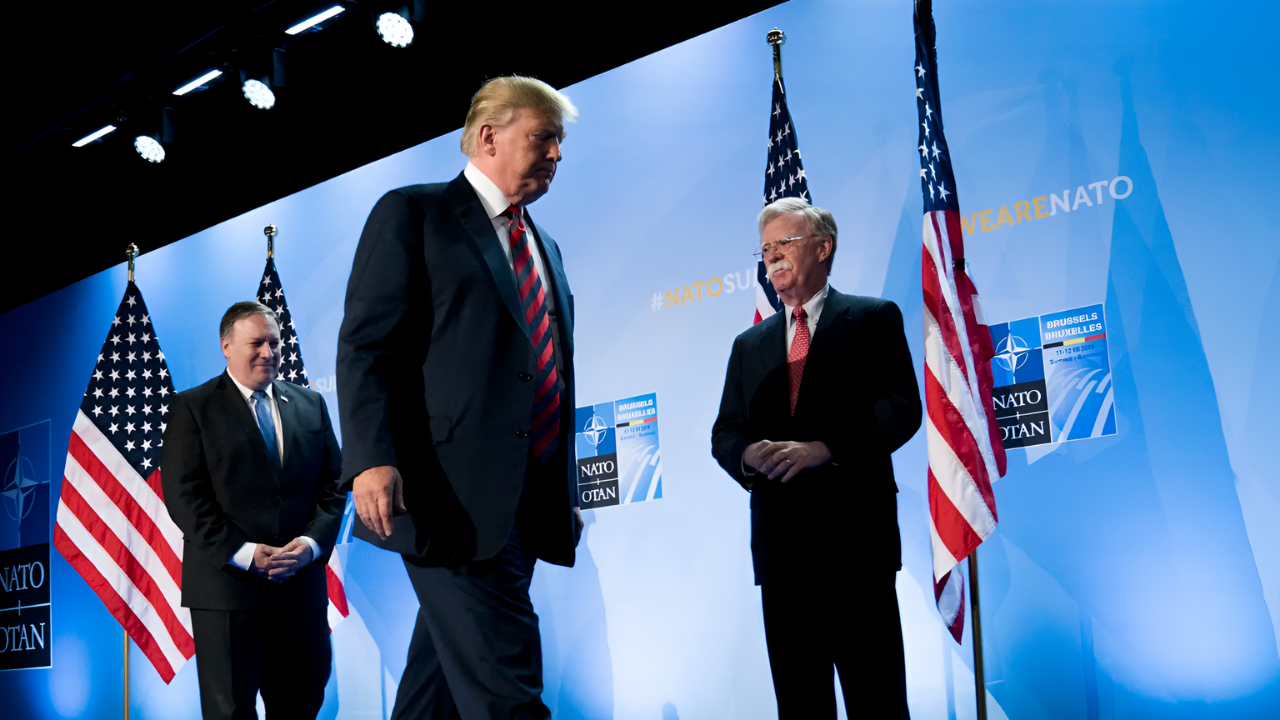
NATO allies’ confidence in U.S. leadership has plummeted to 21% in 2025, a 14-point drop from the previous year, while approval of China’s leadership has risen to 22%, marking a rare parity between the two powers.
This shift, captured in Gallup’s polling from March to October 2025, precedes recent tensions like U.S. military actions in Venezuela and discussions about controlling Greenland. Such developments have heightened concerns in alliance capitals, where trust forms the foundation of NATO’s collective defense.
Where the Backlash Hits Hardest
Declines in U.S. approval are steepest in key members. Germany saw a 39-point fall from 2024 to 2025, Portugal a 38-point drop. Across NATO’s 31 members, 18 recorded double-digit decreases, signaling widespread unease. Turkey bucked the trend with a 12-point gain, even as Europe soured.
These shifts prompt questions in nations like Denmark and Portugal about the reliability of their security guarantees, nudging them toward exploring alternative partnerships.
Patterns in U.S. Standing
Support for American leadership has long fluctuated with White House occupants. Under Barack Obama, median NATO approval averaged 45%, rivaling views of the European Union and trailing Germany’s rating only slightly. Donald Trump’s first term dragged it to 22%, Joe Biden lifted it to 39%, and 2025 readings match early lows from George W. Bush’s era and Trump’s initial years, now at 21%.
European leadership fares better, with EU approval at 60% and Germany’s at 54% across NATO publics.
Strains on Transatlantic Ties
U.S. moves in Venezuela and rhetoric on Greenland fuel perceptions of disrupted NATO norms. Demands for allies to reach 5% GDP defense spending—double the current 2% target—add pressure, viewed as unrealistic by many governments despite some spending increases.
China advances through European infrastructure loans, especially in the Balkans and southern regions, providing capital amid these frictions. Publics in several states resent the pushy tone over persuasion.
China’s Emerging Edge
In eight NATO countries—Slovenia, Luxembourg, Turkey, Bulgaria, Spain, Montenegro, Iceland, and Greece—China leads U.S. approval by at least 10 points. Alliance-wide, Beijing’s median stands at 22% against Washington’s 21%, the first such crossover in years.
Only Poland, Albania, and Romania clearly favor the U.S. Southern Europe drives the change: Spain up 15 points, Greece 14, Turkey 21 from 2024-2025. Northern holds like Iceland show U.S. approval at 9%. These eight nations represent over 120 million people.
Leaders Voice Alarm
Danish Prime Minister Mette Frederiksen warned that a U.S. attack on Greenland, part of Denmark’s realm, would end NATO and post-World War II security. Canada’s government under Mark Carney eyes deeper China trade to lessen U.S. reliance.
China’s advances are uneven: double-digit gains only in Spain, Italy, and Belgium. In many states, views of Beijing stagnated, and some U.S. ratings held steady, suggesting opportunistic fills of gaps from trade spats, climate rifts, and territorial issues.
NATO confronts Ukraine’s war, Russia-China military ties, and U.S. skepticism on European burdens. Globally, China outpolls the U.S. in 76 of 96 countries, reversing early 2000s trends. Only three NATO states strongly back Washington; 20 see parity, eight tilt to Beijing—down from five U.S. clear leads in 2020.
Baltic states fret U.S. debates on their defense worthiness; Greenland talk evokes intra-alliance force fears. Defense spending pressure, though longstanding, irks due to delivery.
Allies hedge with higher budgets for self-reliance and EU-led infrastructure shifts, where the bloc holds 60% approval. As 2026 advances, rebuilding U.S. trust amid Greenland and Venezuela fallout remains critical, with China poised to exploit slips and upcoming crises testing alliance resolve.
Sources:
Gallup – U.S. Leadership Approval Drops Among NATO Allies – January 21, 2026
Statista – U.S. Leadership Approval Slips Among NATO Allies – January 20, 2026
News3LV / Fox Baltimore syndicated package – Should US Stick With NATO as Approval of American Leadership Falls? – January 15, 2026
China Daily – It’s Clear Who’s Answering the Call of the Times – January 2026
European Union Institute for Security Studies – Low Trust: Navigating Transatlantic Relations Under Trump 2.0 – October 14, 2025