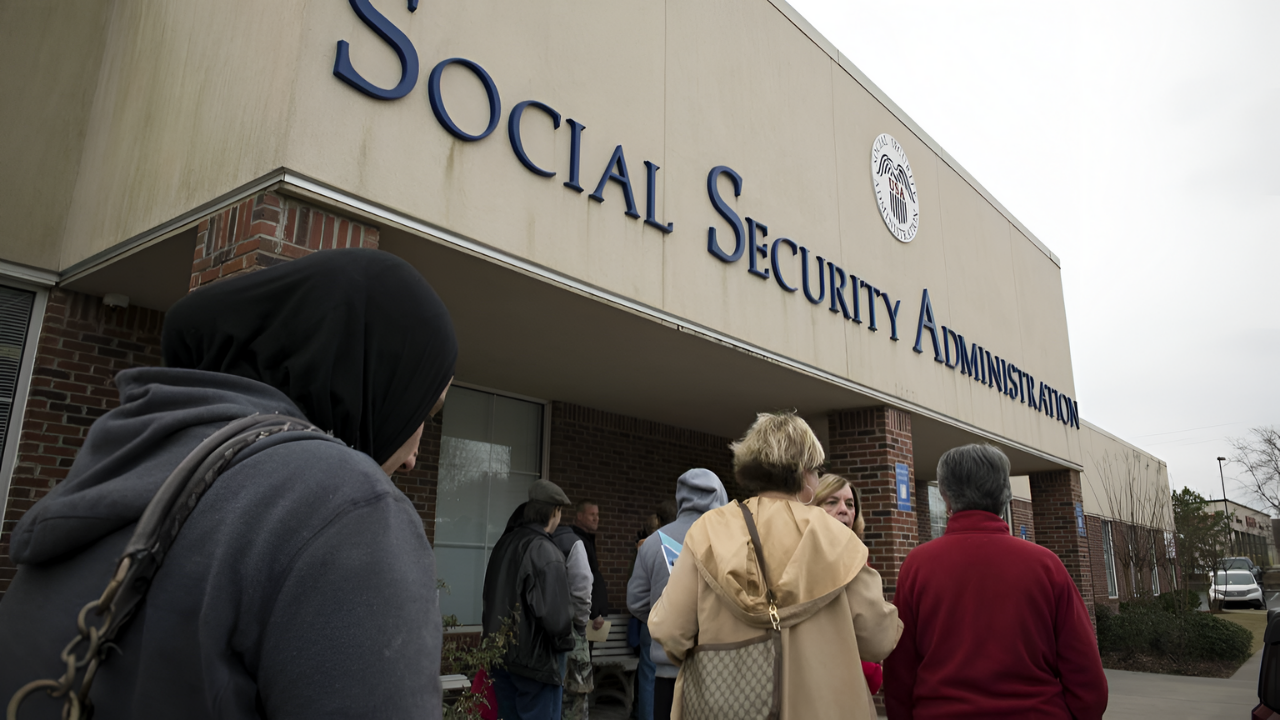
Seventy-five million Americans who rely on Social Security will see much of their 2026 increase absorbed by higher healthcare costs, as Medicare Part B premiums climb at more than three times the pace of Social Security’s cost-of-living adjustment. For many retirees, nearly 40% of their annual benefit boost will be lost to Medicare premiums before it ever reaches their bank accounts.
Cost-of-Living Boost, But Limited Spending Power

The Social Security Administration implemented a 2.8% cost-of-living adjustment (COLA) starting January 1, 2026, affecting about 71 million Social Security beneficiaries and 7.5 million Supplemental Security Income (SSI) recipients. The increase is based on the Consumer Price Index for Urban Wage Earners from the third quarter of 2025, edging up from 2025’s 2.5% adjustment but still below the 10-year average of 3.1%.
On average, retirees gained $56 a month, lifting the typical retirement benefit from $2,015 to $2,071. Disabled workers saw their average benefit rise from $1,586 to $1,630. Married couples who both receive benefits gained about $88 a month, bringing their combined average benefit to $3,208. These increases apply automatically; beneficiaries do not need to file additional paperwork.
Advocacy groups argue the 2.8% adjustment does not keep pace with actual living costs, especially for older adults. Ramsey Alwin, president and CEO of the National Council on Aging, has described the 2026 adjustment as “woefully inadequate” amid rapidly rising healthcare expenses. Financial consultant Stephanie Ford similarly noted that the increase “doesn’t necessarily enhance their financial situation” when healthcare and housing costs continue to outstrip general inflation.
Medicare Premiums Climb to New Highs

The financial strain is magnified by Medicare Part B, which covers outpatient services and physician visits. In 2026, the standard Part B premium climbed to $202.90 per month, the first time it has ever exceeded $200. That 9.7% jump from 2025’s $185 premium ranks among the steepest percentage increases in recent years.
The annual Part B deductible also rose, from $257 to $283, adding another layer of out-of-pocket costs for enrollees. Taken together, the higher premium and deductible mean that a large share of the average retiree’s COLA is effectively offset by medical expenses.
Tricia Neuman, senior vice president at KFF, explained that “many individuals will not receive the COLA they might expect, as the premium deduction diminishes part of it.” For a typical retiree, the $17.90 monthly premium increase eats up almost one-third of their $56 COLA, leaving only about $38 in additional monthly purchasing power.
Higher Taxes and Larger Potential Benefits

Several other important changes took effect in 2026 that affect workers as well as retirees. The taxable wage base for Social Security payroll taxes increased from $176,100 to $184,500. Earnings above this amount are not subject to the 6.2% Social Security tax, but workers whose pay now falls under the higher cap will pay more. Employees at or above the new maximum will contribute an additional $520.80 in Social Security taxes in 2026, while self-employed workers—who pay both the employer and employee share—will owe an extra $1,041.60. About 6% of American workers are affected by this change.
The maximum benefit available to retirees also increased. For those who claim benefits at full retirement age, the maximum monthly payment rose to $4,152, up from $4,018 in 2025. Workers who delay claiming until age 70 can receive up to $5,181 a month, while those who sign up early at age 62 receive a maximum of $2,969. To qualify for the top benefit, a worker must have earned at or above the taxable maximum for 35 years.
The gap between claiming early and waiting until 70—$2,212 a month in 2026—illustrates the substantial long-term impact of timing decisions. For people in good health who have other income sources, delaying benefits can generate roughly 8% higher payments for each year past full retirement age, potentially resulting in much larger lifetime benefits for those who live into their late 80s or beyond.
Work Rules and Disability Thresholds Adjust Upward

Social Security’s rules for working beneficiaries also shifted. Individuals who have not yet reached full retirement age can now earn up to $24,480 annually, or $2,040 a month, before the earnings test reduces their benefits. Above that amount, $1 in benefits is withheld for every $2 earned. For those who will reach full retirement age during 2026, the higher limit is $65,160 in earnings, with $1 withheld for every $3 earned above that threshold.
Financial planner Bill Shafransky warns the earnings test can be a “rude wake-up” for people who return to work and see their checks shrink, and in some cases, “the benefit actually zeros out entirely.” However, months in which benefits are withheld are not lost forever. Once a beneficiary reaches full retirement age, the Social Security Administration recalculates their benefit to credit back the withheld months in the form of higher future payments.
There is no earnings limit after full retirement age. At that point, workers can earn unlimited wages without any reduction in their Social Security checks. Investment income, pensions, and capital gains are never counted toward the earnings test at any age.
For disability beneficiaries, the Substantial Gainful Activity (SGA) thresholds also increased. In 2026, non-blind individuals on disability can earn up to $1,690 a month without being considered capable of substantial work, while blind beneficiaries can earn up to $2,830, up from $2,700. Exceeding these amounts can affect disability eligibility.
Separately, the Trial Work Period allows disability beneficiaries to test their ability to work for up to nine months within a rolling 60-month window, regardless of how much they earn. In 2026, any month with earnings over $1,210 counts as a trial work month. This framework is designed to give people with fluctuating health a chance to attempt returning to employment without immediately losing their benefits.
SSI, Credits, and Long-Term Outlook
Low-income individuals receiving Supplemental Security Income also saw modest increases. The maximum federal SSI payment rose to $994 a month for individuals and $1,491 for eligible couples, increases of $27 and $41 respectively. About 7.5 million people receive SSI based on financial need rather than work history. The federal resource limits, however, remain unchanged at $2,000 for individuals and $3,000 for couples. Because January 1, 2026, falls on a federal holiday, SSI recipients received their first COLA-adjusted payment on December 31, 2025.
Workers accruing eligibility for future benefits face slightly higher thresholds as well. It now takes $1,890 in earnings to receive one Social Security work credit, up from $1,810. Earning $7,560 in 2026 generates the maximum four credits for the year. Most workers need 40 lifetime credits—generally about 10 years of work—to qualify for retirement benefits, though younger disabled workers may qualify with fewer.
These annual adjustments unfold against a backdrop of long-term financing concerns. The Social Security trust funds are projected to be depleted in 2034, after which ongoing payroll tax revenue is expected to cover only about 80% of scheduled benefits unless lawmakers act. Policy options under discussion include raising the taxable wage base further, changing retirement ages, or revising the benefit formula, each with different effects on workers and retirees.
At the same time, healthcare spending continues to grow faster than the broader economy. National health expenditures rose around 8% in 2024 and are projected to keep outpacing GDP growth, a trend that erodes the buying power of retirees whose income depends on benefits and COLAs. In response, the Social Security Administration is modernizing service delivery through enhanced “my Social Security” online accounts, streamlined COLA notices, and electronic alerts, aiming to give beneficiaries clearer, more timely information as they navigate increasingly complex financial decisions in retirement.
Sources:
“Social Security Announces 2.8 Percent Benefit Increase for 2026.” Social Security Administration, October 2025.
“2026 Medicare Parts A & B Premiums and Deductibles.” Centers for Medicare and Medicaid Services, November 2025.
“Medicare Part B Premium to Top $200 a Month in 2026.” AARP, November 2025.
“7 Social Security Changes That Take Effect Today.” Yahoo Finance, January 2026.
“Six Changes Coming to Social Security in 2026.” Kiplinger, October 2025.