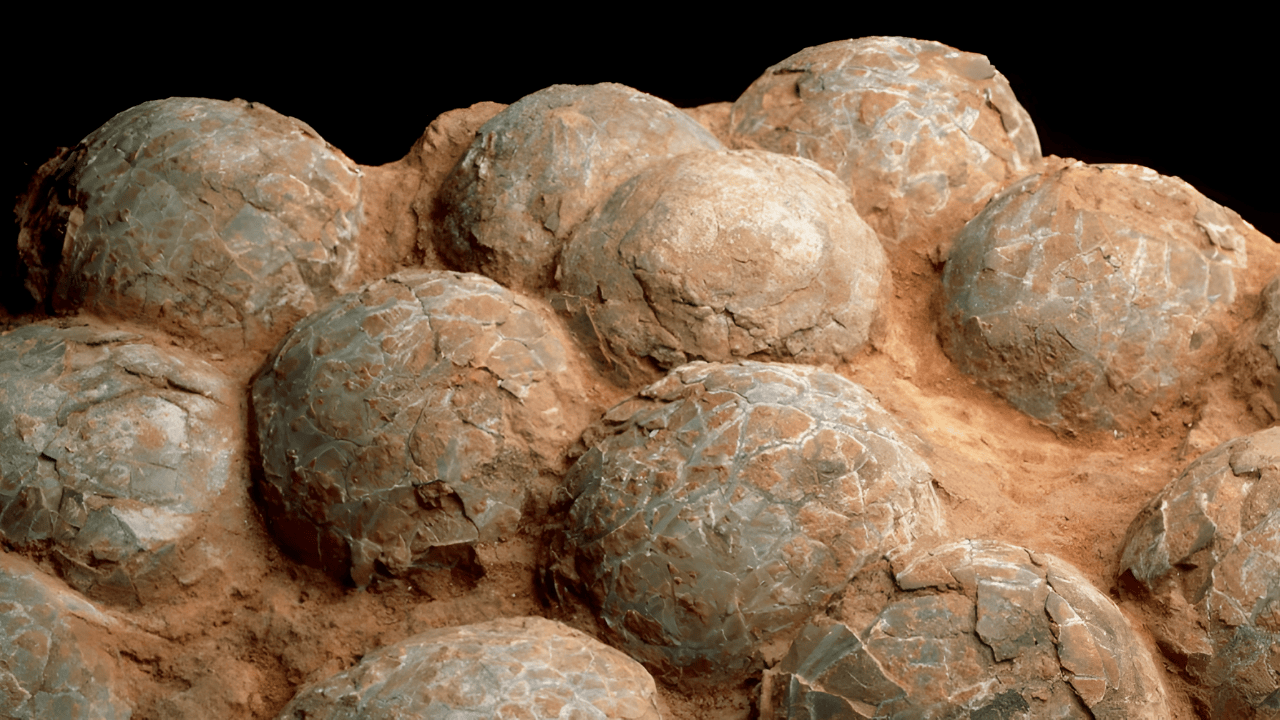
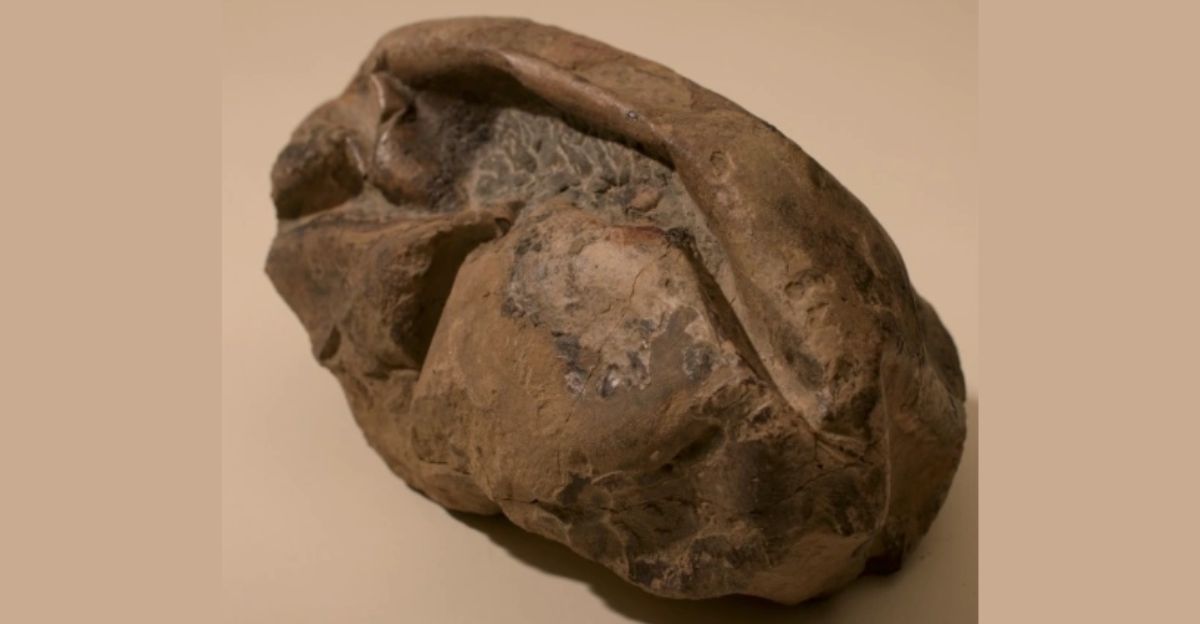
In 2011, Chilean scientists exploring Antarctica found a strange, deflated, football-shaped object on Seymour Island and took it to Chile’s National Museum of Natural History. The object then sat on a shelf for nine years while no one understood what it really was. In 2018, paleontologist Julia Clarke from the University of Texas at Austin decided to examine it more closely.
She studied the specimen, which came from the Lopez de Bertodano Formation, a rock layer that dates to about 68 million years ago, just before the mass extinction that wiped out most species on Earth. At that time, Antarctica appeared very different from its current appearance. Forests covered large areas, the climate felt significantly warmer, and a diverse array of animals thrived there.
Scientists had dug through those rocks for years, but nothing else looked like this object. Clarke and her team nicknamed it “The Thing,” after the horror movie set in Antarctica. The object measured about 11 by 8 inches. When Clarke used powerful microscopes, she found a thin, soft membrane instead of a thick, hard shell.
The texture and structure looked like the soft, leathery eggs of many modern lizards and snakes, only on a giant scale. The squashed, deflated shape made sense too, because soft eggs naturally collapse after the young animal hatches or after long fossilization. In June 2020, Clarke’s team announced in the journal Nature that the object was a fossil egg, now called Antarcticoolithus bradyi. It counts as the first fossil egg ever found in Antarctica and the largest soft-shelled egg that scientists have documented.
Hunting for the Giant Reptile That Laid the Egg
After confirming that the fossil was an egg, the team posed a key question: Which animal could have laid something so large? They compared the egg’s size and shape with data from 259 living reptile species. From those comparisons, they estimated that the mother measured at least 23 feet long, not including the tail.
That size ruled out local birds and most land dinosaurs known from the region. Instead, the evidence pointed toward a huge marine reptile known as a mosasaur. Mosasaurs swam in the oceans during the Late Cretaceous and belonged to the same broader group as modern monitor lizards and snakes, not to dinosaurs.
Near the egg site on Seymour Island, researchers had already discovered the skeleton of a large mosasaur species called Kaikaifilu hervei, which reached roughly 33 feet in length. The closeness in both size and location made mosasaurs strong candidates for the egg’s parents. For many years, scientists thought that mosasaurs gave birth to live young in open water, much like whales.
Earlier fossils and scientific papers supported that idea. The Antarctic egg adds a new layer to the story. It suggests that at least some large marine reptiles laid soft eggs in sheltered coastal areas or shallow seas. In that scenario, the adult might approach the shore, lay a soft egg that hatches quickly, and then leave the newborn to grow in relatively calm, protected waters, similar to how modern sea turtles utilize beaches and nearshore zones.
How One Egg Changes the Story of Reptile Evolution
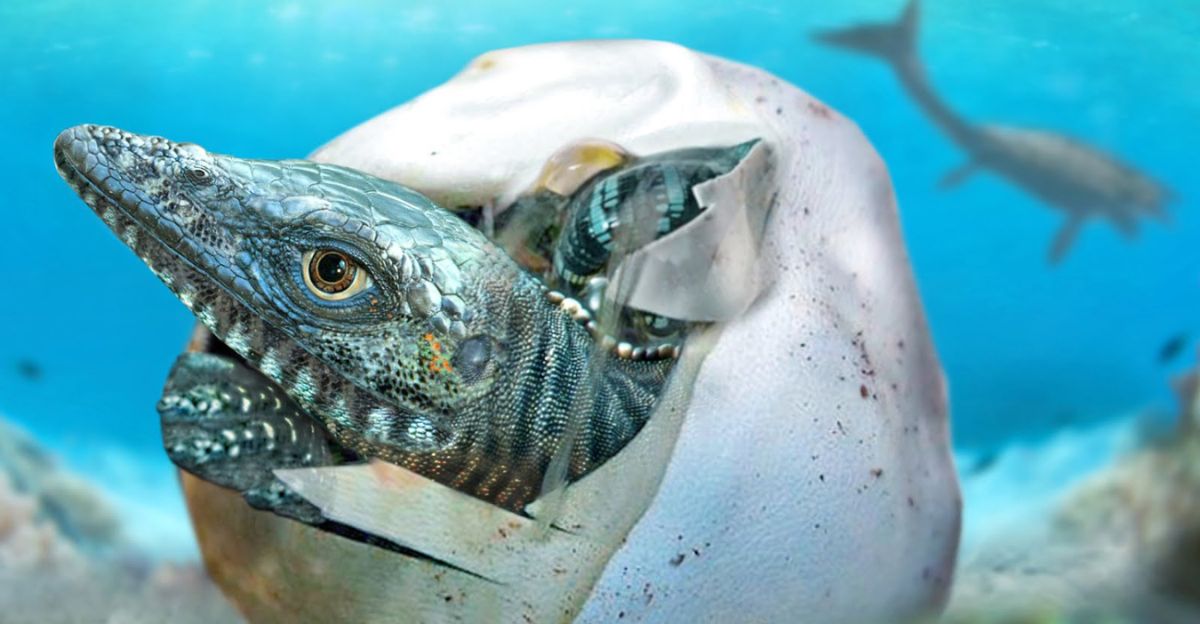
This single egg prompted scientists to reconsider long-held notions about reptile reproduction. Since the first mosasaur fossils were discovered in the 1700s, paleontologists have noticed the absence of hard, calcified eggs around them and concluded that these animals must have delivered live babies. Antarcticoolithus bradyi suggests that early mosasaurs and some dinosaurs laid soft-shelled eggs instead, and that hard shells evolved later in several unrelated groups.
In other words, eggs like those of chickens or the famous hard-shelled eggs of Tyrannosaurus rex did not represent the original pattern. Studies of other fossils now indicate that early dinosaurs, such as Protoceratops and Mussaurus, also laid soft-shelled eggs.
Those flexible shells allowed for better gas exchange and moisture uptake, which helped embryos develop; however, they also provided less protection from predators and harsh environments. On Seymour Island, scientists found tiny bones from baby plesiosaurs and mosasaurs in the same rock layers as the egg.
This mix of young marine reptiles suggests that the area functioned as a kind of nursery or rookery, where giant sea creatures gathered to lay eggs and raise their young away from the dangers of deeper water. The discovery also encourages researchers to re-examine soft tissues and delicate structures in Antarctic rocks, using tools such as Raman spectroscopy and chemical imaging to detect faint traces of ancient membranes and biopolymers.
As warming temperatures expose more rock, scientists gain fresh chances to uncover similar finds. The “deflated football” from Antarctica now stands as a reminder that Earth still harbors remarkable fossils, and that a single well-preserved egg can rewrite major chapters in the history of marine reptiles and their use of coastlines and land.
Sources
University of Texas at Austin, 17 Jun 2020
Nature, Summary Analysis 2020
History of Science Journal, 2022
Snopes, Verified 2024
Frontiers in Marine Science, 2023
Journal of Analytical Atomic Spectrometry, 2024