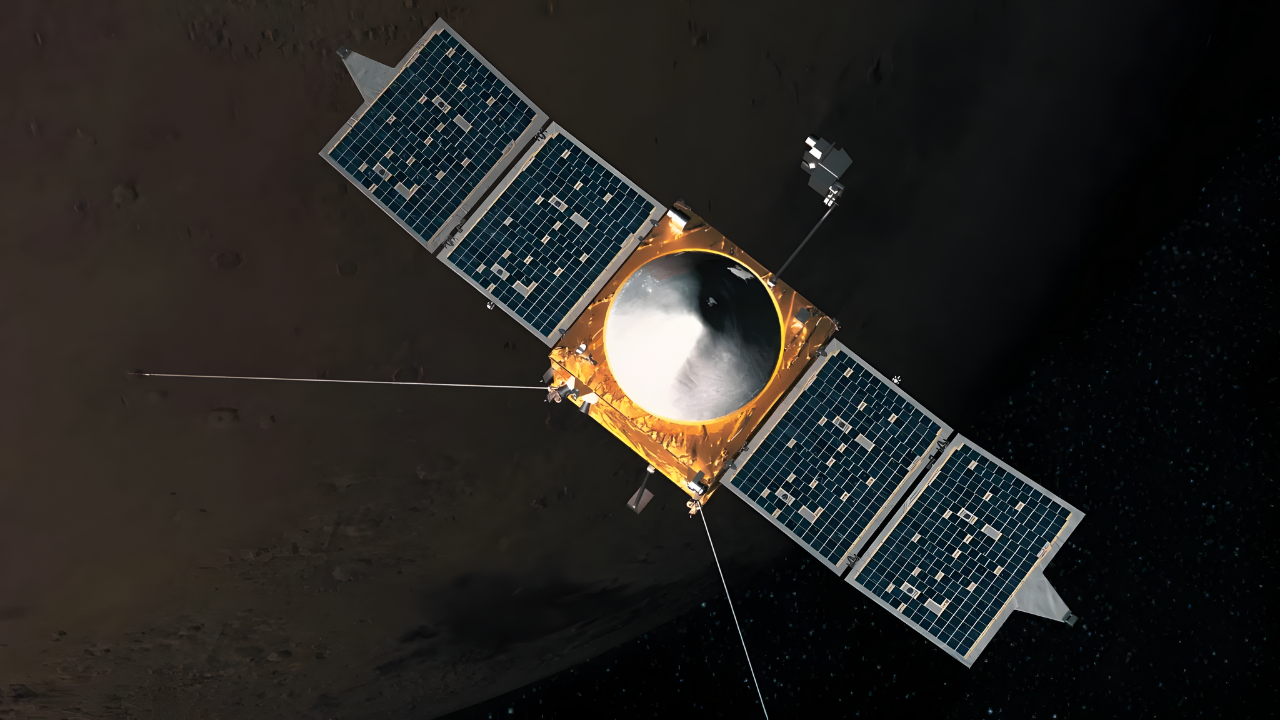
NASA’s MAVEN orbiter, a veteran explorer of Mars’ atmosphere, fell silent on December 6, 2025, during a routine pass behind the planet. The 70-meter dish at the Goldstone Deep Space Communications Complex in California detected no signal when MAVEN passed behind Mars, marking the start of an urgent international effort to locate the $671 million spacecraft.
A Clean Disappearance
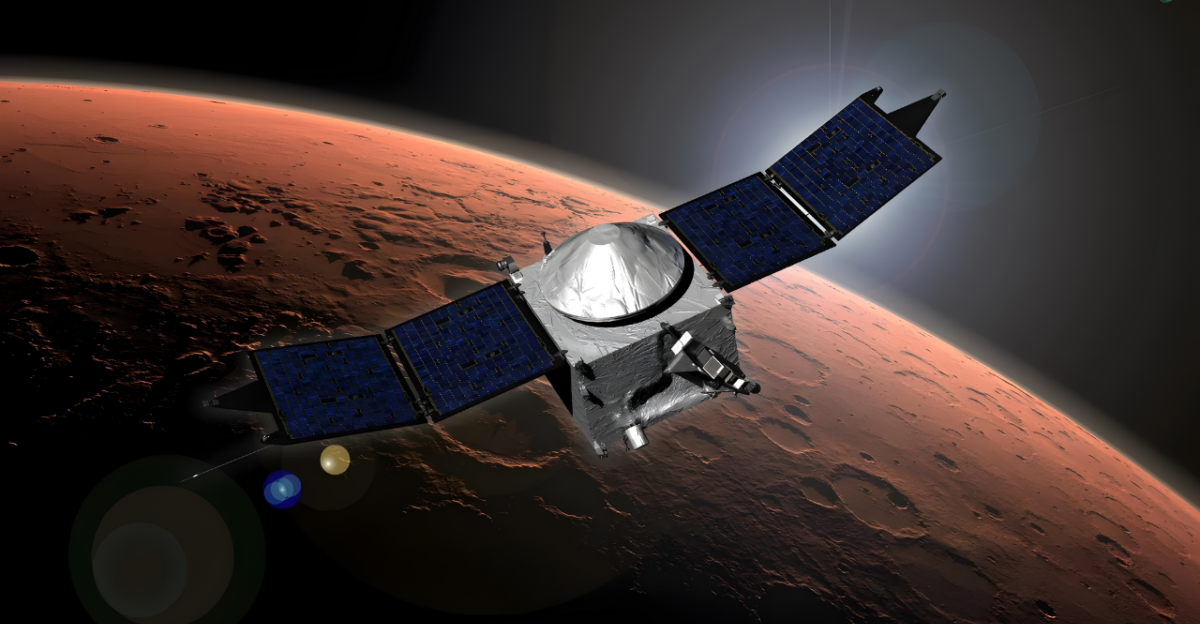
Telemetry data moments before MAVEN slipped behind Mars showed a fully operational vehicle. Voltage was steady, temperatures optimal, and the high-gain antenna aimed directly at Earth. No anomalies appeared in the final readings from the Jet Propulsion Laboratory control room.
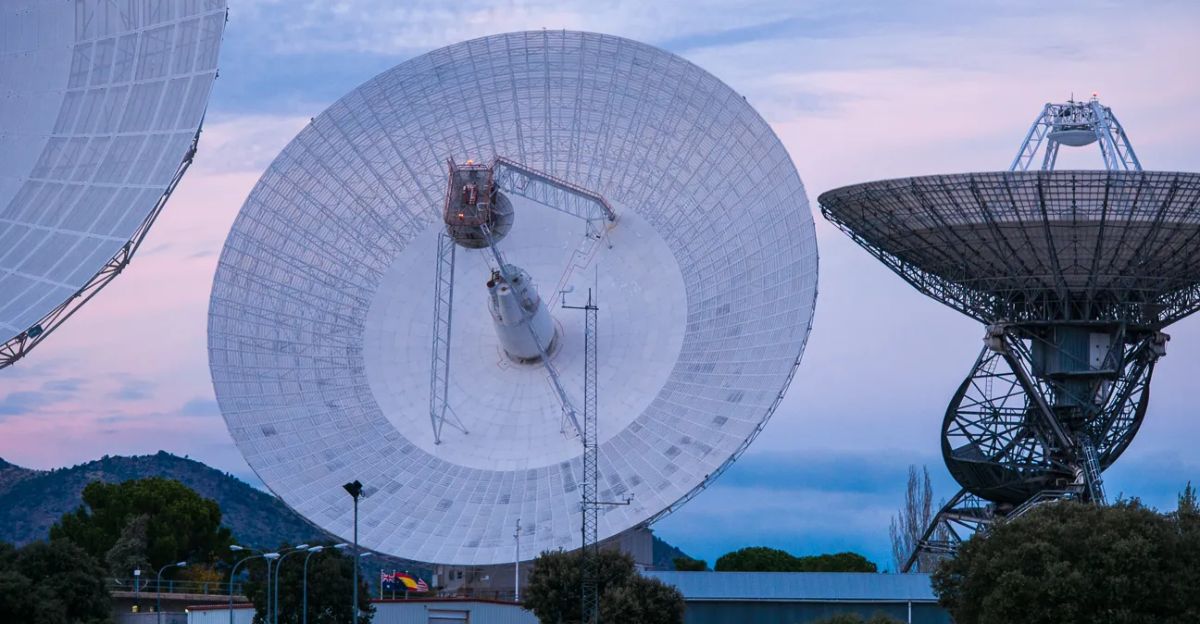
The abrupt silence stunned engineers. For over a week, NASA’s Deep Space Network—antennas in California, Spain, and Australia—has scanned frequencies for the spacecraft’s emergency low-gain beacon. A formal spacecraft emergency declaration prioritizes these assets, but as of December 15, no signal has returned.
A Mission Extended Beyond Design
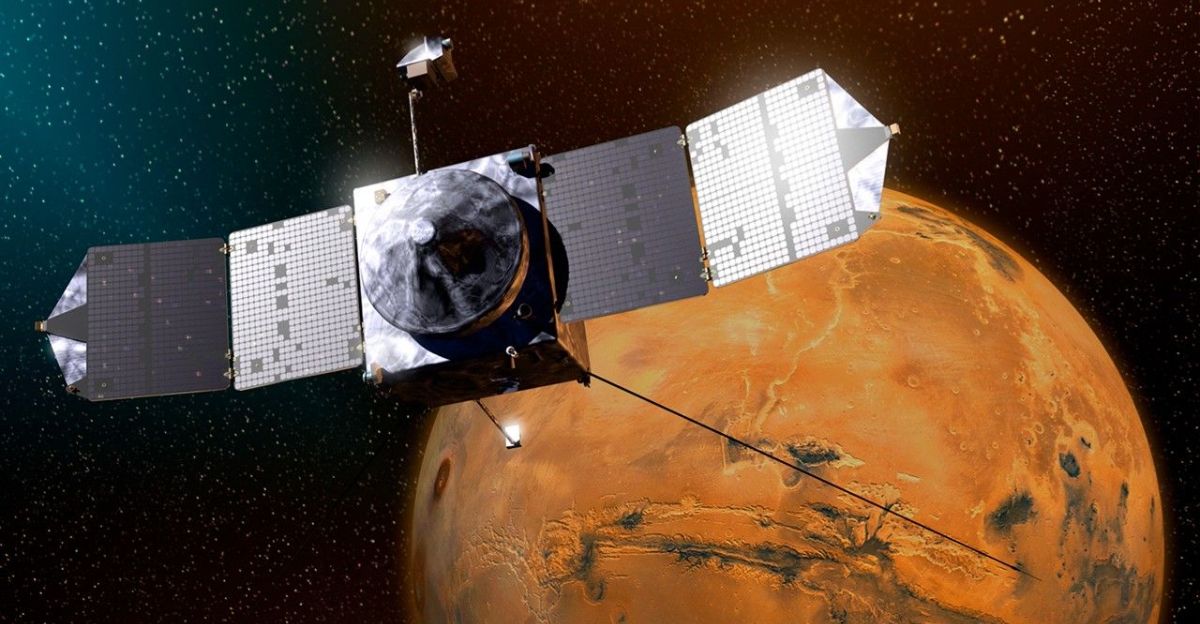
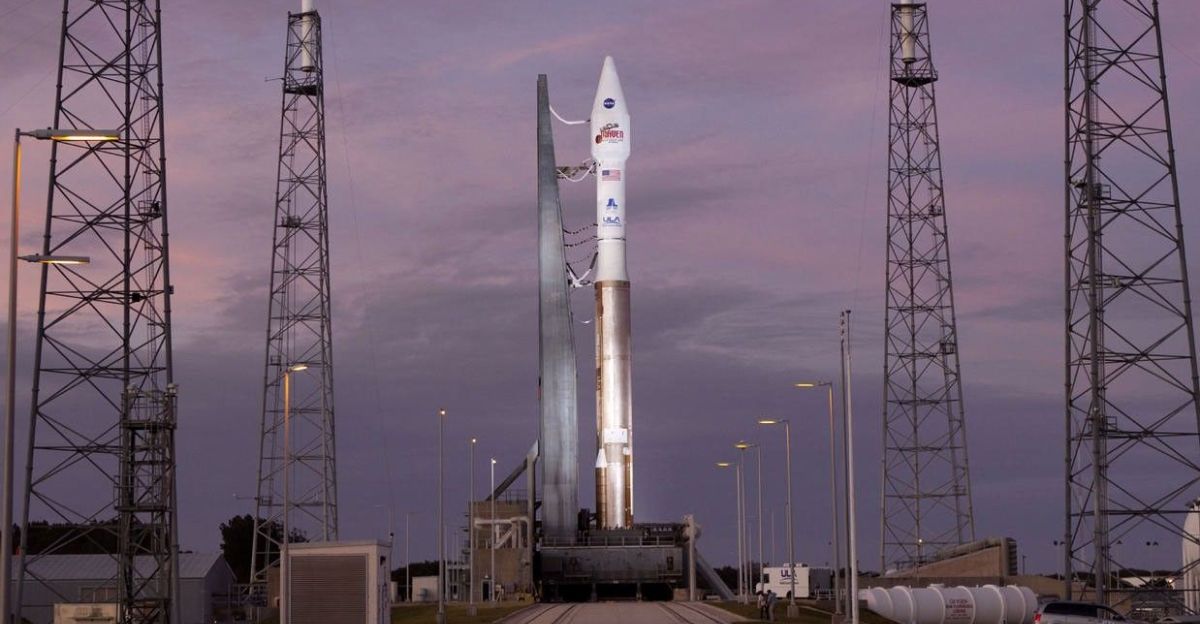
Launched in November 2013 on an Atlas V rocket, MAVEN reached Mars in September 2014 for a one-year primary mission studying atmospheric loss. Built by Lockheed Martin, it operated more than 11 years, becoming essential to NASA’s Mars infrastructure.
The orbiter analyzed how solar wind eroded Mars’ ancient atmosphere, transforming a potentially habitable world into a barren desert. Instruments measured gas escape rates, enabling models of the planet’s climate billions of years ago.
Key Discoveries in Atmospheric Loss
MAVEN identified “sputtering,” where solar particles eject atoms from the upper atmosphere, akin to heavy ions disrupting a calm pool. Recent observations confirmed this process’s role in Mars’ climate shift.
The spacecraft also linked global dust storms to water loss. During these events, water vapor rises, breaks apart under solar radiation, and escapes into space—explaining the fate of ancient oceans and offering insights for exoplanet studies.
Critical Relay Role Disrupted
MAVEN functions as a data bridge, relaying gigabytes of images and geological data daily from Perseverance and Curiosity rovers at up to 2 megabits per second via UHF. Without it, rover teams in Jezero Crater and elsewhere depend more on Mars Reconnaissance Orbiter, Odyssey, and ESA’s Trace Gas Orbiter.
Bandwidth has shrunk, slowing science returns, though redundancies prevent total data loss. The aging fleet—Odyssey since 2001, Mars Reconnaissance Orbiter since 2005—now faces heightened strain without MAVEN, the fleet’s relative newcomer.
History of Resilience and Recovery Efforts
MAVEN survived a 2022 crisis when both inertial measurement units failed, entering safe mode. Lockheed Martin engineers uploaded new software, enabling navigation via star trackers alone—a workaround restoring full operations by May.
Engineers now probe possibilities: navigation faults causing tumbling and power drain, computer lockups, or micrometeoroid strikes. A watchdog timer could trigger a reboot, potentially ending the silence after weeks. Amateur radio operators have joined the Deep Space Network in listening for faint signals.
The spacecraft also monitors upper atmospheric density for landing predictions and Mars Sample Return planning. Its absence forces reliance on outdated models, raising risks for future missions.
NASA’s response remains methodical. Fault-tree analyses simulate failures matching the clean signal cutoff. Congress has funded a $700 million commercial telecom orbiter for 2028 launch. If additional orbiters fail before then, Mars operations would face a communication bottleneck.
MAVEN’s potential loss underscores Mars network fragility, yet its legacy endures in rewritten planetary science. Recovery efforts continue, balancing hope against the void, with implications for ongoing surface exploration and ambitious sample returns ahead.
Sources:
“NASA Teams Work MAVEN Spacecraft Signal Loss.” NASA / MAVEN Mission Blog, Dec 9, 2025.
“NASA loses contact with its Maven spacecraft orbiting Mars for the past decade.” MSN, Dec 2025.
“NASA’s MAVEN Makes First Observation of Atmospheric Sputtering at Mars.” NASA Science Mission Directorate, May 28, 2025.
“NASA Loses Contact with MAVEN Mars Orbiter.” SatNews, Dec 8, 2025.
“NASA loses contact with Mars orbiter. What to know about the missing signal.” USA Today, Dec 12, 2025.