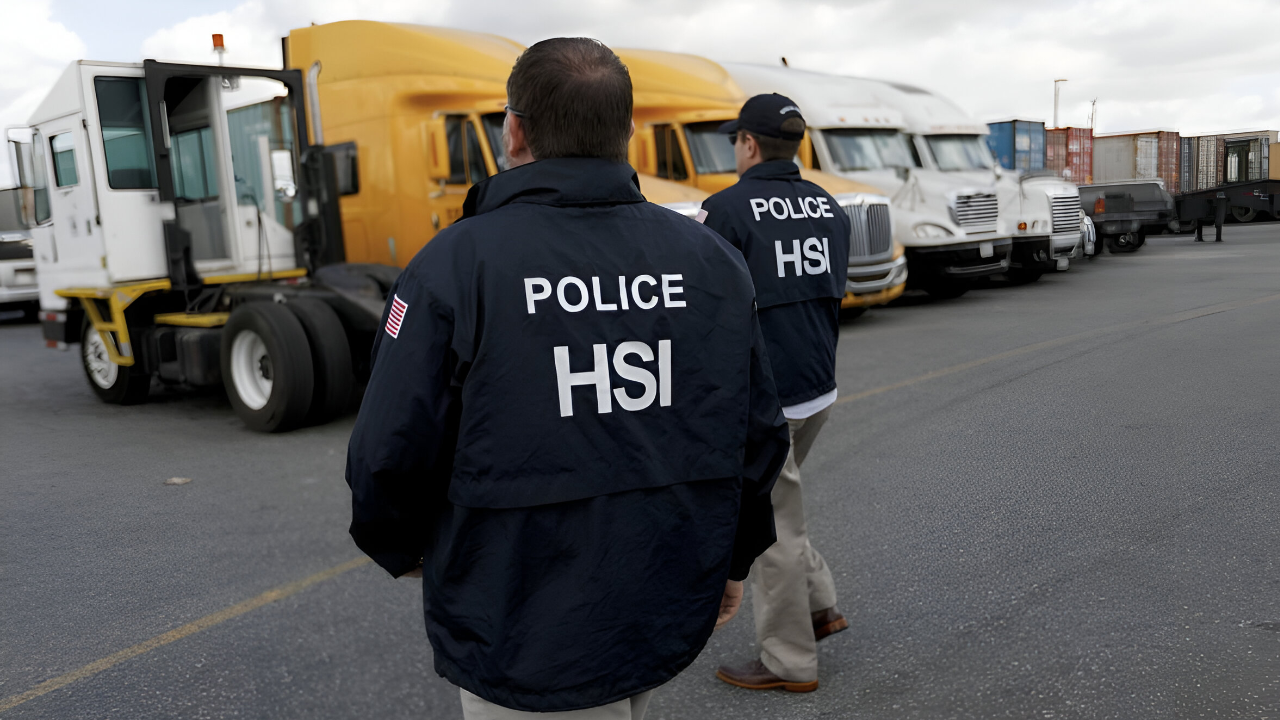
A sweeping crackdown by U.S. Immigration and Customs Enforcement (ICE) in 2025 has shaken the American trucking industry, placing thousands of drivers at risk and raising alarms over the potential economic fallout. The enforcement campaign, part of a broader federal initiative to tighten immigration verification, is forcing trucking companies to reevaluate their workforce and compliance systems amid fears of a severe driver shortage.
Estimates vary on how many truckers could be directly impacted, but industry analyses suggest up to 16 percent of the nation’s drivers, roughly 614,000 individuals, face possible job loss if immigration-related rules are fully enforced. This development arrives at a time when the trucking sector, a vital artery of the U.S. economy, already grapples with longstanding labor shortages and high turnover rates.
Immigrant drivers have been central to keeping freight moving across the country. Roughly 18 percent of the 3.5 million professional drivers in the United States were born abroad, a figure that has steadily grown over recent decades. These workers fill crucial gaps in an industry struggling to attract new American-born drivers, particularly as the average age of truckers climbs and recruitment pipelines falter. The current enforcement wave, however, threatens to upend this delicate balance, intensifying strain on an already stretched labor market.
ICE operations have ramped up in multiple states, including Oklahoma, Indiana, and California, where agents have joined with local law enforcement to verify driver documentation and immigration status. In several cases, joint patrol actions have led to over a hundred arrests for immigration violations. At the same time, federal guidance issued earlier this year has instructed state motor vehicle departments to more rigorously validate commercial licenses, raising risks for drivers unable to produce satisfactory legal documents.
Disruption Threatens Supply Chains and Prices

The implications of a mass driver shortage extend far beyond trucking firms. The trucking industry carries 71 percent of all goods transported by weight in the United States, underpinning supply chains across manufacturing, agriculture, retail, and construction. Even a modest reduction in workforce capacity could ripple quickly through these sectors, pushing up freight prices and driving inflation.
Logistics analysts warn that if even a fraction of the estimated 614,000 potentially affected drivers were removed from the workforce, delivery delays and higher transportation costs would soon follow. Essential goods, including food, medical supplies, and building materials, could experience distribution backlogs, while perishable products would face increased spoilage risks. Economists add that the costs of disrupted logistics would inevitably reach consumers through higher retail prices.
Freight companies are already reporting significant operational challenges. Tighter compliance audits and stricter employee documentation checks have slowed recruitment and onboarding processes. Shipments are being delayed or rerouted as companies verify legal statuses, and some small carriers are struggling to meet federally mandated verification standards. Because smaller trucking companies depend more heavily on immigrant drivers, many lack the legal or administrative resources to adapt quickly, putting them at heightened financial risk.
Trade groups such as the American Trucking Associations (ATA) have publicly urged federal authorities to consider balanced policy adjustments, including special work permits for immigrant drivers or phased enforcement approaches that prevent abrupt workforce disruptions. Several state governments have echoed this sentiment, suggesting collaborative frameworks to maintain both legal compliance and supply chain stability.
Policy Crossroads and Industry Adaptation

The 2025 ICE initiative has exposed deep tensions between immigration enforcement and economic necessity. While federal officials emphasize the importance of consistent rule implementation, business leaders and economists caution that rigid application could destabilize one of America’s most essential industries. Analysts agree that a large-scale removal of immigrant drivers would represent the most severe labor shortage in U.S. trucking history, reshaping how goods move domestically and igniting new waves of inflation.
To navigate the uncertainty, trucking companies are adopting various strategies. Some are investing in advanced verification tools to streamline compliance processes. Others are expanding domestic recruitment campaigns, offering signing bonuses and higher wages to attract new drivers. Industry coalitions are also lobbying for legislative solutions that recognize immigrant workers’ contributions and ensure continuity of service in a legally compliant manner.
At the federal level, ongoing policy debates highlight the complexity of balancing border integrity with economic demands. While proponents of stricter enforcement argue that consistent application of the law reinforces fairness, critics contend that the abrupt enforcement surge disrupts an industry already under immense strain and could inflict broader harm on national logistics.
For now, the situation remains fluid. ICE’s enforcement pace shows no signs of slowing, and upcoming policy decisions will likely shape the trajectory of this standoff for years to come. What remains clear is that the trucking industry, the lifeline of American commerce, is facing one of its most significant trials in recent history. Whether through rule adjustments, targeted reforms, or new labor agreements, its response will test the resilience of a sector critical to the nation’s economic stability.