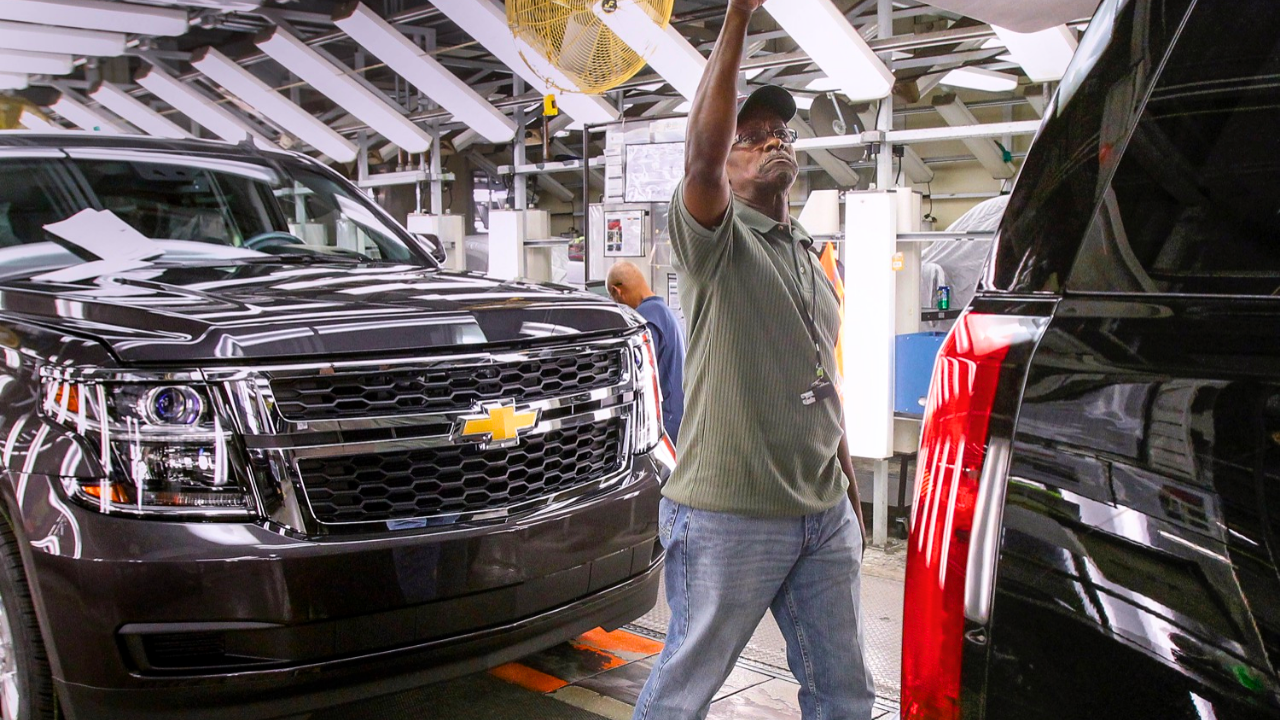
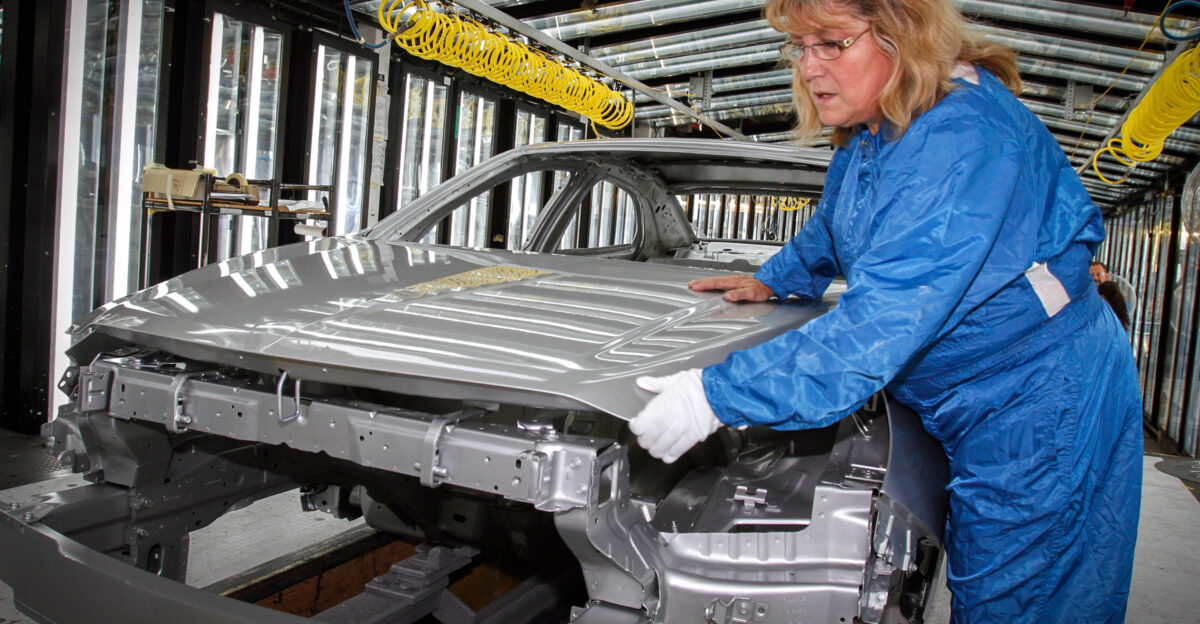
Under bright white lights in Spring Hill, Tennessee, robotic arms glide over unfinished SUVs as welding sparks flicker across a busy factory floor. Within two years, this assembly line will begin turning out Chevrolet Blazers that were once built in Mexico, part of a sweeping shift by General Motors in response to new U.S. tariffs that is poised to reshape where North America’s vehicles are made, how much they cost, and which models roll off which lines.
Tariffs Reorder GM’s North American Map
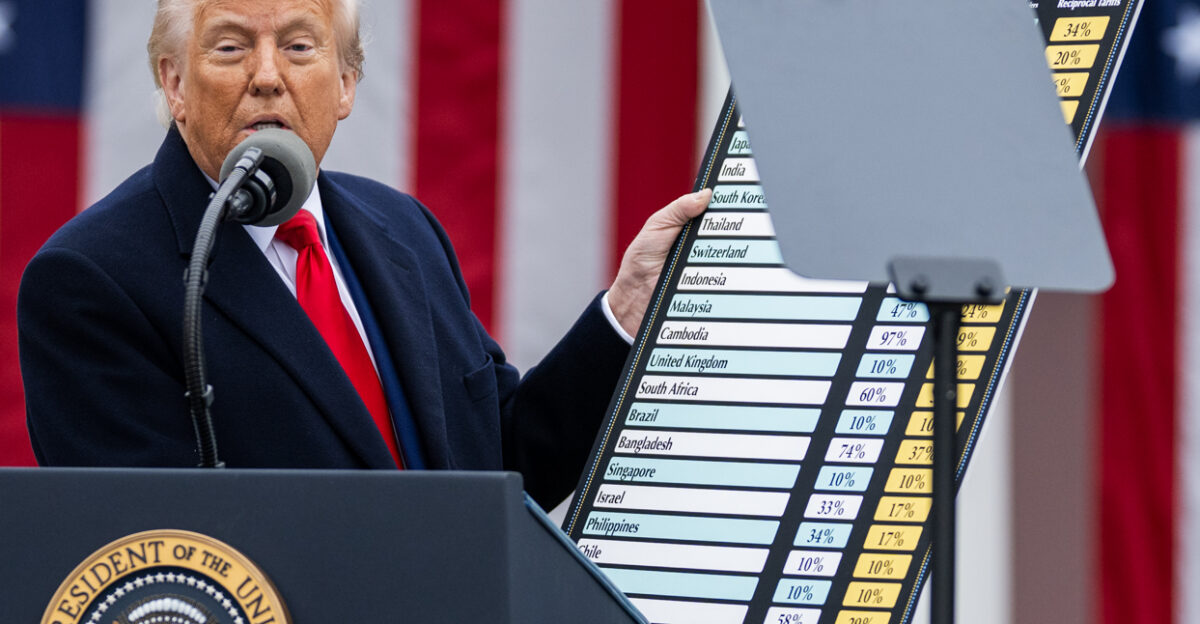
GM now expects a hit of 4 billion to 5 billion dollars to its 2025 earnings from higher duties on imported vehicles and parts, after President Donald Trump imposed a 25% tariff on many auto imports from key trading partners, including Mexico and Canada, in March 2025. The measures, which took effect in the following weeks, disrupted a long-standing strategy in which GM treated North America as a single integrated manufacturing system, shifting components and finished vehicles across borders to minimize costs.
The tariffs raise expenses at every stage, from Mexican assembly plants that ship SUVs north to U.S. factories that rely on foreign-made parts, forcing GM to reassess which models should be built where. Company leaders concluded that continuing to concentrate production of high-volume vehicles like the Chevrolet Blazer and Equinox in Mexico for the U.S. market would expose GM to sustained tariff costs that are difficult to pass on entirely to consumers.
A $4 Billion Push Into U.S. Plants
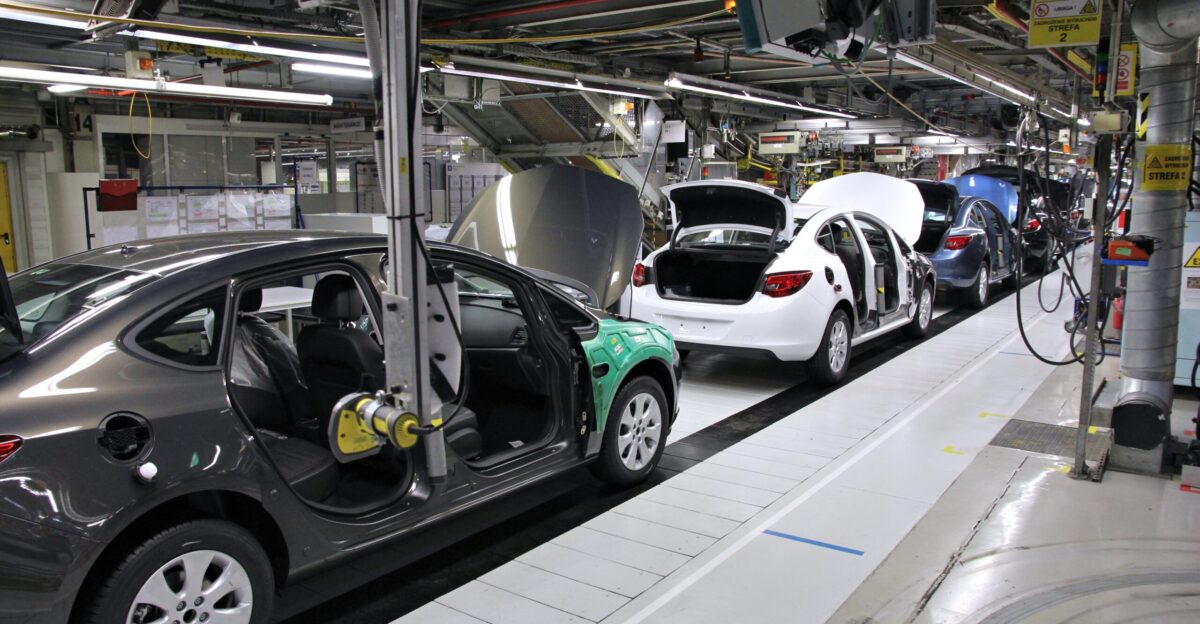
In June, GM outlined a roughly 4 billion dollar investment in three U.S. facilities in Michigan, Kansas and Tennessee, covering both gasoline and electric models. Executives presented the move as a way to reduce exposure to tariffs while taking advantage of federal and state incentives and tightening control over costs by anchoring more production in the United States.
The plan does not abandon Mexican manufacturing, but it rebalances the load. From 2027, GM intends to add U.S. production of its gasoline-powered Chevrolet Blazer and Equinox, models that have been mainstays at its Ramos Arizpe complex in northern Mexico. New assembly lines in Spring Hill, Tennessee, and Fairfax, Kansas, will serve North American customers from domestic plants shielded from U.S. import duties, while Mexican output will increasingly be directed to other export markets.
Spring Hill, long associated with Saturn and now home to Cadillac’s Lyriq and other SUVs, will become a hub for both combustion and electric Blazers, using flexible lines designed to switch between powertrains. In Kansas, the Fairfax Assembly Plant will be retooled to build the Equinox, one of GM’s top sellers, with production expected to ramp up around mid-2027 as the company seeks to meet steady demand with tariff-free capacity.
Orion, Ramos Arizpe and the EV Balancing Act
The strategy also reshapes GM’s electric-vehicle footprint. The Orion Township plant in Michigan, once earmarked as a major center for electric pickups, will pivot to building gas-powered full-size SUVs and light trucks as part of the new investment package. Electric pickups that had been assigned to Orion are being consolidated at GM’s Factory Zero facility in Detroit, while Orion is repurposed for high-margin combustion models that continue to underpin the company’s profitability.
In Mexico, the impact is more immediate. GM’s Ramos Arizpe plant in Coahuila, which produces the Chevrolet Equinox and Blazer along with several electric vehicles, has already reduced its schedule from three shifts to two, a change that local reports estimate has eliminated about 800 jobs. GM and Mexican officials emphasize that the company is not withdrawing from the country, but the combination of slower exports to the United States and a reoriented production mix illustrates how tariffs are pressuring once fast-growing border hubs.
Despite the pivot at Orion and the new emphasis on gasoline-powered trucks and SUVs in U.S. plants, GM maintains that its long-term electric-vehicle plans remain in place. The current restructuring highlights the tension between policy-driven decarbonization goals and the immediate economic realities of tariffs, earnings targets and consumer demand for larger vehicles.
Higher Sticker Prices And Investor Concerns
Economists estimate that broad-based auto tariffs of the kind now in place could add roughly 1,700 to nearly 2,000 dollars to the average new vehicle price in the United States, depending on how much of the added cost automakers pass on to buyers. For models such as the Blazer and Equinox, which will straddle production in both Mexico and the United States, analysts say retail prices could rise by about 1,000 to 2,000 dollars once higher tariffs and the expense of expanded domestic manufacturing are fully reflected.
GM has already lowered its 2025 earnings outlook to incorporate the anticipated 4 billion to 5 billion dollar impact from tariffs, telling investors that trade rules now represent a significant drag on profits. Some on Wall Street, however, argue that the 4 billion dollar U.S. investment could, over time, help stabilize margins by reducing uncertainty around tariffs and demonstrating that GM is responsive to political and regulatory pressures in its largest market.
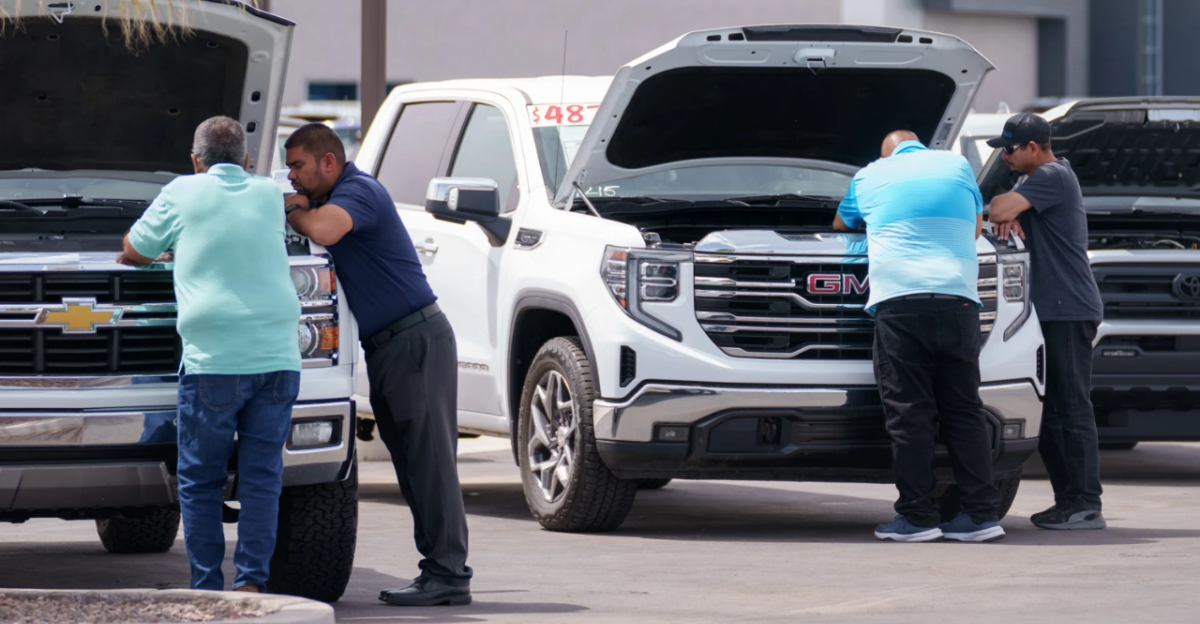
For car shoppers, the timing is difficult. Higher sticker prices linked to tariffs arrive alongside rising insurance premiums and still-elevated interest rates, making new SUVs harder to afford even as more of them are assembled in U.S. factories. Dealers report that buyers are stretching loan terms, trading down to smaller models, or turning to used vehicles as they weigh appeals to buy domestically built cars against household budget constraints.
Politics, Labor And An Emerging Template
In Washington and state capitals, GM’s reshoring moves are being held up by politicians and union leaders as proof that tariffs, combined with targeted incentives, can pull manufacturing jobs back from overseas. The United Auto Workers has cited the new commitments as support for its recent bargaining push, while governors and mayors in Tennessee, Kansas and Michigan highlight construction, retooling work and future hiring as evidence that industrial policy can deliver visible gains in local communities.
Industry analysts say GM’s response to tariffs may offer a template for other automakers that rely heavily on Mexican production, including Ford and several Japanese manufacturers. The emerging playbook, they argue, is to absorb short-term tariff costs while methodically reconfiguring factory footprints so that strategically important, high-volume models are built closer to their largest markets, with overseas plants increasingly focused on exports elsewhere.
As tariffs, politics, technology choices and shifting consumer preferences collide, decisions now being made in places like Spring Hill, Fairfax, Orion Township and Ramos Arizpe will help determine where North American vehicles are produced, how much buyers pay for them, and how quickly the regional auto sector moves from gasoline-powered trucks and SUVs toward a lower-carbon future.
Sources:
“GM to invest $4 billion in 3 US facilities for gas-powered vehicles,” Reuters, June 10, 2025
“GM plans $4B investment to boost US manufacturing,” Manufacturing Dive, June 10, 2025
“GM says it will invest $4 billion to increase US production,” CNN, June 10, 2025
“Auto tariffs seen hiking car prices by nearly $2000 per vehicle,” Los Angeles Times, June 19, 2025
“Car Prices Face $3000 Increase as Tariffs Hit Auto Sector,” Bloomberg, February 2, 2025
“GM CEO Mary Barra: Tariffs will cost us $5 billion,” CNN, May 1, 2025