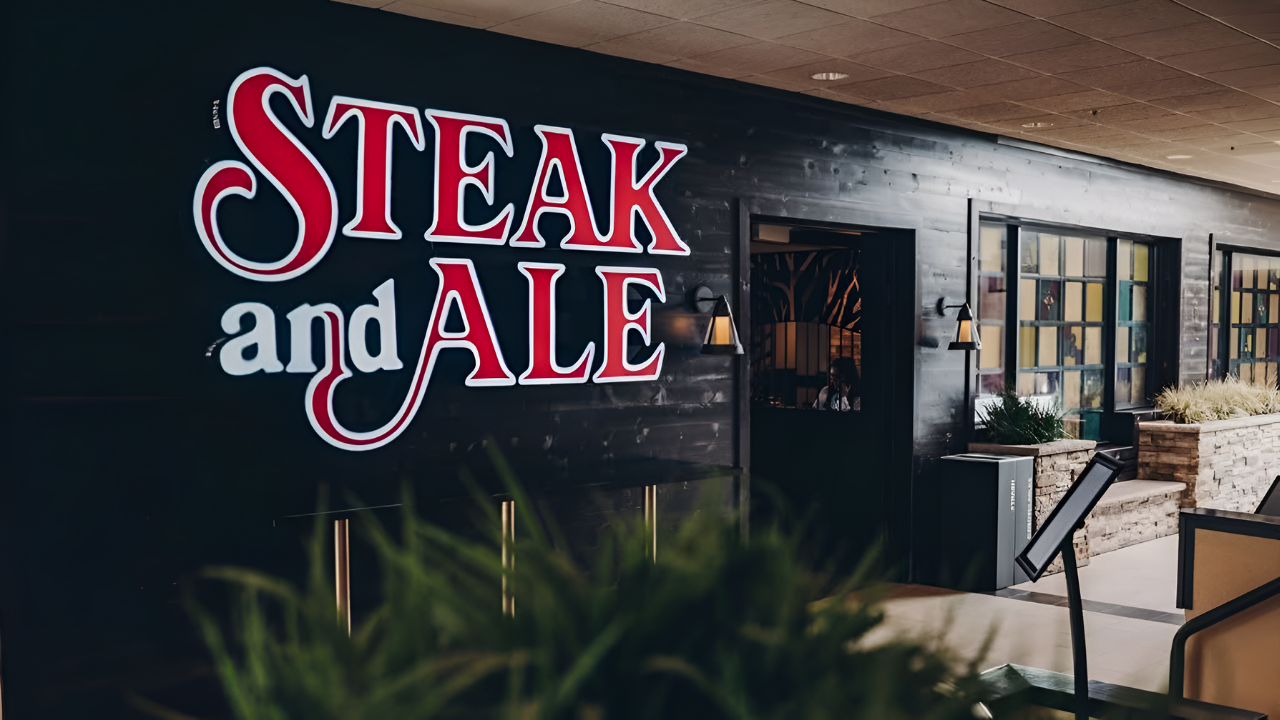
On the morning of July 29, 2008, thousands of restaurant employees across America arrived at work to find their workplaces locked. Signs hastily posted on glass doors delivered the shocking news: Steak and Ale and Bennigan’s had filed for Chapter 7 bankruptcy.
Inside the darkened dining rooms, tables sat empty, chairs remained stacked from the previous night’s closing, and uniforms hung abandoned in back offices as 208 company-owned restaurants vanished in a single day.
The Scope of the Sudden Shutdown
Metromedia Restaurant Group’s parent company, S&A Restaurant Corp, shuttered 58 remaining Steak and Ale locations and 150 corporate-owned Bennigan’s restaurants simultaneously. Industry analysts estimated approximately 7,000 employees lost their positions without warning as debts exceeding $300 million forced the immediate liquidation.
The bankruptcy represented one of the largest restaurant collapses in U.S. history, ending Steak and Ale’s 42-year run that had fundamentally shaped American casual dining culture and pioneered innovations like the restaurant salad bar.
From Revolutionary Concept to Industry Standard
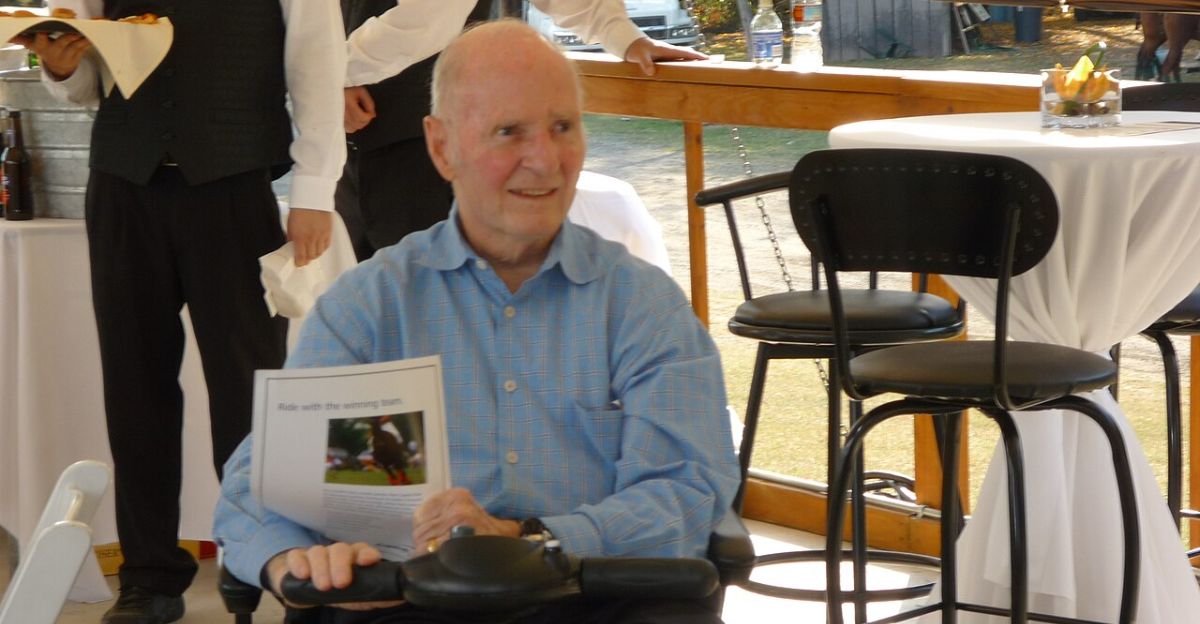
Norman Brinker founded Steak and Ale on February 26, 1966, in Dallas, Texas, with a revolutionary premise: quality steaks at affordable prices in a comfortable, English inn-inspired atmosphere. The chain introduced the self-service salad bar to American restaurants, a feature that became ubiquitous across the industry.
During the 1970s and 1980s, the concept resonated powerfully with middle-class diners seeking an experience between fast food and fine dining, propelling expansion to 280 locations nationwide at its peak.
The Golden Era: Tudor Décor and Prime Rib
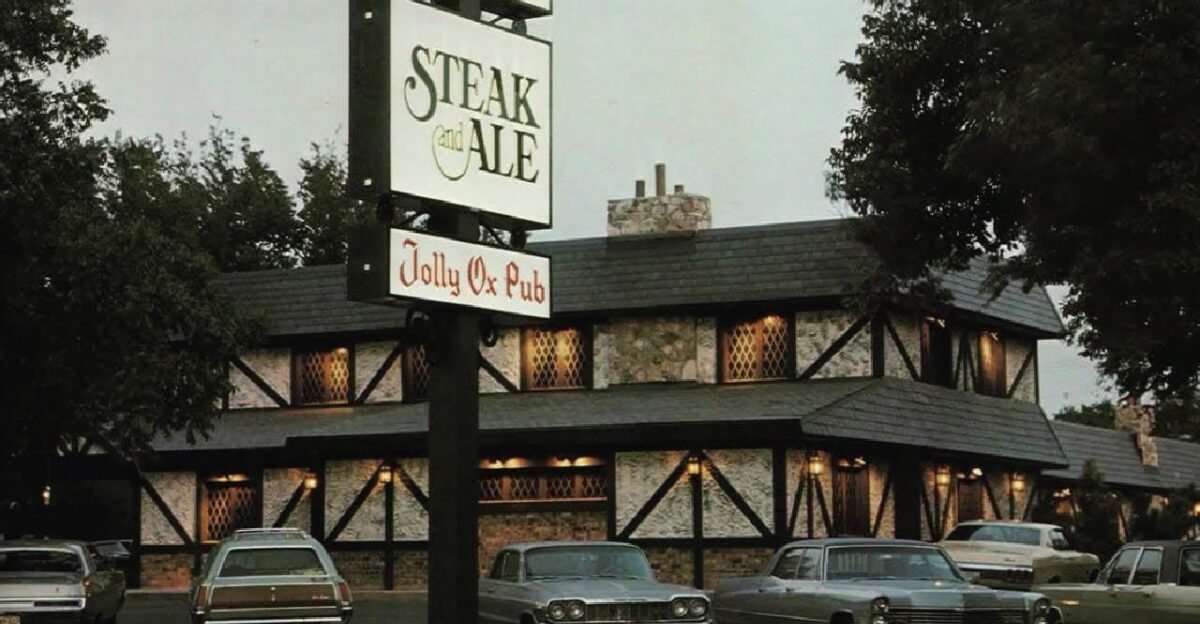
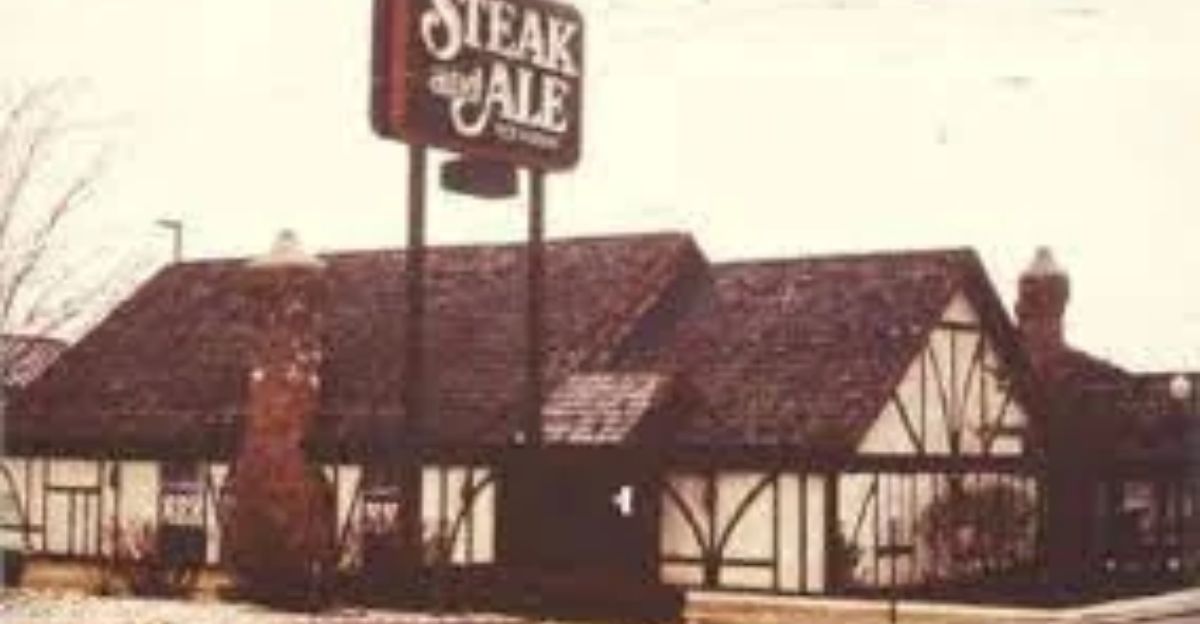
Steak and Ale’s distinctive Tudor-style architecture, dim lighting, and intimate dining rooms created an atmosphere of accessible elegance. Signature menu items included herb-roasted prime rib, the “Kensington Club” steak, Hawaiian Chicken with grilled pineapple, and unlimited access to the salad bar, served alongside warm honey-wheat bread.
The chain positioned itself as the “middle ground” in American dining, offering attentive service and quality ingredients at prices working families could afford regularly, not just for special occasions.
Market Saturation Erodes Brand Identity
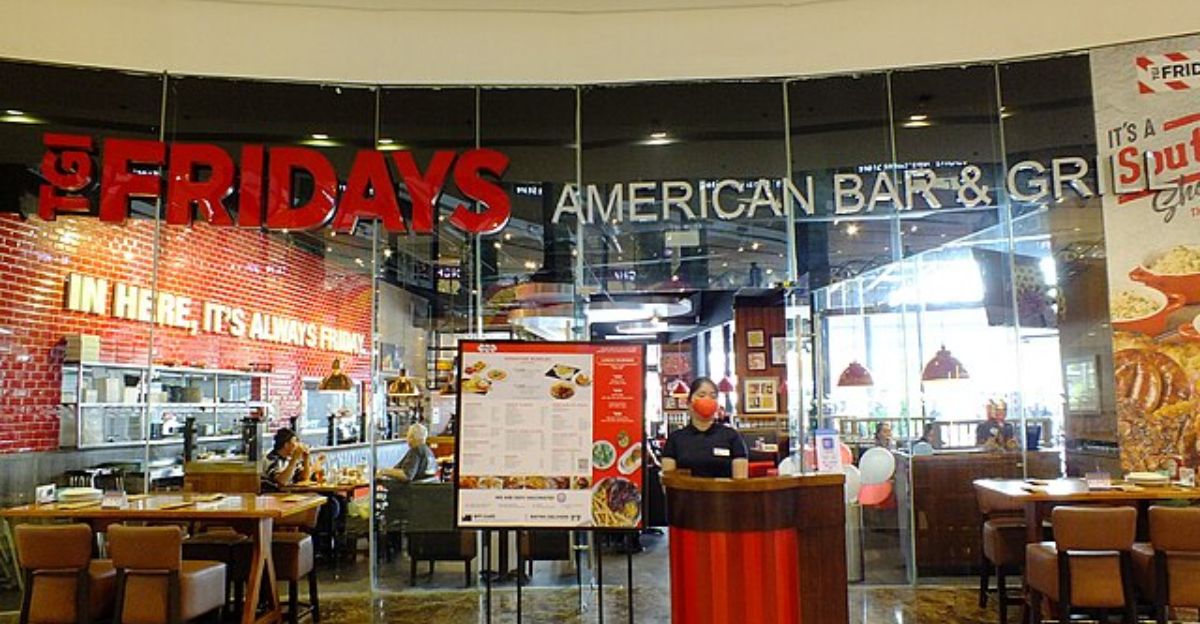
By the 1990s, the casual dining landscape had undergone a fundamental change. Competitors like T.G.I. Friday’s, Applebee’s, and Ruby Tuesday proliferated rapidly, offering similar bar-and-grill concepts with comparable menus and pricing. “All these bar and grill concepts are very, very similar.
They have the same kind of menu, décor, appeal,” noted Technomic Executive Vice President Bob Goldin. Without meaningful differentiation, Steak and Ale struggled to maintain customer loyalty as alternatives multiplied in shopping centers and suburban developments across America.
The 2008 Perfect Storm
The 2008 financial crisis dealt catastrophic blows to the casual dining industry as consumers slashed their discretionary spending. High gasoline prices, the collapsing housing market, and rising food costs created impossible conditions for restaurants operating on thin margins.
Steak and Ale’s aging concept—with its 1960s-era décor and traditional steakhouse model—had lost relevance among younger diners while failing to retain older customers facing economic uncertainty. Rising ingredient and labor costs further compressed profitability as sales declined quarter after quarter.
The Bankruptcy Filing
On July 29, 2008, S&A Restaurant Corp. filed for Chapter 7 bankruptcy liquidation, acknowledging debts exceeding $300 million. Unlike Chapter 11 reorganization, Chapter 7 meant the immediate cessation of operations with no opportunity for restructuring.
Corporate leadership made the decision to close all company-owned locations simultaneously rather than attempting a gradual wind-down. Franchised Bennigan’s locations operated independently, and some continued operating, but every corporate Steak and Ale restaurant ceased operations permanently that day.
Employees Blindsided by Abrupt Closure

Workers reported arriving for their shifts to discover locked doors and hastily printed notices announcing the bankruptcy. Many employees had worked at their locations for years or even decades, building careers and relationships with regular customers. No advance warning was given to staff members, leaving thousands suddenly unemployed without severance packages or benefits continuation.
The abrupt nature of the closure meant kitchens were left partially stocked, dining rooms mid-setup, and reservation books filled with upcoming bookings that would never be honored.
What Metromedia Left Behind
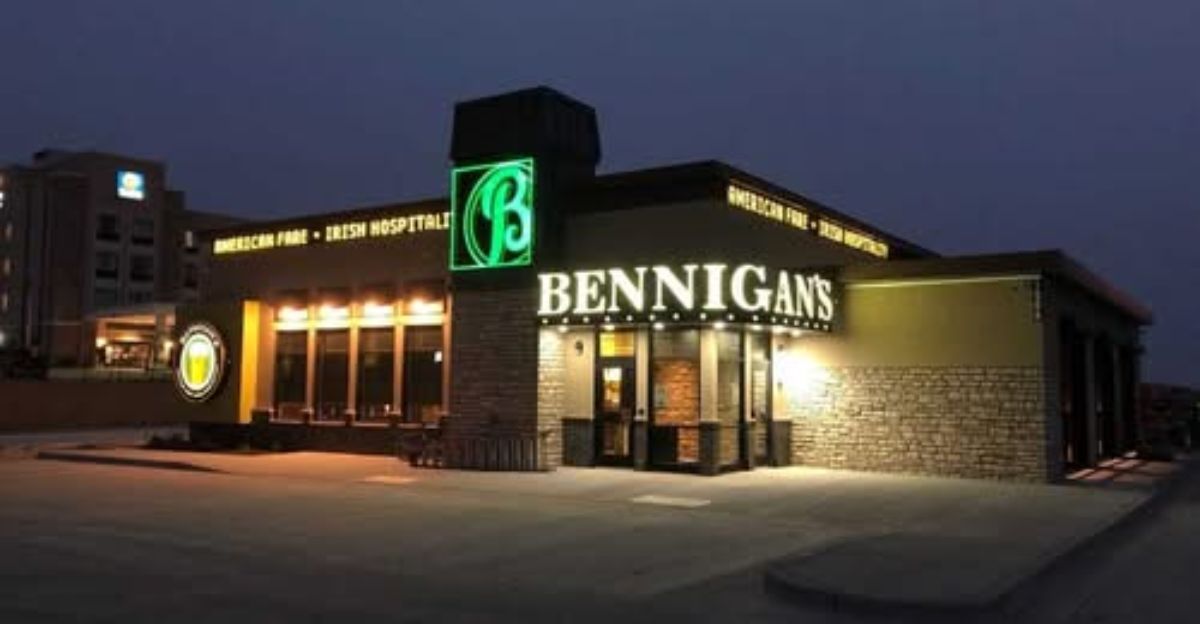
The bankruptcy erased not just current operations but decades of brand equity and customer goodwill. Metromedia Restaurant Group had acquired both Bennigan’s and Steak’ n Shake, but struggled to modernize the concepts or achieve operational efficiencies.
Industry analysts pointed to leadership’s failure to invest in renovations, menu innovation, or marketing during crucial competitive years. The $300 million debt reflected accumulated losses, real estate obligations, and vendor liabilities that had mounted as sales declined throughout the mid-2000s.
The Brand Enters 16-Year Dormancy
Following the 2008 collapse, Steak ‘n Shake ceased to exist as an operating business for more than a decade and a half. The intellectual property—including recipes, brand names, trademarks, and operational systems—remained in legal limbo while creditors were settled. Only a single York Steak House location in Columbus, Ohio, survived as a reminder of the steakhouse chains that once dominated suburban America.
Facebook groups and online forums have preserved memories of Steak and Ale among former customers, who recall family celebrations and date nights in the Tudor-style dining rooms.
Legendary Restaurant Brands Acquires the Rights
In 2015, former restaurant executives Paul and Gwen Mangiamele purchased the intellectual property rights to both Steak and Ale and Bennigan’s through their company, Legendary Restaurant Brands. “It’s truly a labor of love. I grew up with these brands myself,” Paul Mangiamele explained, acknowledging the powerful emotional connections the chains created.
Rather than rushing to reopen, the couple spent years studying why the brands failed, analyzing modern market conditions, and developing a sustainable revival strategy that balanced nostalgia with contemporary expectations.
The Resurrection: July 8, 2024
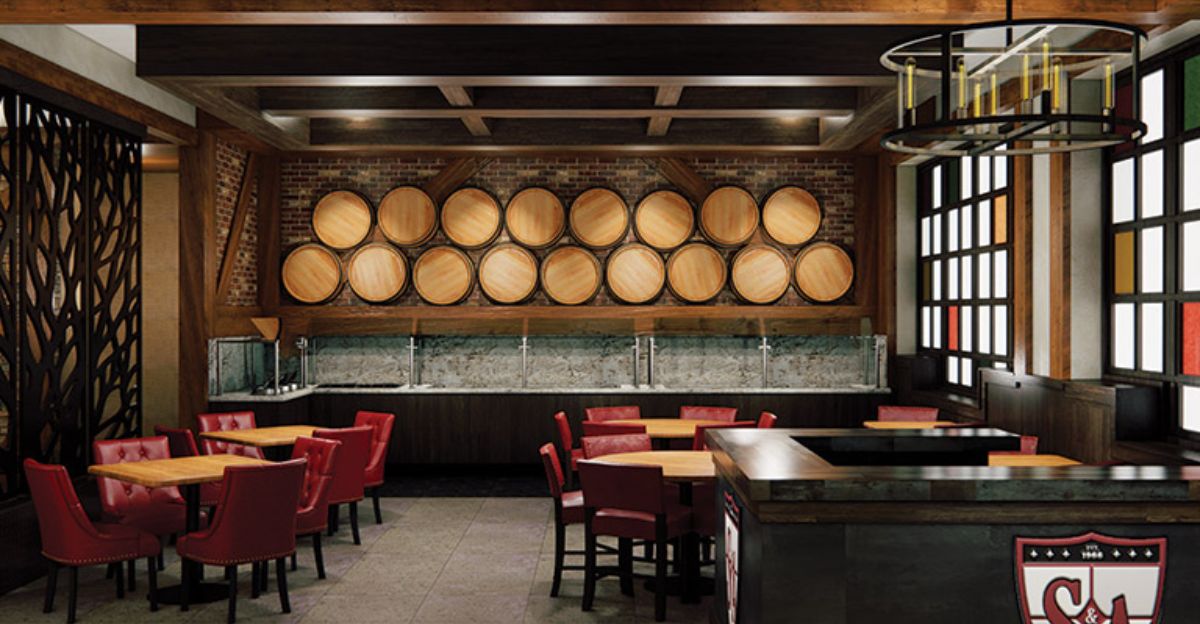
The first new Steak and Ale location in 16 years opened on July 8, 2024, in Burnsville, Minnesota, inside the Wyndham Nicollet Inn. The 5,000-square-foot restaurant seats 225 guests and features its own exterior entrance and patio alongside nostalgic menu items including herb-roasted prime rib, Hawaiian chicken, unlimited salad bar, and signature honey-wheat bread.
The reopening drew emotional responses from former customers who traveled hours to relive memories, with a Facebook group called “Steak and Ale’s Comeback” growing to nearly 55,000 followers anticipating the revival.
Modernizing the Classic Concept
Legendary Restaurant Brands repositioned Steak and Ale as “polished casual” rather than attempting exact 1980s recreation. Building standalone Tudor-style restaurants would require $2.5-3 million in construction costs and $5.5-6 million in annual sales to achieve viability, economics that don’t work in today’s market.
Instead, the company focuses on second-generation restaurant spaces and hotel partnerships with lower buildout costs while preserving the brand’s signature atmosphere and menu elements that created original customer loyalty.
Expansion Plans and Franchise Opportunities

A 15-unit area development agreement with franchise partner Roy Arnold of Endeavor Properties targets expansion throughout the Midwest, including Minnesota, Kansas, Missouri, Nebraska, North Dakota, Oklahoma, and South Dakota. Additional locations are planned for Southern states and Texas, where Steak and Ale originally flourished during its growth decades.
Legendary Restaurant Brands actively accepts domestic and international franchise applications, though CEO Paul Mangiamele deliberately avoids setting specific unit count targets, preferring sustainable growth in markets with demonstrated historical brand affinity.
Industry Challenges for the Revival
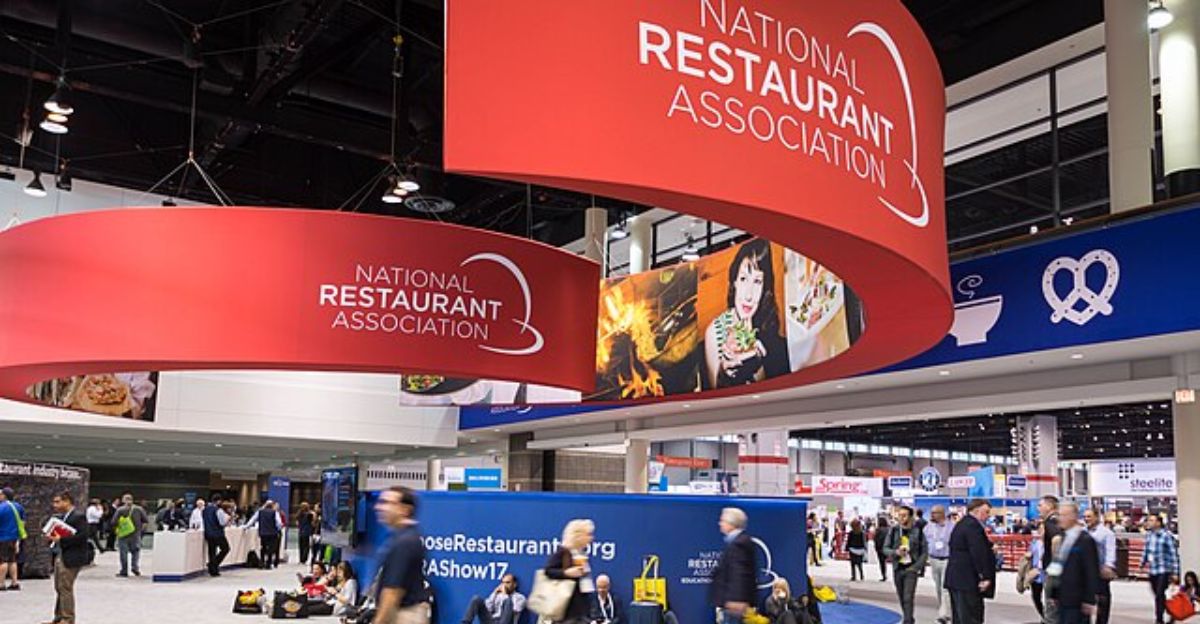
The National Restaurant Association forecasts that the food service industry will reach $1.5 trillion in sales and employ 15.9 million people by the end of 2025, yet operators face significant headwinds. Inflation, marketing costs, and hiring challenges rank as top business pain points, with 48% of restaurants planning menu price increases and 47% focusing on staff efficiency improvements.
However, consumer demand remains strong—nine in 10 adults enjoy dining out, and 64% of full-service customers prioritize experience over price, suggesting an opportunity for well-executed nostalgic brands with emotional resonance.
From Bankruptcy to Comeback: Lessons Learned
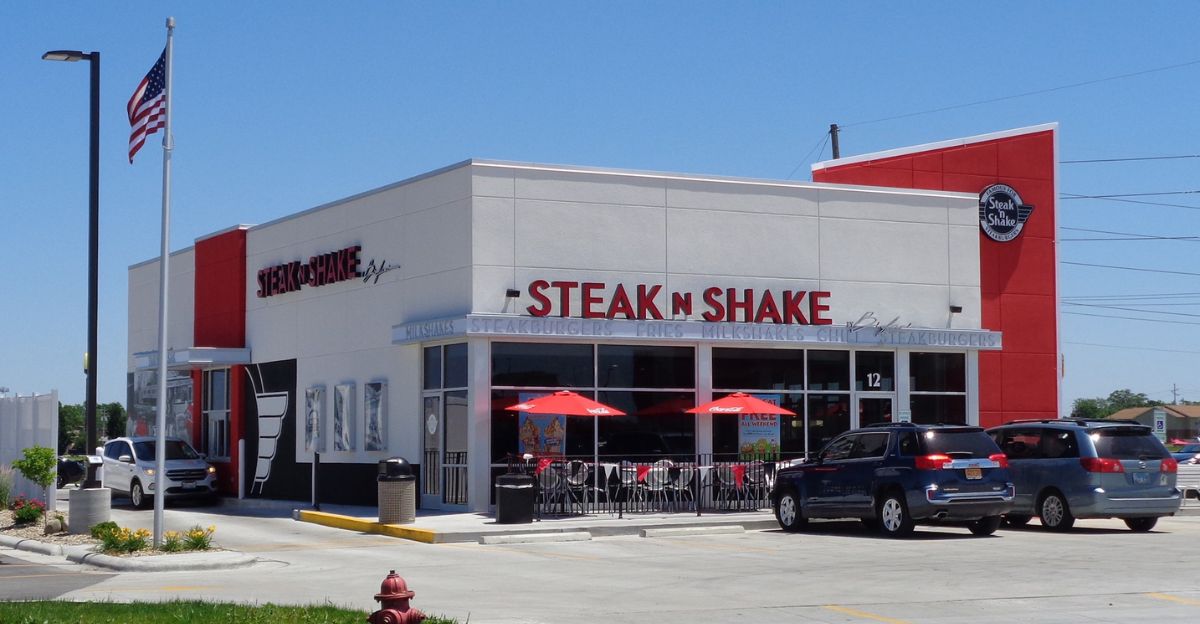
Steak ‘n Shake’s journey from a $300 million bankruptcy disaster to 2024 revival demonstrates both the fragility and resilience of restaurant brands. The 2008 collapse resulted from a failure to adapt, market oversaturation, and catastrophic economic timing, which eliminated 208 restaurants and approximately 7,000 jobs overnight.
Yet powerful brand loyalty endured through 16 years of complete absence, enabling resurrection when executed thoughtfully. Whether this comeback scales nationally remains uncertain, but the initial response suggests that authentic emotional connections between restaurants and customers can endure even extended dormancy when the foundations are genuinely strong.