
High above the Loire River in central France lies La Roche-Cotard, a small limestone cave that has been hidden for tens of thousands of years. The Loire Valley is famous for its vineyards and grand Renaissance châteaux, but long before these were built, Neanderthals once called this place home. The cave’s walls are made of tuffeau, a pale, fine-grained stone that formed around 90 million years ago from marine shells and sediments.
Inside, Neanderthals hunted large animals and prepared their food, leaving behind stone tools and animal bones that tell the story of their everyday life. The same stone that formed their shelter was later used to construct many of the magnificent buildings that now define the Loire Valley. However, La Roche-Cotard holds something far more ancient and remarkable than architecture, it contains the earliest known artistic marks ever made by Neanderthals.
Sealed for Thousands of Years
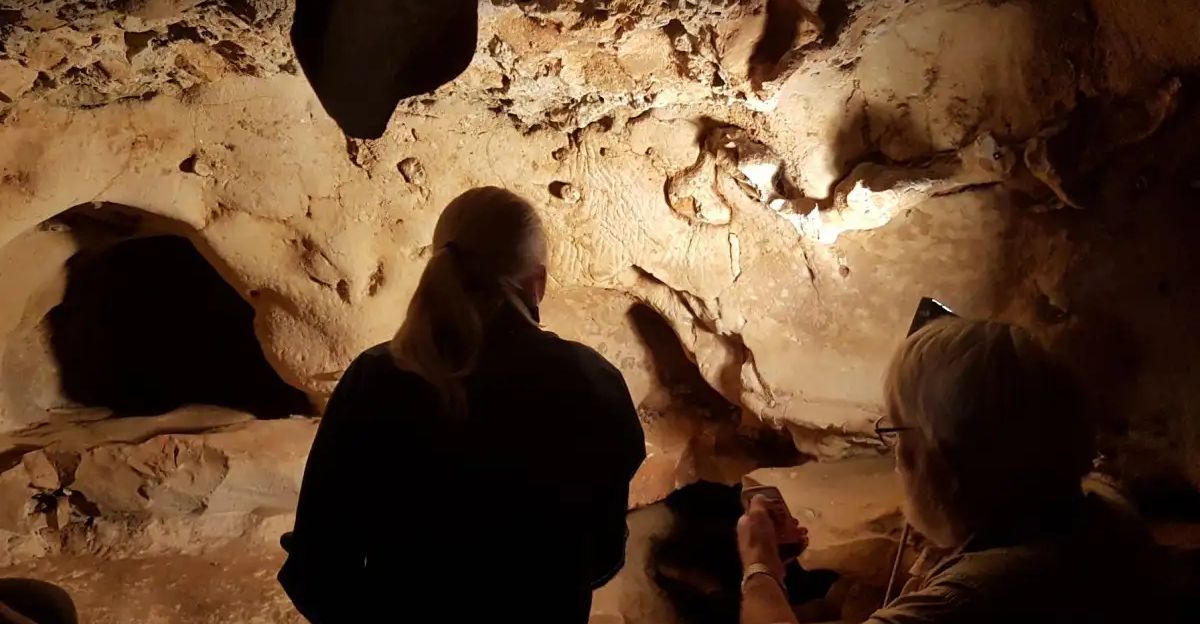
Around 57,000 to 75,000 years ago, the Loire River flooded repeatedly and erosion from the nearby hillside caused the cave’s entrance to collapse. Over time, more than 30 feet of sediment buried the entrance, sealing it completely. The layers of earth acted like a protective blanket, preserving everything inside exactly as it had been left. No animals or people entered again, and even natural weathering could not reach the interior.
To estimate when the cave was sealed, scientists used a technique called optically stimulated luminescence, or OSL. This method measures how long it has been since grains of minerals like quartz or feldspar were last exposed to sunlight. When these grains are tested in a laboratory, they release light that reveals how long they’ve been buried. Samples taken from deposits inside La Roche-Cotard showed that the entrance became sealed long before modern humans arrived in western Europe, about 40,000 years ago. This means that the engravings inside the cave were made solely by Neanderthals.
Rediscovery and Investigation
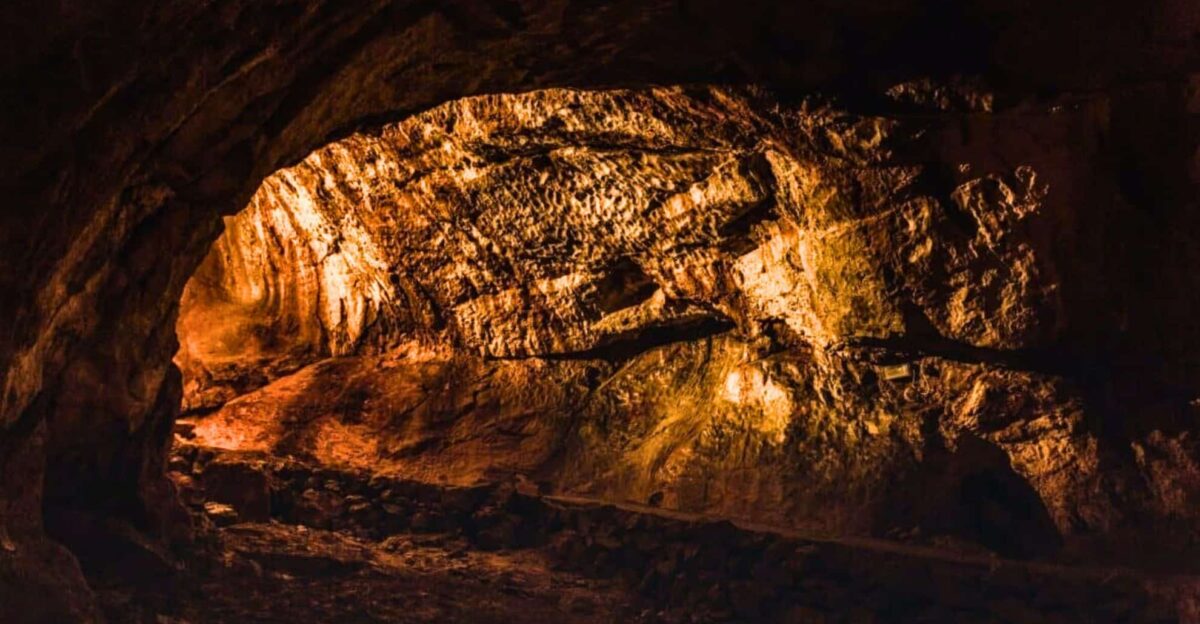
After more than 57,000 years underground, the cave was rediscovered by accident in 1846 when railway workers digging into the hillside opened a gap that revealed its hidden interior. At that time, prehistoric archaeology was still in its infancy, and Neanderthals had not yet been officially identified as a distinct human species. The cave’s first detailed exploration was carried out in 1912 by a French landowner, François d’Achon, who found stone tools typical of Neanderthal craftsmanship. These included flint scrapers, pointed tools, and flakes made with the Levallois technique, a highly skilled method for shaping stone.
D’Achon also uncovered bones bearing cut marks and traces of fire, showing that the cave’s inhabitants butchered and cooked animals. On the walls were strange lines and patterns that no one could explain at the time. For decades, these markings remained a mystery, dismissed by some as natural scratches or accidental damage. It would take many years and new scientific tools before researchers could finally understand their significance.
The Oldest Neanderthal Engravings
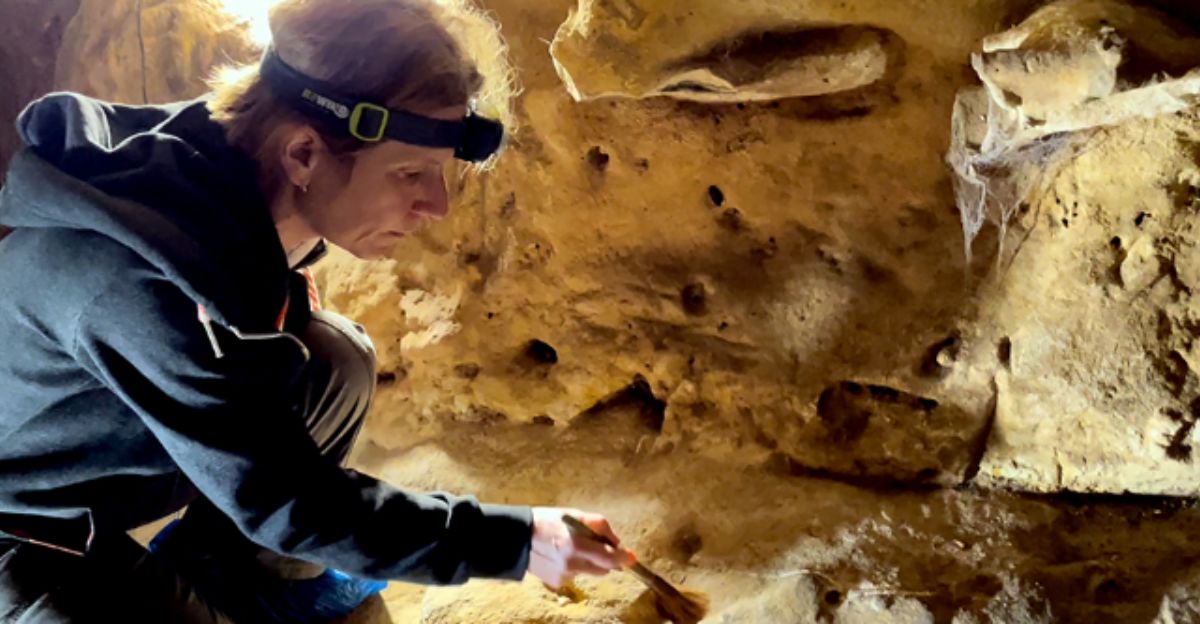
In the section known as the Pillar Room, researchers discovered deliberate markings on the cave walls — rows of lines, arcs, and patterns shaped by human fingers. The Neanderthals who made them pressed and dragged their fingertips through the soft clay that coated the tuffeau, creating intricate arrangements of grooves and ridges. To test whether these were truly human-made, scientists compared them to marks made by animals or by erosion in nearby caves. Only human fingertips could have produced the distinctive rounded impressions and deliberate patterns found here.
Using 3D imaging, the team created detailed digital models of every engraving. The results, published in PLOS One in June 2023 by Jean-Claude Marquet and Eric Robert, confirmed beyond doubt that the engravings were ancient and intentional. They are now considered the oldest known examples of symbolic art made by Neanderthals, predating similar finds such as the cross-hatched engravings in Gibraltar’s Gorham’s Cave by more than 18,000 years.
These discoveries push back the timeline of human creativity. They are even older than famous artworks by early modern humans, like those in Chauvet Cave in France and El Castillo in Spain, both dated to around 30,000 to 40,000 years ago. The La Roche-Cotard engravings reveal that long before modern humans arrived in Europe, Neanderthals were already capable of abstract thought and artistic expression.
Rather than being the crude, uncreative figures they were once thought to be, Neanderthals now appear as intelligent beings who could symbolize, plan, and possibly communicate meaning through visual marks. Their art predates even the 45,500-year-old painting of a pig in Indonesia, made by Homo sapiens, proving that the desire to create and express meaning through symbols is far older and more universal than once believed.
The discovery of La Roche-Cotard changes how we understand human evolution. It suggests that creativity and symbolic thinking did not begin with our species alone but were shared among our extinct relatives. Future excavations may uncover even more evidence of Neanderthal imagination, showing that the roots of art stretch deeper into the human past than anyone had imagined.
Sources:
PLOS One – “The earliest unambiguous Neanderthal engravings on cave walls: La Roche-Cotard, Loire Valley, France” – June 21, 2023
Smithsonian Magazine – “Oldest Known Neanderthal Engravings Were Sealed in a Cave for 57,000 Years” – June 20, 2023
Natural History Museum, London – “Oldest known Neanderthal engravings unearthed in French cave” – June 21, 2023
EurekAlert! – “Neanderthal cave engravings are oldest known” – June 20, 2023
CNRS – “Neanderthals were artists too” – June 28, 2023