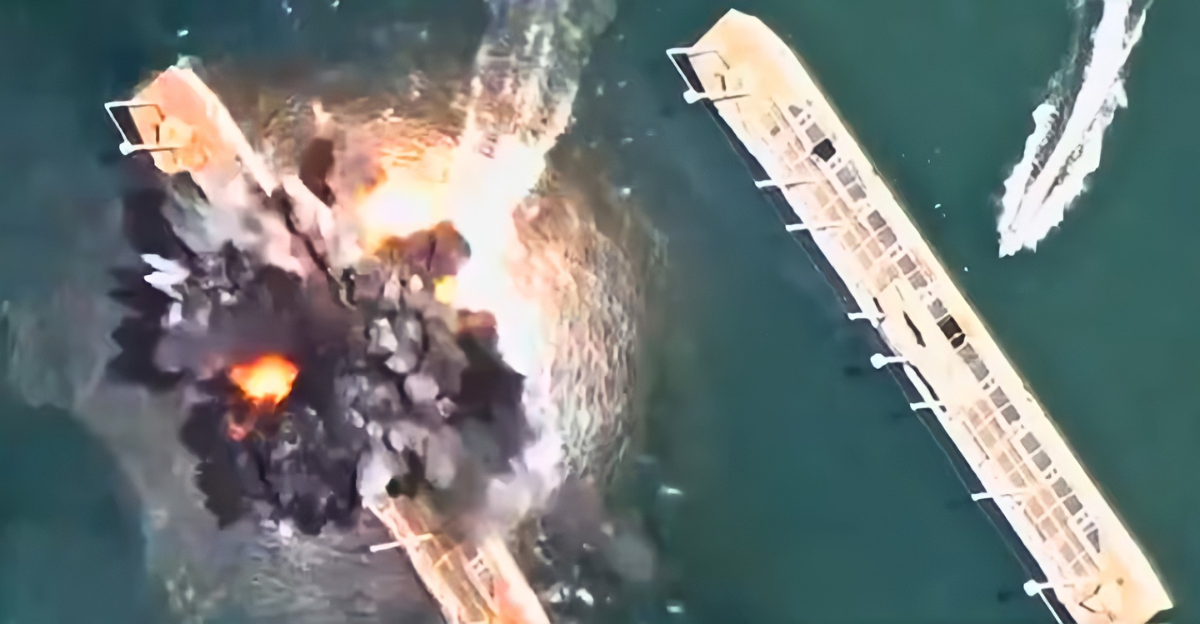
On August 28, 2025, Ukraine demonstrated a radical maritime capability. In a covert operation deep in Russian-controlled waters, Ukrainian intelligence used a simple FPV drone to disable a Russian Buyan-M-class missile corvette.
The uncrewed craft first jammed the vessel’s radar and then struck its hull, forcing the warship to withdraw from its patrol area.
Analysts hailed this as a paradigm shift: even a hobbyist drone, costing only a few hundred dollars, could threaten high-value warships at great distance. This bold exploit signaled a new chapter where asymmetrical technology can overwhelm traditional naval defenses.
Scale

At the same time, Ukrainian strikes have devastated Russia’s Black Sea Fleet. Since 2022, Kyiv’s forces have destroyed or badly damaged roughly 30 Russian ships and submarines – about one-third of the fleet.
These losses have forced the remaining vessels to retreat to safer ports. By early 2024, Britain’s defence ministry concluded the fleet was effectively “functionally inactive”.
Russia’s main missile ships now seldom venture near Ukrainian waters, underscoring how decisively control of the Black Sea has tilted toward Kyiv. In effect, Moscow has been compelled to shift most naval assets east to Novorossiysk on the Russian coast.
Evolution

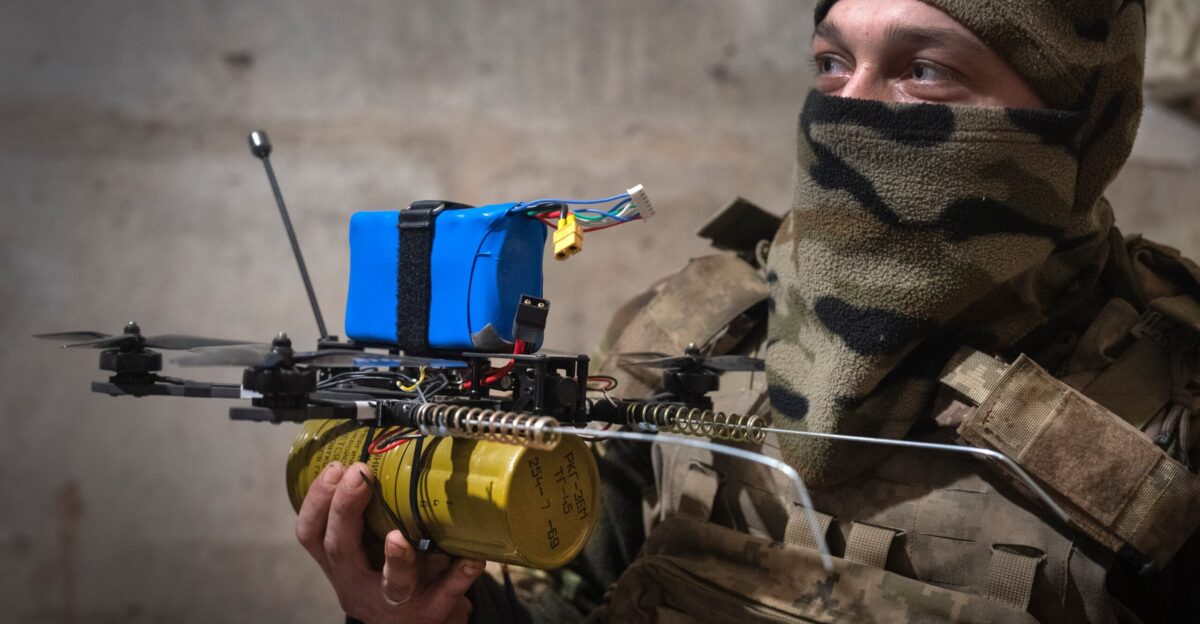
This war increasingly mixes traditional combat with civilian drone innovation. Ukraine is at the forefront of this evolution. First-person-view (FPV) drones – initially built for racing or hobbyist photography – have been weaponized into precision loitering munitions.
Operators now fly these drones over the frontline using simple video-game controllers. These nimble devices can close in on armored vehicles or fortified positions with lethal accuracy.
This shift – leveraging off-the-shelf hardware for military ends – reflects a fundamental change: cheap, agile drones are now fighting on equal footing with tanks and jets.
Arms Race

The result is an unmanned arms race. Ukraine aims to mass-produce millions of drones: recent reports say Kyiv plans to assemble about 4.5 million FPV attack drones in 2025.
Russia’s forces are responding in kind: in July 2025 alone, Moscow launched over 6,000 attack drones – roughly 14 times the number from July 2024.
These swarms do most of the damage: one analysis found small drones now cause about 60–70% of destroyed equipment on the front. Because each drone costs only a few hundred dollars, Ukraine can afford to swarm Russian forces relentlessly, trading cheap quality for strategic impact.
Record Strike
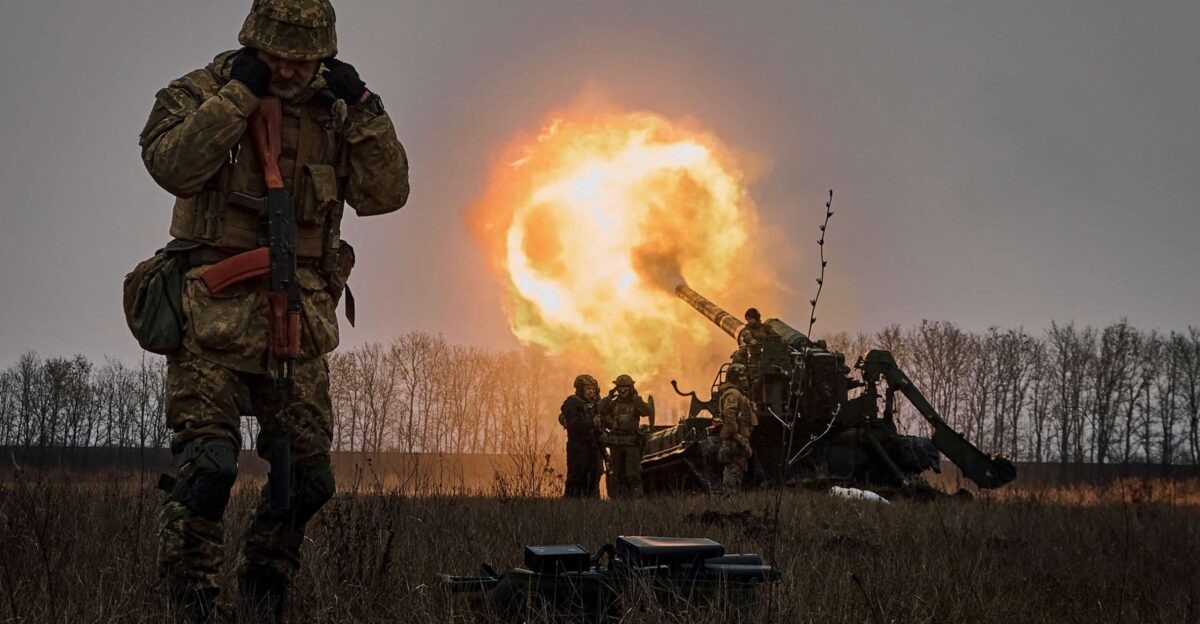
Then, on August 28, 2025, Ukraine’s military intelligence launched a historic strike in waters off Crimea. A small FPV drone hit a Russian Buyan-M-class corvette at an unprecedented range.
The drone first disrupted the ship’s radar, then struck its hull – actions that Kyiv’s intelligence chief said “forced [the corvette] to withdraw” from its patrol zone.
This covert operation – the first drone strike on a warship at over 350 km range – shattered Ukraine’s previous distance record and demonstrated the extraordinary reach of its new unmanned tactics.
Regional Impact
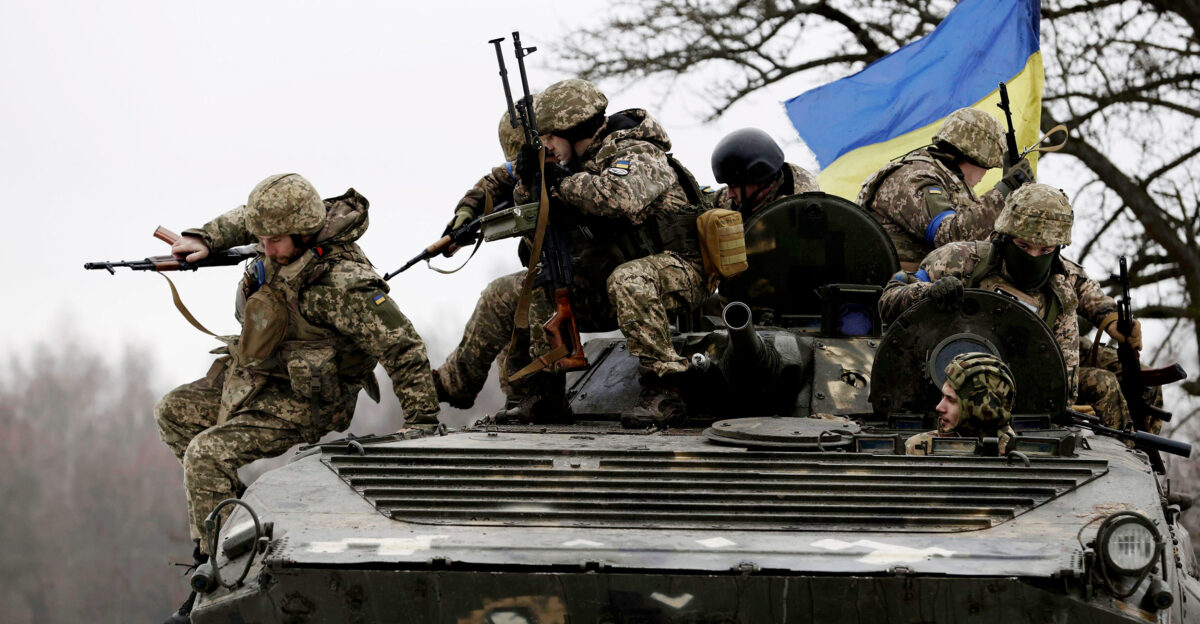
That strike had an immediate strategic impact. Russian naval groups retreated from parts of the Azov Sea, disrupting patrol routes that had threatened Ukrainian coastlines. Neutralizing the Buyan-M corvette was crucial: it was armed with eight long-range Kalibr missiles (around 2,500 km range), so its loss significantly reduced Russia’s firepower.
According to one Ukrainian analyst, “the Black Sea Fleet has suffered significant losses” and is now “unable to control maritime traffic or defend its base in Sevastopol”.
After the attack, repeated drone threats forced Russia to shift nearly all remaining Black Sea ships east to Novorossiysk.
Human Element

Behind these strikes are highly trained operators. GUR (Ukraine’s military intelligence) reported that after the corvette was hit, “the corvette sustained significant damage and was forced to withdraw”.
The pilots themselves liken the missions to video games – but with no safety net. One member of Ukraine’s Typhoon drone unit put it plainly: “People think flying a military drone is like playing ‘Call of Duty,’ until they realize there’s no restart option”.
Operators literally keep score of each hit, competing on digital leaderboards as if in a deadly contest. Many of these young, hoodie-clad technicians sit far from the front lines, translating hobbyist skills into battlefield results.
Economic Warfare

But the math of this conflict is starkly asymmetric. Ukrainian FPV drones cost only a few hundred dollars apiece, yet they can disable equipment worth millions.
For example, a single Buyan-M corvette costs on the order of tens of millions to build – analysts estimate roughly $215 million to replace.
Russia loses hundreds of millions in hardware for a few thousand dollars’ worth of drones. This cost asymmetry means Ukraine can afford to trade quantity for quality; even if many drones are lost, Russia’s financial losses remain disproportionate.
Technology Disruption
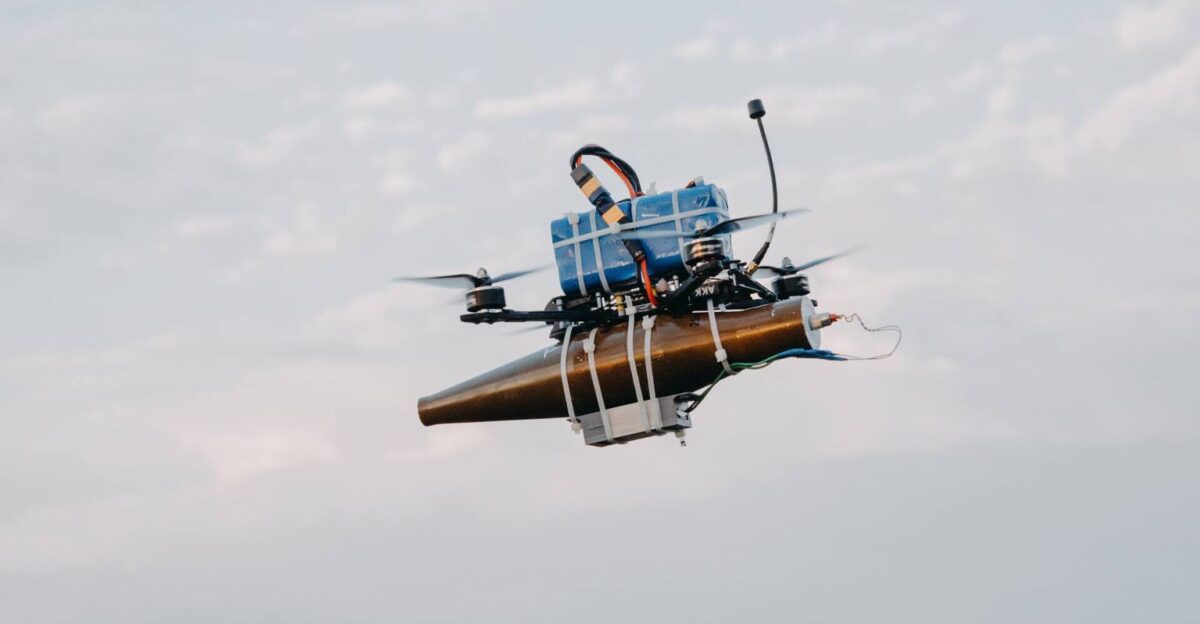
Meanwhile, Ukraine’s drone industry has scaled up massively. Manufacturers reportedly supply thousands of FPV attack drones each month, mixing cheap off-the-shelf parts with Ukrainian electronics. Some advanced models – especially fiber-optic linked drones – can penetrate deep into enemy lines.
For instance, Ukrainian forces have already used fiber-optic FPV drones to hit targets over 20 kilometers away.
Because the fiber-optic link is immune to jamming, these drones remain nearly undetectable and allow operators to maintain video control even behind dense enemy signals. Over time, these mass-produced drones have become a cornerstone of Ukraine’s attacks.
Previous Records
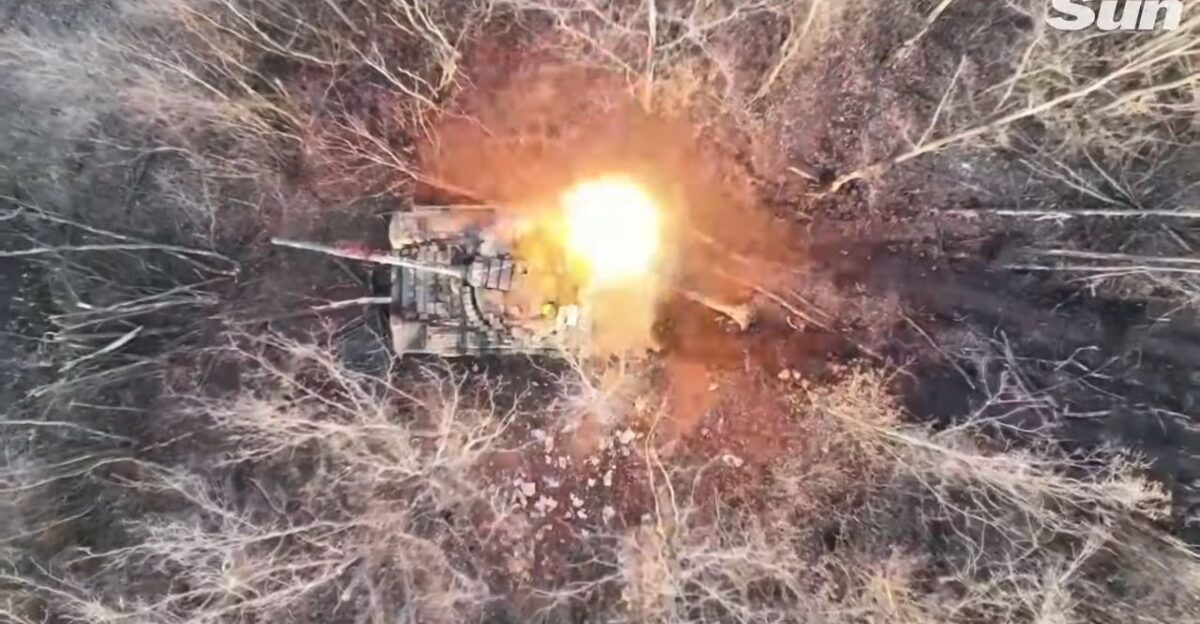
In fact, the August attack vastly exceeded Ukraine’s prior range records. Just three months earlier, on May 27, 2025, a Ukrainian brigade used a fiber-optic FPV drone to destroy a Russian tank from 42 km away.
That distance was already hailed as “a major milestone” in Ukraine’s drone warfare.
But the August strike was more than eight times farther. Each new operation seems to outdo the last, highlighting how rapidly Ukraine’s unmanned techniques are evolving. Observers now acknowledge that their earlier assumptions about drone range and capabilities are being steadily outstripped by Ukraine’s innovations.
Operational Challenges

Meanwhile, the Russian navy has struggled to counter these new threats. Traditional close-in defenses simply aren’t optimized for small, low-flying drones. In the recent corvette attack, even the ship’s AK-630M2 “Duet” rapid-fire cannon failed to engage the incoming FPV drone.
The flurry of losses has sparked friction among Russia’s commanders; crews are reportedly frustrated that aging radars and jammers cannot reliably track these craft.
Some analysts say this internal strain has led to command conflicts, as legacy doctrine clashes with the new reality of swarms of plastic kamikaze boats.
Strategic Adaptation
Consequently, Russia has repositioned its fleet and command structures. Satellite and news reports confirm that the Black Sea Fleet relocated its headquarters from Sevastopol (Crimea) to Novorossiysk (Russia).
By moving its ships to ports further from Ukraine, Moscow essentially conceded control of the western Black Sea. A Russian defense minister bluntly admitted that the fleet’s large vessels became “big targets” for Ukrainian unmanned boats.
This strategic withdrawal represents a complete reversal of Russia’s original objectives in the region: instead of dominating the Black Sea, it now focuses on defending the assets it still has.
Recovery Efforts

On its part, Russia has adjusted its tactics at sea. Intelligence reports indicate the navy is deploying more submarines and bolstering coastal defenses around Crimea and Novorossiysk.
At the same time, Russian warships continue firing long-range Kalibr missiles at Ukraine, but now only from the eastern Black Sea – safer waters well beyond Ukrainian drone range.
Russia has shifted to a defensive posture: rather than contesting Ukraine’s coastal waters, it tries to preserve its fleet by hiding larger assets. These moves underscore Ukraine’s dominance in the littoral zone.
Expert Assessment
However, some analysts urge caution on the most sensational claims. The reported $500 million price tag for the Buyan-M corvette is likely an exaggeration – shipbuilding estimates put its replacement in the tens of millions of dollars, perhaps around $215 million.
Likewise, descriptions that the ship was “wrecked” may overstate the damage: official reports said it “sustained significant damage and was forced to withdraw”, not that it sank.
Independent experts will want to verify the 350 km range and damage claims. Still, even if some details are inflated, the operation clearly highlights critical vulnerabilities in defending large vessels against agile drones.
Future Implications
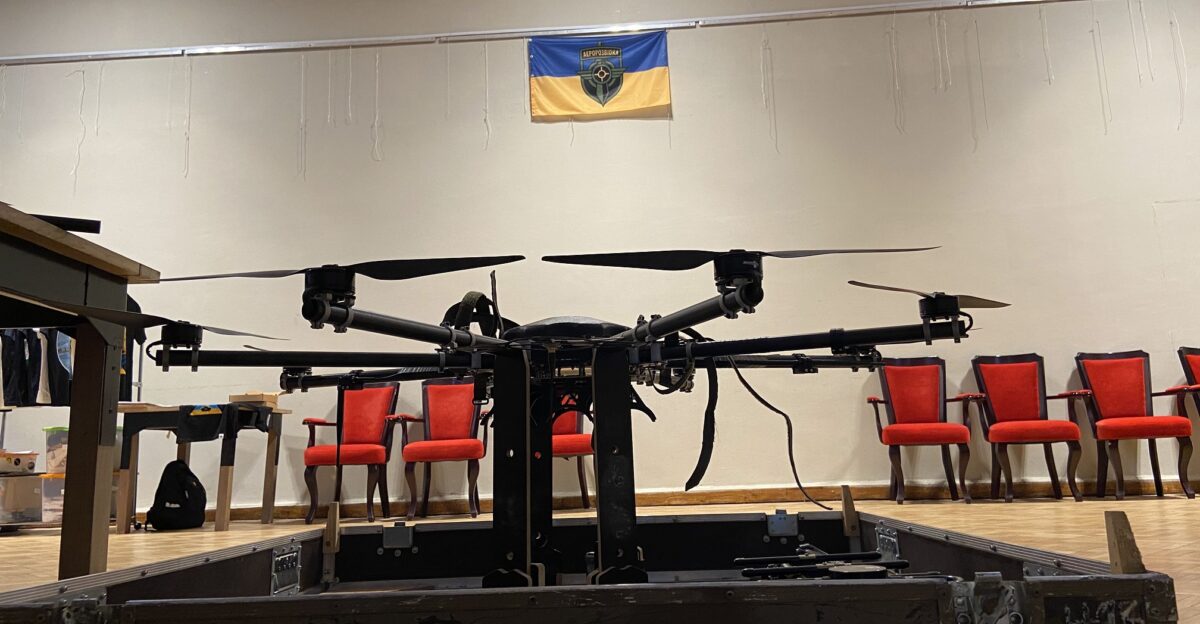
Looking beyond the immediate results, this warship strike raises profound questions about naval defense. Traditional ship defenses – layers of radars, guns, and missiles – were built to counter jets and cruise missiles, not tiny plastic UAVs.
Analysts now ask: how will modern fleets defend themselves against swarms of inexpensive unmanned boats? Every successful drone attack suggests an enduring shift: states can no longer rely solely on big ships for sea control.
Instead, cheaper asymmetric tactics can neutralize traditional advantages.
Geopolitical Consequences

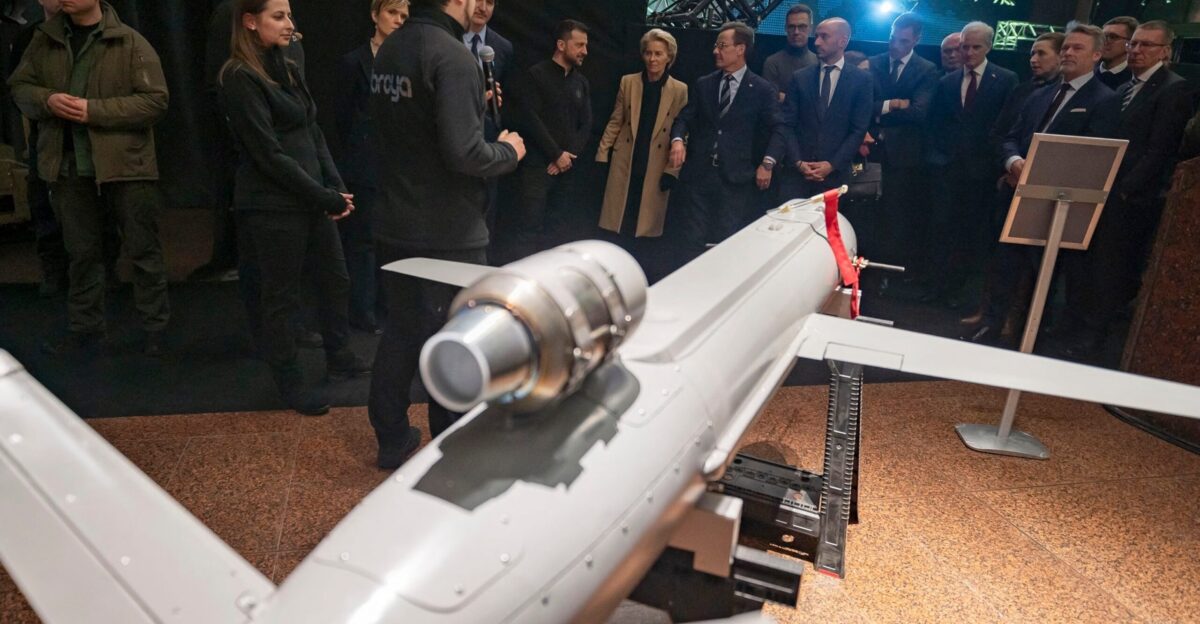
At the same time, the implications reach far beyond Ukraine’s waters. By neutralizing much of Russia’s fleet, Ukraine has effectively broken Moscow’s de facto Black Sea blockade.
Analysts note that Ukrainian drones sank seven Russian warships, forcing the fleet’s retreat and allowing grain shipments to resume.
This reopened vital export routes for Ukrainian grain. The success is already influencing global defense planning: NATO and allies are studying Ukraine’s drone innovations as a blueprint. As one expert warned, these events are “a stark warning that warfare has changed”.
International Response

Indeed, Western militaries are already responding. In January 2025, the UK announced it would send 30,000 FPV drones to Ukraine, funded by a new international Drone Capability Coalition.
By mid-2025, this coalition (co-led by the UK and Latvia) grew to 20 nations and agreed to allocate roughly €2.75 billion for additional drone support to Kyiv.
Defense officials say this unprecedented coordination shows how commercial drone kits can challenge heavy armor. Military planners across Europe and North America are closely analyzing the Ukrainian campaign, asking how their own forces would defend against similar drone tactics in future conflicts.
Legal Frameworks

This also raises thorny legal questions. International maritime law was written for battles between crewed ships and aircraft, not for fleets of unmanned vehicles.
Observers note that current rules of engagement don’t clearly cover cases where drones without human pilots strike ships on the high seas.
Questions abound about sovereignty, identification of combatants, and proportional response. The incident may prompt debates at the United Nations and among naval powers over how the laws of armed conflict apply to drones at sea.
Cultural Impact

Even on the ground, the shift is cultural as much as technological. In Ukrainian units, drone warfare has been “gamified.” A Western analyst reported that “each hit earned points, with teams competing against one another” at a frontline control center.
Operators literally keep score of their strikes on digital leaderboards, treating each mission like a high-stakes game.
This mindset – where destroying an enemy tank can feel like topping a high score – marks a new generation of combat.
Paradigm Shift

Ultimately, the Aug. 28 strike isn’t just a tactical victory—it heralds a new paradigm. It shows that in future wars, adaptability and low-cost tools can overcome sheer firepower. As one NATO expert warned, this should be “a stark warning that warfare has changed”.
Ukraine’s success suggests we are entering an era where military strength depends less on big budgets and more on smart use of commercial technology.
The democratization of military power – where a $500 drone can threaten a multi-million-dollar warship – could reshape defense strategy for years to come.