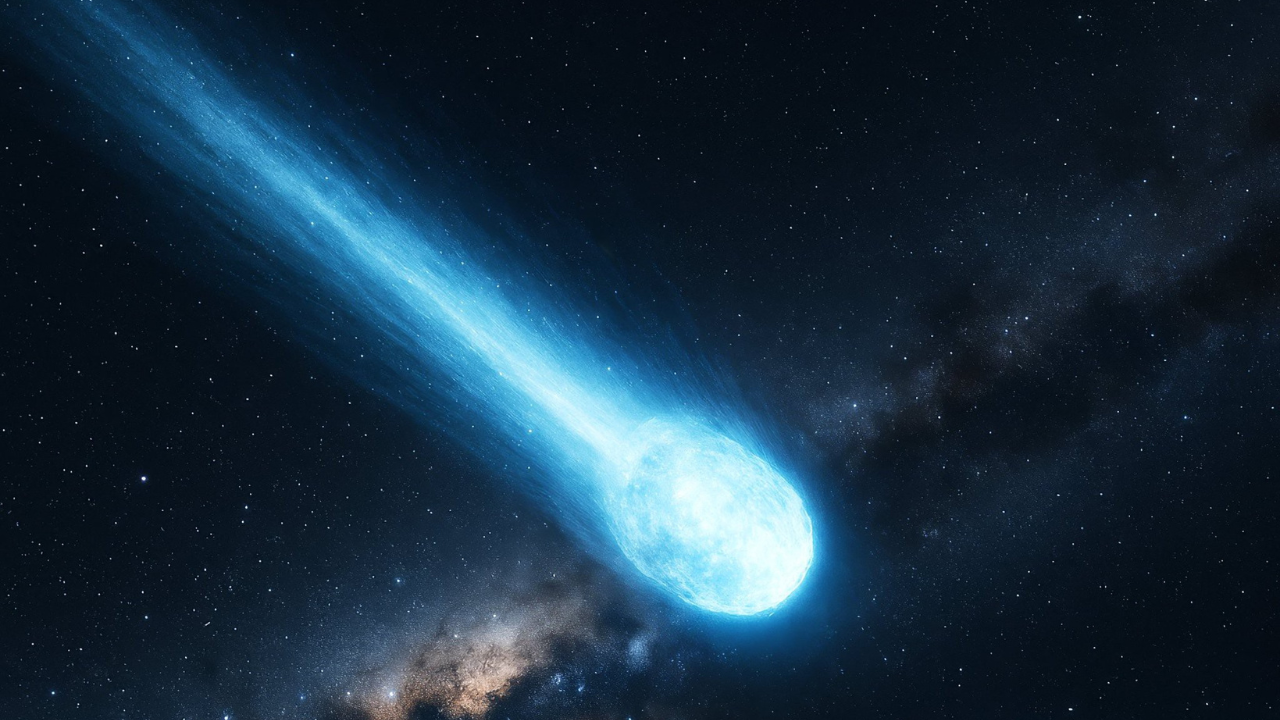
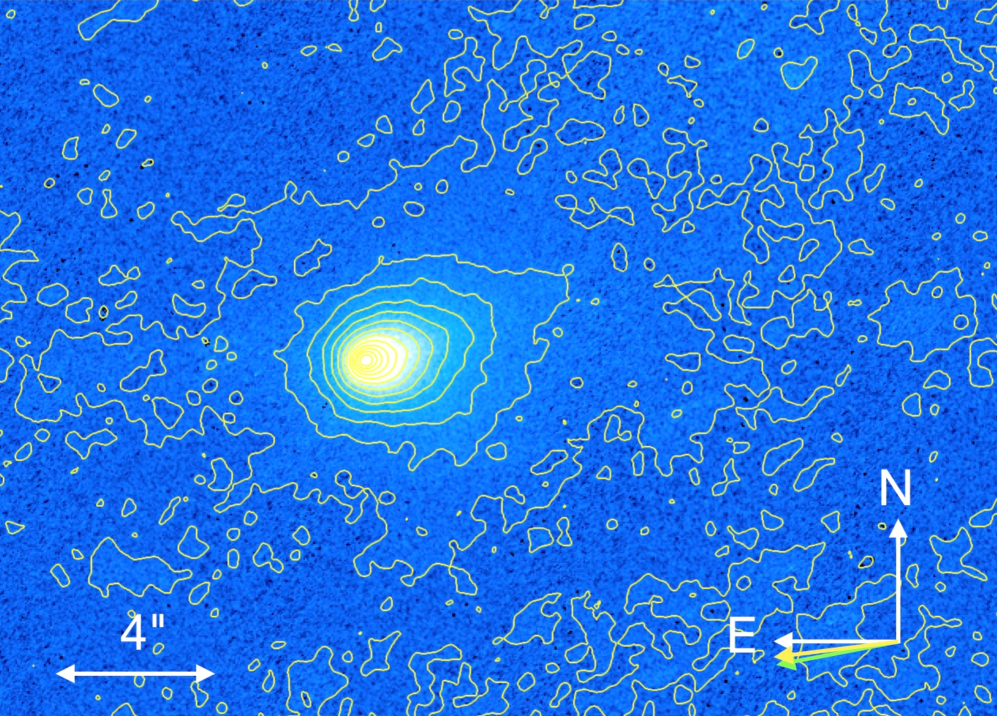
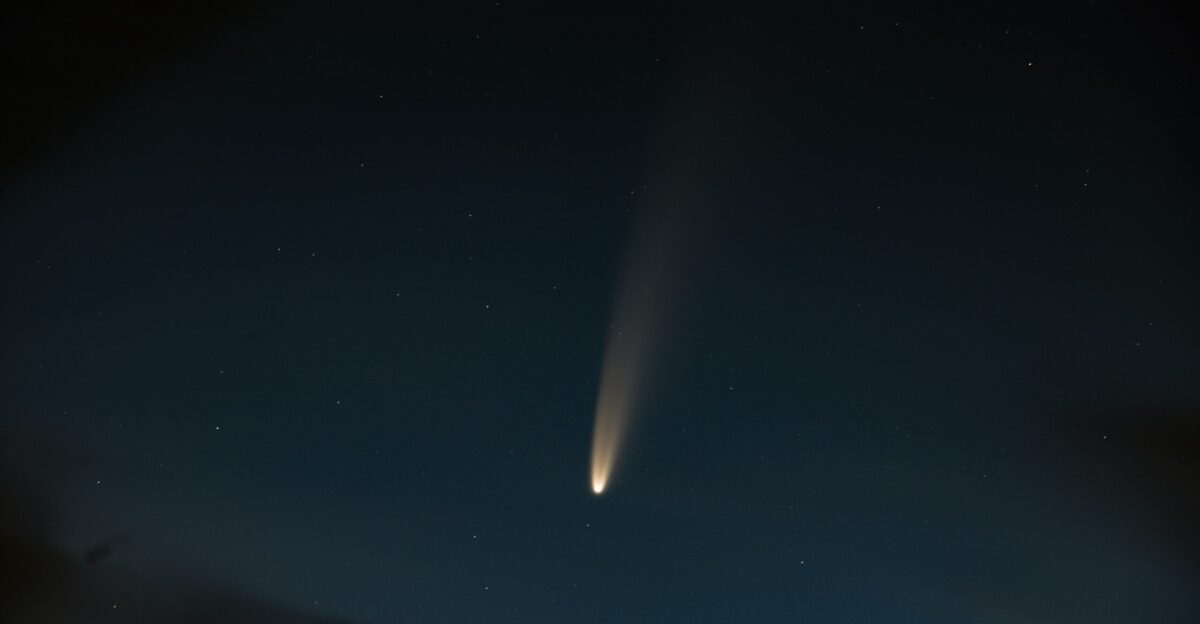
A comet unlike any seen before streaked across the inner solar system in late October 2025, capturing worldwide attention. 3I/ATLAS brightened dramatically as it neared the Sun, displaying a stunning blue hue that defies typical comet behavior. Telescopes around the globe, including Hubble and Webb, were trained on the comet, documenting a celestial visitor that moves faster than expected and exhibits mysterious non-gravitational acceleration.
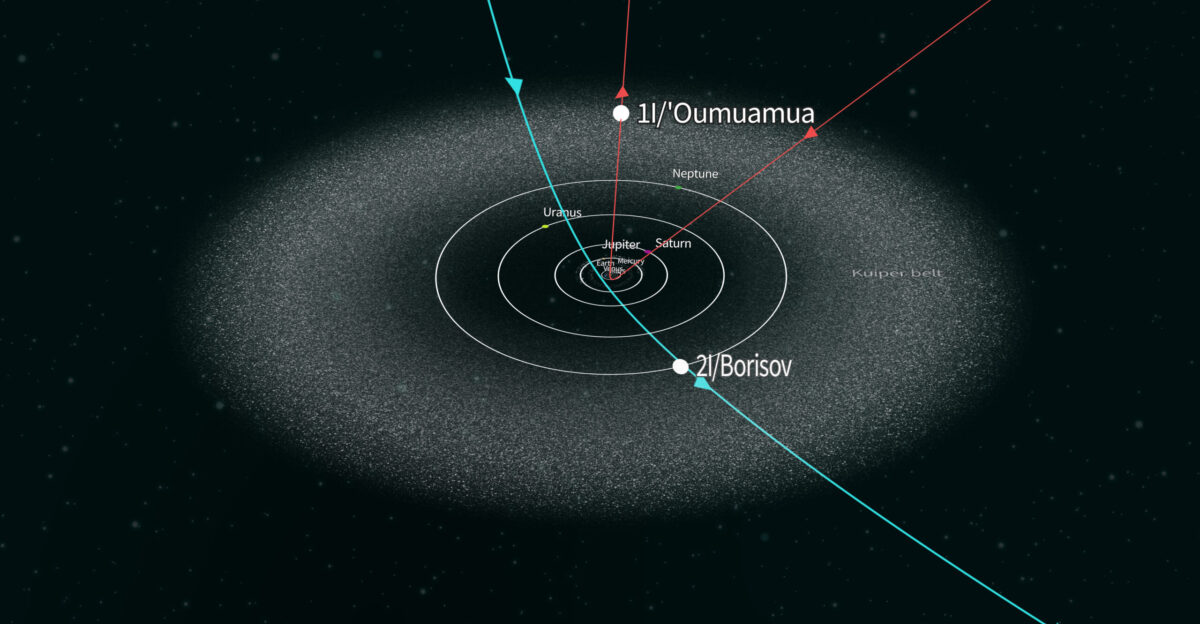
Scientists are racing to understand its composition, behavior, and origins. Early data suggest that this is only the third interstellar object ever recorded passing through our solar system, following ‘Oumuamua and 2I/Borisov. Observers describe a rare and unforgettable spectacle of a comet seemingly alive with energy, unlike anything in our cosmic backyard.
Non-Gravitational Forces
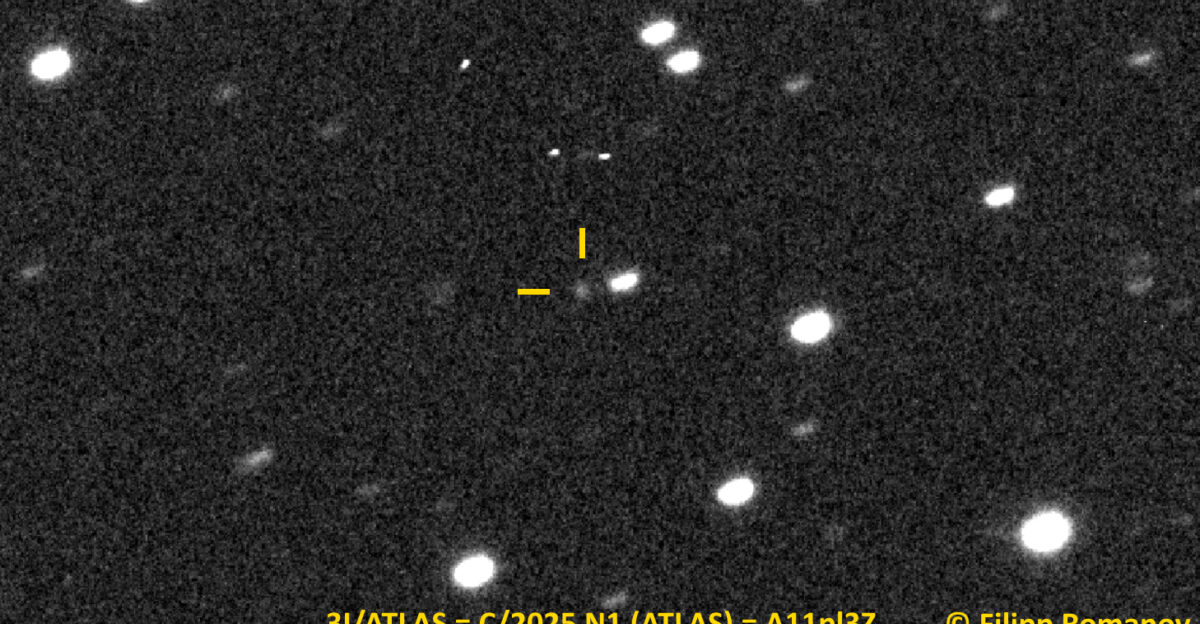
As 3I/ATLAS approached the Sun, astronomers noted it was accelerating in ways not explained by gravity alone. This phenomenon, known as non-gravitational acceleration, is typically caused by outgassing—where solar heat vaporizes the comet’s ices, generating a jet-like effect. At perihelion, the acceleration was measured at 135 kilometers per day squared radially away from the Sun and 60 kilometers per day squared in the transverse direction. The forces were significantly stronger than anticipated for an object of its size. Existing models failed to predict the magnitude of these non-gravitational forces, with the brightening rate far exceeding standard comet predictions.
Researchers are studying these forces closely to understand the comet’s composition and volatile materials. The unusual behavior could reveal whether the comet’s ices are different from those in our solar system, offering insight into the makeup of interstellar visitors and the processes that drive their dynamic behavior.
Interstellar Origins
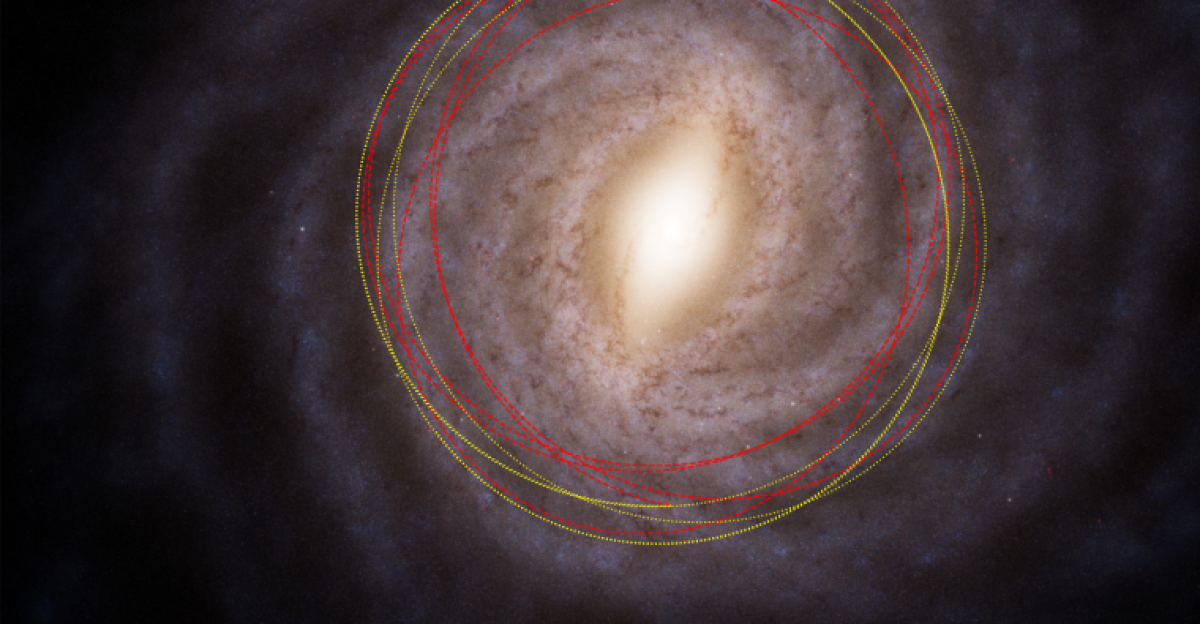
3I/ATLAS is only the third interstellar object confirmed to have entered our solar system. Discovered on July 1, 2025, by the NASA-funded ATLAS survey in Chile, the comet has traveled for billions of years through interstellar space. Unlike most comets originating in our solar system, this visitor has journeyed across vast cosmic distances, making it a rare opportunity to study material from beyond our planetary neighborhood.
Its passage allows astronomers to investigate interstellar ice and dust composition, providing clues about the environments of other star systems. The comet’s trajectory and history are unique, offering scientists an unprecedented window into the outer galaxy and the building blocks of planetary systems.
Perihelion Observations
On October 29, 2025, 3I/ATLAS reached perihelion, its closest point to the Sun at 1.36 AU, or 203 million kilometers (126 million miles). Observations revealed rapid brightening and unexpected color variations, including possible bluish tones. NASA’s Hubble, Webb, and SPHEREx telescopes captured detailed images and spectra, enabling in-depth analysis of the comet’s behavior.
These observations challenged prior predictions, showing that the comet was far more energetic than anticipated. NASA’s predictive models underestimated the comet’s activity by approximately a factor of two, with scientists describing the brightening as puzzling. Scientists hope the perihelion data will shed light on the underlying mechanisms of activity, including the composition of its volatile ices and potential dust ejection patterns.
Unusual Activity Observed
On the day of perihelion, multiple spacecraft, including STEREO-A and SOHO, recorded the comet dramatically brightening near the Sun. Some instruments suggested a bluish coloration, unusual for natural comets, which typically exhibit redder dust-induced hues. These early observations triggered widespread interest, although some color readings may be instrument-specific and require peer-reviewed confirmation.
The comet’s activity exceeded initial expectations, prompting discussions about its composition and the nature of the outgassing. Its energetic behavior raises fundamental questions about how pristine interstellar material responds to intense solar heat.
Solar System Trajectory
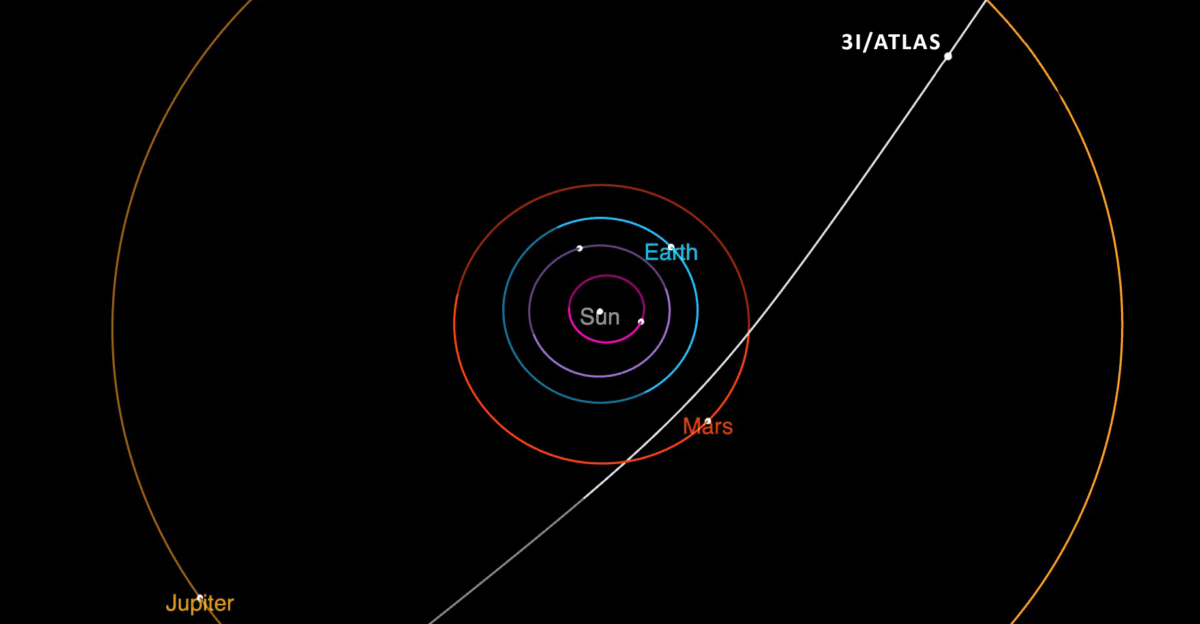
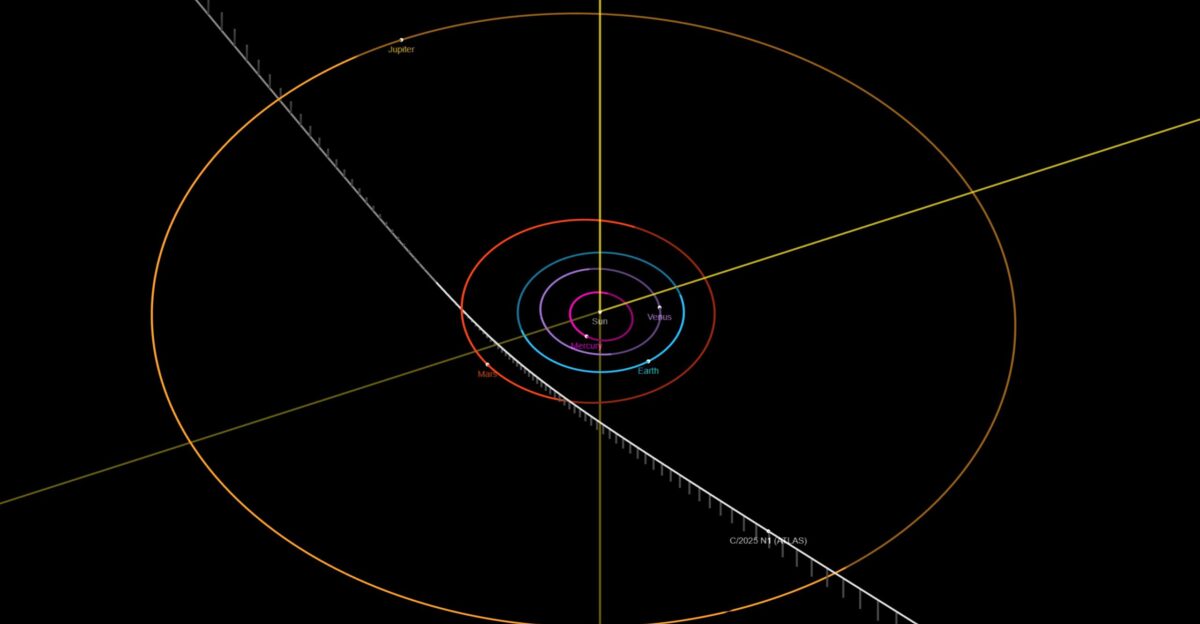
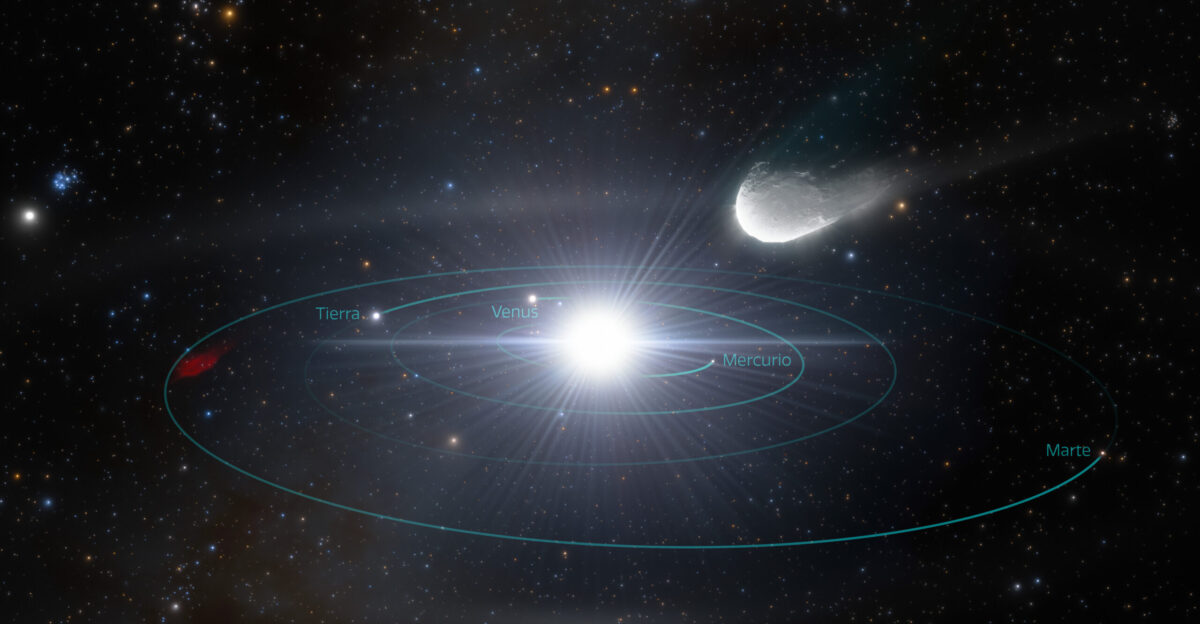
3I/ATLAS passed inside Mars’ orbit during its perihelion, providing a rare opportunity for close study. NASA confirmed that the comet poses no threat to Earth, with its closest approach projected at 1.8 AU, about 270 million kilometers (167-168 million miles) on December 19, 2025. The orbit allows for continuous monitoring by both space-based and ground-based telescopes over the coming months.
Scientists emphasized the observational window as an opportunity to study an interstellar visitor in unprecedented detail. Tracking its trajectory will help refine models of interstellar comet motion and assess how outgassing affects its path through the solar system.
Speculation and Scientific Response
The comet’s unusual behavior has captivated both scientists and the public. Harvard astrophysicist Avi Loeb has speculated that the non-gravitational acceleration could indicate a technological origin, though he stresses that natural explanations remain most likely. NASA responded to public concern, emphasizing, “No aliens. No threat to life here on Earth,” after the unusual attention generated by celebrity interest.
While speculation adds intrigue, the scientific community remains focused on natural explanations. Researchers continue to analyze high-resolution data to determine whether outgassing alone explains the unusual acceleration and coloration or if other mechanisms might be involved.
Global Scientific Scrutiny
International teams from NASA, ESA, and the University of Hawai’i are collaborating to analyze 3I/ATLAS. Observatories worldwide are participating in a massive data-gathering effort, combining space-based and ground-based observations. This collaboration has accelerated research on cometary behavior and interstellar object tracking.
The comet’s passage has reinvigorated the scientific community’s interest in interstellar visitors. Researchers are comparing 3I/ATLAS’s behavior with prior interstellar objects to understand patterns and anomalies in composition, activity, and trajectory, advancing knowledge across multiple disciplines.
Broader Context: Interstellar Visitors

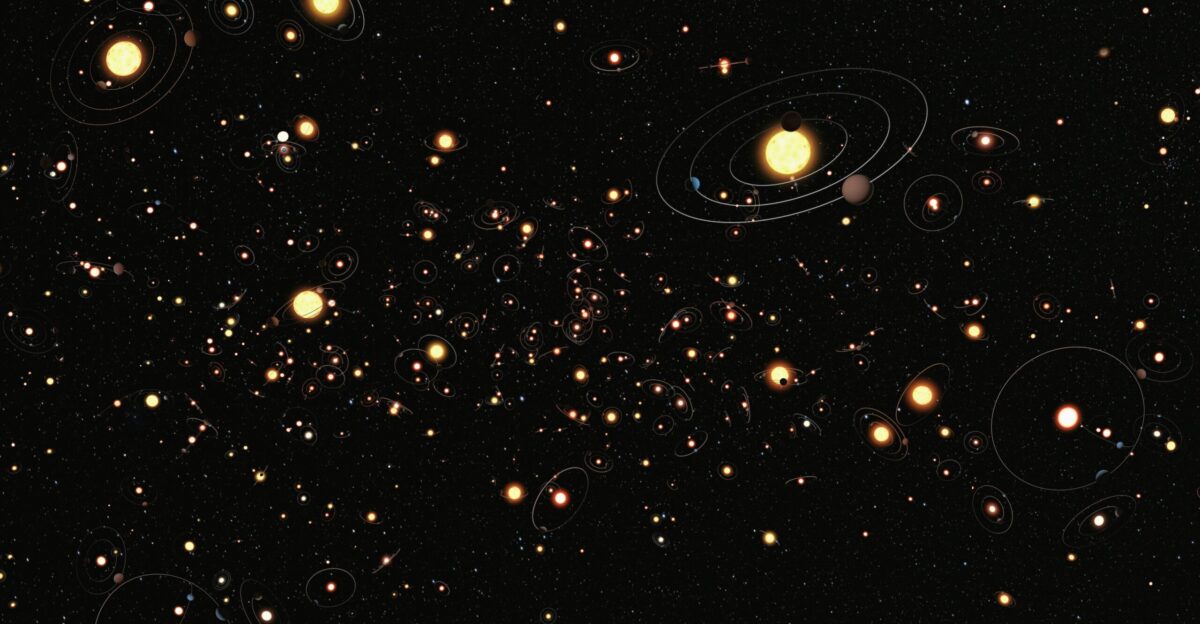
The discovery of 3I/ATLAS adds to a small but growing list of interstellar objects entering our solar system. Improved sky survey technology has enabled astronomers to detect these rare visitors more efficiently, offering insights into the dynamics and composition of material from other star systems.
Studying interstellar comets like 3I/ATLAS helps astronomers understand galactic processes, such as planetary system formation and material exchange. These discoveries provide valuable context for interpreting observations of distant exoplanets and the interstellar medium.
Alternative Hypotheses

Some scientists, including Avi Loeb, have proposed that unusual acceleration could suggest a technological signature or internal propulsion. These ideas have sparked public debate but remain unconfirmed by peer-reviewed research. The prevailing scientific consensus attributes the acceleration to natural outgassing and other cometary processes.
While sensational, these hypotheses push researchers to examine unusual comet behavior more closely. Confirming or refuting artificial origins would have profound implications for understanding both cosmic phenomena and potential extraterrestrial technology.
Scientific Discussion

The unexpected intensity of 3I/ATLAS’s activity has led scientists to revisit predictive models for interstellar comets, which failed to account for the rapid brightening and strong non-gravitational acceleration observed near perihelion. Some researchers consider whether pristine interstellar ice reacts differently to solar heat than solar system comets. Others caution that the observations remain consistent with known natural processes.
This debate highlights the importance of maintaining rigorous scientific frameworks. By refining models and testing assumptions, astronomers can better predict the behavior of future interstellar visitors and improve understanding of how such objects interact with the Sun’s energy.
Leadership on Record

NASA Acting Administrator Sean Duffy addressed public concern in October 2025, emphasizing transparency and the agency’s commitment to scientific rigor. His statement reassured the public and the scientific community that observations would proceed carefully and openly, countering misinformation.
Duffy’s response highlighted NASA’s dedication to communicating complex space phenomena responsibly. Public engagement during high-profile events like 3I/ATLAS ensures both awareness and confidence in the scientific process while supporting ongoing research.
Strategic Response

NASA prioritized 3I/ATLAS in its observation schedule, deploying additional telescope resources and coordinating with international partners. The agency plans renewed ground-based observations when the comet reappears from behind the Sun in early December 2025.
This strategy ensures critical data collection during the comet’s closest approach to Earth. By combining space-based and terrestrial observations, scientists hope to gather information on mass loss, composition, and other key indicators to determine the comet’s true nature.
Expert Assessment

Most experts interpret 3I/ATLAS’s behavior as consistent with natural processes, though unusually energetic. The comet may contain pristine interstellar ices that produce stronger outgassing than typical solar system comets. This explanation fits both the acceleration and the color changes observed near perihelion.
While unconventional ideas capture public imagination, rigorous scientific analysis remains the cornerstone of understanding. Confirming natural explanations for such unusual behavior will refine models of cometary physics and interstellar object dynamics.
Looking Ahead
3I/ATLAS is expected to become visible again to ground-based telescopes in December 2025, after emerging from behind the Sun. Upcoming observations will allow scientists to study mass loss, composition, and outgassing in detail.
This observational period is crucial for testing hypotheses about the comet’s unusual behavior. Scientists anticipate that the data could provide definitive evidence on whether 3I/ATLAS behaves purely as a natural comet or if anomalies suggest other phenomena.
Policy Implications

The 3I/ATLAS event has spurred discussions about updating protocols for tracking and analyzing interstellar objects. Policymakers are considering enhanced funding for sky surveys and rapid-response observation networks to prepare for future visitors.
By improving observational infrastructure and global coordination, space agencies aim to ensure timely study of rare interstellar objects. This policy evolution could accelerate scientific understanding and preparedness for potential high-impact discoveries.
International Collaboration
The comet’s passage has strengthened international cooperation, with NASA, ESA, and other space agencies sharing data and observational resources. Collaborative efforts allow comprehensive tracking and monitoring of fast-moving interstellar objects.
This joint approach establishes a framework for future discoveries and planetary defense. By pooling expertise, agencies can ensure maximum data collection, scientific rigor, and rapid dissemination of results to the global community.
Scientific Framework
3I/ATLAS raises questions about best practices for observing and characterizing interstellar objects. Agencies are reviewing guidelines to ensure responsible research, data sharing, and collaboration among international partners.
The comet’s study emphasizes the importance of structured scientific protocols. Establishing clear observation standards helps mitigate errors, enables reproducible research, and fosters confidence in conclusions about these rare cosmic visitors.
Cultural Fascination
Public fascination with 3I/ATLAS reflects a deep cultural interest in space exploration and extraterrestrial life. Its unusual brightening, blue coloration, and rapid acceleration have sparked conversations across social media and mainstream news outlets.
This interest demonstrates humanity’s curiosity about its place in the universe. Unusual celestial events like 3I/ATLAS inspire science education, discussion of space policy, and speculation about life beyond Earth, blending scientific inquiry with cultural imagination.
What It Means Now
The 3I/ATLAS observation campaign underscores the value of continued investment in sky surveys and international research collaboration. As data continues to emerge, scientists may gain new insights into interstellar material and the processes shaping cometary behavior.
This event sets a precedent for future interstellar discoveries, highlighting the need for rapid-response observation networks and transparent scientific communication. 3I/ATLAS may ultimately refine our understanding of how pristine interstellar objects behave when entering a solar system.