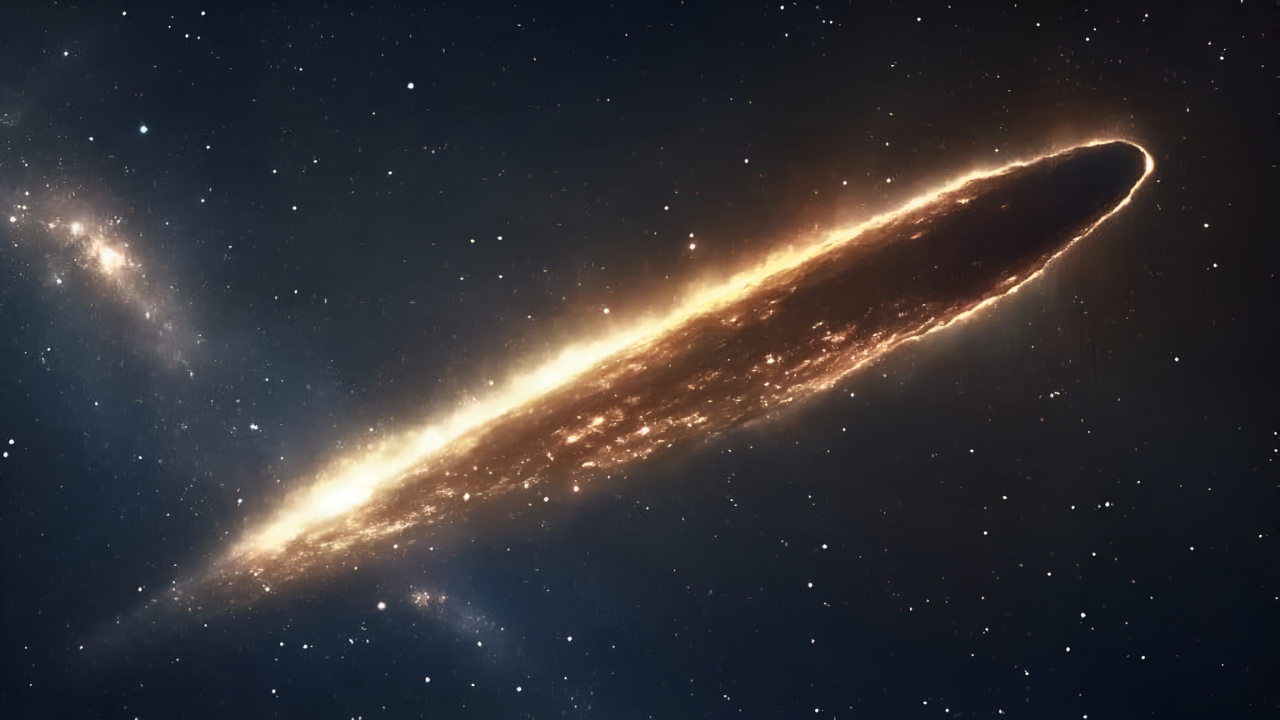
On October 30, 2025, astronomers recorded a remarkable event: the interstellar comet 3I/ATLAS reached its closest point to our Sun.
It glowed far brighter than anyone predicted, catching scientists off guard. This wasn’t just any comet passing through—its sudden brightness surge hinted at mysteries waiting to be solved.
What unknown force drives such a cosmic visitor from beyond our solar system?
Surge of Surprise
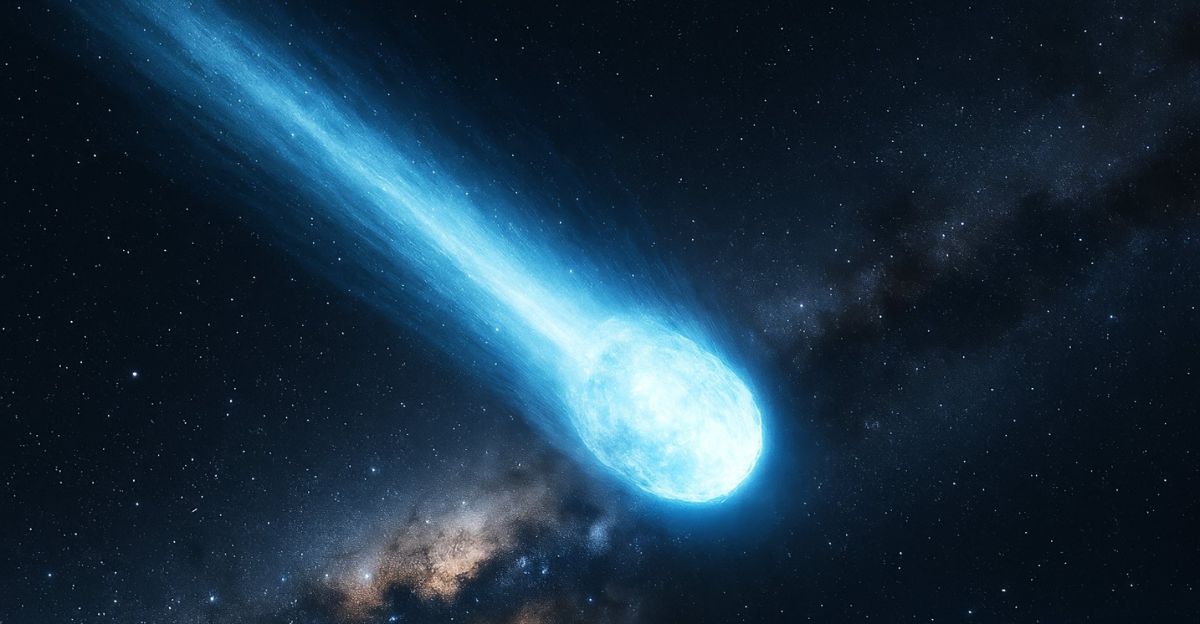
After perihelion, 3I/ATLAS brightened faster than mathematical models could explain.
Observatories across the globe detected a brightness increase seven times steeper than typical comets display.
This kind of dramatic spike hadn’t appeared since ‘Oumuamua flew by in 2017.
Scientists wonder: where did this interstellar visitor obtain such tremendous energy, and what does it reveal about cosmic processes we don’t yet understand?
Alien Origins
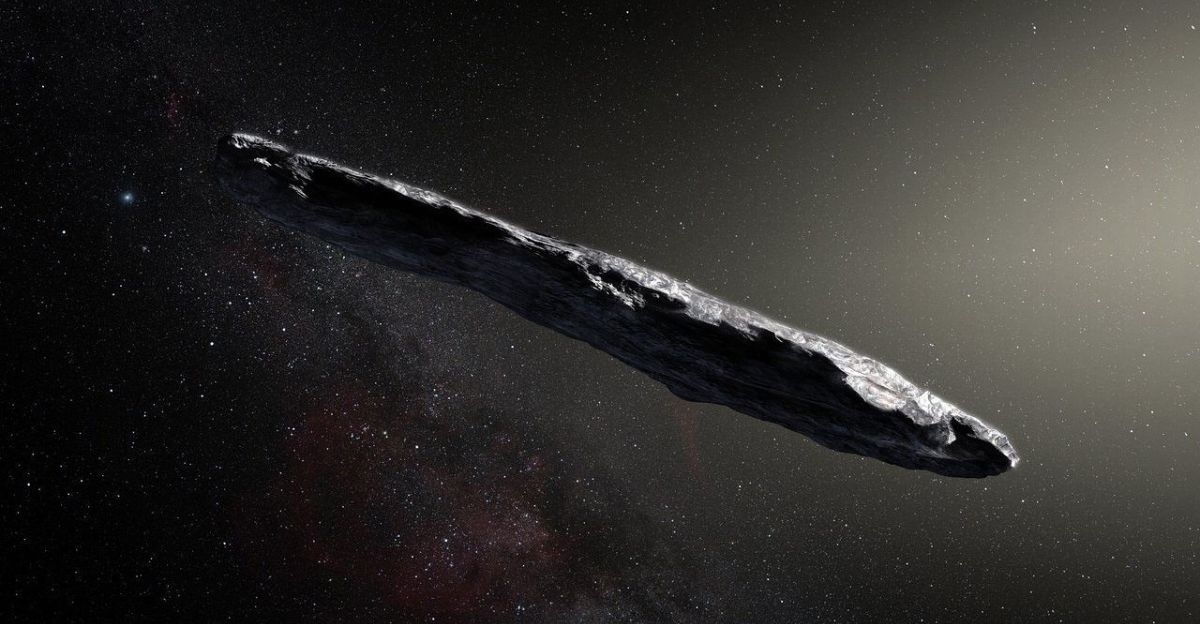
3I/ATLAS holds a unique distinction: it’s only the third confirmed interstellar object ever found.
It joins ‘Oumuamua from 2017 and 2I/Borisov from 2019 in this rare category. The ATLAS survey telescope in Chile first spotted it.
The Minor Planet Center officially gave it the “3I” designation. Now the world’s top space agencies carefully observe this scientific rarity.
Global Eyes

The comet’s passage triggered an unprecedented response.
Over 15 spacecraft from NASA, the European Space Agency, and other international partners coordinated observations, including the Hubble Space Telescope, the James Webb Space Telescope, Mars Orbiters, the Psyche mission, and the Lucy spacecraft.
All aimed cameras and sensors at the same target from different vantage points. No interstellar object has ever prompted such a massive, coordinated effort.
Solar Slingshot Anomaly
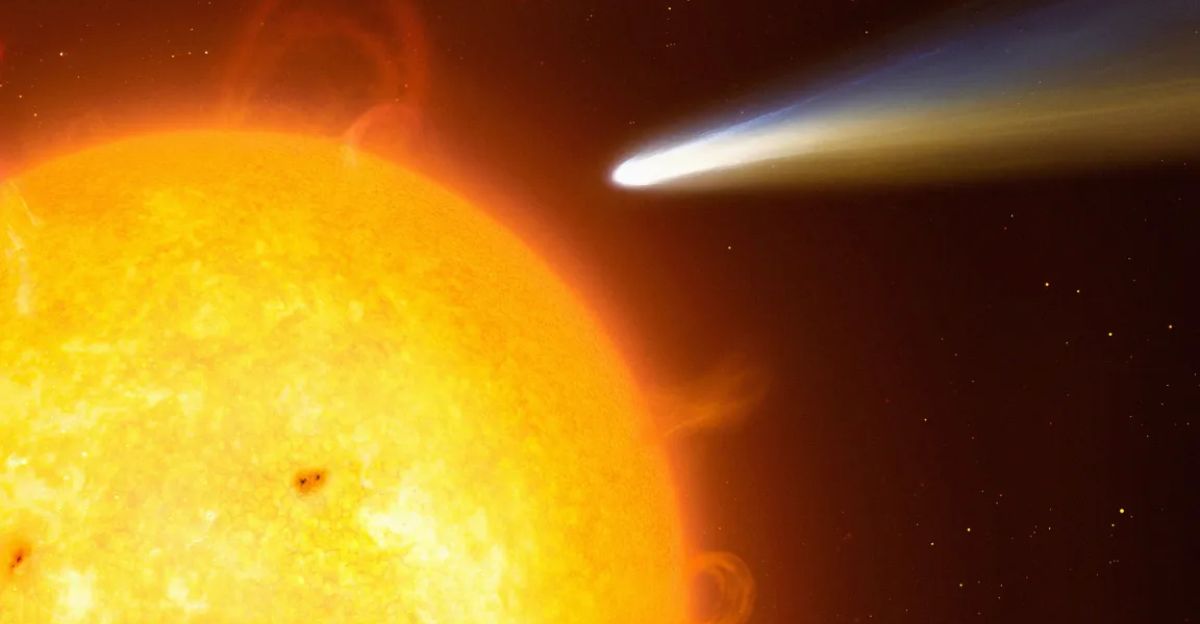
On October 29-30, 2025, 3I/ATLAS reached perihelion at a distance of exactly 1.36 astronomical units from the Sun.
NASA’s Jet Propulsion Laboratory announced a striking discovery: the comet’s actual trajectory deviated by approximately four arcseconds from what gravity alone should produce.
This deviation proves that powerful non-gravitational forces are at work. The Sun’s pull cannot explain the comet’s motion. Something else pushes or pulls this ancient visitor.
Martian Advantage
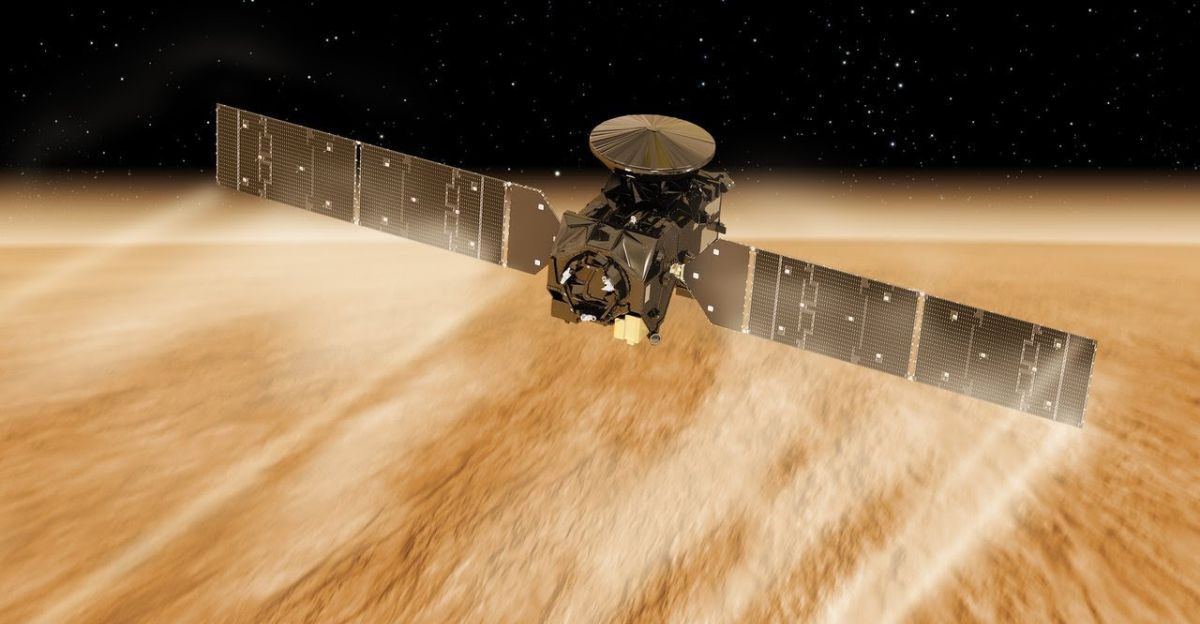
Mars-based cameras and instruments achieved unprecedented clarity. On October 3, the ExoMars Trace Gas Orbiter captured detailed images from just 19 million miles away—producing images ten times sharper than Earth’s most powerful ground-based telescopes could achieve.
This precision enabled scientists to track the comet’s exact position as 3I/ATLAS looped around the Sun and continued its course toward Jupiter.
What details did Mars reveal that Earth observers missed?
Voices from the Dome

Harvard astrophysicist Avi Loeb issued a cautionary statement in early November: “Massive evaporation required, no evidence yet.”
Researchers calculated the comet lost somewhere between 10 and 16 percent of its mass, yet they found no corresponding massive gas cloud.
Astronomers worldwide expressed astonishment at the contradiction. One report simply called the comet’s behavior “spooky.”
Why wasn’t the physical evidence matching the theoretical expectations?
Chasing the Comet
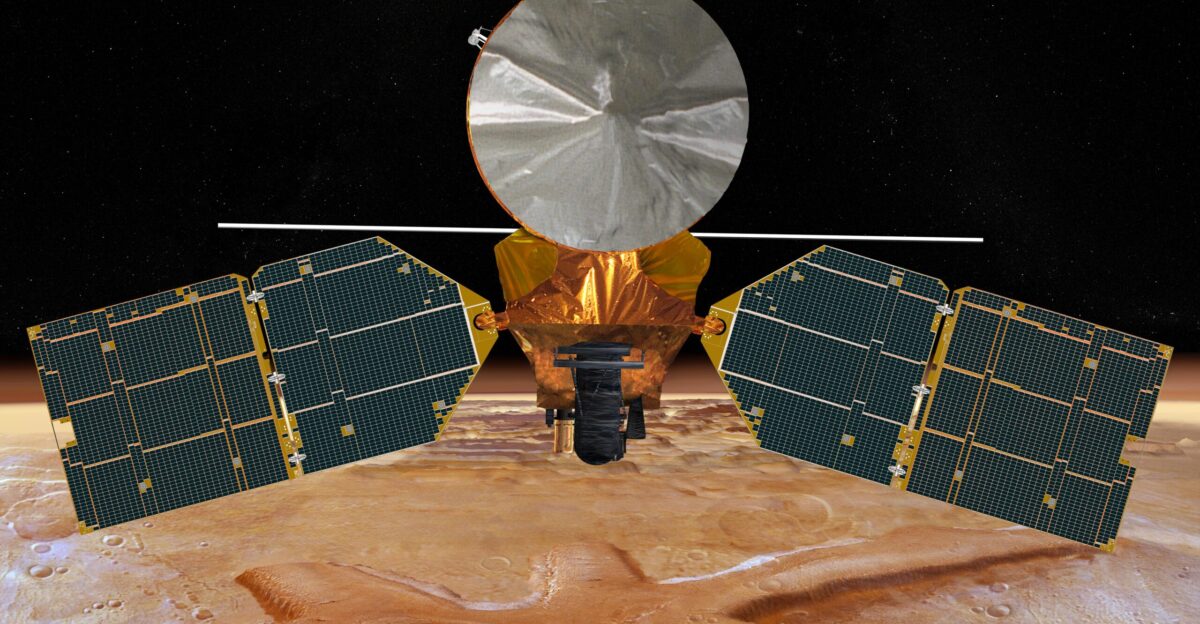
Multiple orbiters worked together to track the comet across different wavelengths.
Mars Reconnaissance Orbiter, the Hubble Space Telescope, and other spacecraft observed 3I/ATLAS using visible light, ultraviolet radiation, and infrared sensors. ESA’s Mars Express contributed significantly to additional observations and improved location accuracy.
These coordinated efforts captured the comet’s distinctive blue-shifted spectrum—a rare feature even among interstellar objects. Could these combined insights finally unravel the comet’s true composition?
Scientific Shockwaves
The accumulating data sparked intense debate throughout the astrophysics community. Some researchers proposed that unfamiliar chemical compounds were escaping from the comet’s nucleus.
Others drew connections to earlier interstellar anomalies and exotic phenomena. However, one fact stood clear: the comet displayed non-gravitational acceleration that existing mathematical models struggled to explain.
What entirely new physical laws or cosmic processes might 3I/ATLAS force astronomers to confront and reconsider?
Cosmic Ghosting
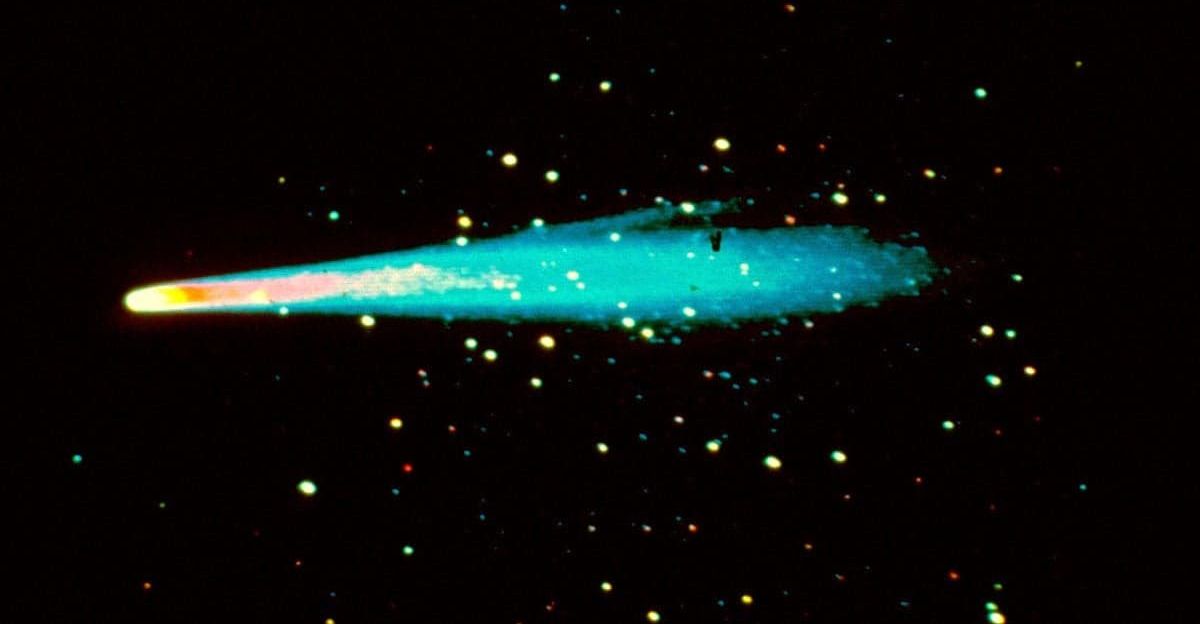
The central mystery deepened as observations continued. Scientists expected to detect massive quantities of gas and dust—phenomena typically accompanying such dramatic mass loss in comets.
Yet these expected materials never materialized in any significant amount. Experts adopted a striking phrase: “cosmic ghosting.”
This amplified suspicions that something fundamentally new and unprecedented had been witnessed. What could produce such a massive disappearance with so little visible trace?
Scrambling Models
Behind closed doors, NASA team members engaged in serious debate. The central question: was this behavior truly natural, or did it hint at something exotic?
Scientists split into camps, proposing different explanations. Some argued the data revealed a new class of cometary outburst. Others suggested unknown propulsion mechanisms. Still others attributed it to random cosmic coincidence.
High-profile space missions shifted resources to monitor every nuance, creating internal tensions over priorities and funding.
Stewards of Data

Leadership at space agencies circulated calls for unprecedented international data pooling. Investigators from ExoMars, Hubble, and Webb debated who should control the dissemination of breakthrough findings.
Global agencies balanced competing instincts: the drive to cooperate for science against natural competition for credit and recognition.
These tensions raised fundamental questions: How will exclusive discoveries reshape future mission design? Will data sharing policies change? What precedents are being set?
Racing for Recovery
Research teams brainstormed creative solutions to trace the comet’s vanished gases and understand its mass loss mechanism.
Proposed ideas ranged from ground-based follow-up observations to ambitious concepts, such as deploying fast-probe spacecraft for direct sampling. All initiatives are aimed toward one goal: advancing solar system science through this extraordinary opportunity.
The underlying question remained: can real-time innovation and engineering keep pace with nature’s cosmic surprises and anomalies?
Skepticism Stirs

Outside experts and independent researchers questioned fundamental assumptions. Did the comet’s behavior and unexplained mystery truly bend established physics, or did they merely expose gaps and weaknesses in current models?
Some skeptics argued the interstellar label itself demanded extreme caution. They noted that the comet’s appearance and properties resembled those of known solar system bodies in certain key ways.
Where exactly lies the boundary between rigorous scientific skepticism and open-minded wonder?
Journey’s End
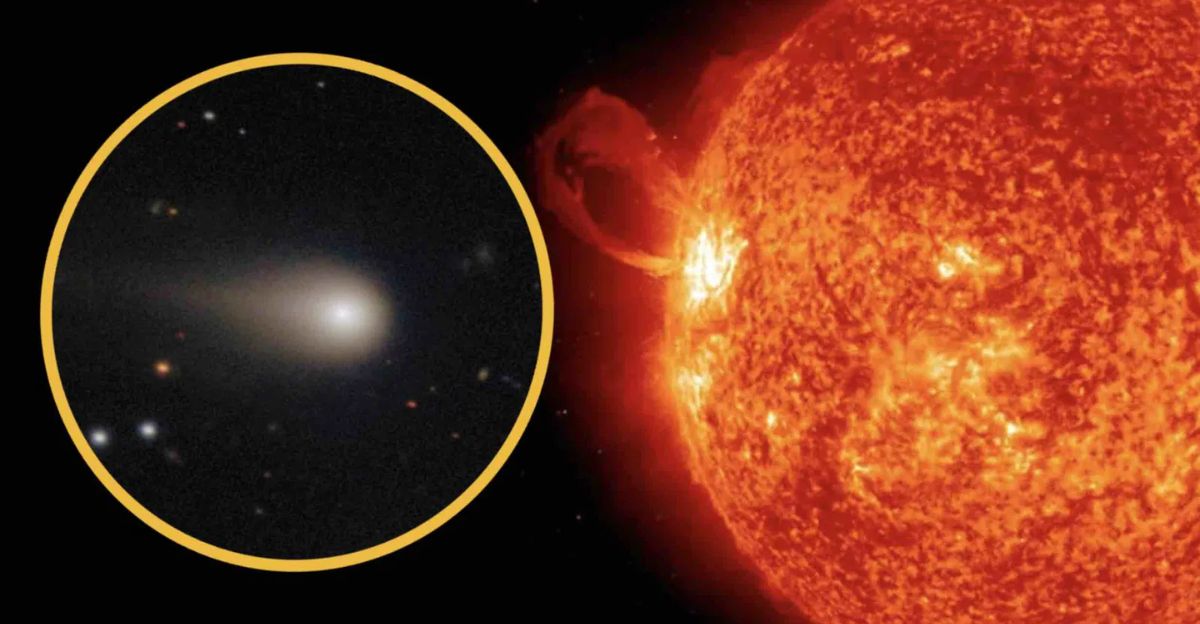
3I/ATLAS now rushes outward from the Sun at speeds exceeding 152,000 miles per hour.
On March 16, 2026, the comet’s hyperbolic trajectory will bring it within 0.357 astronomical units of Jupiter—close enough for gravitational influence but not collision.
After this encounter, the ancient visitor will exit our solar system forever, returning to the vast expanse of interstellar space.
What new riddles and discoveries will its brief cosmic visit leave behind for future generations of scientists?
Sources:
StarWalk, 24 Nov 2025
YouTube (starwalk.space), Nov 2025
IFLScience, 3 Nov 2025
Wikipedia, Nov 2025
NASA Science, 18 Nov 2025
Supercluster, 3 Nov 2025